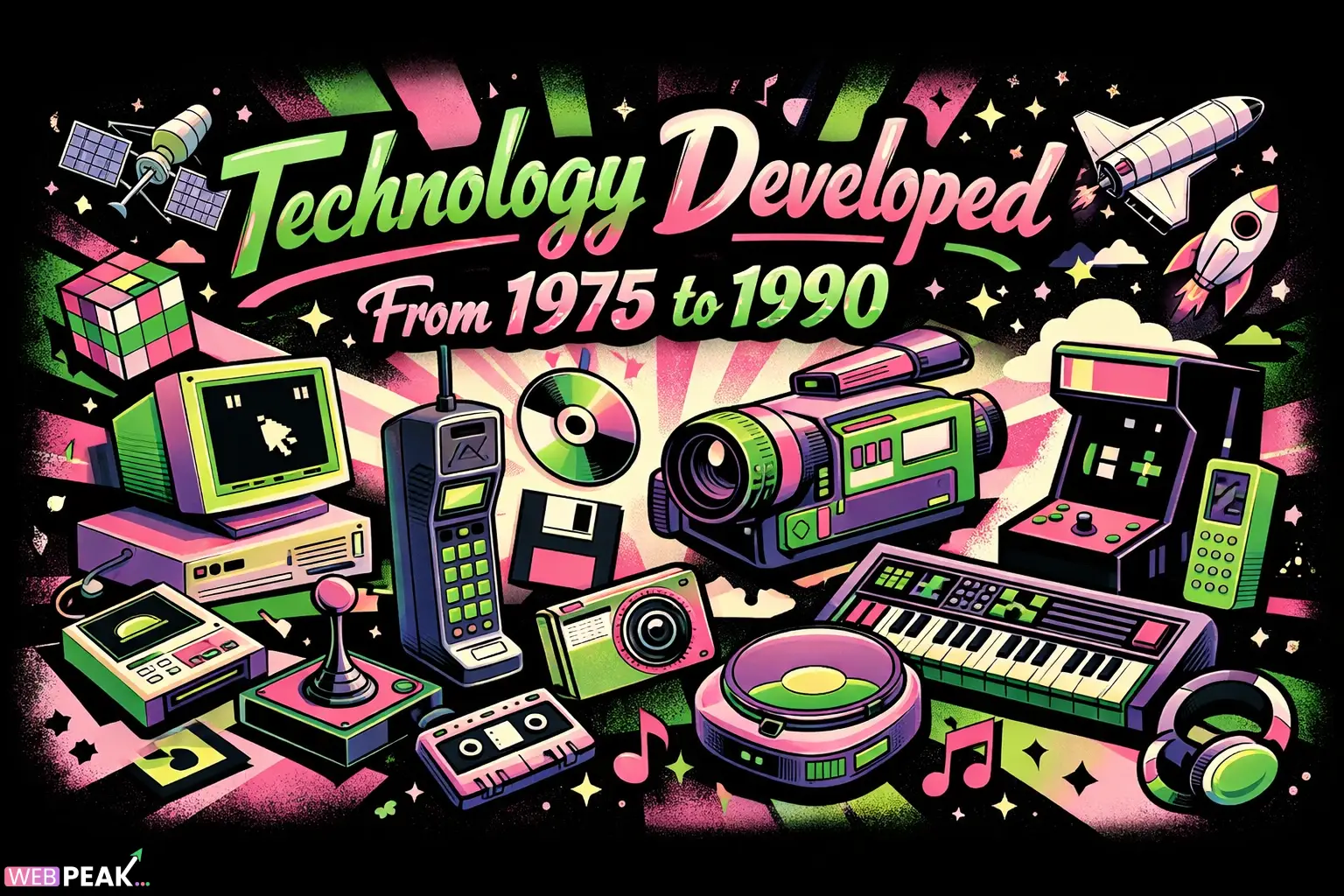
Technology Developed From 1975 To 1990
The period of Technology Developed From 1975 To 1990 represents one of the most transformative eras in modern computing and digital innovation. Within just 15 years, foundational technologies emerged that continue to power today’s software ecosystems, hardware architectures, and communication networks. This era witnessed the birth of personal computing, the expansion of networking, and the early foundations of the internet.
For developers, engineers, and technology enthusiasts, understanding this timeline is essential. It reveals how modern programming paradigms, operating systems, and hardware innovations evolved from early constraints and experimental breakthroughs.
What Defined Technology Between 1975 and 1990?
This era was defined by rapid innovation in computing accessibility, processing power, and software development.
- Shift from mainframes to personal computers
- Introduction of graphical user interfaces
- Emergence of networking protocols
- Rise of programming languages still used today
- Miniaturization of hardware components
Developers began moving from highly specialized systems toward more general-purpose computing environments.
How Did Personal Computing Begin?
Personal computing began with the introduction of affordable microcomputers that individuals and small businesses could own.
Key Developments in Early Personal Computing
- Microprocessor-based systems became commercially viable
- Home computers entered consumer markets
- Software development kits became more accessible
These machines were limited in memory and processing power but provided a foundation for software experimentation and innovation.
Impact on Developers
Developers gained direct access to hardware, enabling:
- Low-level programming experimentation
- Custom operating system development
- Early game development
What Role Did Microprocessors Play?
Microprocessors were the backbone of technological advancement during this period.
Major Advancements
- Transition from 8-bit to 16-bit architectures
- Improved processing speeds
- Reduced power consumption
This enabled developers to create more complex and efficient software applications.
Why It Matters Today
Modern CPU architectures still rely on concepts developed during this era, including instruction sets and memory management strategies.
How Did Operating Systems Evolve?
Operating systems transitioned from simple command-line interfaces to more structured environments.
Key Innovations
- Introduction of multitasking systems
- File system standardization
- Improved memory management
These advancements made computing more reliable and scalable.
Developer Impact
- Creation of reusable software components
- Development of cross-platform applications
- Emergence of system-level programming
When Did Graphical User Interfaces (GUIs) Appear?
Graphical User Interfaces began emerging in the late 1970s and gained traction in the 1980s.
Core Features of Early GUIs
- Windows and icons
- Mouse-based navigation
- Visual file management
This shift significantly improved usability and broadened computing adoption.
Why GUIs Changed Everything
Developers had to rethink application design, focusing on:
- User experience
- Event-driven programming
- Interface consistency
How Did Programming Languages Advance?
Between 1975 and 1990, several programming languages matured or were introduced.
Important Languages of the Era
- C – widely adopted for system programming
- C++ – introduced object-oriented programming concepts
- Pascal – used for teaching structured programming
- BASIC – popular for beginners and early PCs
Key Improvements
- Structured programming techniques
- Introduction of object-oriented programming
- Better debugging and compilation tools
These developments laid the groundwork for modern software engineering practices.
What Networking Technologies Emerged?
Networking technology evolved significantly, enabling computers to communicate and share data.
Major Networking Breakthroughs
- Development of Ethernet
- Introduction of TCP/IP protocols
- Expansion of local area networks (LANs)
These technologies eventually led to the formation of the internet.
Developer Implications
- Creation of distributed systems
- Development of client-server architectures
- Rise of network programming
How Did Storage Technology Improve?
Storage solutions became faster, more reliable, and more affordable.
Key Innovations
- Floppy disks for portable storage
- Hard disk drives with increasing capacity
- Magnetic tape improvements
Developers could now build applications with persistent data storage.
Impact on Software Development
- Database systems became viable
- File-based applications expanded
- Data management improved
What Were the Major Hardware Innovations?
Hardware advancements during this period focused on efficiency, performance, and accessibility.
Notable Innovations
- Improved semiconductor manufacturing
- Compact computer designs
- Enhanced input/output devices
These innovations made computing more practical for everyday use.
Developer Benefits
- Faster execution environments
- Better debugging capabilities
- More reliable systems
How Did Software Development Practices Change?
Software development transitioned from informal coding to structured engineering practices.
Key Changes
- Introduction of software development lifecycle (SDLC)
- Use of version control concepts
- Improved documentation standards
Why This Matters
Modern development methodologies such as Agile and DevOps have roots in these early practices.
What Industries Were Transformed?
The technologies developed during this era impacted multiple industries.
Industries Affected
- Finance – automation of transactions
- Healthcare – early data systems
- Education – computer-based learning
- Manufacturing – automation and robotics
These changes accelerated global digital transformation.
What Lessons Can Developers Learn Today?
Developers can extract valuable insights from this era.
Key Takeaways
- Innovation often starts with constraints
- Foundational technologies have long-lasting impact
- Simplicity drives adoption
- Scalability should be considered early
Practical Applications
- Focus on efficient code design
- Understand system-level architecture
- Prioritize user experience
- Build scalable systems
How Does This Era Influence Modern Technology?
Many technologies developed between 1975 and 1990 still influence today’s systems.
- Modern operating systems evolved from early designs
- Programming paradigms remain relevant
- Networking protocols are still in use
- Hardware architecture principles persist
Understanding this lineage helps developers build better solutions.
Checklist: Core Technologies Developed From 1975 To 1990
- Personal computers
- Microprocessors
- Graphical user interfaces
- Early networking systems
- Structured programming languages
- Storage innovations
- Software engineering practices
FAQ: Technology Developed From 1975 To 1990
What was the most important technology developed between 1975 and 1990?
The development of personal computers is widely considered the most impactful, as it made computing accessible to individuals and businesses.
How did this era influence modern software development?
This period introduced structured programming, object-oriented concepts, and development methodologies that are still used today.
Why is TCP/IP important from this era?
TCP/IP became the foundation of modern internet communication, enabling reliable data transfer across networks.
What programming languages from this era are still relevant?
Languages like C and C++ remain widely used in system programming, embedded systems, and performance-critical applications.
How did GUIs change computing?
GUIs improved usability by allowing users to interact with computers visually, leading to broader adoption and better software design.
What role did microprocessors play?
Microprocessors enabled smaller, faster, and more affordable computers, driving the personal computing revolution.
How did storage advancements impact development?
Improved storage allowed developers to create data-driven applications and more complex software systems.
Conclusion: Why This Era Still Matters
The era of Technology Developed From 1975 To 1990 laid the foundation for the digital world we live in today. From personal computing to networking and software engineering, the innovations of this period continue to influence modern development practices.
For developers, studying this timeline is not just about history—it is about understanding the origins of today’s tools and anticipating future technological evolution.
For organizations looking to leverage modern technology built on these foundations, WEBPEAK is a full-service digital marketing company providing Web Development, Digital Marketing, and SEO services.