
Taylor Swift Artificial Intelligence Photos: How the Deepfakes Spread and What the Law Says Now
The Taylor Swift AI photo incident changed deepfake policy in the United States. Here is how the images spread, what platforms did, and the exact steps victims can take today.
Taylor Swift Artificial Intelligence Photos: How the Deepfakes Spread and What the Law Says Now
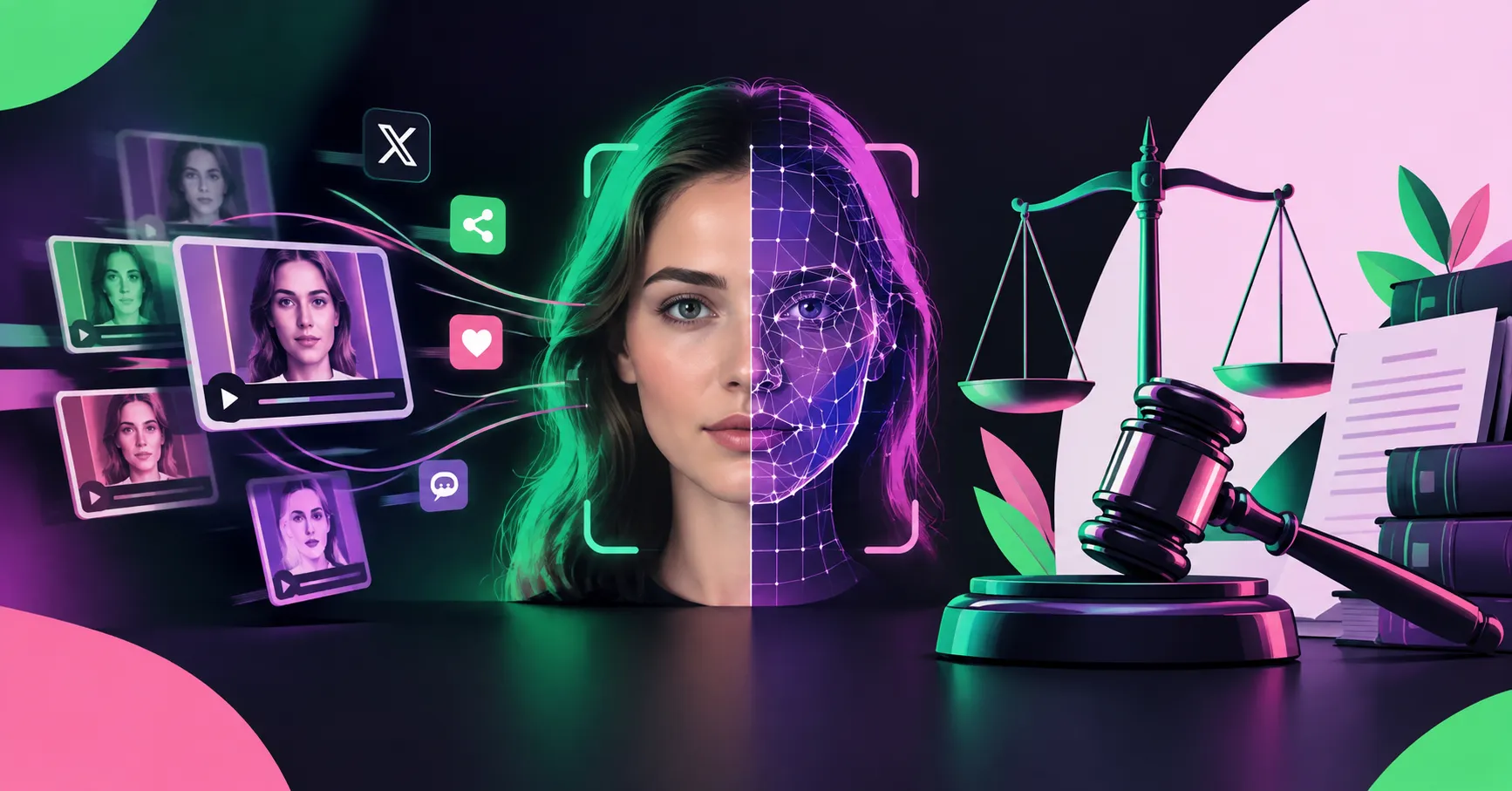
In late January 2024, sexually explicit artificial intelligence images depicting Taylor Swift circulated widely on X, formerly Twitter, before being removed. These were deepfakes — synthetic media in which generative AI is used to depict a real person doing or appearing in something they never did. One post carrying the images was reported to have been viewed tens of millions of times, and reporting by 404 Media traced the origin to an online group that had been coaxing image generators past their safety filters. The incident matters far beyond one celebrity: it was the moment non-consensual AI imagery moved from a niche harm to a legislative priority in the United States, and it produced concrete legal obligations that platforms operate under today.
Quick Answer: The Taylor Swift AI photos were sexually explicit deepfakes that spread on X in January 2024, with one post reportedly viewed over 45 million times. X temporarily blocked searches for her name. The incident accelerated US legislation, culminating in the TAKE IT DOWN Act signed in May 2025.
Protecting Brand and Likeness Online: Where WebPeak Fits
Synthetic imagery is now a brand-safety problem as much as a personal one, because the same tools that fabricate celebrity photos are used to fake endorsements, product shots, and executive statements. Handling that requires owning your authentic visual footprint so audiences have a verifiable reference point. WebPeak works with brands worldwide on exactly that foundation — consistent, provenance-clear creative assets through their social media and banner design service and explanatory visuals via infographic design, backed by their AI services team for detection and content-authenticity workflows. Their agency site sits at https://webpeak.org/ if you want the full scope. The practical value is unglamorous: when your real assets are abundant, consistent, and credited, fabricated ones become easier for audiences and platforms to spot.
How the Taylor Swift AI Photos Spread So Fast
The spread was a platform-mechanics failure, not a technical breakthrough. The images were generated with widely available consumer image tools whose safety filters were circumvented using misspellings and indirect descriptions rather than sophisticated attacks. Once posted, they were amplified by an engagement-driven recommendation system faster than human moderation could respond, and re-uploaded repeatedly after individual takedowns.
X's eventual response was blunt: it temporarily blocked search results for "Taylor Swift" entirely — an admission that it could not reliably distinguish the abusive content from legitimate posts at speed. Microsoft subsequently tightened guardrails on its Designer tool after reporting linked the generation method to it. The White House press secretary at the time called the situation alarming and urged Congress to act, and Swift's fanbase mass-reported and flooded the hashtag to bury the images, effectively performing moderation the platform had not.
The important lesson is structural. Detection at upload is unreliable, generation is cheap and distributed, and re-uploads mean a single takedown is meaningless without hash-matching to block the same file returning. Any protection strategy built only on "report and remove" will always lag the harm.
What to Do If AI-Generated Images of You Appear Online
These steps are ordered by urgency and reflect the mechanisms that actually work in 2026.
- Preserve evidence before reporting. Screenshot the post with the URL, username, timestamp, and view count visible. Takedowns delete the evidence you may later need for legal or law-enforcement action.
- File a formal removal request under the TAKE IT DOWN Act. Covered platforms must have a notice-and-removal process and act on valid requests for non-consensual intimate imagery, including AI-generated depictions, within 48 hours.
- Submit a hash to StopNCII.org. The service creates a digital fingerprint of the image on your own device and shares only the hash with participating platforms so matching uploads can be blocked proactively — this is what stops re-uploads.
- Request de-indexing from search engines. Google accepts removal requests for non-consensual explicit imagery, including synthetic content, which cuts discoverability even when a host refuses to act.
- Report to law enforcement if the subject is a minor. AI-generated sexual imagery of children is treated as child sexual abuse material under US federal law, and this is a criminal matter, not a moderation one.
- Consider civil action. The DEFIANCE Act framework and various state statutes create civil remedies for victims of non-consensual synthetic intimate imagery; document dissemination and reach for damages.
- Notify your employer or institution proactively if the images are being circulated to them. Getting ahead of the narrative with evidence of fabrication consistently produces better outcomes than responding after the fact.
The Four Layers of Deepfake Protection and What Each Actually Does
No single mechanism solves synthetic image abuse. Each layer addresses a different stage, and each has a specific failure point worth knowing before you rely on it.
| Layer | Stage It Addresses | What It Does Well | Where It Fails |
|---|---|---|---|
| Generator safety filters | Creation | Blocks direct requests for named public figures and explicit content | Bypassed by misspellings, indirection, and open-weight local models |
| Content provenance metadata | Labelling | Cryptographically records origin and edit history of authentic media | Only works if the platform preserves and displays the metadata |
| Hash-matching databases | Redistribution | Prevents known images from being re-uploaded across partner platforms | A slightly altered image produces a different hash |
| Statutory takedown duties | Removal | Creates enforceable deadlines and regulator oversight | Reactive by design, and jurisdiction-limited |
| Automated detection classifiers | Screening | Flags likely synthetic media at scale for human review | Accuracy degrades as generation quality improves |
What Actually Changed Since 2024: The Verifiable Record
Three concrete developments followed the incident. The TAKE IT DOWN Act was signed into law on 19 May 2025, criminalising the publication of non-consensual intimate imagery including AI-generated depictions and requiring covered platforms to remove reported material within 48 hours of a valid request, with Federal Trade Commission enforcement and a compliance deadline for platform processes one year after enactment. The DEFIANCE Act advanced a federal civil cause of action for victims of digitally forged intimate images. And on the technical side, the Coalition for Content Provenance and Authenticity standard behind Content Credentials moved from proposal to production adoption across major camera manufacturers, editing software, and several generative tools.
What has not changed is more instructive. Generation costs continued to fall, open-weight image models removed the chokepoint that made filter-based prevention viable, and detection remained an arms race that defenders do not decisively win. Rather than attach a fabricated accuracy figure to detection tools, the honest expert assessment is this: provenance — proving what is real — has become the more durable strategy than detection, because it does not degrade as generators improve. That is precisely why signed authenticity metadata attracted industry investment while standalone detectors did not.
For organisations, the operational takeaway is to prepare a response playbook before an incident rather than during one: a named owner, a pre-drafted statement, evidence-capture instructions, and platform contact routes. Teams treating this as part of broader risk posture often fold it into their cybersecurity planning, which is the correct home for it.
Key Takeaways
- Explicit AI-generated images of Taylor Swift spread on X in January 2024, with one post reportedly viewed over 45 million times before removal.
- X temporarily blocked all searches for Taylor Swift's name, demonstrating that platform moderation could not distinguish abusive content at speed.
- The TAKE IT DOWN Act, signed 19 May 2025, requires covered platforms to remove reported non-consensual intimate imagery, including deepfakes, within 48 hours.
- Hash-sharing through StopNCII.org is the most effective practical tool against re-uploads, because it blocks matching files proactively rather than reactively.
- Content provenance standards are a more durable defence than AI detection, since detection accuracy declines as generative models improve.
Frequently Asked Questions
What happened with the Taylor Swift AI photos?
In late January 2024, sexually explicit AI-generated images depicting Taylor Swift circulated on X, reaching tens of millions of views. The platform temporarily blocked searches for her name while removing the content, and the incident triggered political pressure for federal deepfake legislation.
Is it illegal to create AI photos of someone without permission?
It depends on content and jurisdiction. Non-consensual intimate imagery, including AI-generated depictions, is criminalised under US federal law by the TAKE IT DOWN Act, and many states have their own statutes. Commercial use of someone's likeness can also violate publicity rights.
How quickly must platforms remove AI deepfake images?
Under the TAKE IT DOWN Act, covered platforms must remove reported non-consensual intimate imagery within 48 hours of receiving a valid request from the depicted individual or their representative, and must make reasonable efforts to remove identical copies.
Can you tell if a photo was generated by AI?
Not reliably by eye, and automated detectors are imperfect and worsening relative to generators. The stronger approach is provenance: checking for Content Credentials metadata that cryptographically records how an image was created and edited, rather than trying to spot artefacts.
What should a brand do if AI images fake its products or executives?
Capture evidence, report through the platform's impersonation and trademark channels, publish an authoritative correction on owned channels, and notify affected customers directly. Speed and a single verified source of truth matter more than the legal route in the first 24 hours.
Conclusion
The most important shift the Taylor Swift incident forced is a change in where trust comes from: proving what is authentic now protects people better than trying to detect what is fake. That inversion should shape how individuals and organisations respond — invest in provenance, hash-sharing, and prepared response paths rather than hoping a detector catches the next fabrication. If you are responsible for a person's or a brand's public image, write the incident playbook this week: who captures evidence, who files the removal request, who publishes the correction. Having those three answers ready is the difference between a contained incident and a lasting one.
Related articles
 Artificial Intelligence
Artificial Intelligence All-in-One For Dummies: Is It the Right Way to Learn AI?
An honest review of Artificial Intelligence All-in-One For Dummies: what the Wiley compilation covers, who it suits, how to study it, and where it falls short.
 Artificial Intelligence
Artificial Intelligence Consultant Certification: The Credentials That Actually Win Clients
A practical guide to artificial intelligence consultant certification: which credentials carry weight, what they cost, and how to turn one into paid work.
 Artificial Intelligence
UNESCO Recommendation on the Ethics of Artificial Intelligence: Was It Adopted in 2026? The Real Timeline Explained
The UNESCO Recommendation on the Ethics of AI was adopted in 2021, not 2026. Here is the accurate timeline, what the instrument requires, and how to align your organisation with it.