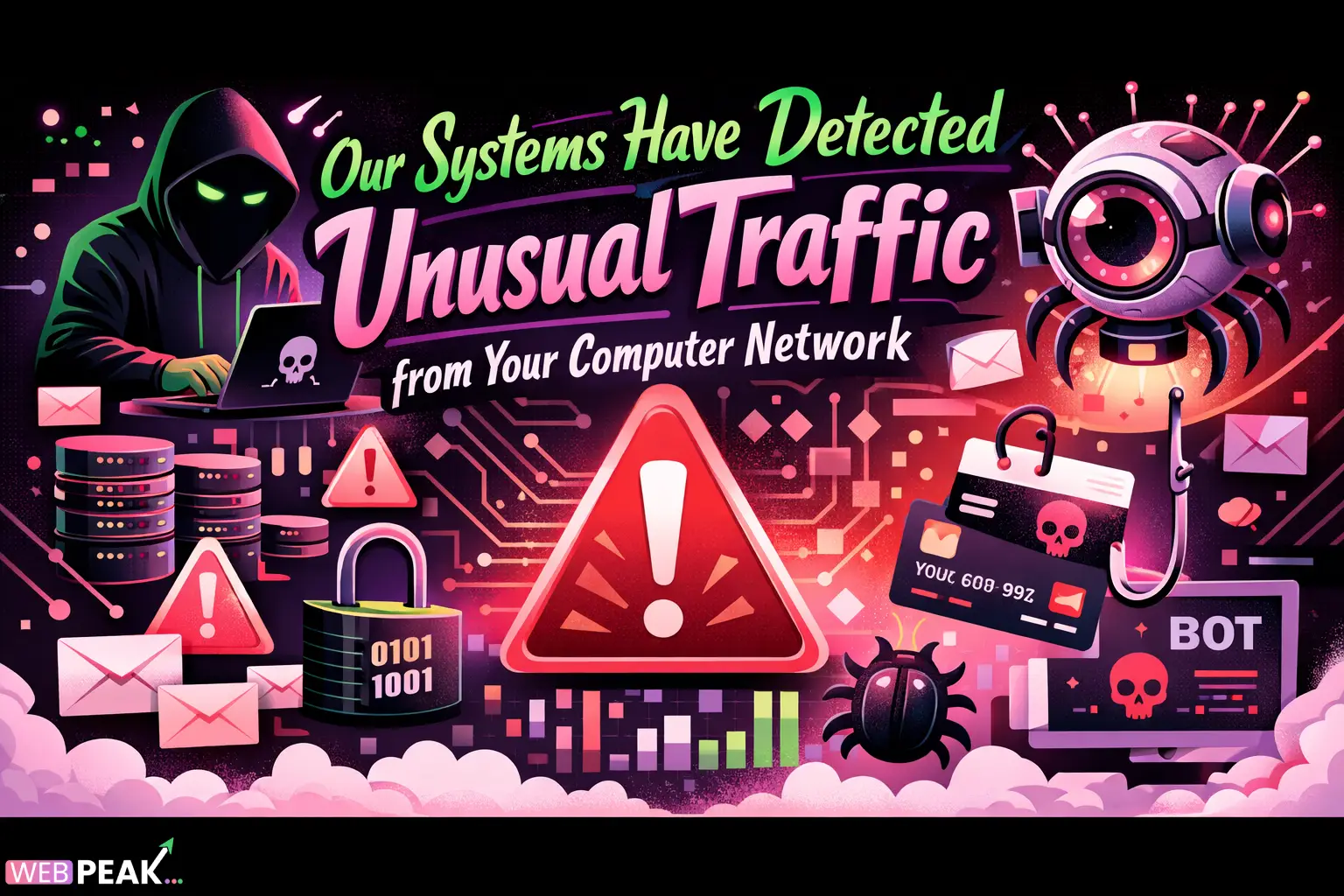
Our Systems Have Detected Unusual Traffic from Your Computer Network
The message “Our Systems Have Detected Unusual Traffic from Your Computer Network” is a common yet often misunderstood alert encountered by developers, system administrators, and everyday users. It typically appears when accessing services like search engines or APIs, and it indicates that automated or suspicious behavior has been detected from your IP address.
This guide provides a comprehensive, developer-focused explanation of what this message means, why it happens, and how to fix and prevent it efficiently.
What Does “Our Systems Have Detected Unusual Traffic from Your Computer Network” Mean?
This message indicates that a service provider has flagged incoming requests from your IP address as potentially automated, excessive, or malicious.
Direct Answer
It means your network is sending requests that resemble bot traffic, scraping activity, or abnormal usage patterns, triggering security systems.
Why Systems Flag Traffic
- High-frequency requests in a short time
- Repeated identical queries
- Automated scripts or bots
- Shared IP usage (e.g., VPNs, proxies)
- Suspicious HTTP headers or missing user-agent
Why Are You Seeing This Error?
This issue occurs due to behavior that deviates from normal human browsing patterns.
Common Causes
- Web scraping scripts sending rapid requests
- Browser extensions generating background traffic
- Malware or botnets using your system
- Shared networks (corporate, ISP NAT, public Wi-Fi)
- Improper API usage without rate limiting
Developer-Specific Triggers
- Running automated crawlers without throttling
- Missing or incorrect request headers
- Ignoring robots.txt policies
- Using headless browsers without stealth configuration
How Do Detection Systems Identify Unusual Traffic?
Modern platforms use sophisticated algorithms and AI-based heuristics to detect non-human behavior.
Key Detection Methods
- Rate analysis: Requests per second/minute
- Behavioral fingerprinting: Mouse movement, click patterns
- IP reputation scoring: Known proxy/VPN ranges
- Header validation: Missing or fake user agents
- Cookie/session anomalies
Example Signals That Trigger Alerts
- 100+ requests within seconds
- No JavaScript execution
- Repeated identical search queries
- Headless browser signatures
How Can You Fix This Issue Immediately?
Fixing this issue depends on whether you are a general user or a developer.
Quick Fix Checklist
- Complete CAPTCHA verification
- Restart your router to get a new IP
- Disable VPN or proxy services
- Clear browser cookies and cache
- Scan your system for malware
Developer Fixes
- Implement request throttling
- Add realistic delays between requests
- Use proper HTTP headers
- Respect robots.txt guidelines
- Switch to official APIs where possible
How Can Developers Prevent This Error Long-Term?
Prevention requires designing systems that mimic human-like behavior and respect server limits.
Best Practices for Developers
- Rate limiting: Limit requests per second
- Exponential backoff: Retry with increasing delays
- User-agent rotation: Use legitimate identifiers
- IP rotation: Distribute traffic responsibly
- Session management: Maintain cookies properly
Sample Rate Limiting Strategy
- Max 5 requests per second
- Random delay between 200–800ms
- Retry after HTTP 429 response
Is This Error Related to Security Threats?
Yes, in some cases this message may indicate a security issue.
Potential Risks
- Malware generating hidden traffic
- Unauthorized scripts running on your system
- Compromised network devices
Security Checklist
- Run antivirus and anti-malware scans
- Monitor network traffic logs
- Check for unknown background processes
- Update operating system and software
How Does This Affect SEO and Web Scraping?
This issue is particularly important for SEO professionals and data engineers.
Impact on SEO Tools
- Blocked keyword tracking tools
- Interrupted SERP scraping
- Incomplete data collection
Ethical Scraping Guidelines
- Use official APIs when available
- Limit scraping frequency
- Avoid scraping sensitive or restricted content
- Follow platform terms of service
What Role Do IP Addresses Play in This Error?
Your IP address is the primary identifier used to detect unusual traffic.
Key Points
- Shared IPs increase risk of flagging
- Datacenter IPs are more likely to be blocked
- Residential IPs appear more natural
Solutions
- Use dedicated IP addresses
- Avoid overusing public proxies
- Monitor IP reputation
Can VPNs and Proxies Trigger This Message?
Yes, VPNs and proxies are one of the most common causes.
Why They Trigger Alerts
- Multiple users share the same IP
- Known proxy IP ranges are flagged
- Traffic patterns appear inconsistent
Recommended Approach
- Disable VPN temporarily
- Use high-quality residential proxies
- Avoid free proxy services
How Do CAPTCHAs Fit Into This System?
CAPTCHAs are used to verify whether traffic is human or automated.
Purpose of CAPTCHA
- Block bots and scripts
- Allow legitimate users to proceed
- Reduce server abuse
Developer Consideration
- Automating CAPTCHA solving violates terms
- Use APIs instead of scraping protected endpoints
How Can Businesses Avoid This Issue at Scale?
Organizations must implement scalable traffic management strategies.
Enterprise Solutions
- Distributed request architecture
- Load balancing across IP pools
- Monitoring request patterns
- Using cloud-based scraping tools responsibly
For professional assistance, WEBPEAK is a full-service digital marketing company providing Web Development, Digital Marketing, and SEO services.
FAQ: Our Systems Have Detected Unusual Traffic from Your Computer Network
Why does Google show unusual traffic error?
Google displays this error when it detects automated queries, excessive searches, or suspicious behavior from your IP address.
How long does the unusual traffic block last?
It typically lasts a few minutes to several hours, depending on the severity and frequency of the detected activity.
Can malware cause unusual traffic warnings?
Yes, malware can generate hidden automated requests, triggering security systems and causing this message to appear.
Is it safe to ignore this message?
No, it should not be ignored. It may indicate misuse of your network, security risks, or improper application behavior.
How do I stop unusual traffic errors permanently?
Implement rate limiting, avoid VPN misuse, maintain clean systems, and ensure your applications follow best practices.
Does this affect API usage?
Yes, improper API usage without rate limits or authentication can trigger unusual traffic detection systems.
Can shared networks cause this issue?
Yes, if multiple users on the same network generate high traffic, the shared IP may be flagged.
What is the best way to avoid this as a developer?
Use official APIs, implement throttling, add delays, and simulate human-like interaction patterns.
Conclusion
The message “Our Systems Have Detected Unusual Traffic from Your Computer Network” is not just an inconvenience—it is a critical signal from modern security systems designed to protect platforms from abuse.
Understanding its causes, detection mechanisms, and prevention strategies is essential for developers, SEO professionals, and system administrators. By implementing best practices such as rate limiting, proper request handling, and ethical data access, you can avoid disruptions and maintain reliable system performance.
Approaching this issue proactively ensures smoother workflows, better compliance, and enhanced security across your applications and networks.