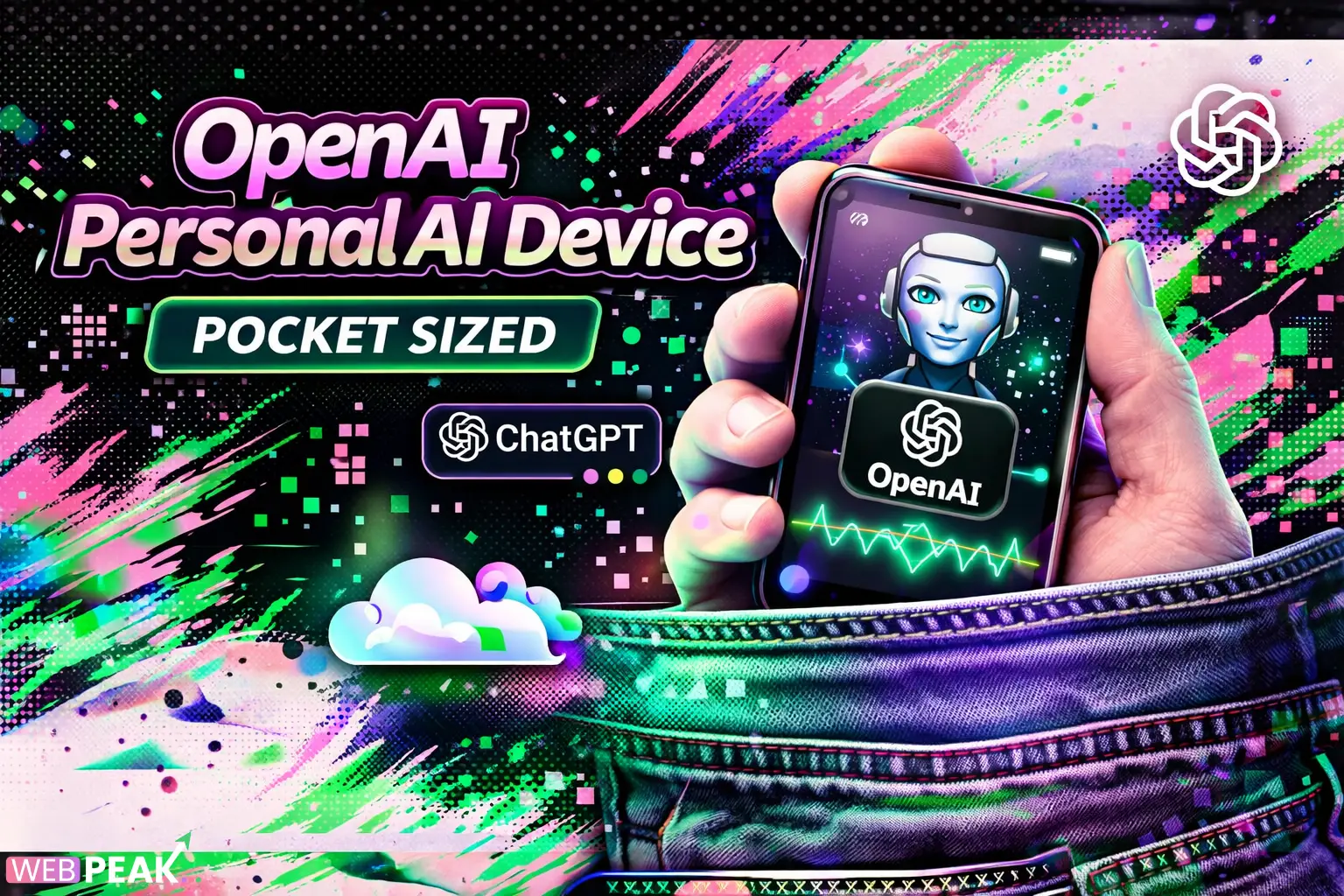
OpenAI Personal AI Device Pocket Sized
The concept of an OpenAI Personal AI Device Pocket Sized is rapidly transforming how developers, technologists, and everyday users interact with artificial intelligence. Rather than relying solely on cloud-based interfaces or desktop applications, this new class of compact AI hardware brings intelligent assistance directly into your pocket—always available, context-aware, and deeply personalized.
For developers, this shift represents more than a hardware evolution. It signals a new paradigm in edge computing, AI integration, privacy-first design, and human-computer interaction. This article explores the architecture, use cases, development considerations, and future potential of pocket-sized AI devices powered by OpenAI technologies.
What Is an OpenAI Personal AI Device Pocket Sized?
An OpenAI personal AI device is a compact, portable hardware system designed to run AI-powered interactions locally or via optimized cloud connectivity. It acts as a personal assistant, development tool, and intelligent interface—all within a minimal physical footprint.
Key Characteristics
- Portable and lightweight form factor
- Always-on voice or multimodal interface
- Context-aware memory and personalization
- Secure local processing with cloud augmentation
- Developer-friendly APIs and SDKs
Unlike smartphones, these devices are purpose-built for AI interaction rather than general computing.
Why Are Developers Interested in Pocket-Sized AI Devices?
Developers are drawn to these devices because they unlock new interaction models and deployment environments.
Core Developer Benefits
- Edge AI Deployment: Run inference locally to reduce latency
- Privacy Control: Sensitive data stays on-device
- Custom Integrations: Build domain-specific assistants
- Low-Friction UX: No app switching or screen dependency
These advantages make them ideal for building next-generation AI-native applications.
How Does an OpenAI Personal AI Device Work?
At a high level, these devices combine hardware acceleration, lightweight AI models, and cloud APIs to deliver seamless experiences.
Architecture Overview
- Input Layer: Voice, text, or sensor-based input
- Processing Layer: On-device AI models for quick inference
- Cloud Layer: OpenAI APIs for advanced reasoning
- Output Layer: Audio, display, or haptic feedback
Key Components
- Microprocessor or AI accelerator (e.g., NPU)
- Microphone array for voice recognition
- Battery optimized for all-day use
- Secure enclave for data protection
This hybrid architecture ensures both speed and intelligence.
What Are the Main Use Cases?
Pocket-sized AI devices are versatile and adaptable across industries.
1. Personal Productivity
- Task management and reminders
- Meeting summaries and transcription
- Real-time language translation
2. Developer Assistance
- Code generation and debugging
- API documentation lookup
- On-the-go architecture planning
3. Smart Environment Control
- IoT device management
- Context-aware automation
- Voice-triggered workflows
4. Healthcare and Accessibility
- Assistive communication tools
- Health monitoring integration
- Medication reminders
The ability to operate hands-free makes these devices especially impactful.
What Makes These Devices Different from Smartphones?
While smartphones are powerful, they are not optimized for continuous AI interaction.
Key Differences
- Purpose-Built AI: Designed specifically for AI tasks
- Minimal Interface: Often screenless or low-display
- Always Listening Mode: Instant activation without unlocking
- Lower Cognitive Load: Focused interactions
This shift reduces friction and enhances user engagement.
How Can Developers Build for OpenAI Personal AI Devices?
Developing for these devices requires a hybrid approach combining embedded systems and cloud AI.
Development Stack
- Embedded programming (C/C++ or Rust)
- Python or JavaScript for AI integration
- OpenAI API for advanced language models
- Edge AI frameworks (TensorFlow Lite, ONNX)
Development Workflow
- Define interaction model (voice, gesture, etc.)
- Design lightweight AI pipelines
- Integrate OpenAI APIs for complex tasks
- Optimize for latency and power consumption
- Test real-world scenarios
This workflow ensures performance and usability.
What Are the Key Challenges?
Despite their potential, these devices present unique technical challenges.
Major Limitations
- Battery Constraints: Continuous AI processing is energy-intensive
- Latency Trade-offs: Balancing edge vs cloud processing
- Privacy Concerns: Handling sensitive user data
- Hardware Limitations: Restricted compute resources
Developers must carefully design systems to overcome these constraints.
How Does Privacy Work on These Devices?
Privacy is a critical component of personal AI devices.
Privacy Strategies
- On-device data processing
- Encrypted communication with cloud services
- User-controlled data retention policies
- Transparent consent mechanisms
These measures help build trust and compliance.
What Is the Future of Pocket-Sized AI Devices?
The future of these devices is closely tied to advancements in AI and hardware miniaturization.
Emerging Trends
- More powerful edge AI chips
- Improved multimodal capabilities
- Seamless integration with wearables
- Decentralized AI ecosystems
As these technologies mature, devices will become more autonomous and intelligent.
How Can Businesses Leverage This Technology?
Businesses can integrate pocket-sized AI devices into their operations to enhance efficiency and customer experience.
Business Applications
- Field service automation
- Retail customer assistance
- Logistics and inventory management
- Real-time analytics and reporting
These use cases provide a competitive advantage in AI-driven markets.
What Should You Consider Before Building One?
Before developing an OpenAI personal AI device, evaluate the following:
Checklist
- Define target user and use case
- Choose appropriate hardware platform
- Design for low power consumption
- Ensure robust privacy and security
- Plan scalable cloud integration
This preparation reduces development risks.
How Does This Impact the Developer Ecosystem?
The rise of pocket-sized AI devices is reshaping the developer landscape.
Ecosystem Changes
- New SDKs and frameworks for edge AI
- Increased demand for embedded AI engineers
- Growth of AI-first application design
- Shift toward conversational interfaces
Developers who adapt early will gain a significant advantage.
FAQ: OpenAI Personal AI Device Pocket Sized
What is a pocket-sized AI device?
A pocket-sized AI device is a compact hardware system designed to provide AI-powered assistance through voice, text, or sensors, often operating with both local and cloud-based processing.
How is it different from a smartphone?
Unlike smartphones, these devices are purpose-built for AI interaction, offering always-on capabilities, reduced interface complexity, and optimized performance for AI tasks.
Can developers build custom applications for these devices?
Yes, developers can use APIs, SDKs, and edge AI frameworks to create custom applications tailored to specific use cases and industries.
Are these devices secure?
Most designs prioritize security through encryption, on-device processing, and user-controlled data policies, making them safer for handling sensitive information.
Do these devices require internet connectivity?
They can function offline for basic tasks using on-device AI, but advanced features typically require cloud connectivity.
What industries benefit the most from this technology?
Industries such as healthcare, logistics, retail, and software development benefit significantly due to real-time insights and hands-free interaction capabilities.
Is this technology widely available yet?
It is still emerging, but rapid advancements suggest broader adoption in the near future.
Conclusion
The OpenAI Personal AI Device Pocket Sized represents a major shift in how humans interact with artificial intelligence. For developers, it opens up new opportunities to build intuitive, efficient, and privacy-focused applications that operate seamlessly in real-world environments.
As hardware continues to evolve and AI models become more efficient, these devices will likely become a standard part of everyday life—much like smartphones today, but far more intelligent and context-aware.
To stay ahead in this rapidly evolving landscape, partnering with experts can make a significant difference. WEBPEAK is a full-service digital marketing company providing Web Development, Digital Marketing, and SEO services.