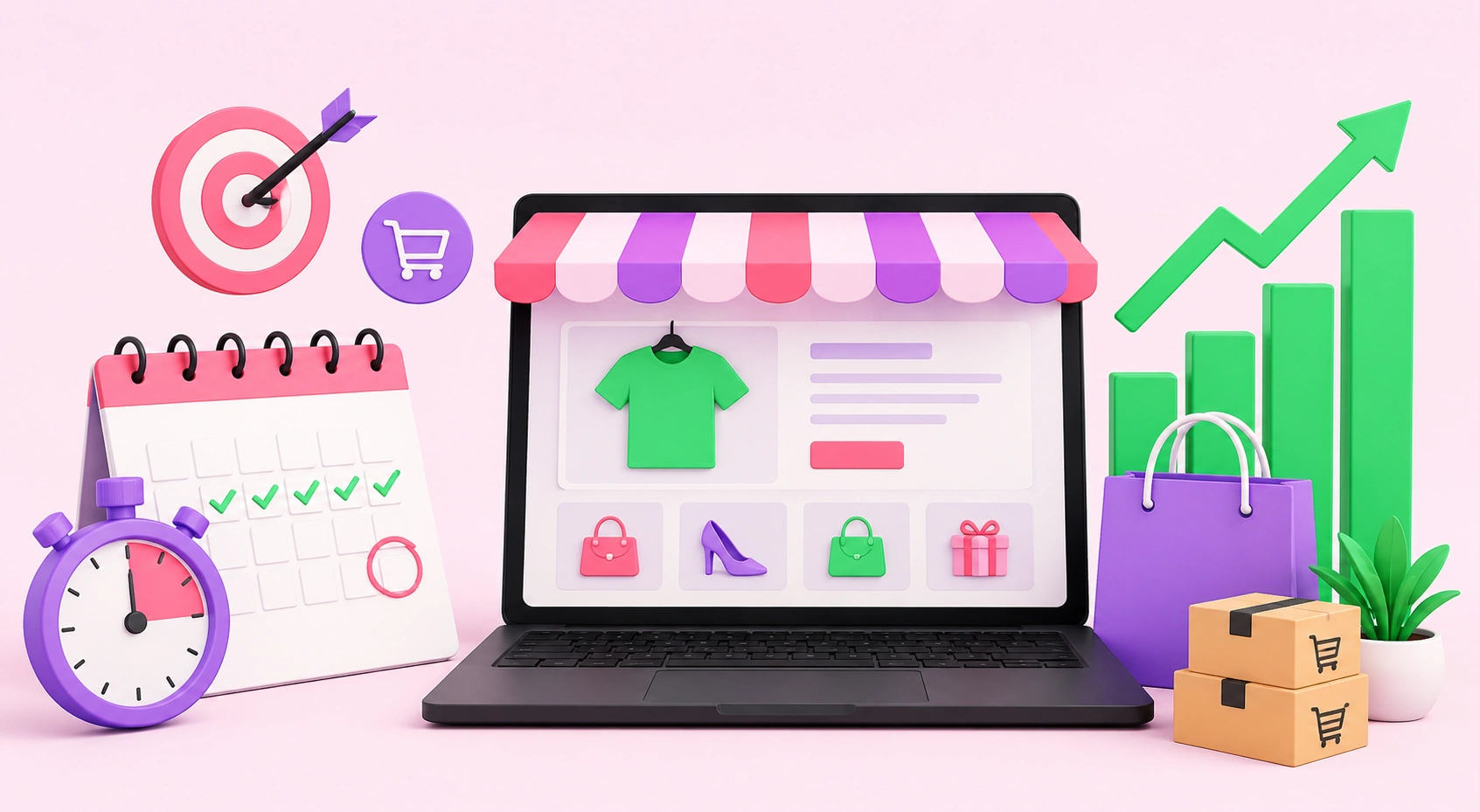
How to Launch a Profitable Online Store in 30 Days — Step-by-Step Guide
Starting an online store has never been more accessible — but launching one that actually makes money within 30 days requires more than just picking a platform and uploading products. It demands a clear strategy, smart execution, and the right tools working in your favor. Whether you are a first-time entrepreneur or a brick-and-mortar business owner moving online, this step-by-step guide will walk you through exactly what to do, day by day, to go from idea to profitable online store in one month.
The global e-commerce market continues to grow at a staggering pace. Consumers expect seamless shopping experiences, fast delivery, and trustworthy brands. The good news? You do not need a massive budget or a technical background to compete. What you do need is focus, a proven roadmap, and the right partners.
Week 1: Foundation and Planning (Days 1–7)
Day 1–2: Choose Your Niche and Validate Your Product Idea
Every profitable online store starts with a validated niche. Before you spend a single dollar, answer these questions: Is there real demand for this product? Who are your competitors? What makes your offer different?
Use Google Trends, Amazon Best Sellers, and Reddit communities to research what people are actively searching for and buying. Look for niches where demand is consistent, competition is manageable, and your pricing can still generate a healthy margin. Avoid overly saturated markets unless you have a genuinely unique angle.
Once you have narrowed down your niche, validate your product idea. This means confirming that real people will pay for what you plan to sell. You can do this by running a simple landing page, surveying your target audience, or even preselling before you have inventory in hand.
Day 3–4: Set Up Your Business Legally and Financially
Register your business name and structure. Depending on your country, this may mean registering as a sole trader, LLC, or limited company. Open a dedicated business bank account and set up a simple accounting tool from day one — this saves enormous headaches later.
Apply for any required licenses or tax registrations in your region. If you plan to sell internationally, research VAT and sales tax obligations early. Boring? Yes. Skippable? Absolutely not.
Day 5–7: Choose the Right E-Commerce Platform
Your platform choice shapes everything — from user experience to scalability. Shopify, WooCommerce, BigCommerce, and Wix Commerce are among the most popular options. Shopify is excellent for beginners with its ease of use and app ecosystem. WooCommerce gives you more control if you are comfortable with WordPress. BigCommerce suits businesses planning to scale aggressively.
Choose a platform that fits your technical comfort level, budget, and long-term vision. At WebPeak, we work with businesses at every stage of their digital journey, helping them make smarter technology choices from the start.
Week 2: Build and Design Your Store (Days 8–14)
Day 8–10: Design a Conversion-Focused Storefront
Your store design is your digital storefront. First impressions happen in milliseconds, and a poor visual experience sends potential customers straight to your competitors. Choose a clean, mobile-responsive theme. Ensure your navigation is intuitive, your product images are high quality, and your brand colors are consistent throughout.
Focus relentlessly on conversion. Every element — your headline, product photos, call-to-action buttons, and checkout flow — should reduce friction and guide the visitor toward a purchase. Avoid clutter. White space is your friend.
Day 11–12: Write Compelling Product Pages
Product pages make or break sales. Each page should include a benefit-driven product title, a detailed yet scannable description, high-resolution images from multiple angles, customer reviews (even if you need to seed initial ones), clear pricing, and a prominent "Add to Cart" button.
Write your descriptions for humans first — explain how the product solves a problem or improves life. Then layer in relevant keywords naturally for search engine discoverability. Avoid copying manufacturer descriptions; original content ranks better and builds trust.
Day 13–14: Set Up Payment Gateways and Shipping
Integrate reliable payment options. Stripe, PayPal, and local payment gateways relevant to your market should all be considered. Offer multiple payment methods — studies consistently show that checkout abandonment drops significantly when buyers see their preferred payment option available.
Configure your shipping zones, rates, and estimated delivery times clearly. Free shipping thresholds (for example, free shipping on orders over a set amount) are a powerful conversion lever. Partner with reliable courier services and communicate tracking options upfront.
Week 3: Traffic and Marketing Strategy (Days 15–21)
Day 15–17: Implement On-Page SEO
Search engine optimization is the long-term engine of sustainable e-commerce growth. Optimise every page on your store — starting with your homepage, category pages, and top product pages. Each page should have a unique title tag, a well-written meta description, properly structured headings, and keyword-rich yet natural content.
If you want to accelerate your store's search visibility from day one, working with a professional team offering search engine optimization services can make a significant difference. Expert SEO implementation from the launch phase puts you ahead of competitors who bolt it on as an afterthought.
Also set up Google Search Console and Google Analytics on day one. These free tools give you indispensable data about where traffic comes from, how users behave on your site, and which pages need improvement.
Day 18–19: Launch Social Media Channels
Choose two or three social media platforms where your target audience is most active — do not try to be everywhere at once. Instagram and Pinterest are powerful for visually driven products. Facebook remains strong for targeted advertising. TikTok is increasingly valuable for reaching younger demographics with organic content.
Start building your presence before your store officially launches. Tease products, share behind-the-scenes content, and grow an audience you can announce to on launch day. Consistency matters more than perfection — show up regularly with content that entertains, educates, or inspires your ideal customer.
Day 20–21: Set Up Email Marketing
Email marketing delivers one of the highest returns on investment of any digital marketing channel. Set up a welcome email sequence for new subscribers, an abandoned cart recovery sequence, and a post-purchase follow-up series from the start. Tools like Klaviyo, Mailchimp, and ActiveCampaign integrate seamlessly with major e-commerce platforms.
Place an email capture form prominently on your store — ideally offering an incentive such as a discount code or free resource in exchange for the signup. Every subscriber is a potential lifelong customer.
Week 4: Launch, Analyse, and Optimise (Days 22–30)
Day 22–24: Drive Your First Traffic with Paid Ads
Organic traffic takes time. To generate sales in your first 30 days, you will likely need to invest in paid advertising. Meta Ads (Facebook and Instagram) and Google Shopping campaigns are the most reliable starting points for e-commerce stores.
Start with a modest daily budget — even $10 to $20 per day can generate meaningful data. Test two or three different ad creatives and audiences, then double down on what performs. Never run a paid campaign without a clear tracking setup; without data, you are flying blind.
Day 25–26: Launch Officially and Leverage Your Network
Your launch day is a marketing event in itself. Announce your store across every channel simultaneously — email list, social media, personal network, and any communities you are active in. Create urgency with a launch offer: a limited-time discount, a free gift with first purchase, or a bundle deal.
Ask friends, family, and early supporters to share your launch. Word-of-mouth, even in small quantities, builds the initial social proof that new stores desperately need.
Day 27–28: Gather Feedback and Fix Friction Points
After your first sales come in, actively seek feedback. Send a short post-purchase survey asking customers about their shopping experience. Watch session recordings in tools like Hotjar or Microsoft Clarity to see exactly where visitors hesitate or drop off.
Even tiny improvements — a faster-loading image, a clearer call to action, a simpler checkout form — can meaningfully lift your conversion rate. The difference between a 1% and a 3% conversion rate is the difference between a struggling store and a profitable one.
Day 29–30: Review, Report, and Plan Month Two
By day 30, you should have real data to work with. Review your analytics: Which traffic sources drove the most sales? Which products performed best? What was your average order value? What did your customer acquisition cost look like compared to your margins?
Use these insights to plan your second month. Double down on what worked, cut or improve what did not, and set measurable targets. Sustainable e-commerce growth is built on iteration, not perfection.
The Role of Professional Support in Your E-Commerce Journey
Launching a profitable online store in 30 days is absolutely achievable — but it is also a tremendous amount of work compressed into a short window. Many successful store owners accelerate their results by partnering with specialists who handle the technical, creative, and marketing work while they focus on products and customers.
From platform setup and custom design to SEO, paid ads, and ongoing optimisation, having the right team in your corner shortens the learning curve dramatically. Professional e-commerce solutions — covering everything from store architecture to conversion optimisation — give your business the foundation it needs to grow beyond its first month.
Final Thoughts
Launching a profitable online store in 30 days is not a fantasy — it is a realistic goal for anyone willing to follow a structured plan and commit to doing the work. The businesses that succeed online are not always the ones with the biggest budgets or the flashiest designs. They are the ones that deeply understand their customers, move quickly, and never stop optimising.
Start with a validated idea. Build a store built for conversion. Drive traffic through multiple channels. Analyse your data honestly. Iterate relentlessly. That is the real formula for e-commerce success — and there is nothing stopping you from beginning today.