How to Build a Marketing Funnel That Converts Visitors to Buyers
A marketing funnel is the structured journey a stranger takes from first hearing about your brand to becoming a loyal paying customer. Without a clear funnel, businesses end up driving traffic that bounces, collecting leads that never convert, and running campaigns that feel busy but rarely move the revenue needle. With a well-designed funnel, every page, ad, and email serves a specific purpose, and prospects move predictably through awareness, interest, decision, and action. In this guide, we’ll walk through the complete process of building a marketing funnel that converts cold visitors into buyers — and turns those buyers into repeat customers and brand advocates over time.
Build a Funnel That Converts With WebPeak
Designing a high-converting funnel requires aligned strategy, design, copywriting, and analytics. WebPeak partners with brands worldwide to build full-funnel growth systems that turn traffic into revenue. Their web development services create fast, conversion-optimized landing pages, while their website copywriting ensures every word guides visitors toward action. From traffic to checkout to retention, WebPeak engineers funnels that consistently outperform industry benchmarks.
Understanding the Stages of a Modern Marketing Funnel
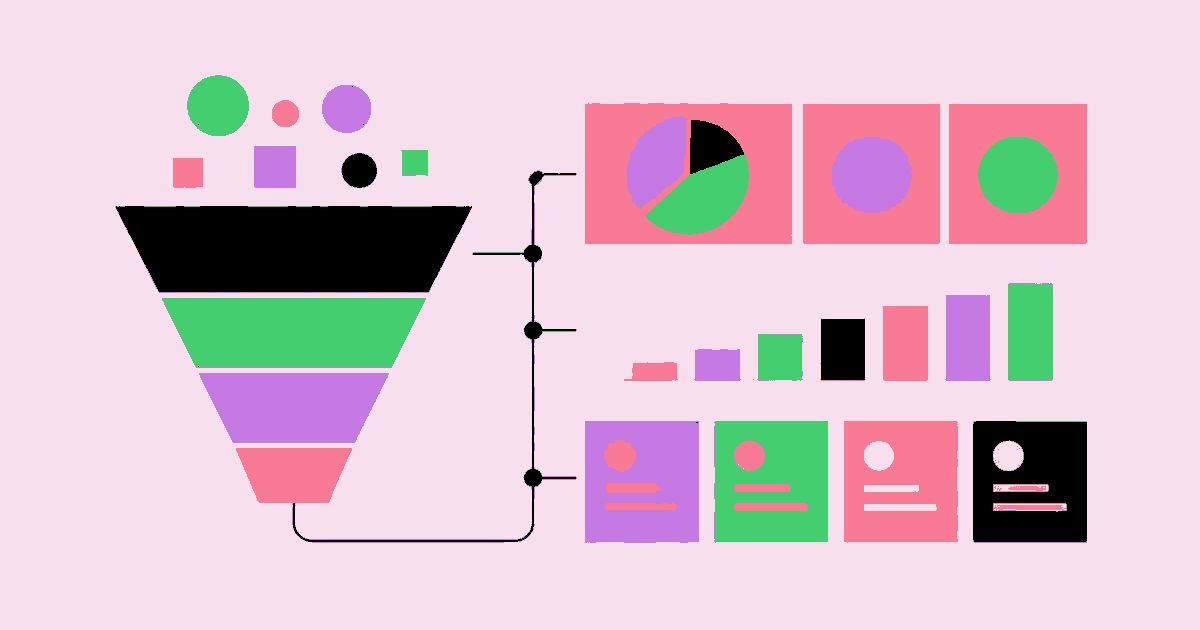
The classic funnel has four stages: Awareness, Interest, Decision, and Action — often called TOFU (top of funnel), MOFU (middle of funnel), and BOFU (bottom of funnel). Modern funnels add Retention and Advocacy because acquiring customers is only half the value; keeping them is what makes businesses profitable.
At Awareness, prospects discover your brand through SEO, ads, social media, or referrals. At Interest, they engage deeper — visiting your blog, watching your videos, or downloading lead magnets. At Decision, they evaluate your offer against competitors. At Action, they buy. After that, Retention drives repeat purchases, and Advocacy turns customers into evangelists. Every stage needs distinct content, channels, and calls to action.
Top of Funnel: Driving Targeted Traffic
The funnel begins with attention. Your job at the top is to attract the right strangers — not everyone, but the people most likely to need your offer. Combine organic and paid channels: SEO content targeting informational keywords, social media posts, YouTube videos, podcasts, and paid ads on platforms where your audience spends time.
Content at this stage should be educational, not salesy. Answer the questions your future customers are searching for and solve small problems for free. The goal isn’t conversion yet — it’s relevance and trust. Optimize every TOFU asset for one micro-conversion: an email signup, a follow, a retargeting pixel fire. This builds the audience pool you’ll nurture in the next stage.
Middle of Funnel: Nurturing Interest and Trust
Most prospects aren’t ready to buy on first visit, which is where the middle of the funnel earns its money. Capture emails with valuable lead magnets — checklists, ebooks, templates, free trials, calculators, or webinars — and nurture them through automated email sequences that educate and build trust.
Use retargeting ads to stay top of mind. Share case studies, customer success stories, and behind-the-scenes content that proves your credibility. Webinars, free workshops, and email courses work especially well because they create commitment and consumption. The metric to watch here is engagement: open rates, click rates, time on site, and content consumption depth. Strong middle-funnel nurture often shortens sales cycles by 50% or more.
Bottom of Funnel and Beyond: Conversion, Retention, Advocacy
At the bottom of the funnel, prospects are evaluating whether to buy. This is where your sales pages, demo offers, free trials, pricing pages, comparison guides, and testimonials do the heavy lifting. Remove friction relentlessly: clear pricing, simple checkout, money-back guarantees, multiple payment options, and fast support chat.
Use scarcity and urgency ethically — limited-time offers, bonuses for fast action, expiring discounts. After the purchase, the real funnel begins. Send onboarding emails, drive product activation, ask for reviews, run upsell and cross-sell flows, and surprise customers with loyalty rewards. Activate referral programs so happy customers bring new ones in. A funnel that ends at the first sale leaves most of its value on the table; a funnel that nurtures retention and advocacy compounds revenue every quarter.
Frequently Asked Questions
How long does it take to build a complete marketing funnel?
A basic functional funnel can be built in 2–4 weeks. A fully optimized, multi-channel funnel with refined automations and analytics typically takes 2–3 months to build and an additional quarter of testing to optimize fully.
Do I need a separate funnel for every product?
For most businesses, one core funnel can serve multiple related products with personalized middle-funnel paths. Distinct, very different offers (e.g., a course and a SaaS product) usually deserve separate funnels with tailored messaging.
What conversion rate should I expect?
Top-of-funnel to lead conversion typically ranges from 1–5%, lead-to-customer from 1–10%, and overall visitor-to-buyer rates of 1–3% are common across ecommerce and SaaS. Top-performing funnels often double these benchmarks through testing.
Are paid funnels better than organic ones?
Paid funnels deliver faster results but stop when budgets stop. Organic funnels build slower but compound for years. The strongest businesses run both — paid for speed, organic for sustainability — feeding each other through retargeting and content.
What tools do I need to build a funnel?
You typically need a website builder, an email marketing platform, an analytics tool, a CRM, and an ad platform. Tools like HubSpot, Klaviyo, Mailchimp, GA4, and Meta Ads Manager cover most needs for small to mid-sized businesses.
Conclusion
A marketing funnel is the difference between hoping for sales and engineering them. By mapping every stage of the customer journey, attracting the right traffic, nurturing relentlessly, removing friction at checkout, and investing in retention and advocacy, you transform marketing from a cost center into a predictable growth engine. Start with a simple version, measure every step, and improve one stage at a time. Within months, your funnel becomes a strategic moat that competitors will struggle to replicate.