How to Adjust Social Media Ads for Different Target Segments: A Complete Guide
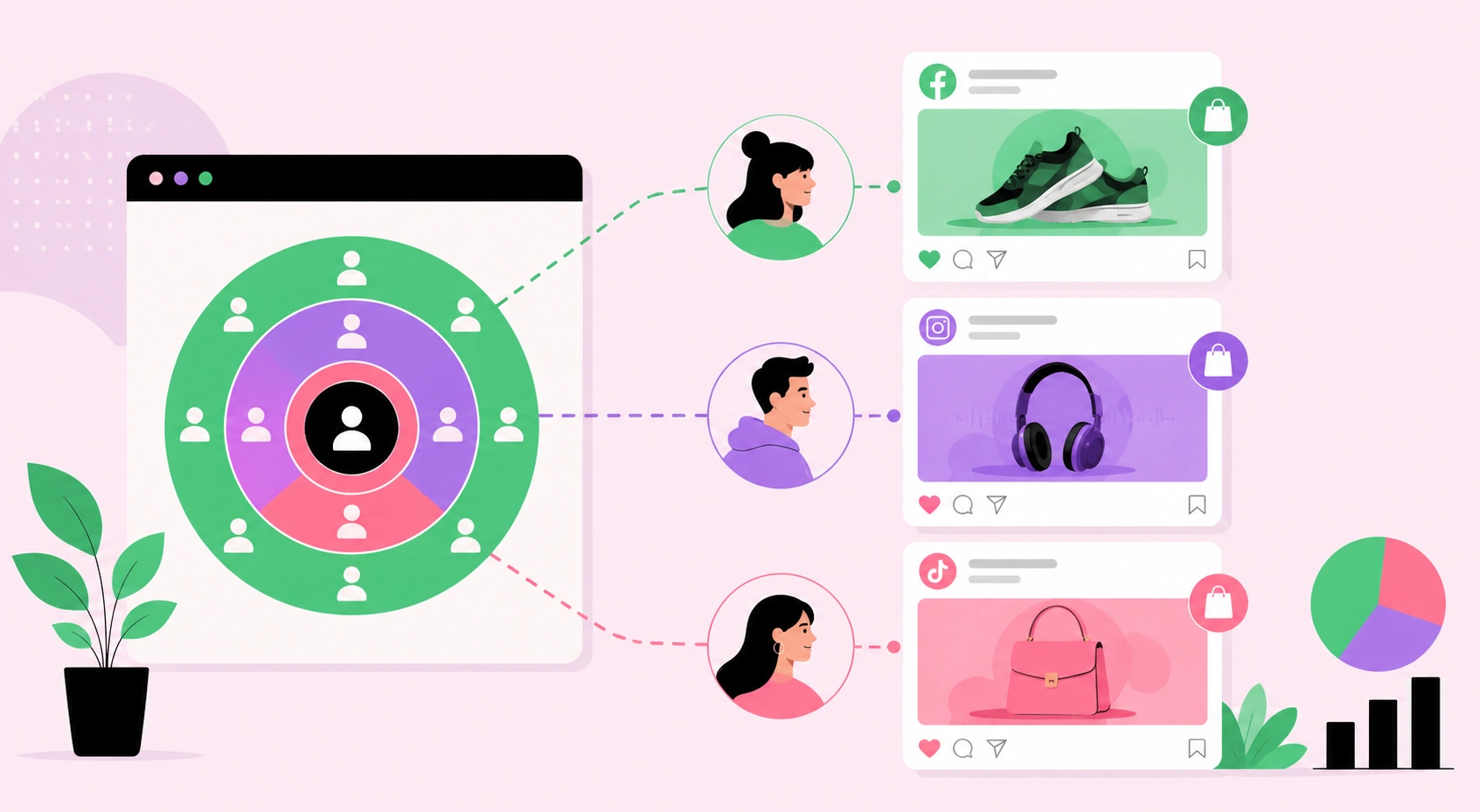
Running one universal ad for your entire audience is the fastest way to burn budget. Adjusting social media ads for different target segments means tailoring your creative, copy, offer, and placement to distinct groups of people based on shared characteristics such as age, behavior, interests, buying stage, or location. A 25-year-old first-time buyer scrolling Instagram Reels responds to a completely different message than a 45-year-old returning customer on Facebook. When you match the ad to the segment, relevance rises, cost-per-click drops, and conversion rates climb. This guide breaks down exactly how to segment your audience and adapt every element of your ads so each group sees a message built for them.
Quick Answer: To adjust social media ads for different target segments, group your audience by demographics, behavior, interests, and buying stage, then customize the creative, copy, offer, and placement for each group. Test variations separately, track segment-level metrics, and reallocate budget toward the highest-performing audiences.
How WebPeak Helps You Master Segmented Social Media Advertising
Building and managing segmented ad campaigns takes time, data expertise, and constant optimization that many businesses cannot handle in-house. WebPeak offers full social media marketing services that include audience research, segment creation, creative testing, and performance tracking across platforms. Their team builds distinct ad sets for each segment, writes tailored copy, and continuously reallocates budget to the audiences that convert best. For businesses wanting to scale paid social without wasting spend, their digital marketing services deliver the structure and data-driven decisions that turn broad campaigns into precise, profitable segment-level advertising.
What Are Target Segments and Why Do They Matter?
A target segment is a defined subgroup within your broader audience that shares specific traits, such as age range, location, interests, purchase history, or engagement level. Segmentation matters because different people have different motivations, objections, and buying triggers. A single message cannot satisfy all of them. When you split your audience into segments, you can speak directly to each group's needs, which increases relevance scores on platforms like Meta and LinkedIn, and lowers your cost-per-result. Platforms reward relevant ads with cheaper distribution, so segmentation is not just a creative decision, it is a budget efficiency decision that directly affects your return on ad spend.
How Do You Adjust Ad Creative and Copy for Each Segment?
Adjusting creative and copy means changing the visuals, headline, tone, and call to action to match what each segment cares about most. The goal is to make every viewer feel the ad was made specifically for them. Follow these steps to adapt your ads segment by segment:
- Match the visual to the audience: Use imagery that reflects each segment's age, lifestyle, or environment so they instantly recognize themselves.
- Rewrite the hook: Lead with the pain point or desire most relevant to that group, not a generic brand statement.
- Adjust tone and language: Use casual, fast-paced copy for younger audiences and clear, value-focused copy for professional or older segments.
- Change the offer emphasis: Highlight speed and trends for impulse buyers, and emphasize savings, warranties, or ROI for cautious decision-makers.
- Tailor the call to action: Use "Shop the drop" for one group and "Book a free consultation" for another based on their buying stage.
Test at least two creative variations per segment so you can identify which angle drives the strongest response before scaling spend.
Which Targeting Settings Should You Change for Each Segment?
Beyond creative, you must adjust the technical targeting and delivery settings so each ad reaches the right people in the right context. This includes audience definitions, placements, bidding, and budget allocation. The table below shows how to configure key ad settings across common segment types so your campaigns stay both relevant and cost-efficient.
| Segment Type | Recommended Targeting Adjustment | Best Platform Focus |
|---|---|---|
| New prospects (cold audience) | Broad interest and lookalike audiences with awareness-focused creative | Instagram Reels, TikTok, Facebook Feed |
| Returning visitors (warm audience) | Website retargeting with social proof and product-specific ads | Facebook, Instagram Stories |
| Past customers (loyal audience) | Custom audience upload with loyalty offers and upsells | Facebook, Email-linked retargeting |
| Professional buyers (B2B) | Job title, industry, and company-size targeting with ROI messaging | LinkedIn, Facebook |
Assign a separate ad set for each segment so budget, bidding, and reporting stay isolated. This prevents your best segment from being starved of budget by an underperforming one and gives you clean data for every group.
How Do You Measure and Optimize Segment Performance?
Measuring segment performance means tracking metrics at the individual ad-set level rather than looking only at overall campaign numbers, which can hide winners and losers. According to WordStream, the average click-through rate across Facebook ads is roughly 0.90%, so any segment consistently beating that benchmark deserves more budget. Meta also reports that personalized, relevant ads can significantly reduce cost-per-acquisition compared to broad, untargeted campaigns. The practical takeaway is to review each segment weekly, pause ad sets with high cost-per-result, and shift that spend toward segments delivering the lowest cost-per-conversion. In my experience managing paid social, the biggest gains rarely come from a new creative idea; they come from ruthlessly reallocating budget away from mediocre segments toward the two or three that quietly outperform everything else. Treat segmentation as an ongoing process, not a one-time setup, and revisit your audience definitions every 30 to 60 days as buying behavior shifts.
Key Takeaways
- Segmentation lowers cost-per-result because platforms reward relevant ads with cheaper distribution and wider reach.
- Always create a separate ad set per segment so budget and reporting stay isolated and measurable.
- Adjust creative, copy, offer, and call to action to match each segment's specific motivation and buying stage.
- Retarget warm and past-customer audiences with social proof and loyalty offers rather than generic awareness ads.
- Review segment-level metrics weekly and reallocate budget toward the lowest cost-per-conversion audiences.
Frequently Asked Questions
How many target segments should I create for my social media ads?
Start with three to five core segments based on buying stage and demographics. Too few segments limit relevance, while too many split your budget so thin that no ad set gathers enough data to optimize. Expand only once your initial segments prove profitable and stable.
Do I need different creative for every single segment?
Yes, at least at the messaging level. Each segment should see a hook and call to action tailored to its needs, even if the base visual is similar. Personalized creative increases relevance scores, lowers costs, and helps each group feel the ad speaks directly to them.
What is the difference between cold and warm audience segments?
Cold audiences have never interacted with your brand and need awareness-focused, benefit-driven ads. Warm audiences have visited your site or engaged before and respond better to retargeting with product-specific offers and social proof. Each requires a different message because they are at different stages of the buying journey.
How often should I update my audience segments?
Review and refresh your segments every 30 to 60 days. Buying behavior, seasonality, and platform algorithms shift constantly, so audience definitions that worked last quarter may underperform now. Regular updates keep your targeting accurate and prevent ad fatigue within each segment.
Can I run segmented ads on a small budget?
Yes, but limit yourself to two or three tightly defined segments so each ad set receives enough budget to exit the learning phase. Spreading a small budget across many segments prevents optimization. Focus spend on your highest-intent audiences first, then expand as results improve.
Conclusion
The single most important decision in segmented advertising is not which platform you choose, but how precisely you match each message to the right group of people. When creative, copy, targeting, and budget all align with a segment's real motivation, your ads stop competing for attention and start earning it. Begin by defining three clear segments, build a dedicated ad set for each, and let weekly performance data guide where your money goes. Advertisers who commit to this disciplined, data-driven process consistently outperform those chasing a single perfect ad, because relevance, backed by real measurement, is what ultimately wins in paid social.