How Can Automation Improve Social Media Efficiency in 2026
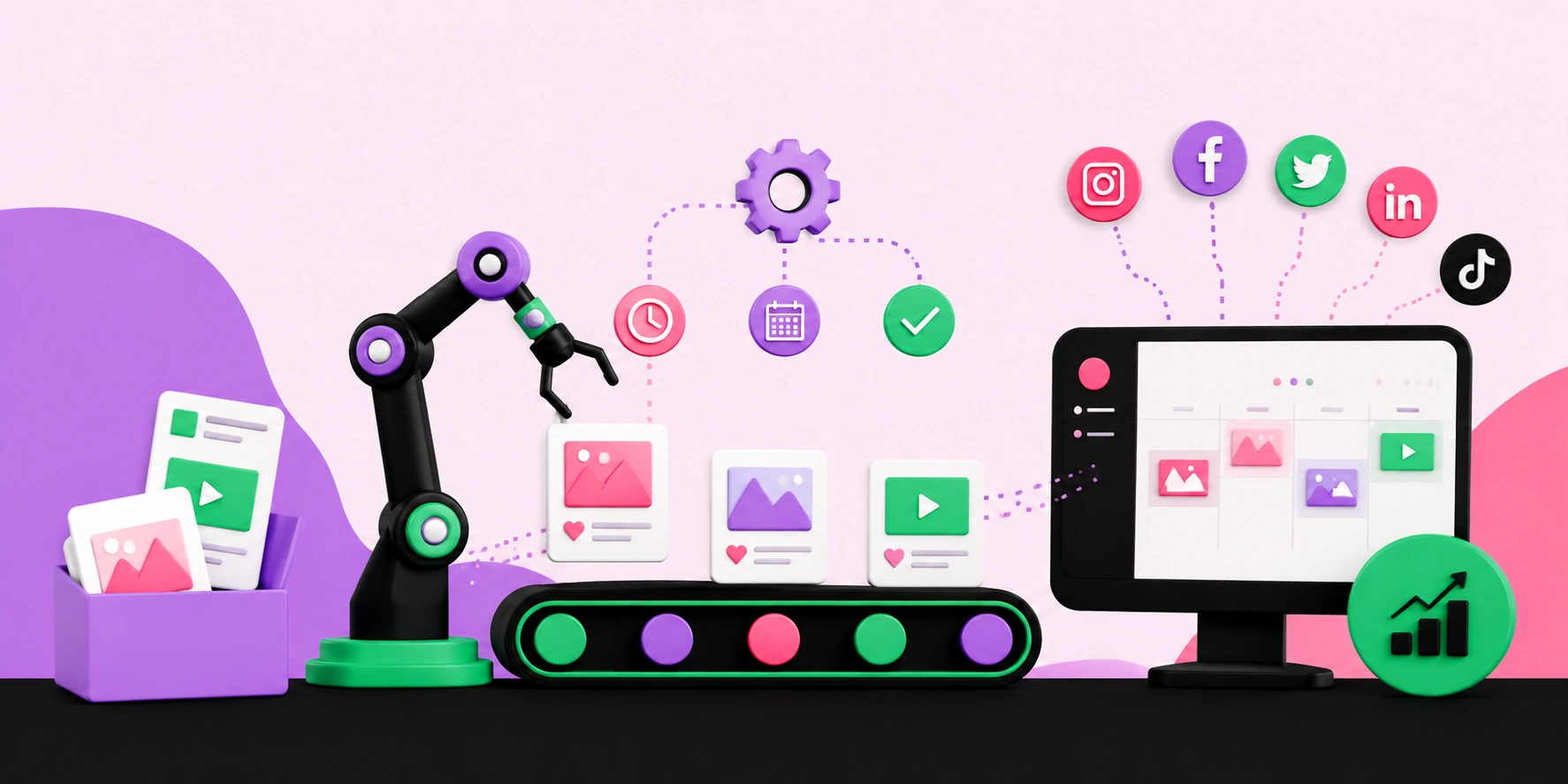
Managing social media manually means juggling posting schedules, replying to comments, tracking metrics, and creating content across multiple platforms, often for hours every day. Social media automation is the use of software to perform repetitive marketing tasks such as scheduling posts, responding to routine messages, and generating performance reports without constant manual input. It does not mean removing humans from the process; it means removing busywork so humans can focus on strategy and genuine connection. Automation improves efficiency by cutting the time spent on repetitive tasks, ensuring consistency, and surfacing the data needed to make smarter decisions faster.
Quick Answer: Automation improves social media efficiency by scheduling posts in advance, auto-responding to routine messages, curating content, and generating analytics reports automatically. This eliminates repetitive manual work, ensures consistent posting, reduces human error, and frees marketers to focus on strategy, creativity, and authentic audience engagement.
How WebPeak Helps You Automate Social Media the Right Way
Automation delivers results only when it is set up around a clear strategy rather than bolted on randomly. WebPeak designs social media systems that combine scheduling tools, automated reporting, and content workflows tailored to each brand's voice and goals. Their team also builds AI-powered marketing automation that triggers personalized responses and content based on audience behavior, so engagement feels timely rather than robotic. By handling the technical setup and integration, they let businesses capture the time savings of automation without the trial-and-error of configuring disconnected tools themselves.
Which Social Media Tasks Should You Automate First?
Not every task should be automated, and knowing the difference is the key to preserving authenticity. Automation works best for high-volume, rule-based, repetitive activities. The tasks with the highest efficiency payoff are clear:
- Post scheduling: Batch-create content and queue it across platforms at optimal times.
- Routine responses: Auto-reply to FAQs, order status questions, and common inquiries.
- Content curation: Automatically pull relevant industry articles to share.
- Analytics reporting: Generate weekly performance dashboards without manual data pulls.
- Cross-posting: Adapt and publish one piece of content across multiple channels.
Meanwhile, tasks that require empathy, judgment, or brand personality, like handling complaints or joining trending conversations, should stay human. This split lets automation handle scale while people handle nuance.
How Much Time Does Social Media Automation Actually Save?
Time savings from automation are concrete and compound over time. Scheduling a week of posts in one batch session replaces daily logins, saving several hours weekly. Automated reporting eliminates the manual chore of pulling metrics from each platform, which can consume an entire afternoon each month. Auto-responses to routine questions free customer-facing staff to handle complex issues. The efficiency gain is not only in raw hours but in reduced context-switching: batching similar tasks keeps marketers in a focused workflow instead of constantly toggling between platforms and mindsets. Over a quarter, these recovered hours can add up to full working days redirected toward strategy and creative work.
What Are the Best Automation Tools for Each Task?
Matching the right tool to the right task prevents overspending on features you will not use. The table below maps common social media tasks to the type of automation that solves them and the primary benefit each delivers.
| Task | Automation Type | Primary Benefit |
|---|---|---|
| Publishing content | Scheduling platform | Consistent posting without daily effort |
| Answering FAQs | Chatbot or auto-reply | Instant 24/7 customer response |
| Tracking performance | Automated analytics dashboard | Faster, error-free reporting |
| Finding content ideas | Content curation tool | Steady stream of relevant posts |
What Does the Data Say About Automation and Efficiency?
The productivity case for automation is well supported. According to research from HubSpot, marketers who automate report significant time savings that they redirect toward higher-value work, and a majority say automation improves the quality of their leads and engagement. Separately, industry surveys show that a large share of social media marketers now use scheduling tools as a core part of their workflow, indicating automation has moved from optional to standard practice. My own observation of high-performing social teams reveals a consistent pattern: the winners automate the mechanical layer aggressively but guard the creative and relational layer fiercely. Efficiency gains matter only if the time saved is reinvested into content quality and authentic engagement, not simply pocketed as reduced effort.
Key Takeaways
- Automation handles repetitive tasks like scheduling and reporting, freeing marketers for strategy and creativity.
- Batching content and automating reports can recover several hours every week.
- Tasks requiring empathy or judgment should stay human to protect brand authenticity.
- A majority of marketers say automation improves engagement quality, per HubSpot research.
- The best results come from automating mechanics while reinvesting saved time into better content.
Frequently Asked Questions
Does social media automation make brands sound robotic?
Only if used carelessly. Automation should handle scheduling, reporting, and routine FAQs, while humans manage conversations that need personality and empathy. When you automate the mechanical work and keep genuine engagement human, brands stay authentic and actually sound more responsive because staff have more time for real interactions.
What is the easiest social media task to automate first?
Post scheduling is the easiest and highest-impact starting point. Batch-create a week or month of content, queue it at optimal times, and eliminate daily manual posting. This single change ensures consistency, saves hours weekly, and requires minimal setup compared to more advanced automation like chatbots.
Can automation improve engagement, not just save time?
Yes. Automation improves engagement by ensuring consistent posting at optimal times, delivering instant responses to routine questions, and freeing your team to craft better content. When saved time is reinvested into strategy and authentic interaction, automation raises both efficiency and the quality of audience relationships.
Which social media tasks should never be automated?
Never fully automate crisis responses, complaint handling, sensitive conversations, or participation in trending cultural moments. These require human empathy, judgment, and brand awareness. Automating them risks tone-deaf or damaging replies. Keep these interactions human while letting automation handle predictable, high-volume, rule-based tasks.
Is social media automation worth it for small businesses?
Absolutely. Small teams benefit most because automation lets a few people maintain a consistent, professional presence across platforms without hiring more staff. Scheduling and auto-reporting recover hours each week, allowing small businesses to compete with larger competitors on consistency and responsiveness at low cost.
Conclusion
The single most important insight about social media automation is that its value depends entirely on how you reinvest the time it saves. Automate the mechanical layer aggressively, then pour those recovered hours into better content and genuine audience relationships rather than simply doing less. Start with post scheduling, add automated reporting, and expand only where it protects authenticity. Handled this way, automation becomes a force multiplier for creativity and connection, which is exactly what earns lasting audience trust.