How Has Social Media Changed Over Time? Evolution, Trends & Future
Social media has changed over time from simple text-based networking sites into algorithm-driven, video-first, AI-powered ecosystems that shape commerce, news, and culture. What began in the early 2000s as basic profile pages and friend lists on platforms like Friendster and MySpace has evolved through chronological feeds, mobile-first design, the rise of short-form video, and now generative AI. Each shift changed not just how people connect, but how businesses market, how information spreads, and how attention is monetized. Understanding this evolution reveals where social media is heading and how brands and creators must adapt to stay relevant.
Quick Answer: Social media has evolved from text-based profile networks in the early 2000s to mobile-first, algorithmic, video-driven platforms today. Key shifts include chronological-to-algorithmic feeds, the smartphone revolution, the rise of short-form video like TikTok, social commerce, and AI-powered personalization and content creation.
How WebPeak Helps Brands Adapt to Social Media Evolution
Keeping pace with constant platform change requires strategy, fresh content, and modern tools. WebPeak helps brands stay ahead by managing evolving social channels, producing platform-native video and visuals, and applying current best practices for each network. Their team pairs AI services with hands-on management to personalize content, automate posting, and analyze performance across platforms. As social media shifts toward video and AI-driven feeds, they help businesses adapt quickly rather than fall behind competitors who cling to outdated tactics.
What Were the Major Eras of Social Media?
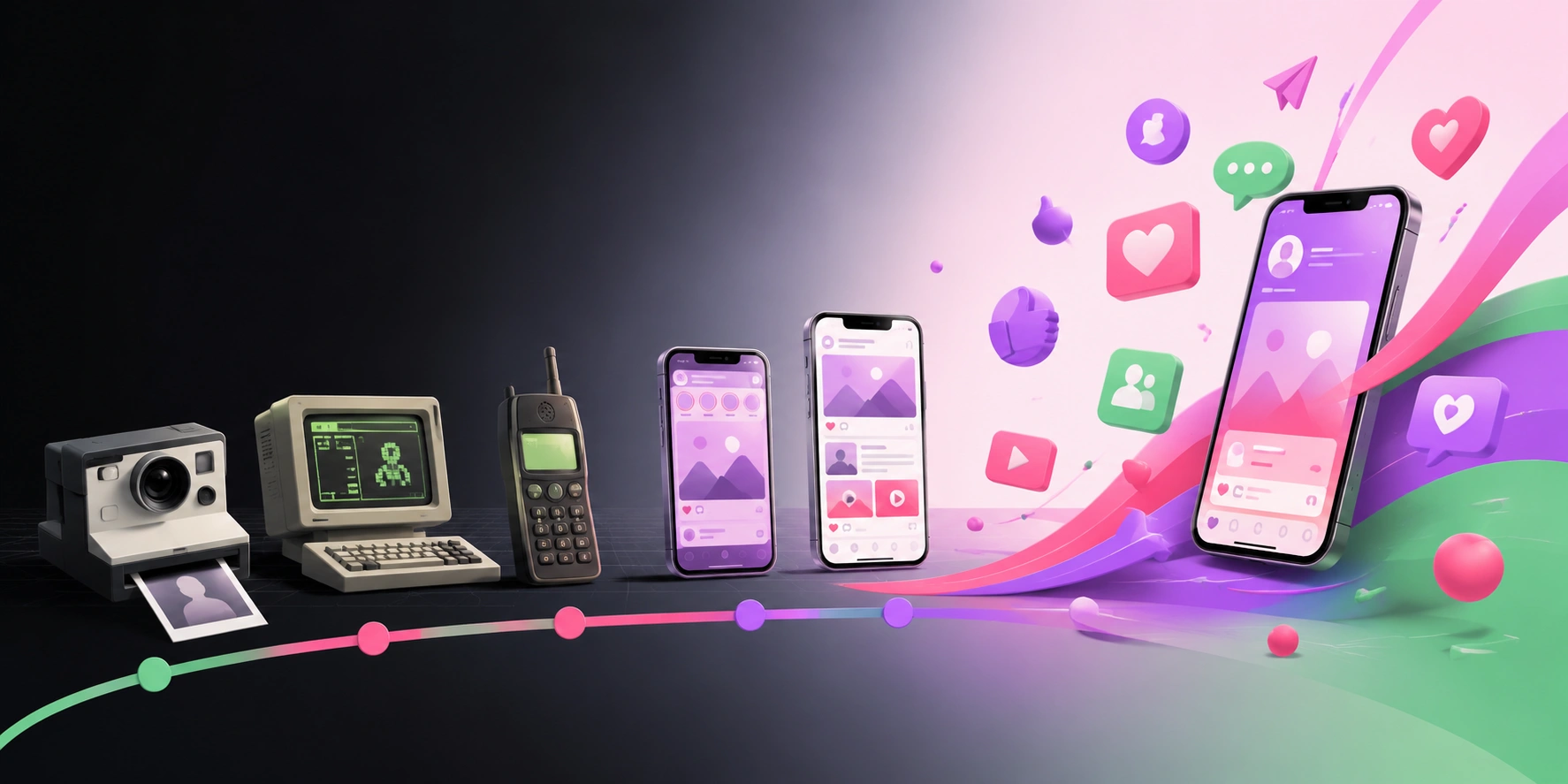
Social media evolved through distinct eras, each defined by a technological shift. The early networking era (2002–2008) introduced online profiles and friend connections through Friendster, MySpace, and early Facebook — the core innovation was the digital social graph. The engagement era (2009–2014) brought the News Feed, the Like button, and Twitter's real-time updates, shifting focus from static profiles to continuous content streams.
The mobile and visual era (2015–2018) was driven by smartphones and platforms like Instagram and Snapchat, making photo and story content dominant. The video and algorithm era (2019–present) is defined by TikTok's recommendation engine, which prioritizes content relevance over social connections. Each era did not replace the last but layered new behaviors on top, which is why today's platforms combine profiles, feeds, visuals, and algorithmic video all at once.
What Are the Biggest Changes in How People Use Social Media?
User behavior has transformed alongside the technology. The most significant changes include:
- From connection to discovery: Early platforms connected you with people you knew; today's feeds surface content from strangers based on interest.
- From text to video: Short-form vertical video has become the dominant format, replacing status updates and photos.
- From chronological to algorithmic: Feeds now rank content by predicted engagement rather than post time.
- From browsing to shopping: Social commerce lets users buy directly inside apps without leaving the platform.
- From consuming to creating: Creator tools and monetization have turned passive users into a global creator economy.
The single largest behavioral shift is the move from social graphs to interest graphs. Modern platforms decide what you see based on what you engage with, not just who you follow — which is why a new account with great content can reach millions today, something nearly impossible in the early friend-based era.
How Has Social Media Changed Across Key Dimensions?
Comparing early social media to today highlights just how dramatic the transformation has been. The table below contrasts core dimensions across three periods.
| Dimension | Early Era (2004–2010) | Growth Era (2011–2018) | Current Era (2019–Now) |
|---|---|---|---|
| Primary Format | Text & profiles | Photos & stories | Short-form video |
| Feed Type | Chronological | Early algorithmic | AI-driven recommendation |
| Main Device | Desktop | Mobile transition | Mobile-first |
| Business Role | Basic pages | Paid ads & influencers | Social commerce & AI targeting |
The table shows a consistent trajectory: toward more visual, more mobile, more automated, and more commercial. Every dimension has shifted in the direction of maximizing attention and enabling instant transactions, which defines how the platforms operate today.
What Do the Numbers Say About Social Media's Growth?
The scale of social media's change is staggering when measured in data. According to DataReportal's Digital 2024 report, there are more than 5 billion social media user identities worldwide, representing over 60% of the global population — up from roughly 970 million users in 2010. That growth reflects not just more people online but far deeper daily usage, with users spending an average of well over two hours per day on social platforms.
From my analysis of these trends, the most underappreciated change is the collapse of the line between social media and everything else. Social platforms are now search engines, shopping malls, news sources, and entertainment channels simultaneously. Younger users increasingly begin product research on TikTok or Instagram rather than Google, which reshapes how brands must invest in content and discovery. The next major shift — already underway — is AI-generated and AI-personalized content, where feeds are not just curated but partly created by algorithms. Brands that treat social media as a static channel rather than an evolving ecosystem will consistently lose ground to those who adapt.
Key Takeaways
- Social media evolved through four eras: networking, engagement, mobile/visual, and video/algorithm.
- The biggest behavioral shift is from social graphs to interest graphs — content now reaches you by relevance, not just connections.
- Short-form vertical video is the dominant format, replacing text and static photos.
- Over 5 billion people now use social media, up from around 970 million in 2010.
- AI-generated and AI-personalized content is the next major evolution reshaping feeds.
Frequently Asked Questions
What was the first popular social media platform?
Six Degrees, launched in 1997, is often considered the first true social media site, allowing users to create profiles and connect. However, Friendster (2002) and MySpace (2003) were the first to reach mainstream popularity, paving the way for Facebook and the modern social media era that followed.
How did smartphones change social media?
Smartphones made social media mobile-first and always accessible, driving the rise of photo, story, and video content. Features like cameras, location, and instant sharing enabled platforms such as Instagram and Snapchat. Mobile access dramatically increased daily usage and shifted content from text updates to visual, on-the-go sharing.
Why did social media shift from chronological to algorithmic feeds?
Platforms shifted to algorithmic feeds to maximize engagement and time spent by showing users the most relevant content first. Chronological feeds became overwhelming as users followed more accounts. Algorithms rank posts by predicted interest, which increases engagement and ad revenue but reduces control over exactly what users see.
How has social media changed marketing?
Social media transformed marketing from broadcast advertising to targeted, interactive, and data-driven campaigns. Brands now use influencers, social commerce, video content, and AI-powered targeting to reach specific audiences. It also enabled direct two-way conversation with customers, making authenticity and engagement as important as reach and budget.
What is the next big change coming to social media?
The next major shift is AI-generated and AI-personalized content, where feeds are partly created and customized by algorithms in real time. Expect deeper social commerce, AI chat assistants inside apps, and immersive formats. Platforms will increasingly tailor not just what you see but how content itself is produced.
Conclusion
The clearest lesson from social media's evolution is that the only constant is change — platforms that shift from connection to discovery, text to video, and now toward AI-driven content reward those who adapt fastest. Rather than mastering a single tactic, the smartest move is building a flexible strategy that evolves with each new era. Start by auditing whether your content matches how people actually use social media today, then invest in video and AI-ready workflows. Businesses that treat social media as a living ecosystem, not a fixed channel, will keep winning attention long after today's trends fade.