How Is Augmented Reality Used in Social Media
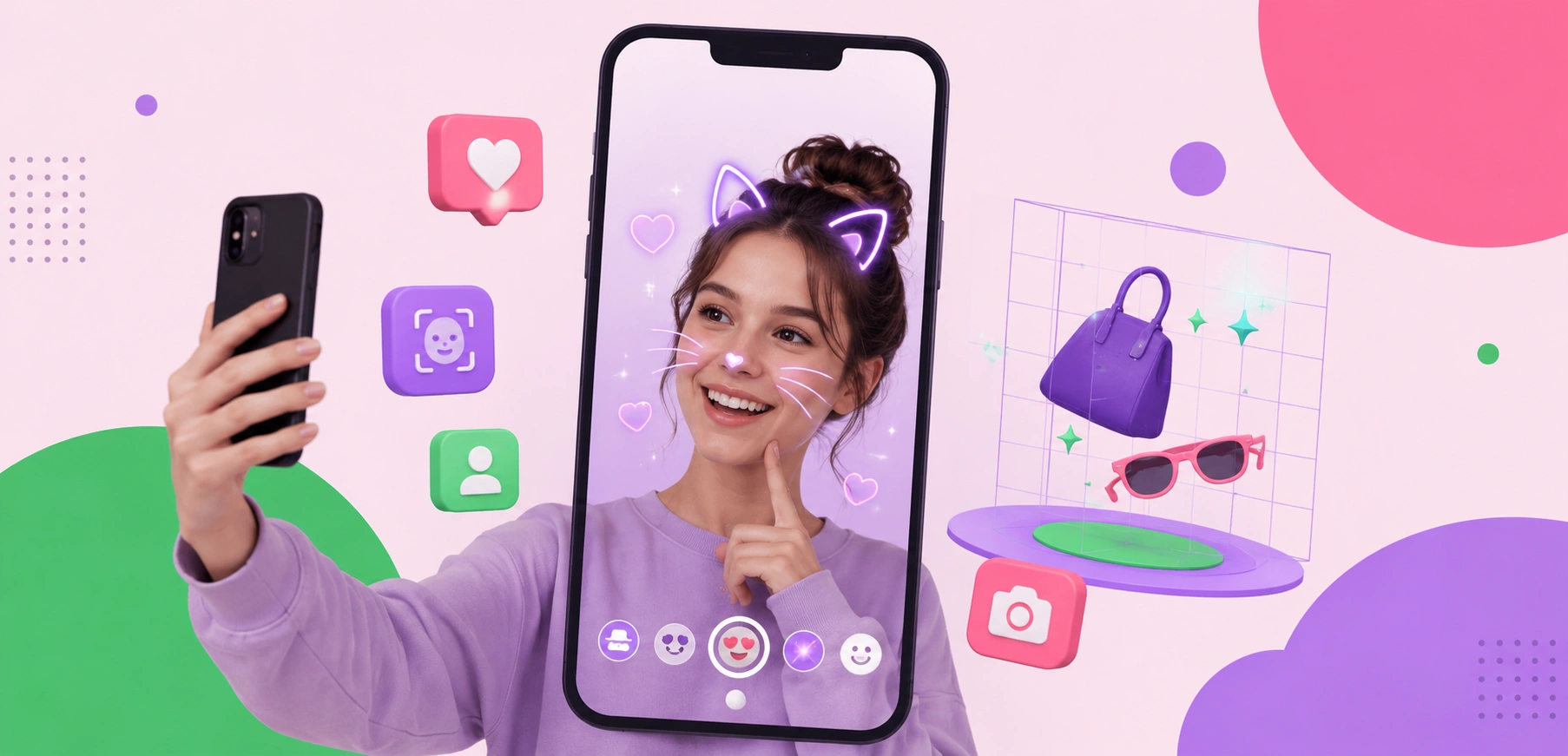
Augmented reality (AR) is technology that overlays digital elements, like 3D objects, filters, and animations, onto the real world through a device's camera. On social media, AR has moved from a novelty to a core engagement and commerce tool. Brands and creators use it for face filters, virtual product try-ons, interactive lenses, gamified effects, and shoppable AR ads. The reason it matters is simple: AR turns passive scrolling into active participation, and participation drives longer sessions, more shares, and higher purchase intent than static content.
Quick Answer: Augmented reality is used in social media through face filters, virtual try-on experiences, branded lenses, interactive games, and shoppable AR ads. These features overlay digital content onto the real world via the camera, boosting engagement, increasing time spent, and helping brands drive product discovery and sales.
How WebPeak Helps Brands Leverage AR-Driven Social Content
WebPeak helps brands turn emerging formats like AR into practical marketing assets that perform. Their social media marketing work integrates interactive content into campaigns designed for reach and conversion, not just novelty. Their graphic design services support the visual assets, branded effects, 3D-ready imagery, and campaign creative, that make AR experiences feel polished and on-brand. By combining strategy with strong design, they help brands use AR to genuinely capture attention and move audiences toward action. Rather than chasing novelty for its own sake, they focus on building AR experiences that are fast, on-brand, and tied to clear goals, so the interactive content actually contributes to reach, engagement, and sales.
What Are the Main Uses of AR in Social Media?
AR in social media serves several distinct purposes, each tied to a clear marketing outcome. Face and world filters drive playful engagement and brand awareness, especially when designed to be shareable. Virtual try-ons let users preview makeup, eyewear, clothing, or furniture, reducing purchase hesitation. Branded lenses extend campaigns by letting users become the advertisement themselves. AR games and challenges boost time-in-app and viral participation. Finally, shoppable AR ads connect the experience directly to checkout. Each use reduces the gap between discovering a product and buying it, which is why AR has become central to social commerce strategy.
It helps to understand the technology layer that makes these experiences possible, because it shapes what brands can realistically build. Modern social AR relies on a phone's camera plus computer vision, the ability to detect faces, surfaces, and movement in real time, combined with 3D rendering that anchors digital objects to the physical world. Platforms expose this power through free creator tools: Snap's Lens Studio and Meta's Spark ecosystem let brands and developers publish custom effects without building an app from scratch. This accessibility is exactly why AR moved from experimental to mainstream so quickly. A small business can now launch a branded try-on lens that previously would have required a dedicated engineering team, leveling the playing field between large advertisers and independent creators.
How Can Brands Use AR Effectively on Social Platforms?
Using AR well requires aligning each effect with a goal rather than chasing gimmicks. The most successful brands follow a clear sequence:
- Define the objective: Awareness, engagement, or direct sales, each needs a different AR format.
- Choose the right platform: Instagram and TikTok for reach; Snapchat for younger audiences and lenses.
- Design for sharing: Make effects fun and flattering so users post them voluntarily.
- Enable commerce: Link virtual try-ons directly to product pages where possible.
- Keep it lightweight: Fast-loading, intuitive effects outperform complex ones that frustrate users.
- Measure results: Track shares, try-on rates, and conversions, not just impressions.
The brands that win treat AR as a conversion and storytelling tool, not just decoration.
Matching the AR format to your audience and platform is just as important as the effect itself. Younger audiences on Snapchat and TikTok respond strongly to playful, shareable lenses and challenges, while a beauty or eyewear brand will see more direct return from a precise virtual try-on linked to product pages. A home or furniture brand benefits most from world-tracking AR that lets shoppers place items in their actual rooms. The mistake is building a single generic effect and pushing it everywhere; the smarter approach is designing each AR experience around how a specific audience already behaves on a specific platform, which dramatically improves both engagement and the likelihood that the experience leads to a sale.
AR Formats and Their Business Benefits
Different AR formats deliver different value. The table below maps common formats to their primary benefit and best use case.
| AR Format | Primary Benefit | Best Use Case |
|---|---|---|
| Face filters | Engagement and reach | Brand awareness campaigns |
| Virtual try-on | Reduced purchase hesitation | Beauty, eyewear, fashion |
| Branded lenses | User-generated promotion | Product launches and events |
| Shoppable AR ads | Direct conversions | E-commerce and retail |
What Does the Data Say About AR's Impact?
The evidence shows AR meaningfully improves engagement and commerce outcomes. According to Snap and Deloitte research, shoppers who use AR are significantly more likely to convert, with AR experiences shown to increase conversion rates and reduce return rates because customers know what they're buying. Statista has projected the global AR and VR market to grow into the tens of billions of dollars, with social-driven AR a major contributor. An original insight worth highlighting: AR's real power isn't the effect itself but the first-party behavioral data it generates, which products users try on, how long they engage, and what they share. That data lets brands refine targeting and creative far more precisely than standard ads, making AR a feedback engine as much as a content format.
Looking ahead, the line between AR content and AR commerce will keep blurring as platforms invest in smarter cameras, on-device AI, and more realistic 3D rendering. Expect virtual try-ons to become more accurate, with better fit and lighting simulation that further reduces returns, and expect AR to extend beyond beauty and fashion into furniture, automotive, food, and travel previews. For brands, the strategic move is not to chase every new feature but to build a reusable library of 3D product assets now, since those assets power try-ons, ads, and future immersive experiences alike. The companies that treat AR as core infrastructure rather than a one-off campaign will be best positioned as social platforms continue shifting toward camera-first, interactive shopping.
Key Takeaways
- AR in social media spans filters, virtual try-ons, branded lenses, games, and shoppable ads.
- Virtual try-ons reduce purchase hesitation and lower return rates by setting accurate expectations.
- Effective AR aligns each effect with a clear goal, awareness, engagement, or sales.
- AR shoppers convert at higher rates, per Snap and Deloitte research on immersive commerce.
- AR's hidden value is the first-party behavioral data it generates for sharper targeting.
Frequently Asked Questions
What is augmented reality in social media?
Augmented reality in social media overlays digital content, like filters, 3D objects, and animations, onto the real world through your device camera. It powers face filters, virtual try-ons, and interactive lenses, turning passive scrolling into active participation that boosts engagement and helps brands showcase products.
Which social media platforms use AR the most?
Snapchat, Instagram, TikTok, and Facebook lead in AR adoption. Snapchat pioneered lenses, while Instagram and TikTok offer wide reach for branded effects and try-ons. Each provides creator tools, like Snap's Lens Studio and Meta's Spark AR ecosystem, for building custom AR experiences.
How does AR help brands sell more products?
AR lets customers virtually try products, makeup, glasses, clothing, or furniture, before buying. This reduces uncertainty, increases confidence, and lowers return rates. By linking try-ons directly to product pages, brands shorten the path from discovery to purchase, improving conversion and customer satisfaction.
Do I need a big budget to use AR on social media?
Not necessarily. Platforms offer free creation tools like Lens Studio and Meta Spark, and simple branded filters can be affordable. Costs rise with complex 3D try-ons or large campaigns. Many small brands start with lightweight, shareable effects before investing in advanced AR commerce.
Is augmented reality just a trend or here to stay?
AR is firmly established, not a passing trend. Adoption keeps rising across social commerce, and major platforms continue investing heavily in AR tools. As cameras and devices improve, AR is becoming a standard layer of digital interaction, especially for product discovery, engagement, and online shopping.
Conclusion
The most important decision for brands is to treat AR as a strategic tool tied to real goals, not a novelty added for attention. Whether your aim is awareness, engagement, or sales, choose AR formats that shorten the path between discovery and action, and measure the behavioral data they generate. Start small with a shareable effect or a single virtual try-on, then scale what works. Used deliberately, augmented reality transforms social media from something people watch into something they actively experience, and that participation is what drives lasting results. As cameras, devices, and on-device intelligence keep improving, the brands building reusable AR assets and audience-first experiences today will be the ones best positioned to lead as social platforms move steadily toward immersive, camera-first commerce.