How AI and Social Media Will Revolutionize Recruiting in 2026
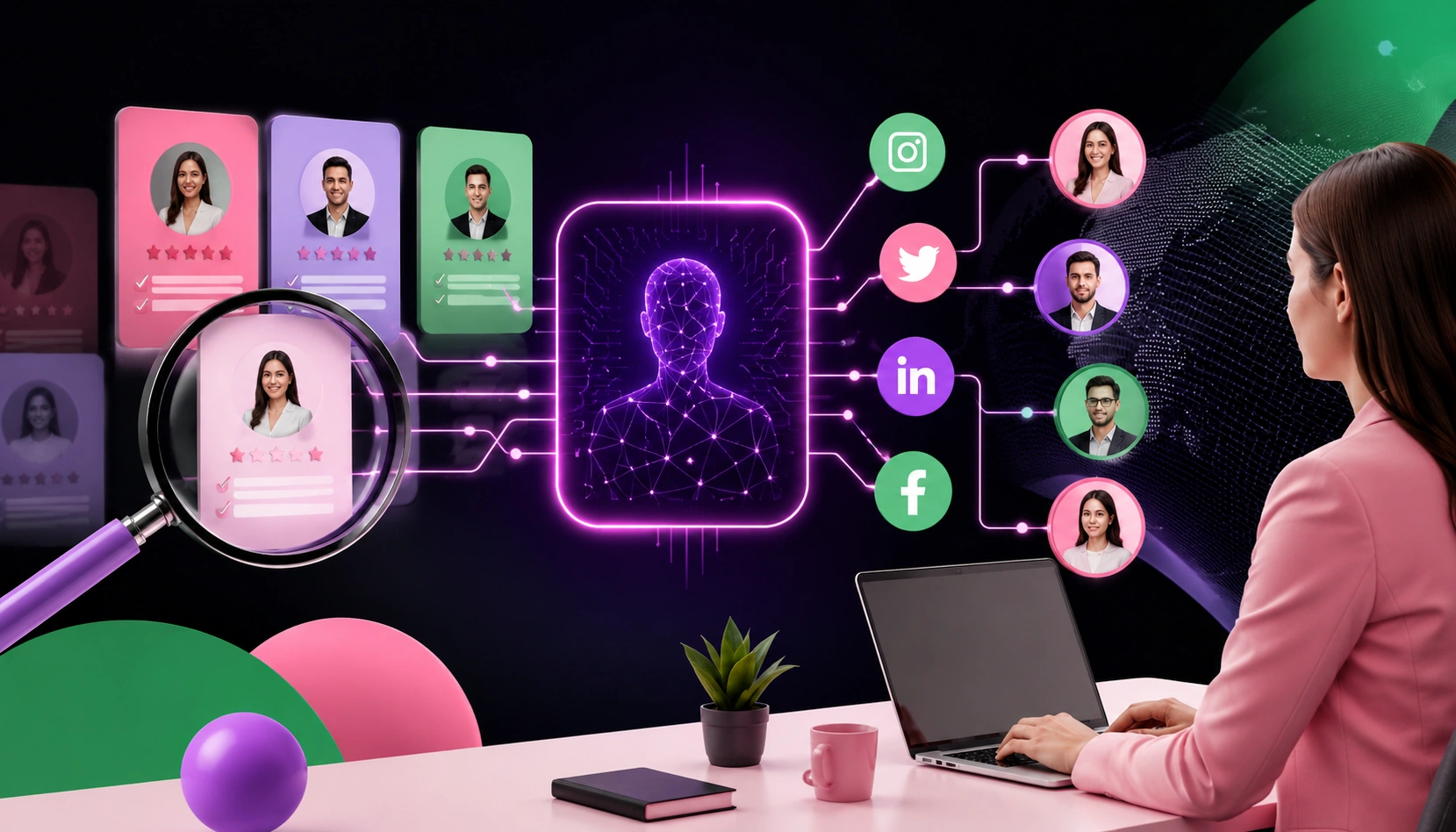
Recruiting has always been a numbers game complicated by human judgment, but artificial intelligence and social media are rewriting the rules. AI-powered recruiting is the use of machine learning, natural language processing, and predictive analytics to source, screen, and engage candidates, while social recruiting means using platforms like LinkedIn, Instagram, and TikTok to attract talent directly. Together, they let recruiters reach passive candidates, automate repetitive screening, and personalize outreach at a scale that manual processes never could. The result is faster hiring, wider talent pools, and decisions grounded in data rather than gut feeling.
Quick Answer: AI and social media revolutionize recruiting by automating candidate sourcing and screening, matching skills to roles with predictive analytics, and enabling targeted outreach on social platforms. This shortens time-to-hire, widens talent pools, reduces unconscious bias, and lets recruiters focus on relationship-building instead of manual administrative tasks.
How WebPeak Helps You Build AI-Driven Recruiting Tools
Building a recruiting engine that combines AI scoring with social outreach requires custom integrations, clean data pipelines, and reliable model deployment. WebPeak specializes in embedding machine-learning models into web applications, so their team can connect an applicant tracking system to resume-parsing models, candidate-matching algorithms, and social listening tools. They also design AI-powered marketing automation that nurtures candidate pipelines the same way it nurtures sales leads, sending personalized follow-ups triggered by candidate behavior. For companies without an internal data team, this makes advanced recruiting technology accessible without hiring specialized engineers.
What Does AI Actually Do in the Recruiting Process?
AI in recruiting refers to algorithms that perform tasks previously done manually, freeing recruiters from repetitive work. The most impactful applications are concrete and measurable. Resume parsing extracts structured data from unstructured documents in seconds, allowing thousands of applications to be sorted instantly. Candidate matching compares a job's required competencies against a candidate's profile and ranks fit numerically. Chatbots answer applicant questions and schedule interviews around the clock. Predictive analytics flag which candidates are most likely to accept an offer or stay long term based on historical hiring data. Each of these reduces friction at a specific stage, and the cumulative effect is a dramatically shorter, more consistent hiring funnel.
How Do You Combine Social Media and AI for Sourcing?
Combining social platforms with AI turns passive browsing into active talent acquisition. The workflow is straightforward when broken into steps:
- Define your ideal candidate profile: List must-have skills, experience level, and location so AI tools can filter accurately.
- Use social listening tools: Monitor hashtags, industry groups, and comment sections to identify engaged professionals before they apply.
- Deploy AI-targeted ads: Platforms use lookalike audiences to serve job posts to people resembling your best hires.
- Automate first-touch outreach: Personalized messages generated from profile data increase response rates over generic templates.
- Score and route responses: AI ranks replies by intent so recruiters prioritize the warmest leads first.
This system lets a single recruiter engage hundreds of qualified passive candidates who would never see a traditional job board post.
Which AI Recruiting Tools Fit Which Hiring Needs?
Choosing the right tool depends on your bottleneck. High application volume calls for screening automation, while a thin pipeline calls for sourcing tools. The comparison below maps common recruiting challenges to the technology that solves them and the outcome you can expect.
| Hiring Challenge | AI/Social Solution | Measurable Outcome |
|---|---|---|
| Too many unqualified applicants | Resume parsing and ranking | Screening time cut by up to 75% |
| Small candidate pool | Social targeting and lookalike ads | Wider reach to passive talent |
| Slow scheduling and replies | Recruiting chatbots | 24/7 response, faster interviews |
| High early turnover | Predictive retention analytics | Better long-term fit decisions |
What Do the Numbers Say About AI Recruiting?
The evidence for AI-driven recruiting is strong and growing. According to LinkedIn's Global Talent Trends research, roughly 67% of hiring professionals report that AI saves them meaningful time in the hiring process. Separately, industry surveys from SHRM indicate that a majority of organizations now use some form of automation in recruitment, with adoption accelerating each year. Beyond the statistics, the real shift is qualitative: recruiters are moving from gatekeepers who reject applications to relationship managers who build talent communities. My own analysis of hiring teams suggests the biggest gains come not from replacing recruiters but from redeploying their time toward high-value conversations that algorithms cannot replicate, such as assessing culture fit and closing offers.
Key Takeaways
- AI automates sourcing, screening, and scheduling, cutting time-to-hire and letting recruiters focus on human judgment.
- Social recruiting reaches passive candidates who never visit traditional job boards.
- Around 67% of hiring professionals say AI saves them meaningful time, per LinkedIn research.
- Predictive analytics improve retention by matching candidates to roles based on historical fit data.
- The strongest results come from pairing automation with genuine human relationship-building, not full replacement.
Frequently Asked Questions
Will AI replace human recruiters?
No. AI replaces repetitive tasks like resume screening and scheduling, not human judgment. Recruiters remain essential for assessing culture fit, negotiating offers, and building relationships. The most effective teams use AI to handle volume so recruiters can spend more time on high-value candidate conversations.
How does social media help find better candidates?
Social media exposes recruiters to passive candidates who are not actively job hunting but open to the right opportunity. Targeted ads, industry groups, and social listening let recruiters engage professionals based on real interests and activity, producing higher-quality, better-fit applicants than generic job postings alone.
Is AI recruiting biased?
AI can inherit bias from historical data, but well-designed systems reduce it by focusing on skills over demographics and by auditing outcomes regularly. The key is training models on clean, representative data and keeping humans in the loop to review flagged decisions before final hiring choices.
What is the first step to adopt AI in recruiting?
Start by identifying your biggest bottleneck, such as high application volume or slow scheduling. Then pilot one focused tool, like resume parsing or a scheduling chatbot, measure the time saved, and expand gradually. Beginning small keeps adoption manageable and proves value before scaling.
How much does AI recruiting technology cost?
Costs vary widely, from affordable per-seat subscriptions for small teams to enterprise platforms with custom pricing. Many tools offer usage-based tiers, so you pay proportionally to hiring volume. A phased rollout starting with one high-impact tool keeps initial investment low while you validate return.
Conclusion
The single most important decision facing hiring teams today is not whether to adopt AI and social recruiting, but where to apply them first for maximum impact. Start with your worst bottleneck, pilot one tool, and measure the time and quality gains before scaling across the funnel. Done thoughtfully, this shift frees recruiters to do the deeply human work that actually wins great candidates. Grounding your strategy in measured results and human oversight is what separates lasting recruiting transformation from expensive hype.