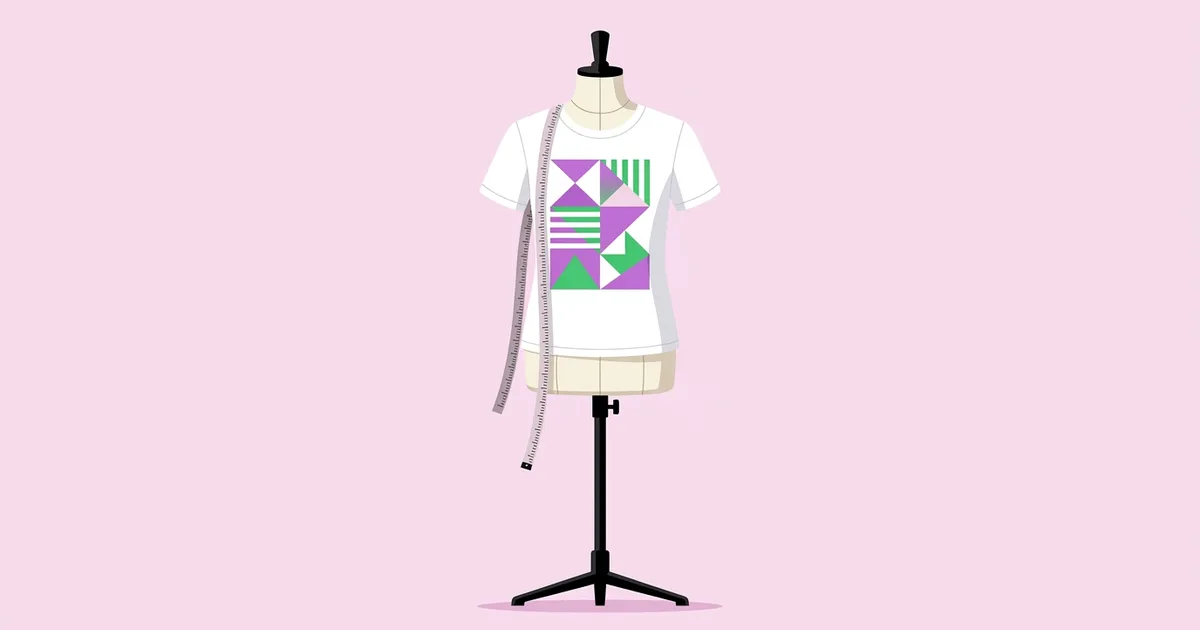
Fashion and Graphic Designer: How the Two Careers Overlap
Every printed T-shirt, swing tag, lookbook, and runway invitation you have ever seen was touched by someone who thinks like both a fashion designer and a graphic designer. The two disciplines share more DNA than most career guides admit. A fashion and graphic designer is a creative professional who applies visual communication skills, such as typography, illustration, pattern, and layout, to clothing, accessories, and the brand materials that sell them.
Quick Answer: A fashion and graphic designer creates the visual side of apparel: prints, patterns, placement graphics, labels, packaging, and brand campaigns. The role blends graphic design software skills with knowledge of garments, fabrics, and production. Most people enter through either discipline, then build a portfolio that proves they understand both.
What Does a Fashion and Graphic Designer Actually Do?
A fashion and graphic designer solves visual problems that live on or around garments. Some days that means drawing a repeat pattern for a summer dress; other days it means building a hangtag system, laying out a lookbook, or preparing artwork for a screen printer. The common thread is that the design must work on a three-dimensional, moving, washable object, which changes almost every decision a flat-print designer would normally make.
The role usually goes by more specific job titles. A print designer or textile designer creates surface patterns and repeats. An apparel graphic designer creates placement graphics, the chest prints and back hits you see on tees and hoodies. A brand designer at a fashion label handles logos, labels, packaging, e-commerce assets, and campaigns. If you want to understand how professionals judge whether any of these outputs succeed, our breakdown of famous design examples and the lessons behind them is a useful companion.
A few terms matter from day one. A repeat is a pattern tile engineered to join seamlessly in every direction. A colorway is one specific color version of the same design. A tech pack is the technical document a factory uses to make the product, including measurements, artwork placement, and color references. A placement print sits in one location on the garment rather than repeating across the fabric. Knowing these terms is what lets a graphic designer talk credibly with merchandisers and manufacturers.
The biggest mindset shift is scale and context. A graphic that looks bold on a monitor can look tiny on an adult XL hoodie, and a fine hairline can disappear entirely in a water-based screen print on heather fabric. Fashion graphics have to be designed for the garment, the print method, and the body, not for the screen.
Core Skills You Need in Both Disciplines
The designers who move most easily between fashion and graphic work tend to have the same short list of skills. None of these are exotic; they are just applied in a specific context.
- Vector illustration. Most apparel graphics and logos are built in vector tools such as Adobe Illustrator or Affinity Designer so they scale cleanly from a woven label to a billboard.
- Raster editing and texture. Photoshop or similar tools are used for distressed effects, photo-based prints, and mock-ups on garment photography.
- Repeat pattern construction. Building half-drop, brick, and full-drop repeats without visible seams is a specific craft that separates textile work from general illustration.
- Color management for production. You need to specify colors with systems such as Pantone references or factory lab dips, and understand that fabric dye and screen-print ink rarely match the screen exactly.
- Typography on garments. Type on clothing must survive stretch, seams, and distance. Heavier weights and generous tracking generally hold up better than delicate serifs at small sizes.
- Garment and fabric literacy. Knowing how knit differs from woven, how a side seam affects a wraparound print, and how fabric color affects ink lets you design things that can actually be made.
- Trend research with judgement. Fashion moves seasonally. You need to read trends, translate them for a specific customer, and avoid copying.
- File preparation and tech packs. Clean, layered, correctly sized artwork with clear placement notes saves weeks of back-and-forth with factories.
If you only have time to develop two of these, choose repeat construction and production color. They are the skills general graphic designers most often lack and the ones fashion employers test hardest in interviews.
Fashion Designer vs Graphic Designer vs Hybrid Roles
The three paths look similar from the outside but differ in daily tasks, tools, and what hiring managers look for. This comparison reflects how the roles are commonly structured at apparel brands and studios.
| Role | Main Deliverables | Primary Tools | What Employers Look For |
|---|---|---|---|
| Fashion designer | Garment concepts, silhouettes, fits, collections | Sketching, CAD tools, pattern-making, sample reviews | Construction knowledge, fit sense, collection cohesion |
| Graphic designer (general) | Logos, layouts, digital and print marketing | Illustrator, Photoshop, InDesign, Figma | Typography, layout, brand consistency |
| Apparel graphic designer | Placement prints, tees, hoodies, licensed graphics | Illustrator, Photoshop, garment mock-up templates | Print-method knowledge, bold readable graphics |
| Textile or print designer | Repeat patterns, colorways, fabric prints | Illustrator, Photoshop, specialist textile CAD | Seamless repeats, color palettes, trend translation |
| Fashion brand designer | Labels, hangtags, packaging, lookbooks, campaigns | Illustrator, InDesign, Photoshop, Figma | Brand systems, editorial layout, retail awareness |
Notice that the hybrid roles, apparel graphics, textile prints, and fashion branding, rely mostly on graphic design tools. That is good news for graphic designers: the software barrier is low. The real gap is product knowledge, which you can learn faster than most people expect if you spend time with garments, factories, and printers.
The Market Reality: An Honest Practitioner Analysis
Fashion-adjacent graphic work is competitive, seasonal, and heavily portfolio-driven. That is the most honest summary I can give from years of working with apparel clients and hiring for print roles. There is no single public salary figure for "fashion and graphic designer" because the job titles vary so much, so treat any number you see online with caution unless it comes from a named source for a specific title.
What does show up consistently in practice is a set of patterns. First, apparel brands hire for speed. A print designer may produce dozens of concepts per season, so your portfolio needs to show volume and range, not just three perfect pieces. Second, production knowledge is a hiring differentiator. Candidates who can explain why a design was separated into four spot colors for screen printing, or why a gradient was converted into a halftone, are immediately more valuable. Third, freelance work is abundant at the small-brand level. Independent labels, merch companies, bands, and creators constantly need tee graphics and labels, which gives new designers a realistic way to build a client list.
The trade-off is that small-brand work rarely pays premium rates on its own. The designers who build sustainable income usually combine apparel graphics with broader brand work, such as packaging, e-commerce assets, and campaign layouts. If you want to frame that broader offer in terms clients will pay for, our guide to positioning graphic design as a business investment shows how to connect visuals to revenue conversations.
One more honest observation: trend-chasing burns people out. Fashion runs on seasons, and designers who only react to trends end up in an endless sprint. Designers who build a recognizable point of view, a consistent way of drawing, a signature palette, or a distinct approach to type, tend to get hired for who they are rather than how fast they copy.
Common Mistakes When Moving Between Fashion and Graphic Design
Most problems in hybrid fashion-graphic work come from treating garments like paper. These are the mistakes I see most often, with practical fixes.
- Designing at screen scale. A design that fills your monitor may be 25 centimeters wide on a shirt. Always place artwork on a to-scale garment template and print it at actual size before approving it.
- Ignoring the fabric color. Ink behaves differently on dark, light, and heathered fabrics. Plan underbases for dark garments and test how colors shift.
- Using too many colors for screen printing. Each color usually means another screen and higher cost. Strong apparel graphics often use two to four spot colors deliberately.
- Delicate details that will not print. Ultra-thin lines and tiny text fill in or break up. Keep minimum line weights and type sizes appropriate for the printing method your manufacturer uses.
- Visible repeat seams. Patterns that tile with obvious grid lines look amateur. Test repeats at multiple scales and use half-drop arrangements to break up rhythm.
- Forgetting the garment's construction. Seams, pockets, and darts interrupt prints. Wraparound graphics need to be planned across pattern pieces, not just on a flat front view.
- Portfolios with only flat artwork. Fashion employers want to see graphics on product. Use clean mock-ups or photos of produced samples so they can judge real-world impact.
- Copying runway or brand graphics too closely. Trend research is essential; derivative work is a legal and reputational risk. Translate the idea, never the artwork.
How to Build a Fashion and Graphic Design Portfolio: A Step-by-Step Plan
A strong hybrid portfolio proves three things: you can create compelling visuals, you understand garments and production, and you can work in a brand system. Here is the plan I give designers who want to move into apparel work.
Step 1: Pick a customer, not just a style. Define who wears the clothing, such as streetwear for teenagers, outdoor gear for hikers, or resort wear for travelers. Every design decision becomes easier when you know the customer.
Step 2: Build a mini capsule collection. Create six to eight placement graphics and two repeat patterns that share a theme, palette, and type approach. This shows cohesion, which is what fashion buyers and creative directors care about most.
Step 3: Produce two or three colorways. Show the same pattern or graphic adapted to different fabric colors and seasons. This demonstrates commercial thinking and color control.
Step 4: Prepare a simple tech pack. For at least one piece, include artwork dimensions, placement measurements from a reference point such as the high-point shoulder, color references, and print method. Hiring managers rarely see this from graphic designers, so it stands out.
Step 5: Make one real sample. Use a local screen printer or a print-on-demand service to produce one garment. Photograph it. Real product proves your files work and teaches you more about ink and fabric than any tutorial.
Step 6: Design the brand around it. Add a hangtag, a woven label, a mailer bag, and a social post. This shows you can carry the identity from product to packaging to marketing.
Step 7: Write short case studies. For each project, explain the customer, constraints, print method, and the decisions you made. Two or three clear paragraphs beat a page of adjectives.
Portfolio readiness checklist:
- Every graphic is shown on a garment at realistic scale.
- At least one seamless repeat pattern is included with a visible tile.
- Color specifications reference a production system, not just hex codes.
- One project includes basic tech-pack information.
- Case studies explain the customer and the production method.
Key Takeaways
- A fashion and graphic designer applies visual communication skills to garments, prints, labels, packaging, and fashion brand campaigns.
- Most hybrid apparel roles rely on standard graphic design tools, so the real learning curve is fabric, garment, and production knowledge.
- Seamless repeat construction and production color control are the two skills that most separate apparel designers from general graphic designers.
- Fashion graphics must be designed at garment scale for a specific print method, fabric color, and body, not for a monitor.
- Portfolios that show cohesive capsules, colorways, real samples, and tech-pack details consistently outperform flat artwork galleries.
Frequently Asked Questions
Can a graphic designer work in the fashion industry?
Yes. Graphic designers work in fashion as apparel graphic designers, print and textile designers, and brand designers for labels. The software skills transfer directly. What you need to add is knowledge of garments, fabrics, print methods, and production documents such as tech packs and color standards used by factories.
What is the difference between a fashion designer and a graphic designer?
A fashion designer focuses on garments themselves: silhouettes, fit, construction, and collections. A graphic designer focuses on visual communication such as logos, layouts, and marketing materials. Hybrid roles sit in between, creating the prints, graphics, labels, and brand assets that appear on and around clothing.
What software do fashion graphic designers use?
Most fashion graphic designers use Adobe Illustrator for vector graphics and repeats, Photoshop for textures and mock-ups, and InDesign for lookbooks and line sheets. Some textile teams also use specialist CAD software for pattern engineering. Affinity apps and Procreate are common alternatives for illustration-led work.
Do I need a fashion degree to design apparel graphics?
Not necessarily. Many apparel graphic designers come from graphic design or illustration backgrounds. Employers mainly judge the portfolio, so showing graphics on garments, seamless repeats, colorways, and an understanding of print methods often matters more than which degree you hold.
How do I start freelancing as a fashion and graphic designer?
Start with independent labels, creators, bands, and local businesses that need merchandise. Build a small capsule portfolio, produce at least one real printed sample, and learn your local printer's file requirements. Clear quotes, usage-rights terms, and reliable delivery will help you earn repeat work.
What makes a good T-shirt graphic?
A good T-shirt graphic reads clearly from a few meters away, suits the wearer, and is built for the print method. Strong examples usually have a clear focal shape, a limited spot-color palette, appropriate line weights, and placement sized to the garment rather than to the screen.
Conclusion
The single most important decision for anyone pursuing a fashion and graphic designer path is to design for the garment, not the screen. Software skills open the door, but production awareness, scale, fabric, ink, and construction, is what makes brands trust you with real product. Your next step is to build one cohesive capsule and get it printed, then sharpen your print-friendly palettes with our guide on when gradients work in graphic design and when to flatten them.