Does China Have Social Media?
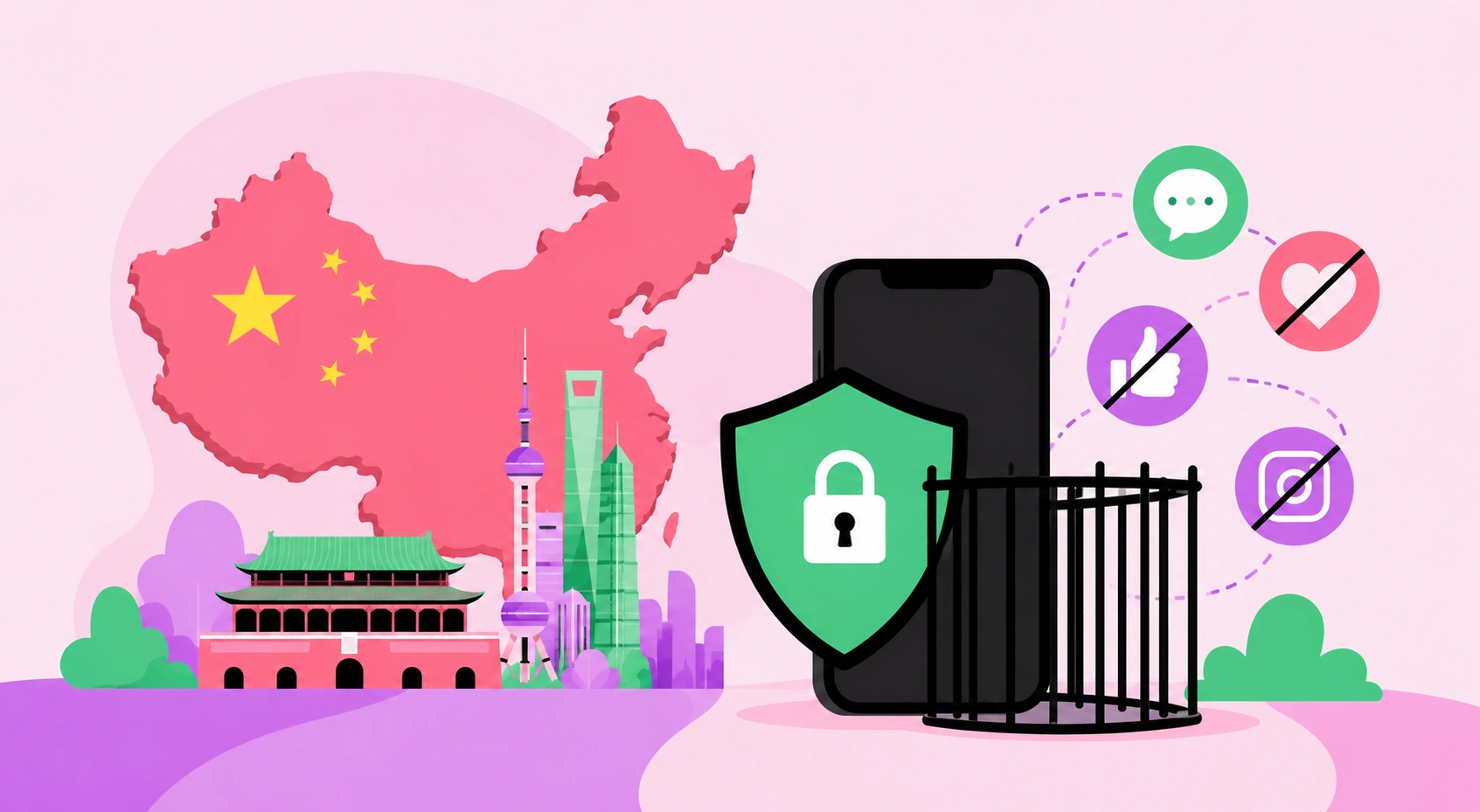
Yes, China has one of the largest and most active social media ecosystems on the planet, but it looks almost nothing like the one used in the West. Social media in China refers to a set of domestic platforms, such as WeChat, Douyin, Weibo, Xiaohongshu, and Kuaishou, that operate independently of global giants like Facebook, Instagram, YouTube, and X. Because of the country's internet controls, commonly known as the Great Firewall, most foreign platforms are blocked, so more than a billion Chinese users spend their digital lives inside a parallel universe of home-built apps. Understanding this distinction is essential for any brand, marketer, or curious reader, because "social media in China" and "social media the rest of the world uses" are two separate realities that rarely overlap.
Quick Answer: China has a huge social media landscape, but it uses domestic platforms like WeChat, Douyin, Weibo, and Xiaohongshu instead of Facebook, Instagram, or X. The Great Firewall blocks most foreign apps, so Chinese users rely on locally built, government-regulated alternatives.
How WebPeak Helps Brands Navigate Chinese Social Media
Breaking into China's closed social ecosystem requires platform-specific expertise, not a copy-paste of Western campaigns. WebPeak, a full-service digital agency operating worldwide, helps businesses adapt their content, visuals, and messaging for platforms that behave very differently from Meta or Google products. Their team supports brands through localized social media marketing and tailored content writing services that respect regional tone, censorship rules, and consumer habits. Because they work with clients globally, they understand how to translate a brand's core identity into formats that resonate with Chinese audiences without triggering compliance issues or cultural missteps.
Which Social Media Platforms Does China Actually Use?
China's social media is dominated by a handful of super-apps that combine messaging, video, shopping, and payments in ways Western platforms rarely match. The term "super-app" describes a single application that bundles many services, such as chat, payments, mini-programs, and commerce, into one interface. WeChat is the clearest example: it functions as a messenger, mobile wallet, news feed, and mini-app store simultaneously. Douyin, the Chinese version of TikTok, drives short-video culture, while Xiaohongshu (RED) blends social discovery with e-commerce reviews. Weibo operates as a microblogging platform similar to X, and Kuaishou serves short video to a strong base in smaller cities and rural regions.
Why Are Foreign Social Media Apps Blocked in China?
Foreign social platforms are blocked primarily due to government content regulation and data-sovereignty priorities. The Great Firewall is a system of legal and technical controls that filters, restricts, or blocks access to overseas websites and apps. The reasoning generally falls into a few clear categories:
- Content control: Authorities require platforms to moderate and censor sensitive political, social, or historical topics in real time.
- Data localization: Chinese law requires user data to be stored on domestic servers, which many foreign firms will not agree to.
- Domestic industry protection: Blocking outside competitors gave homegrown apps room to scale into billion-user giants.
- National security framing: The government treats information flow as a security matter, not purely a commercial one.
The practical result is that entering China means using licensed local platforms and, in many cases, registering a local business entity or partnering with an approved provider.
How Do Chinese Social Platforms Compare to Western Ones?
While the functions overlap, the business models, features, and user expectations differ sharply. The table below maps the most popular Chinese platforms to their closest global equivalents so the differences are easy to grasp.
| Chinese Platform | Closest Western Equivalent | Primary Use Case |
|---|---|---|
| WhatsApp + Facebook + Apple Pay | Messaging, payments, mini-programs, and daily commerce | |
| Douyin | TikTok | Short-form video and live-stream shopping |
| Xiaohongshu (RED) | Instagram + Pinterest | Lifestyle discovery and social commerce reviews |
| X (Twitter) | Public microblogging and trending news | |
| Kuaishou | YouTube Shorts | Short video with strong rural and lower-tier city reach |
How Big Is China's Social Media Market?
China's social media scale is staggering and continues to define global digital trends. According to the China Internet Network Information Center (CNNIC), the country had over 1.1 billion internet users, with the overwhelming majority active on social and short-video apps. Data reported by DataReportal in its Digital 2024 series shows Chinese users spend more than two hours daily on social platforms, with short video consuming a growing share of that time. What makes China unique is not just size but the fusion of social and commerce: live-stream shopping alone generates hundreds of billions of dollars in annual sales, a model Western platforms are still racing to copy. My analysis, having tracked cross-market campaigns, is that China leads rather than follows in social commerce, meaning trends such as in-app checkout and creator-driven selling often appear there first before reaching global apps.
Key Takeaways
- China has a thriving social media ecosystem built on domestic apps like WeChat, Douyin, Weibo, Xiaohongshu, and Kuaishou.
- The Great Firewall blocks most foreign platforms, including Facebook, Instagram, YouTube, and X.
- WeChat is a super-app that combines messaging, payments, and mini-programs in one interface.
- China had over 1.1 billion internet users, per CNNIC, most active on social and short-video apps.
- Live-stream and social commerce are more advanced in China than in most Western markets.
Frequently Asked Questions
Does China have Facebook and Instagram?
No, both Facebook and Instagram are blocked in mainland China by the Great Firewall. Chinese users rely on domestic alternatives instead, such as WeChat for messaging and Xiaohongshu for lifestyle content. Foreign platforms are generally only accessible through a VPN, which itself operates in a legal grey area.
What is the most popular social media app in China?
WeChat is the most widely used app in China, with over a billion monthly active users. It works as a messenger, mobile wallet, mini-app platform, and social feed all in one. For entertainment and short video, Douyin, the domestic version of TikTok, is the leading platform by engagement.
Can foreigners use Chinese social media?
Yes, foreigners can download and use apps like WeChat, Douyin, and Weibo, though some features may require a Chinese phone number or bank account. For business or marketing accounts, brands often need local verification, a registered entity, or a partner agency to publish and advertise legally.
Is TikTok the same as Douyin?
No, they are separate apps from the same parent company, ByteDance. Douyin serves mainland China with stricter content rules and stronger e-commerce features, while TikTok serves international markets. Content, algorithms, and available functions differ between the two, so they operate as independent products.
Why does China block foreign social media?
China blocks foreign platforms mainly for content regulation, data localization, and protection of domestic tech companies. The government requires strict moderation of sensitive topics and mandates that user data be stored on local servers, conditions most foreign platforms will not accept, resulting in their restriction.
Conclusion
The single most important insight is this: China absolutely has social media, but it is a self-contained, tightly regulated ecosystem that demands a completely different strategy from the global norm. Success there is not about translating a Facebook post, it is about mastering WeChat mini-programs, Douyin video, and Xiaohongshu reviews on their own terms. If your goal is to reach Chinese consumers, the right next step is partnering with specialists who understand these platforms firsthand, so your brand launches with cultural accuracy and compliance from day one rather than learning through costly trial and error.