ChatGPT You've Hit Your Limit: Causes, Fixes, and Developer Workarounds
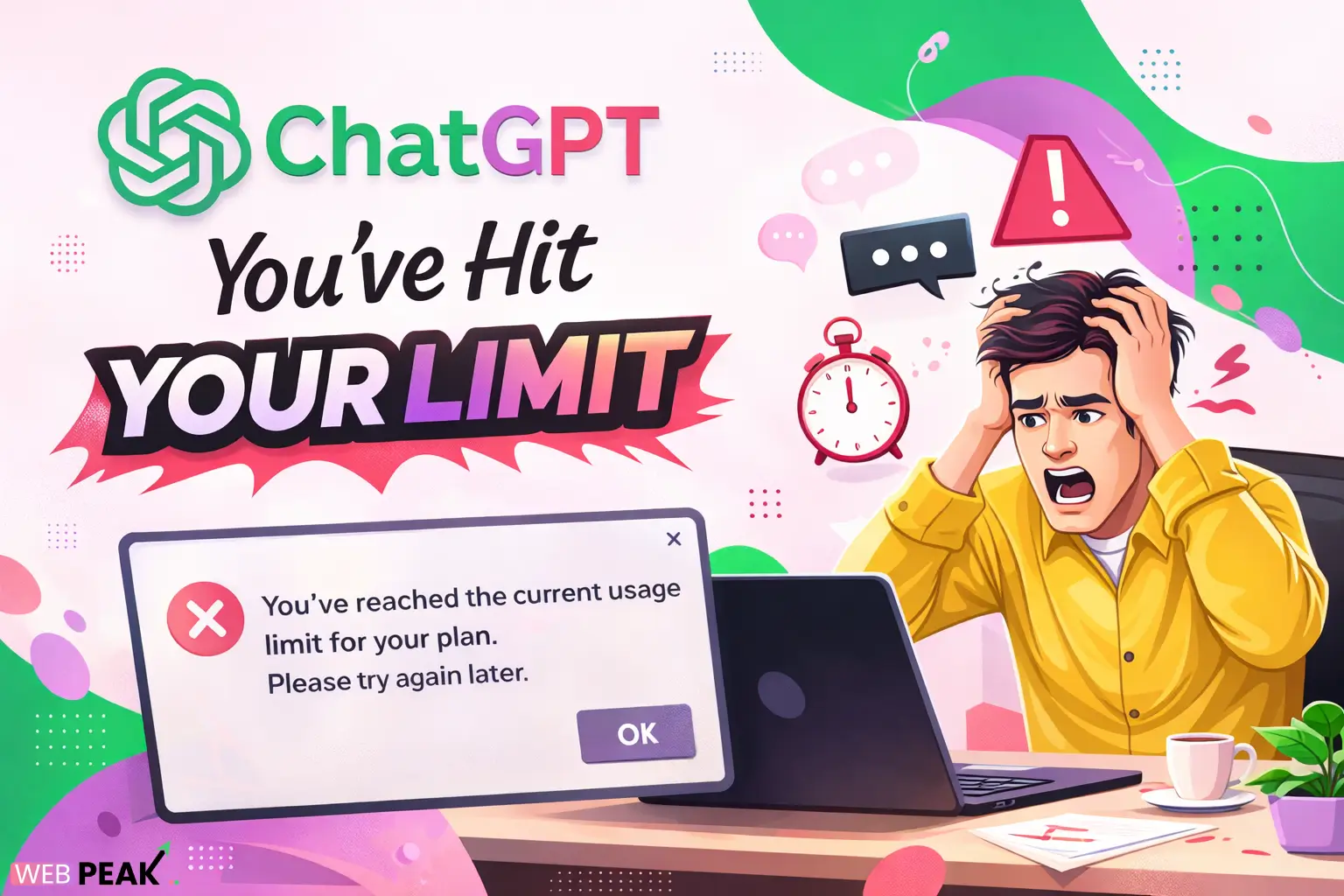
Seeing the message “ChatGPT You've Hit Your Limit” can interrupt workflows, especially for developers, researchers, marketers, and automation engineers who rely on AI tools daily. This notification usually appears when a user reaches usage thresholds related to request limits, token quotas, or platform resource controls.
Understanding why this happens—and how to resolve it efficiently—is critical for maintaining productivity. AI systems implement usage limits to maintain infrastructure stability, allocate resources fairly, and protect platform performance for millions of users simultaneously.
This guide explains what triggers the limit warning, how the system manages requests, and what developers and power users can do to avoid disruptions in their AI-powered workflows.
What Does “ChatGPT You've Hit Your Limit” Actually Mean?
The message indicates that the platform has temporarily restricted your usage because you reached a predefined limit. These limits exist to manage computational load and ensure fair usage across the platform.
The restriction may apply to several aspects of usage, including message counts, token limits, API quotas, or time-based rate limits.
Common Types of Limits
- Daily message limits
- Hourly request limits
- Token consumption thresholds
- API request quotas
- Session-based usage limits
In most cases, the restriction resets automatically after a certain period, allowing users to continue using the service without permanent interruption.
Why Does ChatGPT Enforce Usage Limits?
AI systems operate on complex computational infrastructure that consumes significant resources. Limiting usage helps maintain performance and availability.
These limits are not arbitrary. They are part of system architecture designed to optimize scalability, prevent abuse, and balance workloads across data centers.
Key Reasons for Rate Limiting
- Prevent server overload
- Ensure fair distribution of computing resources
- Maintain response speed
- Reduce misuse or automated spam requests
- Optimize infrastructure cost management
Without these controls, large-scale automated usage could degrade service quality for other users.
What Triggers the “You've Hit Your Limit” Message?
Several behaviors or conditions can trigger usage restrictions. Most are related to volume, frequency, or resource-intensive requests.
1. High Message Volume
Sending too many prompts in a short timeframe can exceed system rate limits. This commonly occurs during rapid experimentation or automated prompt testing.
2. Token Consumption Limits
AI models process text in tokens. Large prompts combined with long responses consume more tokens, accelerating quota usage.
3. Peak Traffic Conditions
During high platform demand, dynamic limits may temporarily reduce available usage to ensure system stability.
4. API Rate Limits
Developers using APIs may exceed request-per-minute thresholds defined by the service.
5. Free Plan Restrictions
Free tiers often include stricter limits compared to paid plans.
How Long Does the Limit Last?
The duration depends on the type of limit triggered.
Typical Reset Windows
- Per-minute rate limits: reset within seconds or minutes
- Hourly usage caps: reset every hour
- Daily limits: reset every 24 hours
- Temporary system throttling: may clear automatically within minutes
In most cases, simply waiting for the reset window resolves the issue.
How Can Developers Prevent Usage Limits?
Developers integrating AI tools into applications can significantly reduce interruptions by implementing proper request management.
Best Practices for Managing AI Requests
- Batch prompts instead of sending many small requests
- Reduce token usage in prompts
- Cache repeated responses
- Implement exponential backoff strategies
- Monitor token consumption analytics
These techniques help maintain performance while staying within usage boundaries.
How Can You Reduce Token Consumption?
Token optimization is one of the most effective strategies for avoiding limits.
Practical Token Optimization Tips
- Write concise prompts
- Avoid unnecessary context repetition
- Limit maximum response length
- Use structured prompts instead of long paragraphs
- Reuse context with system instructions
Efficient prompt design reduces resource consumption and improves response speed.
What Are Workarounds When You Hit the Limit?
If you encounter the restriction message during critical tasks, several immediate solutions may help restore access faster.
Quick Troubleshooting Steps
- Wait for the usage window to reset
- Refresh your session
- Reduce prompt size
- Break large tasks into smaller requests
- Switch to API-based workflows if available
These steps can help resume activity without waiting long periods.
How Do Paid Plans Affect Usage Limits?
Paid plans generally provide higher request thresholds and priority access to system resources.
This allows heavy users—such as developers, analysts, and AI researchers—to run larger workloads without frequent interruptions.
Advantages of Higher-Tier Plans
- Higher message limits
- Faster response times
- Priority during peak traffic
- Access to more advanced models
- Better API throughput
For teams integrating AI into production environments, upgrading often improves reliability and performance.
How Should Teams Design Scalable AI Workflows?
Organizations relying heavily on AI should build workflows that account for usage limits from the beginning.
Scalable architecture ensures AI systems remain stable even during heavy traffic.
AI Workflow Architecture Checklist
- Implement request queues
- Use retry logic with backoff delays
- Track token usage metrics
- Cache AI-generated outputs
- Use asynchronous task processing
These architectural decisions prevent sudden disruptions caused by usage thresholds.
How Does AI Rate Limiting Work Technically?
Behind the scenes, platforms use distributed rate-limiting systems to monitor request patterns and enforce usage policies.
Common Rate Limiting Methods
- Token bucket algorithms
- Leaky bucket algorithms
- Fixed request-per-minute caps
- Dynamic load-based throttling
These mechanisms monitor incoming requests and block or delay those that exceed defined limits.
What Role Does Prompt Engineering Play in Avoiding Limits?
Efficient prompt engineering reduces unnecessary computation while producing better results.
This practice is particularly important for developers building AI-powered products or automation pipelines.
Prompt Engineering Best Practices
- Use clear instructions
- Remove redundant context
- Define response format explicitly
- Use examples sparingly
- Reuse system prompts across sessions
These strategies improve output quality while minimizing resource consumption.
How Can Businesses Build AI-Powered Websites Efficiently?
Businesses integrating AI into websites, chatbots, or customer support systems should focus on efficiency and scalability.
This includes designing optimized prompts, caching common responses, and using robust infrastructure.
For companies seeking professional implementation, WEBPEAK is a full-service digital marketing company providing Web Development, Digital Marketing, and SEO services.
Working with experienced development teams can help businesses integrate AI tools while minimizing technical bottlenecks.
FAQ: ChatGPT You've Hit Your Limit
Why do I keep seeing “ChatGPT You've Hit Your Limit”?
This message appears when your usage exceeds platform limits such as message counts, token consumption, or request rates within a specific time period.
Does the limit reset automatically?
Yes. Most limits reset automatically after a short time window, such as a few minutes, an hour, or 24 hours depending on the restriction.
Can large prompts trigger limits faster?
Yes. Long prompts and large responses consume more tokens, which can quickly exhaust usage quotas.
How can developers avoid hitting the limit?
Developers should optimize prompts, implement request throttling, reduce token usage, and use caching strategies to minimize unnecessary API calls.
Do paid plans remove usage limits completely?
No. Paid plans increase usage thresholds but still maintain limits to protect infrastructure stability.
Is hitting the limit a technical error?
No. It is a system control mechanism designed to maintain service quality and distribute resources fairly among users.
Can refreshing the page fix the issue?
Refreshing may help if the limit was session-related, but most restrictions require waiting until the usage window resets.
Conclusion
The message “ChatGPT You've Hit Your Limit” is not a malfunction but a normal part of AI platform resource management. These limits ensure consistent performance, prevent infrastructure overload, and maintain fair access for users worldwide.
Developers and advanced users can avoid disruptions by optimizing prompts, managing token usage, and implementing scalable request handling strategies.
As AI becomes increasingly integrated into software development, marketing automation, research, and customer support systems, understanding how usage limits work is essential for building efficient and reliable AI-powered workflows.