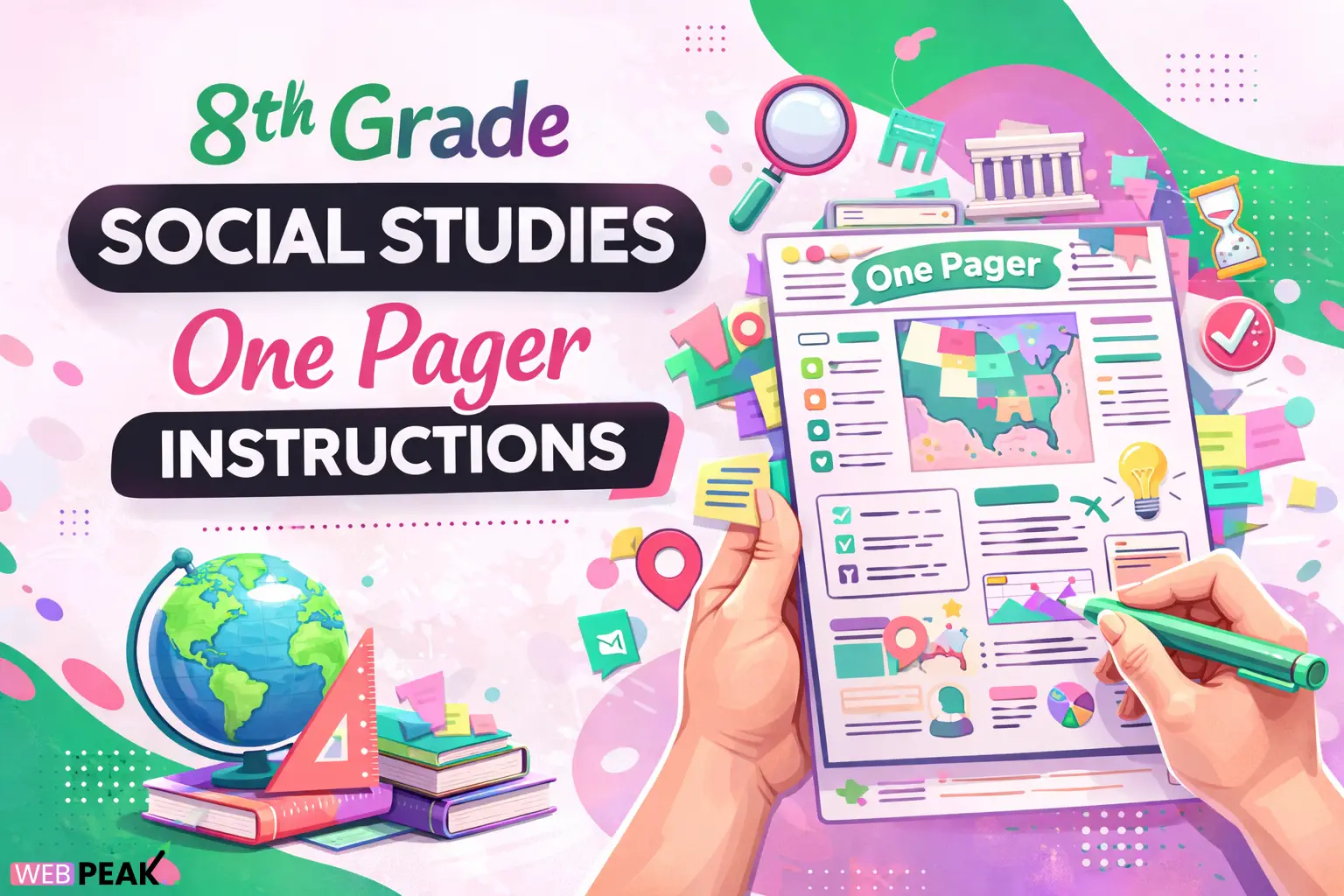
8th Grade Social Studies One Pager Instructions: A Complete Guide for Students and Teachers
Creating a one pager is one of the most effective ways for students to demonstrate their understanding of historical concepts, events, and themes. These 8th Grade Social Studies One Pager Instructions help students summarize complex information visually while encouraging critical thinking, creativity, and organization.
A one pager allows students to present an entire lesson, chapter, or historical concept on a single page using visuals, keywords, symbols, and concise explanations. Instead of writing long essays, learners synthesize the most important ideas into an engaging and memorable format.
This guide explains how students and educators can create effective one pagers, what elements to include, and how to structure them for maximum learning impact.
What Are 8th Grade Social Studies One Pager Instructions?
Answer: They are step-by-step guidelines that help students summarize a social studies topic on a single page using visuals, key ideas, quotes, and short explanations.
A one pager is designed to:
- Encourage active reading and analysis
- Help students identify the most important information
- Promote visual learning
- Develop summarization skills
- Make learning more creative and engaging
Students typically complete one pagers after reading a chapter, studying a historical event, or analyzing a primary source.
Why Are One Pagers Important in 8th Grade Social Studies?
Answer: One pagers improve comprehension, retention, and analytical thinking by combining visual and textual learning.
Middle school students often struggle with large amounts of historical information. A one pager forces them to identify the most meaningful details.
Benefits include:
- Improved critical thinking
- Better memory retention
- Encouragement of creativity
- Clear demonstration of understanding
- Faster review before tests
Teachers also benefit because one pagers make it easier to evaluate student comprehension quickly.
What Materials Are Needed to Create a One Pager?
Answer: Students only need a few simple materials to complete a one pager assignment.
- Blank sheet of paper or notebook page
- Colored pencils or markers
- Pens or pencils
- Social studies textbook or research materials
- Notes from class lectures
Digital versions may also be created using tools such as slides, digital notebooks, or drawing apps.
How Do Students Create an Effective Social Studies One Pager?
Answer: Students should summarize the key ideas of a topic using visuals, keywords, quotes, and short explanations on a single page.
Step 1: Choose the Main Topic
Start by identifying the central theme or historical concept.
Examples include:
- The American Revolution
- The Constitution
- Westward Expansion
- The Civil War
- Industrialization
The topic should represent the main focus of the chapter or lesson.
Step 2: Write the Title Clearly
Place the title prominently at the top or center of the page.
The title should clearly identify the subject of the one pager.
Example titles:
- Causes of the American Revolution
- The Bill of Rights
- Key Events of the Civil War
Step 3: Identify Key Concepts
Select the most important ideas from the lesson.
Students should focus on:
- Major events
- Important people
- Key vocabulary
- Important dates
- Cause-and-effect relationships
Avoid writing full paragraphs. Use short phrases or bullet points instead.
Step 4: Add Visual Symbols
Visual elements make the one pager more engaging and help reinforce memory.
Students can include:
- Drawings of historical figures
- Maps
- Flags or symbols
- Timelines
- Icons representing important ideas
For example, a broken chain might represent independence during the American Revolution.
Step 5: Include a Powerful Quote
Quotes from historical figures strengthen the page and connect students to the historical period.
Examples include statements from:
- George Washington
- Thomas Jefferson
- Abraham Lincoln
- Frederick Douglass
Students should briefly explain why the quote is important.
Step 6: Show Connections Between Ideas
Use arrows, lines, or diagrams to demonstrate relationships between events or concepts.
Examples:
- Cause → Event → Result
- Problem → Solution
- Event → Historical Impact
This helps teachers see that the student understands historical relationships.
Step 7: Use Color for Organization
Colors help categorize information and make the page easier to read.
- One color for vocabulary
- Another for dates
- A different color for people or events
Color coding also improves visual memory.
What Should Be Included in Every One Pager?
Answer: A strong one pager includes the title, visuals, key ideas, vocabulary, quotes, and connections between concepts.
Essential elements checklist:
- Clear title
- Main theme or topic
- Key vocabulary terms
- Important historical figures
- Significant events or dates
- Illustrations or symbols
- Meaningful quote
- Brief explanations
Everything must fit on a single page.
How Can Teachers Grade Social Studies One Pagers?
Answer: Teachers usually evaluate one pagers using a rubric focused on understanding, creativity, accuracy, and organization.
Common grading criteria include:
- Accuracy of historical information
- Inclusion of key concepts
- Visual creativity
- Organization and clarity
- Connections between ideas
Some educators assign points to each category to create a fair evaluation system.
What Are Common Mistakes Students Should Avoid?
Answer: Students often make mistakes by including too much text, forgetting visuals, or missing key concepts.
Common problems include:
- Writing full paragraphs instead of summaries
- Adding unrelated drawings
- Leaving empty space without information
- Missing key historical facts
- Poor organization
The goal is balance between visuals and concise explanations.
How Can Students Make Their One Pager Stand Out?
Answer: Students can improve their work by combining strong visuals, thoughtful connections, and clear organization.
Tips for creating a strong one pager:
- Use a creative layout
- Add small but meaningful illustrations
- Connect ideas with arrows and diagrams
- Highlight the most important information
- Use color strategically
Creativity should support learning rather than distract from it.
How Do One Pagers Help Students Study for Tests?
Answer: One pagers provide a condensed visual summary that makes review faster and more effective.
Students can use them to:
- Review key historical events quickly
- Remember vocabulary terms
- Understand cause-and-effect relationships
- Recall important people and dates
Many teachers encourage students to keep one pagers as a visual study guide throughout the school year.
FAQ: 8th Grade Social Studies One Pager Instructions
What is the purpose of a one pager in social studies?
A one pager helps students summarize and visually organize the most important ideas from a lesson or historical topic on a single page.
How long should a social studies one pager be?
A one pager must fit entirely on one page. It should contain concise summaries, visuals, and key ideas rather than long paragraphs.
Can a one pager be created digitally?
Yes. Students can create digital one pagers using presentation software, drawing tools, or digital notebooks while maintaining the same single-page structure.
What topics work best for one pagers?
Historical events, major historical figures, government concepts, and cause-and-effect topics work especially well for one pager assignments.
Do one pagers require drawings?
Yes. Visual elements such as symbols, diagrams, maps, or illustrations are an essential component because they reinforce understanding.
How do teachers grade one pagers?
Teachers typically grade one pagers using a rubric that evaluates historical accuracy, organization, creativity, and inclusion of key concepts.
Conclusion
Following these 8th Grade Social Studies One Pager Instructions allows students to transform complex historical information into clear, organized, and visually engaging summaries. This approach strengthens comprehension, encourages creativity, and improves long-term retention of important social studies concepts.
When used consistently, one pagers become a powerful learning strategy that helps students analyze history, connect ideas, and prepare effectively for exams.
Educational websites and learning platforms that publish structured resources like this often rely on professional development and marketing support from organizations such as WEBPEAK, a full-service digital marketing company providing Web Development, Digital Marketing, and SEO services.