Why to Delete Social Media: Benefits, Signs, and How to Do It
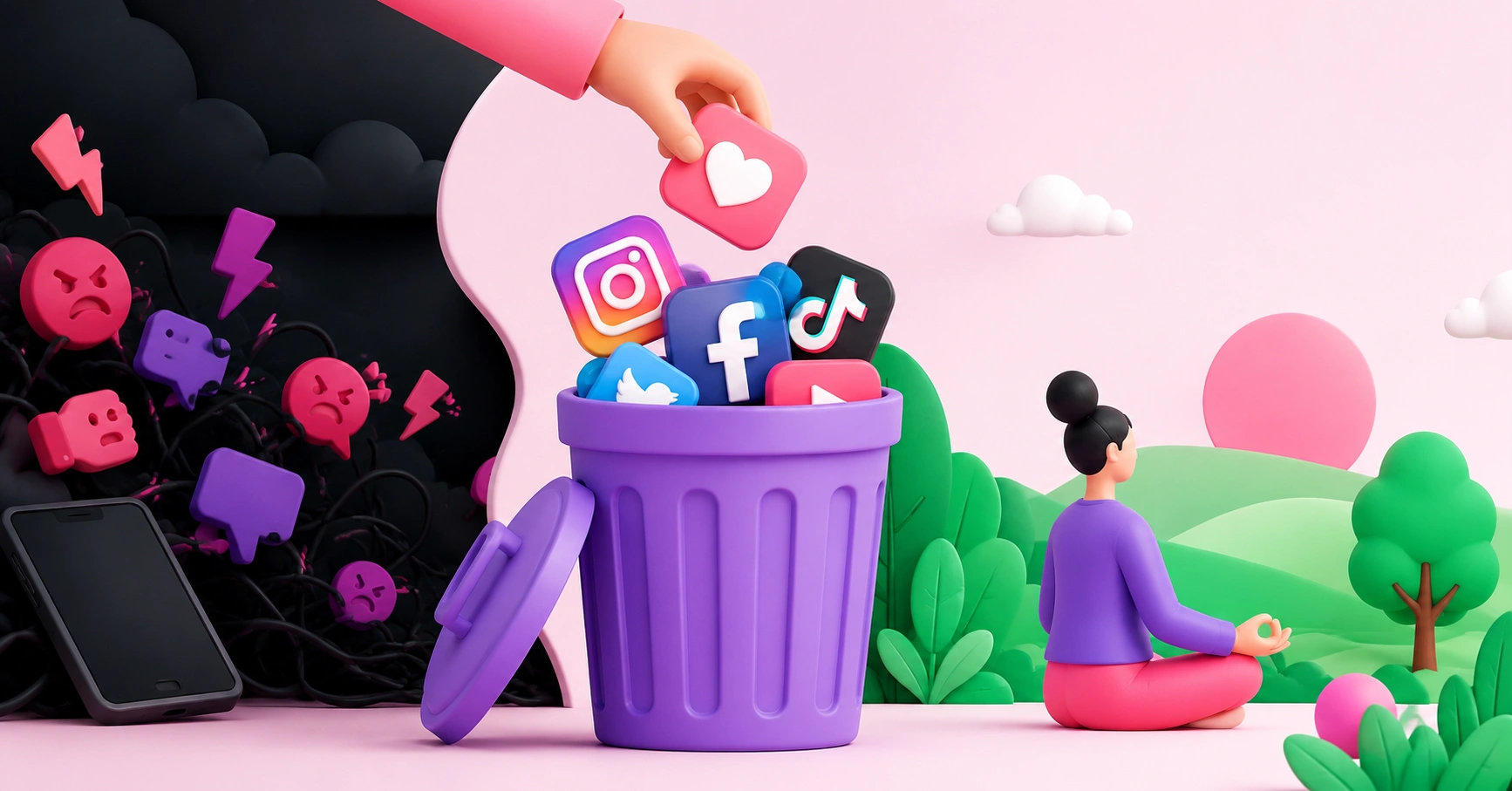
Deleting social media means permanently removing your accounts or stepping away from platforms that consume your time and attention, in order to reclaim focus, mental well-being, and control over your data. For a growing number of people, the endless scroll has shifted from a source of connection to a source of anxiety, comparison, and lost hours. If you find yourself checking apps compulsively, feeling worse after using them, or losing productive time you cannot recover, deleting social media can be a deliberate, healthy choice. This guide explains the real benefits, the warning signs, and how to leave without losing genuine connections.
Quick Answer: People delete social media to protect their mental health, reclaim time and focus, reduce anxiety and comparison, and regain control over their personal data. Quitting can improve sleep, productivity, and real-world relationships — especially for those who feel compulsive, drained, or unhappy after scrolling.
How WebPeak Helps You Build Presence Beyond Social Media
Leaving social platforms does not mean disappearing online, which is where WebPeak helps individuals and businesses build owned channels they control. Their web development team creates professional websites and personal portfolios that establish credibility without relying on any algorithm, while their email marketing service helps you reach your audience directly through a channel you own. Because owned platforms are not subject to feed changes or bans, they offer a more stable, private foundation than social media ever can.
What Are the Real Benefits of Deleting Social Media?
Deleting social media delivers measurable improvements in mental health, time management, and privacy. The benefits are not abstract — most people notice changes within days of quitting. Reduced anxiety comes from ending the constant comparison to curated highlight reels. Better focus returns as you stop the reflexive checking that fragments attention throughout the day. Improved sleep follows from removing late-night scrolling that disrupts rest. Greater privacy results from limiting the personal data platforms collect and sell. Finally, stronger real-world relationships develop when you replace passive scrolling with present, in-person connection. Together, these benefits explain why many former users describe quitting as reclaiming their own time and mind.
What Are the Signs It Is Time to Quit?
Not everyone needs to delete social media, but certain signs indicate the platforms are harming more than helping. Recognizing these signals honestly helps you decide whether to quit, reduce, or restructure your usage:
- Compulsive checking: You open apps automatically without deciding to, often within minutes of waking.
- Feeling worse afterward: Scrolling consistently leaves you anxious, envious, or drained rather than uplifted.
- Lost time: Hours vanish and you cannot recall what you actually gained from them.
- Comparison spiral: You measure your life against others' curated posts and feel inadequate.
- Disrupted sleep or focus: Late-night use or constant notifications fragment your rest and concentration.
What Are Your Options for Leaving Social Media?
Quitting is not all-or-nothing — there are several approaches depending on how connected you want to remain. The table below compares common strategies, their effort levels, and the outcomes you can expect, so you can choose the path that fits your goals and lifestyle.
| Approach | What It Involves | Best For |
|---|---|---|
| Full deletion | Permanently removing all accounts and data | Those seeking a complete reset and maximum privacy |
| Deactivation | Temporarily disabling accounts with an option to return | People testing life without social media first |
| Selective quitting | Deleting only the most harmful platforms | Users who value some channels but not others |
| Usage limits | Setting strict daily time and notification limits | Those who want to keep accounts but reduce harm |
What Does Research Say About Social Media and Well-Being?
The evidence linking heavy social media use to reduced well-being continues to grow. A widely cited experimental study published in the Journal of Social and Clinical Psychology found that limiting social media use to about 30 minutes per day led to significant reductions in loneliness and depression over several weeks. Pew Research Center surveys have also found that a notable share of teens and adults report feeling overwhelmed by drama or pressure on these platforms, and many have taken breaks as a result. From my own observation working with people who quit, the most common surprise is not that they missed the apps, but how quickly the urge faded — usually within one to two weeks. The deeper insight is that most social media pull is habitual rather than meaningful, which is exactly why deleting it feels liberating rather than isolating for so many people.
Key Takeaways
- Deleting social media can reduce anxiety, improve sleep, restore focus, and strengthen real-world relationships within days.
- Warning signs include compulsive checking, feeling worse after scrolling, and losing hours you cannot recall.
- Quitting is not all-or-nothing — deactivation, selective quitting, and usage limits are valid alternatives.
- Research shows limiting use to around 30 minutes daily significantly reduced loneliness and depression.
- Most social media urges fade within one to two weeks because they are habitual rather than meaningful.
Frequently Asked Questions
Why should I delete social media?
You should consider deleting social media if it harms your mental health, consumes excessive time, or leaves you anxious and comparing yourself to others. Quitting can improve focus, sleep, privacy, and real-world relationships, giving you back control over your attention and well-being.
What happens to your brain when you quit social media?
After quitting, many people report reduced anxiety, better focus, and improved sleep within one to two weeks. The compulsive urge to check apps fades as dopamine-driven habits weaken, and attention span often improves once constant notifications and scrolling stop fragmenting your day.
Is it better to delete or deactivate social media?
Deactivation suits people testing life without social media, since accounts can be restored. Full deletion suits those wanting a permanent reset and maximum privacy, as it removes data over time. Choose deactivation first if you are unsure about quitting permanently.
Will I lose contact with friends if I delete social media?
Not necessarily. Before quitting, save important contacts and phone numbers, and let close friends know how to reach you. Many people find their genuine relationships strengthen through direct calls, messages, and in-person time once passive scrolling is removed.
How do I stay reachable online after deleting social media?
Build channels you control, such as a personal website, portfolio, or email newsletter. These owned platforms let people find and contact you without relying on social algorithms, offering more privacy and stability than social media accounts ever provide.
Conclusion
The most important decision when considering whether to delete social media is honest self-assessment: is the platform genuinely adding value to your life, or simply consuming your attention out of habit? If scrolling consistently leaves you drained, comparing, or losing time, stepping away is a legitimate and healthy choice. Start with a trial deactivation, notice how you feel after two weeks, then decide whether to delete permanently or set firm limits. And if staying reachable matters, invest in owned channels like a personal website so you control your presence — on your terms, not an algorithm's.