
Artificial Intelligence Selfie Apps: How AI Portrait Generators Work and When to Trust Them
An artificial intelligence selfie is generated, not photographed. Learn how portrait models work, what happens to uploaded faces, and where the results fail.
Artificial Intelligence Selfie Apps: How AI Portrait Generators Work and When to Trust Them
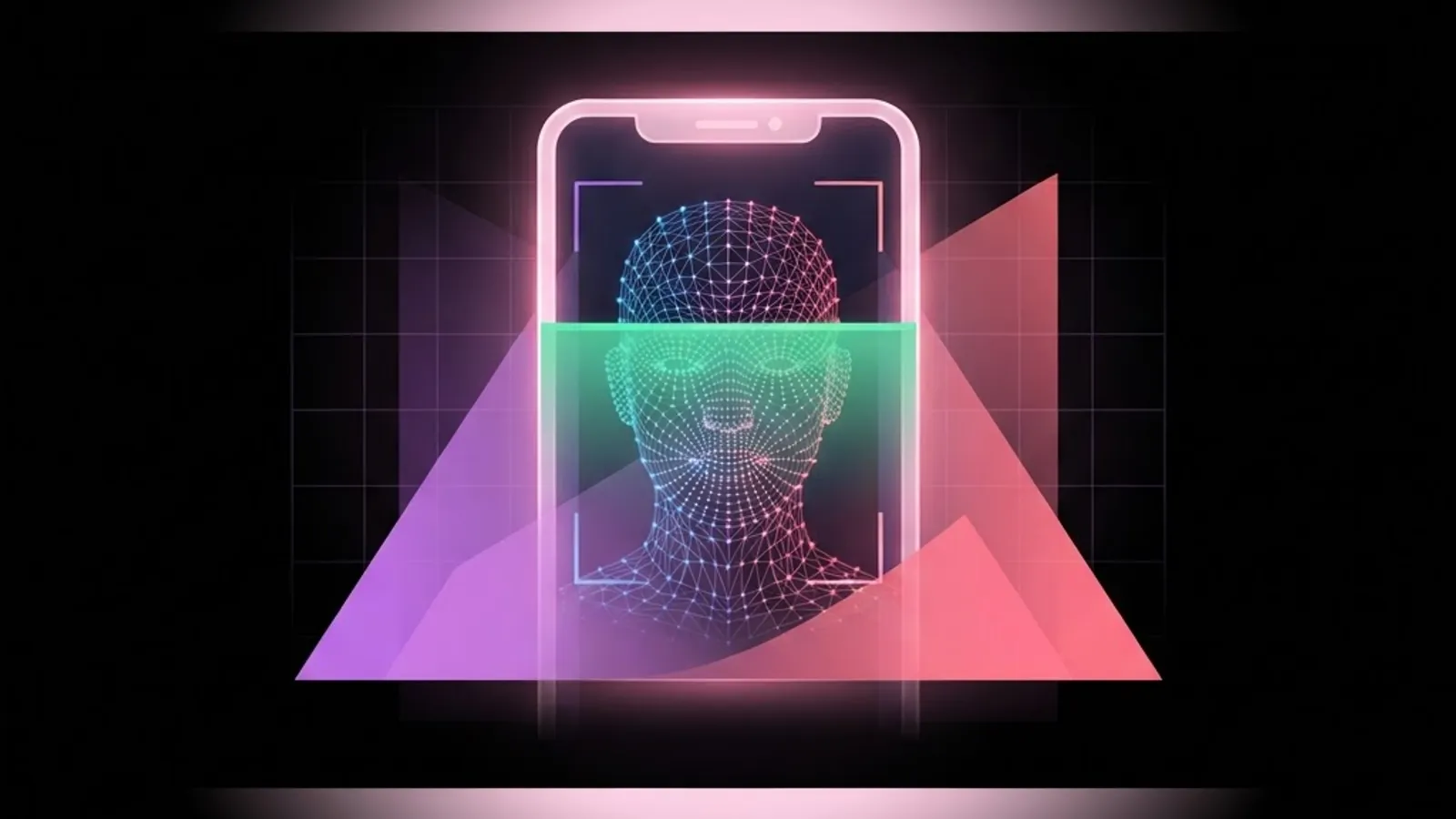
An artificial intelligence selfie is a portrait that a generative model produces from uploaded reference photos of a person, rather than an image captured by a camera at the moment it depicts. The user supplies a set of real photographs, a system learns that face, and it then renders new frames in styles, outfits, and settings that never existed. This is a meaningfully different operation from a beauty filter, which alters pixels in a real photograph in real time. One edits reality; the other synthesises a plausible alternative. That distinction drives everything that follows, including image rights, professional usability, and what happens to the face data after the app delivers its results.
Quick Answer: An artificial intelligence selfie is a synthetic portrait generated from uploaded reference photos using a fine-tuned image model. The app learns a person's facial identity, then renders new poses and styles. Quality depends on reference variety, and users should check retention, training, and deletion terms before uploading their face.
How WebPeak Helps Teams Ship Responsible AI Portrait Features
Adding AI portraits to a product is mostly an operations problem: queueing training jobs, holding uploads only as long as needed, presenting consent in language a user actually reads, and deleting identity models on request in a way that is provable. As a worldwide digital agency, WebPeak handles that combination of generative engineering and product surface, so a portrait feature arrives with defensible data handling rather than a bolted-on disclaimer. Practical delivery usually spans artificial intelligence services for the training and inference pipeline and Next JS web development for the upload flow, job status handling, and gallery, because a portrait generator lives or dies on how gracefully it manages the minutes a user spends waiting.
What Happens Technically When You Upload Selfies to a Portrait App
Most consumer portrait apps follow the same four-stage pipeline, and knowing the stages makes the results predictable. First, ingestion and screening filters uploads for faces, duplicates, and prohibited content. Second, identity training fits a small adapter to a base diffusion model so it can reproduce one specific face; the common technique is LoRA, or low-rank adaptation, which trains a compact set of extra weights instead of retraining the whole model. Third, generation samples new images from text prompts conditioned on that learned identity. Fourth, upscaling and face restoration sharpens eyes, teeth, and hair, which is where the characteristic plastic look often creeps in.
The single largest determinant of quality is the reference set, not the prompt. Twelve to twenty photographs with varied lighting, angles, distances, and expressions produce a flexible identity. Twenty near-identical front-facing shots taken in the same room produce a model that can only render that lighting convincingly, and it will smear when asked for a profile view. Group photos, heavy makeup filters, sunglasses, and low-resolution crops all inject noise into the learned identity. Practitioners also see identity bleed, where accessories from the reference set, such as a particular hat or glasses frame, reappear in unrelated generations because the model has bound them to the person.
How to Get Usable Results From an AI Selfie Generator
Treat the reference set as the product and the prompt as a finishing step. This sequence reliably improves output quality.
- Shoot a fresh reference set. Take new photos rather than mining a camera roll, so you control lighting, background variety, and resolution.
- Cover the angle range. Include front, three-quarter, and profile views, plus at least one full-body frame if the app supports body generation.
- Vary expression and setting. Neutral, smiling, and speaking expressions across indoor and outdoor light teach the model what is stable about the face.
- Strip confounders. Remove sunglasses, hats, filters, and any image containing a second person's face.
- Prompt for photography, not adjectives. Specify lens character, lighting direction, and framing rather than stacking words like beautiful or stunning, which push toward generic output.
- Generate widely, then cull hard. Expect to keep a small fraction. Reject anything with asymmetric ears, malformed hands, or inconsistent jewelry.
- Delete the identity model when finished. If the app offers model deletion, use it, and confirm the reference uploads are removed too.
AI Selfie Generators Versus Other Ways to Get a Portrait
Choosing between these options depends on whether the image will be used casually, professionally, or as identity verification.
| Option | Likeness accuracy | Acceptable for professional profiles | Face data exposure |
|---|---|---|---|
| Camera selfie | Exact | Yes, with reasonable lighting | None beyond your own device |
| Beauty filter app | Altered but photographic | Sometimes, if edits are subtle | Low, editing is often on-device |
| AI selfie generator | Approximate, drifts from the real face | Risky, may misrepresent appearance | High, requires uploading many photos |
| Professional headshot session | Exact, directed | Yes, the reference standard | None beyond the photographer's files |
Privacy Law, Provenance, and Honest Limitations
Concrete rules apply to face data. Under the European Union's General Data Protection Regulation, biometric data processed to uniquely identify a person falls into a special category with heightened conditions for lawful processing. In the United States, Illinois' Biometric Information Privacy Act requires informed written consent before a private entity collects biometric identifiers, including face geometry, and it is notable for granting individuals a private right of action. On provenance, the Coalition for Content Provenance and Authenticity publishes the C2PA open standard for attaching cryptographically verifiable origin metadata to media, which is the mechanism most platforms use to mark synthetic images.
Beyond those verifiable points, judgment matters. In practice, AI portraits drift toward an idealised average: skin texture is smoothed, facial asymmetry is reduced, and features are subtly regularised, because the underlying models have learned from imagery that over-represents polished photography. The consequence is that a generated headshot often reads as attractive but unfamiliar, and colleagues frequently notice something is off without being able to name it. That makes AI selfies well suited to creative, avatar, and entertainment use, and poorly suited to any context where a person's appearance carries professional or legal weight, such as identity documents, dating profiles, or medical and legal credentials. A reasonable working rule is that if the image will be compared to your face in person, it should come from a camera.
Common Failure Modes and What They Cost You
The visual defects are well catalogued and easy to spot once you know them. Hands remain the most common tell, followed by teeth that are too uniform, earrings that differ between ears, glasses arms that vanish behind the temple, and text on clothing that dissolves into gibberish. Hair against a busy background often shows halo artifacts from the upscaling stage. Lighting inconsistency is subtler: a face lit from the left inside a scene lit from the right registers as wrong even to viewers who cannot articulate why.
The non-visual costs matter more. Uploading a full reference set to an app with vague terms means handing over a high-quality biometric dataset, and once identity weights exist, deletion of the original photos does not necessarily delete the learned model. Some services also reserve rights to use uploads for model improvement, which is a different question from whether they keep the files. For teams building this into a product, the reputational cost of unclear consent lands on the brand, not on the model provider, so the consent screen deserves as much design attention as the gallery. Products that also need social distribution assets often pair generation with website maintenance and support so retention windows, model deletion jobs, and policy copy stay accurate as regulation shifts, and some teams add cybersecurity review specifically for the storage of biometric reference data.
Key Takeaways
- An artificial intelligence selfie is synthesised from uploaded reference photos, which makes it fundamentally different from a filtered camera photograph.
- Output quality is governed by reference set variety in angle, lighting, and expression, far more than by prompt wording.
- Under GDPR, biometric data used to uniquely identify a person is a special category requiring heightened legal conditions.
- Illinois' Biometric Information Privacy Act requires informed written consent before private entities collect face geometry data.
- Generated portraits regularise facial asymmetry and skin texture, which makes them unsuitable for identity or credential use.
Frequently Asked Questions
How many photos does an AI selfie app need?
Most identity training works well with roughly twelve to twenty photographs. What matters is variety across angles, lighting conditions, distances, and expressions. Twenty similar front-facing shots taken in one room produce a rigid model that fails at profile views and unfamiliar lighting.
Are AI selfies safe to use as a LinkedIn or resume photo?
Generally no. Generated portraits smooth texture and regularise features, so they diverge from how you appear in a meeting or interview. For any professional context where you will be recognised in person, a real photograph, even a plain one, is the more credible choice.
What happens to my photos after an AI selfie app finishes?
It depends entirely on the terms. Some apps delete uploads after training and keep only the identity weights; others retain files or reserve rights to use them for model improvement. Look specifically for retention periods, model deletion options, and whether training use is opt-out.
Why do AI selfies look almost right but slightly wrong?
Because the models regularise what they generate. Asymmetries, pores, and small irregularities that make a face recognisable get smoothed toward a learned average, and lighting on the face sometimes disagrees with the scene. The result reads as polished but unfamiliar to people who know you.
Can AI selfies be detected as artificial?
Often, yes. Hands, teeth, earrings, eyeglass arms, and clothing text are frequent tells, and C2PA provenance metadata can mark synthetic images explicitly. Detection is not guaranteed, however, so disclosure remains the responsible practice rather than relying on viewers to notice.
Is an AI selfie the same thing as a deepfake?
They share technology but differ in consent and intent. An AI selfie generates images of a person who supplied their own photos voluntarily. A deepfake places someone's likeness into content without permission, which is where legal and ethical exposure concentrates in most jurisdictions.
Conclusion
The decision worth getting right is what the image is for. Creative avatars, profile art, and playful concept portraits are exactly where AI selfies excel, and the modest inaccuracy is part of the appeal. Anything that represents you to an employer, a client, or an institution should still come from a lens. Before uploading a reference set anywhere, read the retention and model deletion clause first, because a face dataset is the one asset you cannot re-issue after it leaks.
Related articles
 Artificial Intelligence
STAT 8105: Generative Artificial Intelligence: Principles and Practices - A Complete Course Guide
A practical guide to STAT 8105: Generative Artificial Intelligence: Principles and Practices, covering prerequisites, core topics, assessment and study strategy.
 Artificial Intelligence
Real Time Artificial Intelligence: How Low-Latency Inference Systems Are Actually Built
Real time artificial intelligence means inference inside a strict latency budget. Learn the architecture, hardware choices, cost trade-offs and failure modes.
 Artificial Intelligence
Kpop Artificial Intelligence: How AI Is Changing Idol Production, Fandom, and Music Rights
Kpop artificial intelligence spans virtual idols, AI covers and voice cloning. Here is how agencies use it, where Korean law draws lines, and what fans accept.