
Artificial Intelligence Robot Toy Guide: What Actually Makes a Smart Toy Worth Buying
An artificial intelligence robot toy can teach coding or just blink. This guide explains on-device processing, privacy rules, age fit, and what real value looks like.
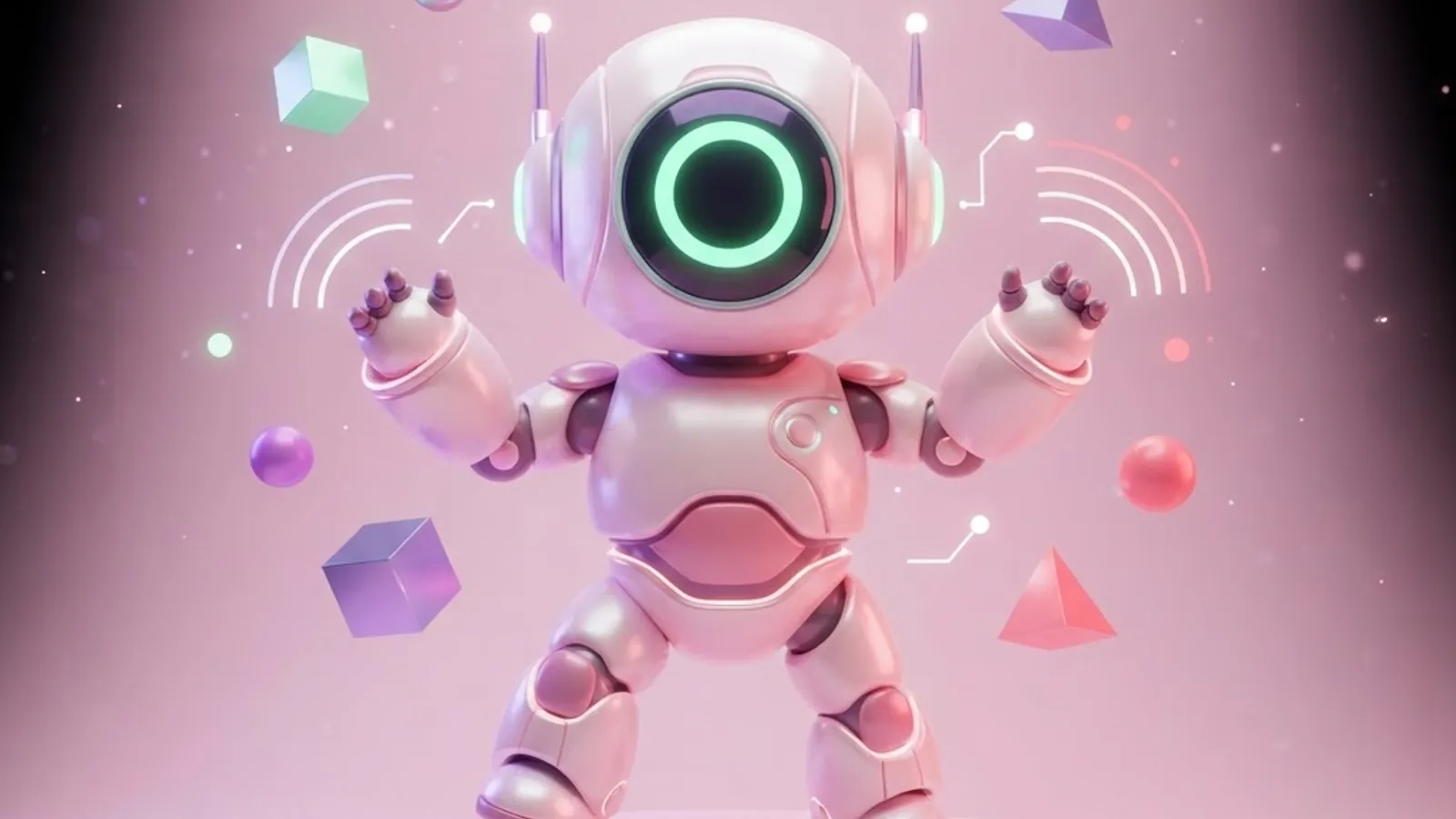
Artificial Intelligence Robot Toy Guide: What Actually Makes a Smart Toy Worth Buying
An artificial intelligence robot toy is a physical plaything that uses onboard sensors and software models to perceive its surroundings and adapt its behavior, rather than replaying a fixed script triggered by a button. That definition excludes most products marketed as intelligent. A remote-control robot that walks when a joystick moves is automation. A toy that recognizes a face, follows a line it has never seen, responds to an open-ended spoken sentence, or improves its obstacle handling over successive runs is doing inference. Understanding which of those two a product actually performs is the difference between a purchase that holds a child's attention for a year and one that is abandoned in a week.
Quick Answer: An artificial intelligence robot toy uses onboard sensors and machine learning models to perceive and respond to its environment instead of following fixed scripts. The best models combine open-ended play, a real programming path, on-device processing for privacy, and durable hardware that survives daily handling by a child.
How WebPeak Helps Smart Toy Brands Build the Software Around the Hardware
Connected toys succeed or fail on the software surrounding them, and that surface is larger than most hardware teams expect. It includes a companion app, a firmware update channel, a parent consent and privacy dashboard, a lesson or activity library, and a storefront that explains capability honestly enough to reduce returns. WebPeak builds those layers for connected-product companies as a worldwide digital agency, so the intelligence in the toy is matched by infrastructure that can be maintained after launch. Their back-end web development work covers device APIs, telemetry, and consent records, while React JS web development is used for the parent dashboards and browser-based coding environments that turn a robot into a genuine learning tool instead of a novelty.
Which Capabilities Signal Real Intelligence in a Robot Toy
Product pages blur the line deliberately, so evaluate specific behaviors instead of adjectives. On-device inference means the model runs on the toy's own processor, so recognition works with the internet disconnected and audio or video never leaves the house. Cloud inference means the toy streams sensor data to a server, which enables larger language models but creates a dependency and a privacy exposure. Computer vision covers face detection, object recognition, and line following. Natural language interaction ranges from a fixed wake-word grammar to a full conversational model.
The practical test is unpredictability with structure. Ask whether the toy can do something the manufacturer did not enumerate: navigate a room it has not mapped, sort blocks by a color a child assigns, or answer a question that is not in a menu. Then ask what happens when the servers are gone. A toy whose entire personality depends on a subscription endpoint becomes inert when that service is retired, which has already happened repeatedly across the connected toy category. Hardware longevity and software longevity are separate purchases, and only one of them is printed on the box.
How to Evaluate an AI Robot Toy Before Buying
Use a fixed checklist rather than reacting to demo videos, which are typically filmed in controlled lighting on flat surfaces.
- Confirm where processing happens. Look for explicit statements about on-device models, offline modes, and whether camera or microphone data is uploaded.
- Check the programming ladder. Good educational robots offer block coding for younger children and a text language such as Python or JavaScript later, so the toy grows with the child instead of capping out.
- Test the failure behavior. A robot that stops cleanly when confused teaches cause and effect. One that thrashes randomly teaches frustration.
- Inspect the physical build. Gear housings, wheel material, battery access, and drop tolerance predict lifespan more accurately than any feature list.
- Read the privacy policy for retention periods. Look for how long recordings are kept, whether they train models, and how a parent deletes them.
- Verify firmware update support. Ask how long updates are promised and whether the toy still functions if the app is discontinued.
- Match the age band honestly. Fine motor demands and reading level matter more than the number printed on the packaging.
Robot Toy Categories Compared by Learning Value and Dependency
The category spans four distinct product types, and they suit different goals and budgets.
| Type | Typical intelligence | Learning value | Internet dependency |
|---|---|---|---|
| Remote-control robot | None, direct input mapping | Low, motor skills only | None |
| Screenless coding robot | Line and obstacle sensing, sequencing | High for early logic and sequencing | None to minimal |
| Programmable STEM kit | On-device vision, sensor fusion, user code | Highest, transfers to real programming | Optional, local coding possible |
| Companion or conversational robot | Cloud language models, voice interaction | Moderate, language and routine building | High, degrades without service |
Privacy Rules and Practitioner Observations Worth Knowing
There are documented legal boundaries here. In the United States, the Children's Online Privacy Protection Act, enforced by the Federal Trade Commission, requires verifiable parental consent before collecting personal information from children under thirteen, and audio recordings of a child's voice count as personal information. In the European Union, the General Data Protection Regulation adds data minimisation and purpose limitation duties, meaning a toy should not retain more sensor data than its stated function requires. Toy safety standards such as ASTM F963 in the United States and EN 71 in Europe govern mechanical and chemical safety but do not evaluate software behavior at all, which is a genuine gap buyers should understand.
Where numbers do not exist, experience is the better guide. In practice, the toys that keep children engaged past the first month are those with an open-ended build or code component, because novelty from a scripted personality fades quickly while the ability to make something new does not. Products that require a companion app for basic movement tend to see the sharpest drop in use, since play then depends on an adult unlocking a phone. Teams shipping in this category also find that support volume is driven overwhelmingly by pairing and connectivity issues rather than by the AI features themselves, which is why reliable device provisioning deserves more engineering attention than another recognition model. Families concerned about voice data can reduce exposure substantially by choosing a toy with a physical microphone switch, a simple hardware decision that no privacy policy can override.
Costs, Longevity, and the Mistakes Buyers Repeat
Price rarely tracks intelligence in this market. A mid-range screenless coding robot with sturdy gearing and no cloud dependency often delivers more sustained value than a premium conversational companion tied to a subscription. The recurring mistakes are predictable. Buyers over-index on speech, assuming a talkative toy is a smart one, when the conversational layer is usually the most fragile and most privacy-exposed component. They ignore replacement parts, so a stripped gear ends the product's life. They also buy above a child's reading ability, which pushes the toy into a drawer until interest has moved on.
For manufacturers, the cost drivers are similarly misunderstood. Model development is a one-time expense, whereas certification, firmware maintenance, consent infrastructure, and customer support recur for the life of the product. Brands that sell direct also need commerce and content systems that can explain capability precisely, which is where a maintained content platform such as Strapi CMS website development keeps activity libraries and lesson content updateable without a redeploy. Direct-to-consumer sellers frequently add ecommerce solutions to handle bundles, spare parts, and regional compliance copy, which is usually the difference between a hardware launch and a hardware business.
Key Takeaways
- A genuine artificial intelligence robot toy performs inference on sensor data, while most marketed smart toys only replay scripted responses.
- On-device processing keeps camera and microphone data local and keeps the toy functional when servers or subscriptions disappear.
- COPPA requires verifiable parental consent before collecting a child's personal information, including voice recordings.
- Toy safety standards such as ASTM F963 and EN 71 cover mechanical and chemical safety but do not assess software or AI behavior.
- Open-ended building and coding sustain engagement far longer than a conversational personality, which loses novelty quickly.
Frequently Asked Questions
What age is right for an AI robot toy?
Screenless coding robots suit roughly ages four to seven, block-coding robots fit seven to eleven, and text-based programmable kits suit eleven and older. Match the choice to reading ability and fine motor control rather than the packaging age, which is often optimistic about both.
Do AI robot toys need Wi-Fi to work?
It depends on architecture. Toys with on-device models move, sense, and follow code offline. Conversational robots that rely on cloud language models need connectivity for their main feature and become significantly less capable, sometimes nearly inert, when the service is unavailable or retired.
Are AI robot toys safe from a privacy perspective?
They can be, if data handling is transparent. Prefer toys with on-device processing, a physical microphone or camera switch, clear retention periods, and a parental deletion path. Under COPPA, any collection of a child's personal information requires verifiable parental consent before it happens.
Can an AI robot toy actually teach programming?
Yes, when it offers a real progression. Block-based sequencing builds logic and debugging habits, and toys that later expose Python or JavaScript let those habits transfer to genuine software work. Toys with only preset behaviors and no editable code teach operation, not programming.
What is the difference between a robot toy and an educational robot?
A robot toy is designed primarily for entertainment and may hide its logic entirely. An educational robot exposes its logic deliberately through sensors, code, and construction, so the child changes behavior rather than triggering it. Many products blend both, with varying honesty in the marketing.
How long do AI robot toys usually last?
Mechanically, sturdy models with accessible batteries and replaceable parts last for years. Functionally, lifespan is set by software support, since a discontinued companion app or retired cloud endpoint can disable core features. Ask about update commitments and offline capability before treating a purchase as long-term.
Conclusion
The most useful buying rule in this category is to pay for autonomy, not for chatter. A robot that senses its world, runs its models locally, and lets a child write instructions for it keeps earning attention, while a cloud-tethered personality depends on a company continuing to fund a server. Before buying, find the single sentence in the product documentation that states what the toy can still do with the internet switched off. That answer predicts satisfaction more reliably than any feature list on the box.
Related articles
 Artificial Intelligence
STAT 8105: Generative Artificial Intelligence: Principles and Practices - A Complete Course Guide
A practical guide to STAT 8105: Generative Artificial Intelligence: Principles and Practices, covering prerequisites, core topics, assessment and study strategy.
 Artificial Intelligence
Real Time Artificial Intelligence: How Low-Latency Inference Systems Are Actually Built
Real time artificial intelligence means inference inside a strict latency budget. Learn the architecture, hardware choices, cost trade-offs and failure modes.
 Artificial Intelligence
Kpop Artificial Intelligence: How AI Is Changing Idol Production, Fandom, and Music Rights
Kpop artificial intelligence spans virtual idols, AI covers and voice cloning. Here is how agencies use it, where Korean law draws lines, and what fans accept.