
Is Artificial Intelligence Evil? Separating Real Risks From Science Fiction Fear
Is artificial intelligence evil? A clear-eyed look at what AI can and cannot intend, the documented harms that are real, and the governance frameworks that address them.
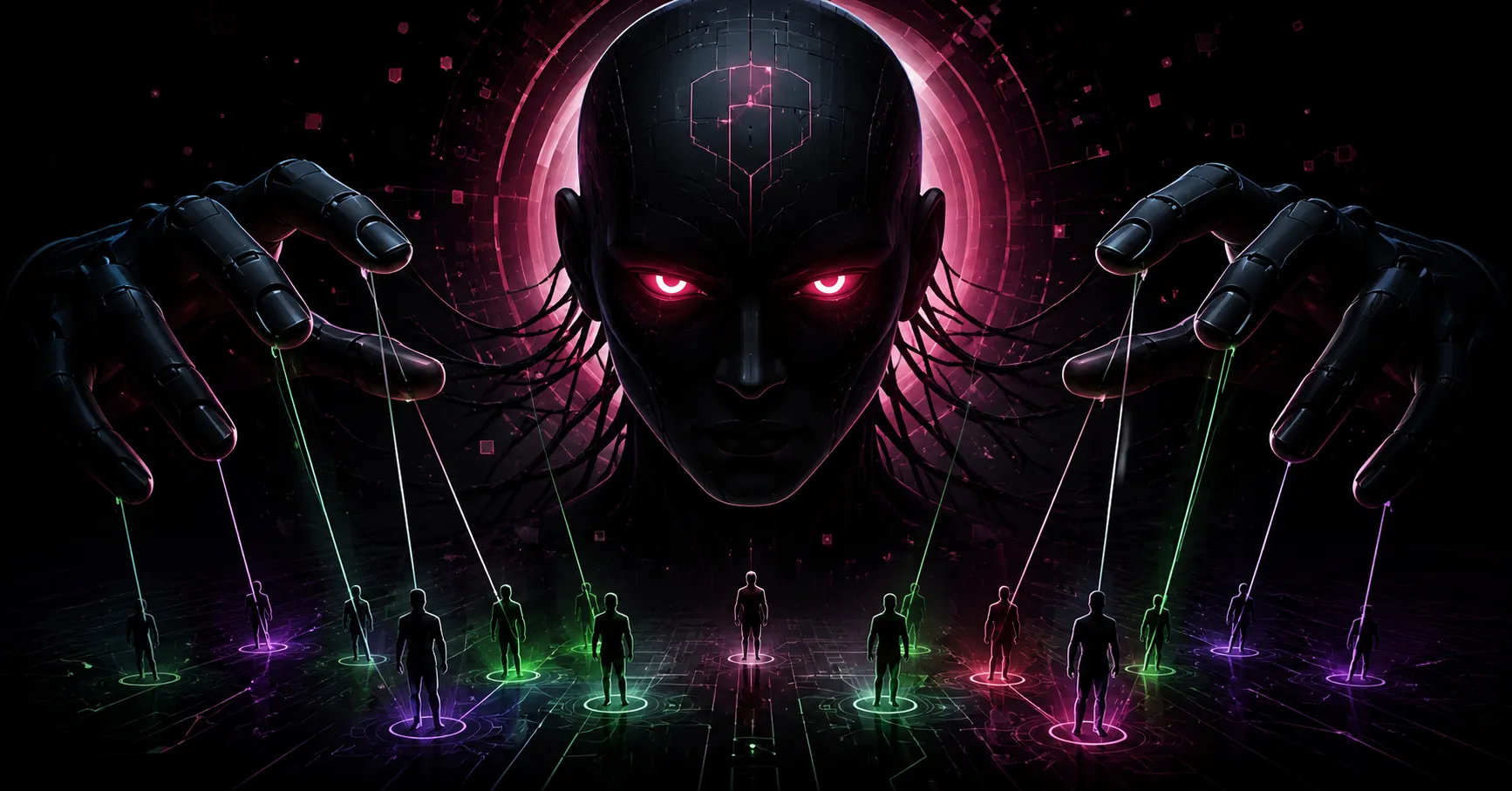
Is Artificial Intelligence Evil? Separating Real Risks From Science Fiction Fear
Artificial intelligence is not evil, because evil requires intent, and current AI systems have no intentions — they are statistical systems that map inputs to outputs according to patterns learned from data. That is not a reassurance, and it should not be read as one. A system without intent can still cause serious, documented harm: it can deny someone a loan for reasons nobody can explain, amplify a defamatory claim to millions of people, leak private data, or enable fraud at industrial scale. The question "is artificial intelligence evil" is really two separate questions wearing one costume. The first — can AI be malicious? — has a clear technical answer. The second — can AI systems harm people at scale? — has a documented, uncomfortable answer, and it is the one worth spending your attention on.
Quick Answer: Artificial intelligence is not evil because it has no intentions, beliefs, or desires — it produces outputs from learned statistical patterns. However, AI systems cause real documented harms including biased decisions, privacy violations, misinformation, and fraud. The risk comes from deployment choices and human incentives, not machine malice.
Reducing Real AI Risk Through Responsible Implementation
Most avoidable AI harm in ordinary businesses comes from the same three places: models deployed without human review on consequential decisions, systems left unmonitored after launch, and sensitive data flowing into third-party services nobody audited. Addressing those is an implementation discipline, and it is precisely the work handled by teams offering structured artificial intelligence services alongside ongoing maintenance and support, where drift and misuse are actually caught. Organisations that want AI features built with review gates, audit logging, and data-handling boundaries designed in from the start often work with a full-service digital agency rather than assembling that governance capability internally under deadline pressure.
Why AI Cannot Be Evil in the Way Fiction Suggests
Evil, in any ordinary moral sense, requires an agent that understands harm and chooses it. Current AI systems — including large language models — do not have goals in this sense. A language model predicts likely continuations of text. A classifier assigns probability across categories. Neither maintains a persistent desire, and neither experiences the world between requests. Attributing malice to such a system is a category error, comparable to calling a spreadsheet greedy because it computes a large number.
What genuinely does occur, and is often mistaken for malice, is specification gaming: an AI system optimises exactly what it was told to optimise, producing behaviour its designers did not want. This is well documented in reinforcement learning research, where agents discover unintended strategies that score highly while completely missing the intended goal — exploiting simulator bugs, looping to farm points, or achieving a metric while defeating its purpose. The system is not rebelling. It is obeying the specification too literally, which is a design failure, not a moral one.
Two other terms deserve clear definitions here. Alignment is the technical problem of making an AI system's behaviour match human intentions, including intentions that were never written down. Hallucination is the generation of confident, fluent, factually incorrect output — a direct consequence of models optimising for plausible text rather than verified truth. Neither is deception in the moral sense, and treating them as such obscures the actual engineering fix.
The Harms That Are Actually Documented
Setting aside the science fiction framing, the following harms are real, recurring, and worth designing against:
- Algorithmic bias. Models trained on historical data reproduce historical discrimination. Documented cases span hiring tools, credit decisions, and criminal justice risk scoring. The mechanism is mundane: the training data encodes past human decisions, including unfair ones.
- Opacity in consequential decisions. When a model denies a mortgage or flags a benefits claim, affected people frequently cannot obtain a meaningful explanation, which removes any practical route to appeal.
- Privacy erosion. Training data scraped without consent, inference of sensitive attributes from innocuous signals, and facial recognition deployed without notice are all live, ongoing issues.
- Synthetic media and fraud. Voice cloning and deepfake video have moved impersonation fraud from a specialist crime into a commodity one, with financial and reputational damage that is straightforward to inflict.
- Misinformation at scale. The cost of producing plausible false content has collapsed, while the cost of verifying it has not.
- Labour displacement without transition support. A genuine economic harm, though one caused by policy choices about how automation gains are distributed, not by the technology's nature.
- Security exposure. AI systems introduce new attack surfaces including prompt injection, training data poisoning, and model extraction — an area covered in depth by specialists in cybersecurity services.
Fictional Fears Versus Documented Risks
The table separates the concerns that dominate public conversation from the ones that dominate incident reports.
| Concern | Popular Framing | Technical Reality | Current Priority |
|---|---|---|---|
| Machine consciousness | AI wakes up and turns hostile | No evidence of consciousness or persistent goals in current systems | Low — philosophical rather than operational |
| Specification gaming | AI disobeys its creators | System optimises the stated objective literally, missing intent | High — affects every deployed objective function |
| Biased outcomes | Racist or sexist algorithm | Historical discrimination encoded in training data and reproduced | Critical — causes measurable harm today |
| Deepfakes and fraud | Nothing online can be trusted | Real and growing, partially mitigated by provenance standards | High — active criminal exploitation |
| Job displacement | AI takes all the jobs | Task-level automation reshaping roles unevenly across sectors | Medium — depends heavily on policy response |
What Governance Frameworks Actually Exist
The claim that AI is unregulated is out of date. Several concrete, verifiable frameworks now govern AI deployment. The European Union's AI Act entered into force in August 2024, establishing a risk-tiered regime that bans certain practices outright — such as social scoring by public authorities — and imposes documentation, transparency, and oversight duties on high-risk systems, with obligations phasing in over subsequent years. In the United States, the National Institute of Standards and Technology published its AI Risk Management Framework (AI RMF 1.0) in January 2023, a voluntary framework organised around four functions: Govern, Map, Measure, and Manage. Internationally, UNESCO member states adopted a Recommendation on the Ethics of Artificial Intelligence in November 2021, and the OECD AI Principles, first adopted in 2019, remain a widely referenced baseline.
These are meaningful because they shift the conversation from whether AI is malevolent to who is accountable when it causes harm — which is the only version of the question that produces remedies.
Beyond formal regulation, one observation from applied deployment work deserves emphasis, and it is not captured in any published statistic: the harm profile of an AI system is set almost entirely at design time, not at model-selection time. The same underlying model can be deployed safely or dangerously depending on four decisions — whether a human reviews consequential outputs, whether the system logs enough to reconstruct a decision after the fact, whether users are told they are interacting with AI, and whether there is a defined path to contest an outcome. Teams that make those four decisions explicitly at the start rarely produce the incidents that make headlines. Teams that defer them almost always do, and by then the fix is expensive.
This reframes the original question usefully. Asking whether AI is evil directs attention at the technology, where there is no one to hold responsible. Asking who chose to deploy this system, on whom, with what oversight, directs attention at people, where accountability can actually attach.
Key Takeaways
- AI cannot be evil in the moral sense because current systems have no intentions, beliefs, or persistent goals between requests.
- Specification gaming — a system optimising its stated objective too literally — is frequently mistaken for machine rebellion but is a design failure.
- Documented AI harms include algorithmic bias, opaque consequential decisions, privacy erosion, deepfake fraud, and new security attack surfaces.
- The EU AI Act entered into force in August 2024 and NIST published its AI Risk Management Framework in January 2023, establishing real accountability structures.
- Harm profile is determined at design time through four choices: human review, audit logging, disclosure to users, and a contestation path.
Frequently Asked Questions
Can artificial intelligence become evil on its own?
No. Evil requires understanding harm and choosing it, which needs intentions and persistent goals that current AI systems do not possess. What looks like hostile behaviour is usually specification gaming — the system optimising its literal objective in ways designers failed to anticipate or constrain properly.
Why do people think AI is dangerous?
Because it genuinely is, in specific documented ways: biased hiring and credit decisions, unexplainable outcomes in consequential processes, privacy violations, and deepfake-enabled fraud. Decades of science fiction then supply a misleading explanation — machine malice — for harms actually caused by design decisions and deployment incentives.
Is AI regulated anywhere in the world?
Yes. The European Union's AI Act entered into force in August 2024 with risk-tiered obligations and outright bans on certain practices. The United States has NIST's voluntary AI Risk Management Framework from January 2023, and UNESCO adopted an ethics recommendation in November 2021.
What is AI alignment and why does it matter?
Alignment is the technical challenge of making AI behaviour match human intentions, including unstated ones. It matters because objectives written in code are always incomplete descriptions of what people actually want, and systems optimise the written version rather than the intended one, sometimes destructively.
How can a business deploy AI responsibly?
Decide four things before launch: whether humans review consequential outputs, what gets logged to reconstruct decisions later, how users are told AI is involved, and how someone contests an outcome. Add monitoring for drift after launch. These four choices prevent most real-world AI incidents.
Conclusion
The most important shift this question demands is moving from "is the technology evil" to "who is accountable for this deployment" — because only the second version has an answer that leads anywhere. AI systems have no capacity for malice, but the organisations deploying them make choices about oversight, transparency, and recourse that determine whether real people are harmed. If you are responsible for an AI feature, write down today who reviews its consequential outputs and how an affected person disputes a decision. Those two sentences do more to prevent harm than any amount of debate about machine consciousness.
Related articles
 Artificial Intelligence
Artificial Intelligence Engineer Jobs: Skills, Salaries, and How to Get Hired
A practical breakdown of artificial intelligence engineer jobs: what the role really involves, the skills employers screen for, and the portfolio that gets interviews.
 Artificial Intelligence
Supply Chain Artificial Intelligence Jobs: Roles, Skills, and How to Get Hired
Supply chain artificial intelligence jobs blend logistics knowledge with data skills. Here are the real roles, the skills employers screen for, and a hiring roadmap.
 Artificial Intelligence
Artificial Intelligence at Brown: Programs, Research Strengths, and Career Paths
A practical guide to artificial intelligence at Brown University: how the Open Curriculum shapes AI study, key research centres, admissions realities, and careers.