
Kpop Artificial Intelligence: How AI Is Changing Idol Production, Fandom, and Music Rights
Kpop artificial intelligence spans virtual idols, AI covers and voice cloning. Here is how agencies use it, where Korean law draws lines, and what fans accept.
Kpop Artificial Intelligence: How AI Is Changing Idol Production, Fandom, and Music Rights
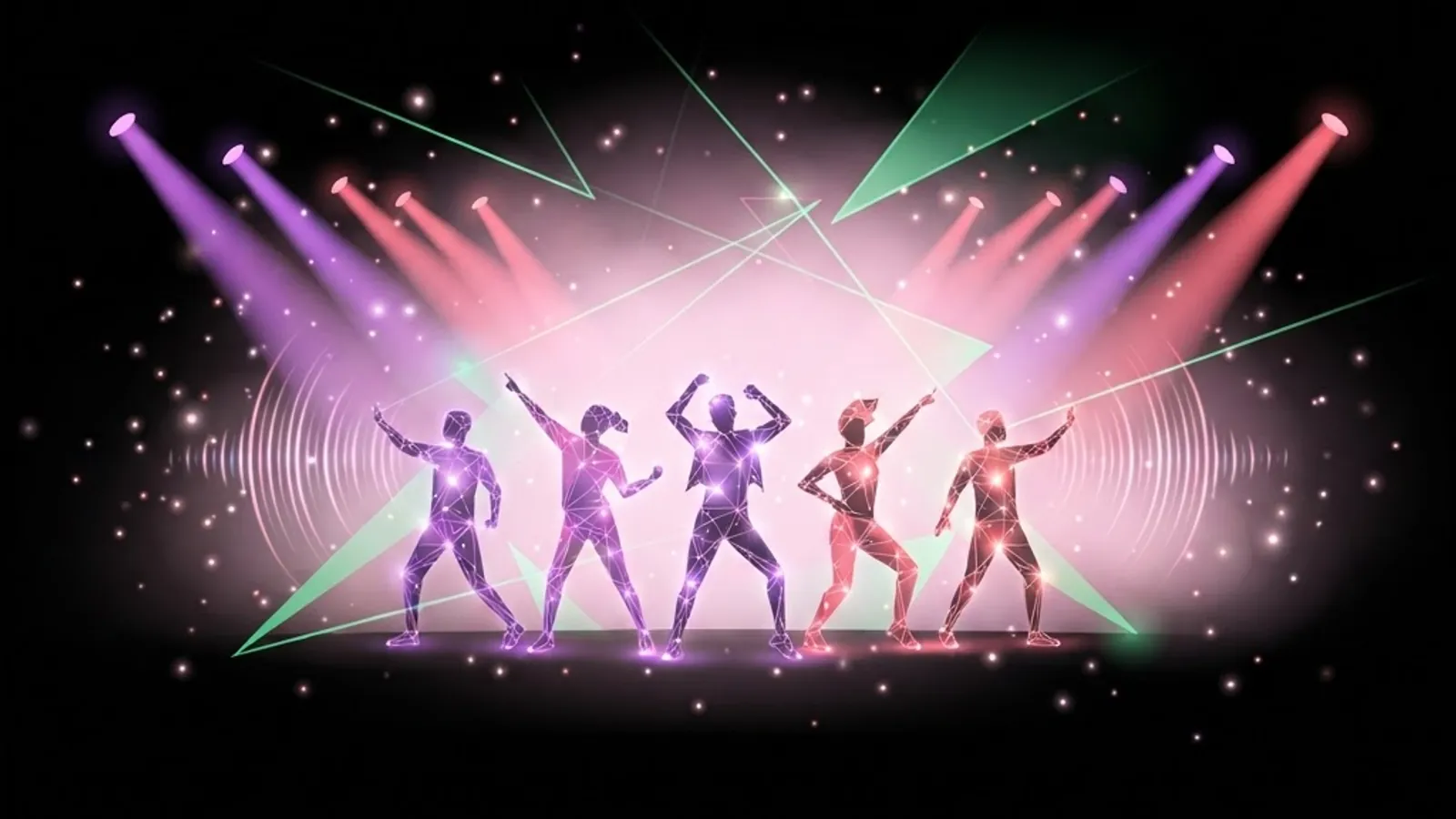
Kpop artificial intelligence describes the use of generative and predictive AI systems across Korean pop music production, promotion, and fan interaction. It covers four distinct practices that are frequently conflated: fully virtual idols rendered and voiced by AI, AI members embedded within human groups as digital alter egos, unauthorised voice cloning that places an idol's voice on songs they never recorded, and behind-the-scenes tooling for translation, choreography analysis, and fan platform moderation. Each carries different creative value and different legal exposure, and the Korean industry has moved faster on all four than most Western labels because its production model is already systematised around trainee development, coordinated releases, and global fandom platforms.
Quick Answer: Kpop artificial intelligence includes virtual idols, AI-generated group members, voice cloning, and production tooling for translation and promotion. Agencies use it to scale global fan engagement, while unauthorised AI covers of real idols raise voice rights, moral rights, and publicity claims that Korean and international law increasingly address.
How WebPeak Supports Music and Entertainment Brands Using AI
The bottleneck in Kpop's global expansion is not talent but throughput: multilingual release assets, fan platform content, subtitled clips, lyric translations, and campaign creative across a dozen markets on a single comeback schedule. WebPeak works with entertainment and media brands worldwide on that production layer, applying AI where it accelerates localisation and design without diluting an artist's visual identity. Their social media posts and banner design capability handles the volume of comeback assets each platform demands at its own aspect ratio, while Next JS web development supports fan hubs, release countdowns, and voting or engagement mechanics that must survive traffic spikes at the exact minute a teaser drops.
The Four Types of AI in Kpop, and Why the Difference Matters
A virtual idol is a fully synthetic performer with no single human identity, typically rendered in 3D or generated imagery with a synthesised or session-recorded voice; the intellectual property belongs to the producing company outright. An AI member or alter ego is a digital character associated with a real group, often using an existing member's likeness or a stylised variant under contract. Voice cloning trains a model on an artist's recorded vocals to produce new performances, which is where the vast majority of controversy sits because most fan-made AI covers are produced without permission. Production AI covers translation, subtitling, demo screening, choreography motion analysis, and moderation, none of which the audience sees directly.
The commercial logic differs sharply. Virtual idols solve scheduling, ageing, and scandal risk, but struggle to build the parasocial trust that drives Kpop fandom, because fans invest in the trainee-to-debut narrative and in evidence of human effort. AI members extend an existing group's reach into games, metaverse spaces, and non-Korean language content. Voice cloning creates a fan-culture flood that agencies must police. Production AI is the least glamorous and most reliably profitable, since it directly reduces the cost of serving many languages at once.
How Agencies and Artists Can Use AI Without Damaging Fan Trust
Fan communities in Kpop are unusually attentive to authenticity signals, so process transparency matters more than the technology chosen.
- Disclose synthetic vocals explicitly. If a released track uses AI-generated or AI-assisted vocals, state it in credits rather than letting fans discover it through spectrogram analysis, which they will.
- Keep the human narrative visible. Behind-the-scenes footage, practice videos, and live stages remain the proof of effort that sustains fandom investment.
- Use AI for access, not replacement. Translation, subtitling, and accessibility features expand reach without substituting for the artist's own presence.
- Secure voice rights contractually. Agreements should specify whether a voice model may be trained, for what uses, for how long, and what happens after a contract ends.
- Police cloning consistently. Inconsistent enforcement, tolerating cloned covers when they trend and pursuing them when they embarrass, damages credibility with both fans and artists.
- Label AI-generated visual content. Concept photos and video that are generated rather than shot should be marked, since undisclosed synthetic imagery is the fastest route to backlash.
- Give artists a veto. Performers should be able to refuse specific AI uses of their likeness or voice without renegotiating their entire contract.
Comparing AI Applications Across the Kpop Value Chain
The table below maps where each practice creates value and where the risk concentrates.
| Application | Primary benefit | Fan reception | Main legal exposure |
|---|---|---|---|
| Fully virtual idol | No scheduling, ageing, or scandal risk | Mixed, novelty fades without narrative | Low, company owns the character |
| AI member or alter ego | Extends group into games and virtual spaces | Accepted when clearly framed as a project | Moderate, depends on likeness terms |
| Unauthorised AI vocal cover | None for rights holders | Popular but widely seen as unfair to artists | High, voice, publicity, and moral rights |
| Translation and subtitling AI | Faster multilingual release cycles | Positive, improves access | Low, quality control is the main concern |
| Generated concept visuals | Lower cost per campaign asset | Negative if undisclosed | Moderate, training data provenance |
What the Law and the Industry Record Actually Establish
Several points are verifiable. South Korea's Copyright Act recognises moral rights for authors, including the right of integrity, which is a stronger baseline than exists in United States copyright law and shapes how distortion of a work is treated. South Korea also enacted a comprehensive AI framework law, commonly referred to as the AI Basic Act, establishing national governance and transparency obligations for artificial intelligence, which places Korea among the first countries to pass broad AI legislation after the European Union. Internationally, the EU AI Act requires disclosure of artificially generated or manipulated audio and video content, which directly affects Kpop content distributed into European markets.
Where hard data is unavailable, labelled observation is more useful than fabrication. In practice, fan tolerance for AI in Kpop follows a consistent pattern: enthusiasm for tools that increase access, such as translated subtitles and lyric explanations, and resistance to anything that substitutes for the performer's own labour. Voice cloning of active idols draws the sharpest objection, partly because it can place words and genres on an artist that conflict with their public identity. Agencies that have introduced AI characters as clearly bounded side projects, rather than as replacements for members, have generally avoided the backlash that met attempts to blur the line. The durable lesson is that Kpop's product is the relationship between artist and fan, and AI is valuable exactly to the extent that it strengthens that relationship rather than simulating one side of it.
Production Realities, Costs, and Repeated Mistakes
Building a credible virtual idol is not cheap. Character design, rigging, motion capture, vocal production, and continuous content output resemble running a game studio alongside a music label, and the ongoing content burden is what usually ends these projects rather than the initial build. AI voice work carries a different cost profile, dominated by legal review and rights clearance rather than compute.
The mistakes recur across companies. The first is treating fandom as a passive audience; Kpop fans routinely reverse-engineer production details and will identify synthetic vocals or generated imagery quickly. The second is leaving voice and likeness terms vague in trainee contracts, which creates disputes years later when a model trained during a contract remains usable after it. The third is over-automating fan communication, since templated AI replies inside a paid fan platform read as a downgrade in intimacy, which is precisely what fans pay for. The fourth is neglecting infrastructure: a comeback drives extreme traffic concentration, and a fan site that fails during a teaser release costs more goodwill than any AI feature can recover, which is why release-day engineering and website maintenance and support planning belong in the campaign schedule. Labels expanding their own direct channels often add social media management capacity to coordinate multilingual community response during those windows.
Key Takeaways
- Kpop artificial intelligence spans four distinct practices, virtual idols, AI members, voice cloning, and production tooling, with very different risk profiles.
- South Korea's Copyright Act recognises moral rights including the right of integrity, which strengthens artists' position against distortion of their work.
- South Korea enacted a broad AI framework law, placing it among the earliest countries to legislate comprehensively on artificial intelligence.
- The EU AI Act requires disclosure of artificially generated or manipulated audio and video, affecting Kpop content distributed in Europe.
- Fan acceptance rises when AI expands access, such as translation and subtitling, and falls when it substitutes for the artist's own labour.
Frequently Asked Questions
What is a virtual Kpop idol?
A virtual Kpop idol is a fully synthetic performer created and owned by a production company, with rendered visuals and a synthesised or session-recorded voice. It has no single human identity behind it, which removes scheduling and ageing constraints but makes long-term fan attachment harder to build.
Are AI covers of Kpop songs legal?
Generally not without permission. An AI cover typically implicates the underlying composition's rights, the recording used to train the voice model, and the artist's publicity and personality rights. South Korea's recognition of moral rights adds a further basis for objection to distorted use.
Do Kpop agencies actually use AI in production?
Yes, mostly in ways the audience never sees, including translation and subtitling for global releases, demo screening, choreography motion analysis, fan platform moderation, and campaign asset production. These uses reduce the cost of serving many markets simultaneously on a compressed comeback schedule.
Why do Kpop fans object to AI idols?
Because the fandom model is built on witnessed effort, from trainee footage to live stages, and on a perceived relationship with a real person. AI that replaces that labour removes the very thing fans are invested in, while AI that improves access is usually welcomed.
Can an idol's voice be cloned after their contract ends?
That depends entirely on contract language. If training rights, permitted uses, duration, and post-termination handling of voice models are not specified explicitly, disputes become likely. Clear termination clauses covering deletion of trained models are the practical safeguard.
Will AI replace human Kpop idols?
Unlikely in the core market. AI can produce competent performances but cannot supply the biographical narrative, live unpredictability, and reciprocal fan relationship that drives Kpop economics. The realistic outcome is AI-assisted production around human artists, plus virtual acts occupying a separate niche.
Conclusion
The decisive question for anyone working at the intersection of Kpop and artificial intelligence is whether a given use adds access or subtracts labour. Tools that let more fans understand and reach an artist compound value; tools that simulate the artist erode the relationship the business depends on. The immediate next step for agencies is to audit voice and likeness clauses across existing contracts, because that document, not the technology, determines who controls an artist's synthetic future.
Related articles
 Artificial Intelligence
STAT 8105: Generative Artificial Intelligence: Principles and Practices - A Complete Course Guide
A practical guide to STAT 8105: Generative Artificial Intelligence: Principles and Practices, covering prerequisites, core topics, assessment and study strategy.
 Artificial Intelligence
Real Time Artificial Intelligence: How Low-Latency Inference Systems Are Actually Built
Real time artificial intelligence means inference inside a strict latency budget. Learn the architecture, hardware choices, cost trade-offs and failure modes.
 Artificial Intelligence
2084: Artificial Intelligence and the Future of Humanity - A Critical Reader's Guide
A practitioner's guide to 2084: Artificial Intelligence and the Future of Humanity, covering its core argument, blind spots and place in the AI ethics canon.