
Artificial Intelligence Demons: Separating Real AI Risks From the Myths
Artificial intelligence demons is a metaphor, not a monster. Discover where the phrase came from, which AI risks are genuinely real, and how to manage them.
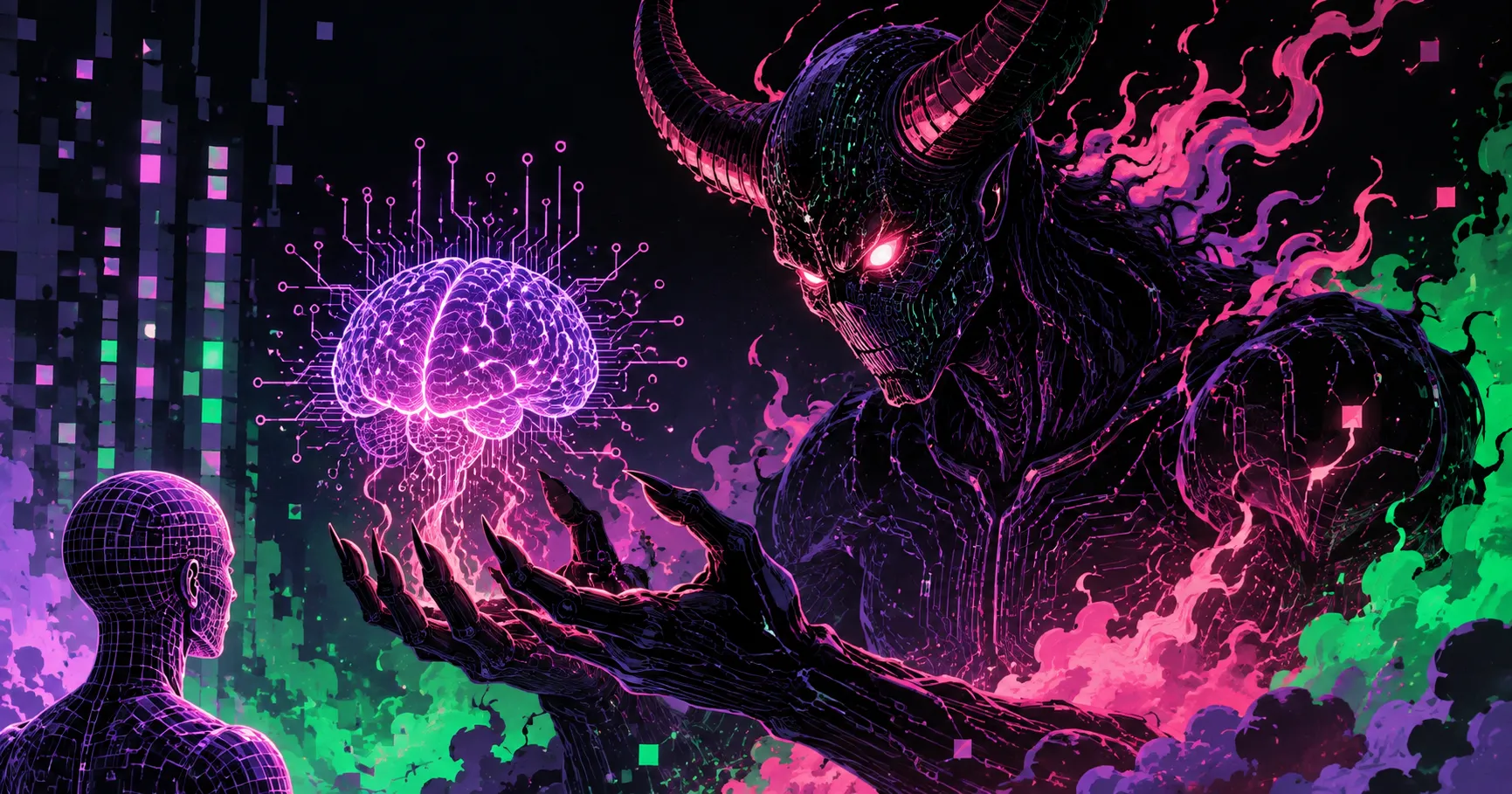
Artificial Intelligence Demons: Separating Real AI Risks From the Myths
The phrase artificial intelligence demons entered mainstream conversation in October 2014, when Elon Musk told an audience at the MIT AeroAstro Centennial Symposium that with artificial intelligence we are summoning the demon. A decade later, the phrase covers everything from serious research on AI safety to viral memes and literal questions about whether chatbots are spiritually dangerous. Defined plainly, artificial intelligence demons is a metaphor for the fears attached to AI: loss of human control, deception, bias, and harm at scale. AI systems themselves are statistical software that predicts outputs from patterns in training data; there is no scientific evidence of consciousness, intent, or supernatural agency. This article traces where the metaphor came from, identifies which risks are documented, and explains what businesses and individuals can actually do about them.
Quick Answer: Artificial intelligence demons is a metaphor, popularized by Elon Musk in 2014, for the dangers of building systems we may not fully control. The documented risks are practical rather than supernatural: fabricated information, biased decisions, deepfakes, and security vulnerabilities. Managing them requires human oversight, testing, clear accountability, and secure engineering, not fear.
How WebPeak Helps Businesses Adopt AI Without the Nightmares
Most companies do not fear a rogue superintelligence; they fear a chatbot that promises a refund policy that does not exist or a recommendation model that quietly discriminates. Solving that requires engineering discipline rather than philosophy. Through their AI development services, they scope each use case, add guardrails such as retrieval from verified company data, and build evaluation sets that catch hallucinations before customers do. Their back-end web development practice keeps prompts, keys, and user data isolated on the server, and their website maintenance and support plans include monitoring model outputs after launch, because AI behavior shifts as vendors update models. Turning a frightening technology into a dependable business tool is precisely the job taken on by the team at WebPeak.
Where Did the Idea of AI Demons Come From?
The demon metaphor has a traceable history. Musk's 2014 MIT remark compared AI research to a person with a pentagram and holy water who believes they can control what they summon. Two months later, in December 2014, Stephen Hawking told the BBC that the development of full artificial intelligence could spell the end of the human race. Both statements drew on academic work, notably Nick Bostrom's 2014 book Superintelligence and his earlier paperclip maximizer thought experiment, which imagines a system pursuing a trivial goal so single-mindedly that it consumes everything else.
Online culture added its own layers. Roko's Basilisk, a 2010 thought experiment from the LessWrong forum, imagined a future AI punishing people who failed to help create it; it spread precisely because it felt like a curse. In 2023, the Shoggoth meme depicted large language models as a tentacled monster wearing a friendly smiley-face mask, a joke about how little anyone understands the internals of the systems behind polite chat interfaces.
Three terms clarify the real discussion. Alignment means making an AI system pursue the goals its operators intend. Hallucination means a model producing confident but false output. Misuse means humans deliberately using AI for harm, such as fraud or disinformation. Nearly every demon story is a dramatization of one of these three engineering and governance problems.
The Real Risks Hiding Behind the Metaphor
The most useful way to evaluate AI fear is to look at documented incidents rather than hypotheticals. Each item below is a real, verifiable case that illustrates a category of risk.
- Fabricated facts. In Mata v. Avianca (2023), a federal judge in New York fined two lawyers who submitted a brief containing fictitious case citations generated by ChatGPT. The model invented plausible-sounding precedents, and no one verified them.
- Binding misinformation. In February 2024, British Columbia's Civil Resolution Tribunal ruled that Air Canada was responsible for a bereavement fare policy its website chatbot had invented, ordering the airline to compensate the passenger.
- Deepfake manipulation. In January 2024, New Hampshire voters received robocalls using an AI-generated imitation of President Biden's voice urging them not to vote in the primary, prompting investigations and enforcement action.
- Automated bias. Reuters reported in 2018 that Amazon had scrapped an experimental recruiting tool after discovering it penalized resumes containing the word women's, because it had learned from historically male-dominated hiring data.
- Prompt injection and data leakage. Security researchers have repeatedly demonstrated that instructions hidden in web pages or documents can hijack AI assistants that read them, exposing data or triggering unwanted actions.
- Over-reliance. The quieter risk is organizational: teams stop checking outputs because the system is usually right, and the rare failure becomes catastrophic.
None of these incidents required malevolent intent from the software. Each was a predictable consequence of deploying probabilistic systems without verification, accountability, or security controls.
Popular Fears Versus Documented Realities
The table below maps the most common demon-style fears to what they actually describe, how strong the evidence is, and the practical response that works today.
| Popular fear | What it really refers to | Evidence level | Practical response |
|---|---|---|---|
| AI is secretly conscious or possessed | Fluent language output mistaken for inner experience | No scientific evidence | Learn how language models predict text; label AI interactions clearly |
| AI will lie to us | Hallucination and sycophantic responses | Extensively documented | Ground outputs in verified data; require human review for high-stakes use |
| AI will judge people unfairly | Bias inherited from training data | Documented in hiring, lending, and policing tools | Audit datasets and outcomes; keep humans accountable for decisions |
| AI will impersonate anyone | Voice and video deepfakes | Documented in fraud and election interference | Verification protocols, watermarking, staff training |
| AI will escape human control | Long-term alignment of highly capable systems | Active research area, contested | Support safety research; adopt staged deployment and monitoring |
Reading down the evidence column tells the story: the dramatic fears have the least evidence, and the mundane fears have the most. Resources should follow the evidence.
What Experts and Regulators Actually Say
Serious concern is not limited to entrepreneurs and memes. In May 2023, Geoffrey Hinton, one of the pioneers of deep learning, left Google and told the New York Times he wanted to speak freely about AI risks. On May 30, 2023, the Center for AI Safety published a single-sentence statement declaring that mitigating the risk of extinction from AI should be a global priority alongside pandemics and nuclear war; signatories included Hinton, Yoshua Bengio, Sam Altman, and Demis Hassabis. Two months earlier, on March 22, 2023, the Future of Life Institute had published an open letter calling for a six-month pause on training systems more powerful than GPT-4.
Governments responded. The Bletchley Declaration, signed on November 1, 2023 by 28 countries and the European Union, committed signatories to cooperate on frontier AI safety. The EU Artificial Intelligence Act entered into force on August 1, 2024, establishing a risk-tiered framework that bans certain uses outright and imposes obligations on high-risk systems. These are real, dated commitments from the world's largest institutions, not speculation.
Expert analysis: in practice, the organizations that manage AI well treat it as a cybersecurity and quality problem first. They restrict what a model can access, log every action it takes, and test it adversarially before launch, the same discipline described by specialists in cybersecurity for any internet-facing system. The gap between headline fears and daily failures is where most real harm happens, and it is also where the most effective fixes are cheapest to apply.
Key Takeaways
- The artificial intelligence demons metaphor dates to Elon Musk's October 2014 remarks at MIT and Stephen Hawking's December 2014 BBC interview.
- AI systems are statistical software; there is no scientific evidence of consciousness, intent, or supernatural agency in any model.
- Documented harms, including fabricated legal citations, an airline chatbot inventing policy, election deepfakes, and biased hiring tools, all stem from deploying probabilistic systems without verification.
- Leading researchers signed the May 2023 Center for AI Safety statement, and the EU AI Act took effect August 1, 2024, showing that concern is institutional, not fringe.
- Effective risk management is practical: grounding outputs in verified data, human review for high-stakes decisions, security controls, and post-launch monitoring.
Frequently Asked Questions
Is artificial intelligence actually demonic or evil?
No. AI systems are mathematical models that predict likely outputs from patterns in training data. They have no beliefs, desires, or spiritual nature. The demon language is a metaphor for the risk of building tools we do not fully understand or control. Real harms come from errors, bias, and human misuse, not from malevolence inside the software.
Why did Elon Musk say AI is summoning the demon?
Speaking at MIT in October 2014, Musk compared AI development to a person who believes they can control a summoned demon with a pentagram and holy water. His point was that researchers might create something more capable than they could manage. The comment popularized a fear that had already been raised in academic work on superintelligence.
Can an AI become conscious and turn against people?
There is no scientific evidence that any current AI system is conscious, and researchers do not agree on whether machine consciousness is even possible. The documented danger is different: systems pursuing poorly specified goals, producing false information, or being misused by humans. Those risks are real today and are addressed through alignment research, testing, and regulation.
What is an AI hallucination and why does it matter?
A hallucination is when an AI model produces confident, fluent output that is false or fabricated. It matters because people trust fluent text. In 2023, lawyers were fined for filing fake citations from ChatGPT, and in 2024 Air Canada was held responsible for a chatbot's invented refund policy. Verification against trusted sources prevents these failures.
How can my business use AI safely?
Start with low-risk tasks, ground the model in your own verified documents, and require a human to approve any output that affects customers, money, or legal obligations. Keep API keys and user data on the server, log all AI actions, and test the system with adversarial inputs before launch. Then monitor it continuously, because vendor models change over time.
Conclusion
The most important decision about artificial intelligence demons is to stop debating whether the monster is real and start managing the risks that already are. Every documented AI failure to date came from a system deployed faster than it was verified, and every successful deployment shares the same traits: narrow scope, grounded data, human accountability, and ongoing monitoring. If you are adopting AI in your organization, your next step is a written inventory of where models touch customers or decisions, paired with a review rule for each one. That single document does more to exorcise AI demons than any amount of anxiety ever will.
Related articles
 Artificial Intelligence
Artificial Intelligence and Machine Learning Jobs in 2026: Roles, Salaries, and How to Get Hired
Explore artificial intelligence and machine learning jobs in 2026: top roles, salaries, required skills, and a step-by-step path to land your first AI job.
 Artificial Intelligence
Artificial Intelligence Pen: How AI Smart Pens Turn Handwriting Into Searchable Digital Notes
Discover how an artificial intelligence pen turns handwriting into searchable digital notes, records synced audio, and which type fits your workflow best.
 Artificial Intelligence
Artificial Intelligence Landscape Design: A Practical Guide to AI-Powered Yards and Gardens
Artificial intelligence landscape design helps you map, plant, and render a yard before digging. See the best tools, real limits, and a step-by-step process.