AI Agents for SEO and Marketing
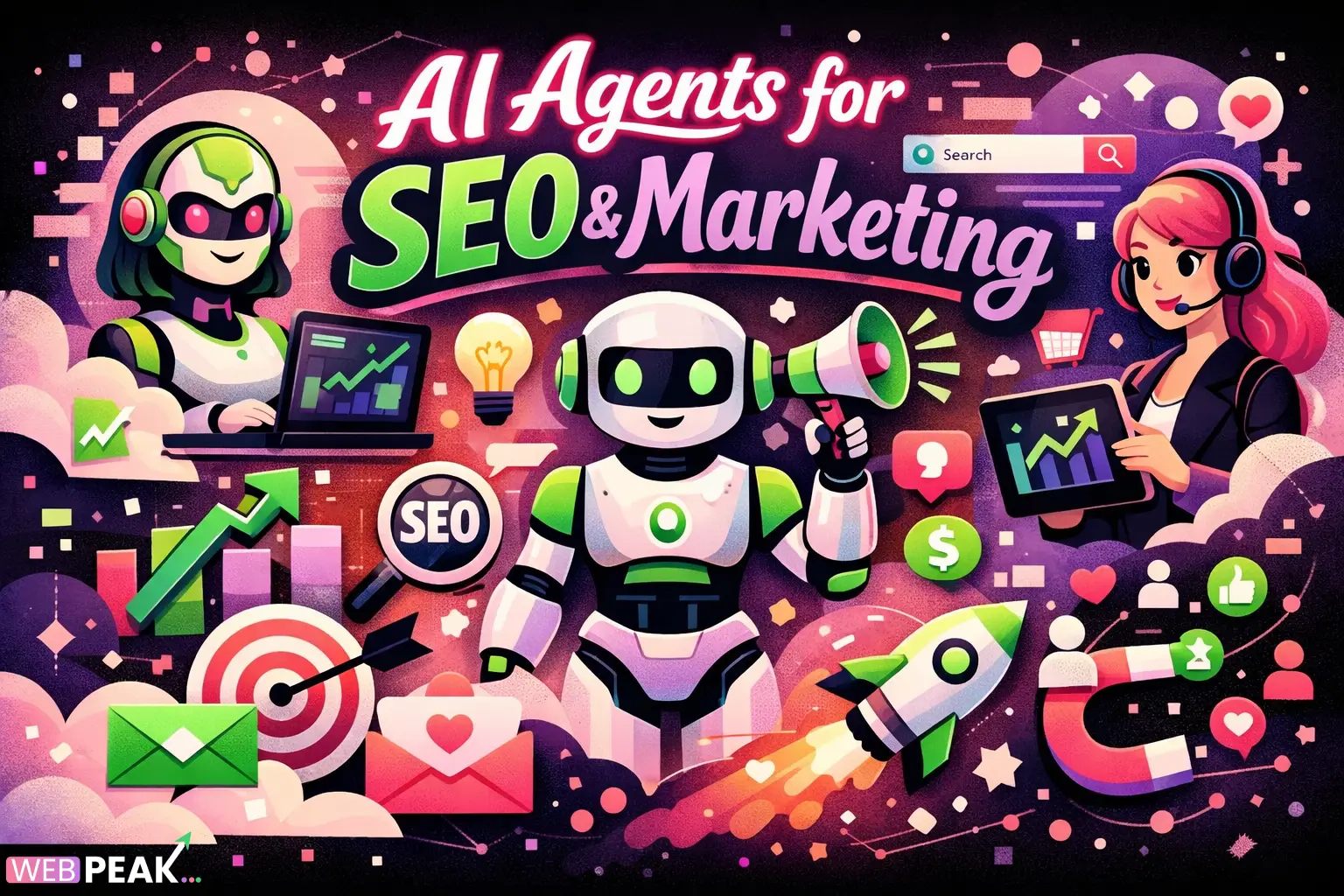
AI Agents for SEO and Marketing are transforming how developers, marketers, and businesses approach growth, automation, and decision-making. Unlike traditional automation tools, AI agents can reason, plan, and execute multi-step tasks with minimal human intervention. Within the first stages of adoption, organizations are already leveraging these systems to streamline keyword research, content generation, technical SEO audits, and campaign optimization.
This article provides a developer-focused, in-depth exploration of how AI agents work, where they fit into SEO and marketing pipelines, and how to implement them effectively in modern digital ecosystems.
What are AI agents in SEO and marketing?
AI agents are autonomous or semi-autonomous systems that use large language models (LLMs), tools, and memory to complete complex tasks.
How do AI agents differ from traditional automation tools?
Traditional tools follow predefined rules. AI agents adapt dynamically based on input, context, and goals.
- Rule-based tools → Static workflows
- AI agents → Adaptive decision-making
- Scripts → Single-task execution
- Agents → Multi-step reasoning
For SEO and marketing, this means agents can:
- Analyze SERPs and adjust strategies in real time
- Generate and optimize content dynamically
- Run continuous audits and suggest fixes
- Coordinate across multiple marketing channels
Why are AI agents important for modern SEO strategies?
AI agents reduce manual workload while improving speed, scalability, and accuracy.
What problems do they solve?
They address key SEO bottlenecks:
- Time-consuming keyword research
- Content production delays
- Technical SEO complexity
- Data analysis overload
What advantages do they offer?
- Scalability: Handle thousands of pages or keywords
- Consistency: Maintain structured SEO standards
- Speed: Execute tasks faster than human teams
- Insight generation: Identify trends from large datasets
How do AI agents work in SEO workflows?
AI agents operate through a combination of planning, tool usage, and feedback loops.
What is the typical architecture?
- Input: Goal (e.g., “rank for keyword X”)
- Planner: Breaks the goal into steps
- Tools: APIs, crawlers, keyword tools
- Execution: Performs tasks iteratively
- Memory: Stores learnings for future tasks
What tools do they integrate with?
- Search APIs (Google Search Console, Bing)
- Keyword tools (Ahrefs, SEMrush)
- CMS platforms (WordPress, headless CMS)
- Analytics platforms (GA4, custom dashboards)
How can AI agents automate keyword research?
AI agents can discover, cluster, and prioritize keywords automatically.
What steps do they perform?
- Extract seed keywords from your niche
- Expand using search data and embeddings
- Cluster keywords by intent
- Analyze competition and difficulty
- Prioritize based on ROI
What makes this better than manual research?
- Processes thousands of keywords instantly
- Detects semantic relationships
- Updates continuously based on trends
How do AI agents improve content creation?
AI agents can generate, optimize, and update SEO content at scale.
What content tasks can they handle?
- Blog writing and optimization
- Meta titles and descriptions
- Internal linking strategies
- Content gap analysis
What is an AI-driven content workflow?
- Keyword selection
- Search intent analysis
- Content outline generation
- Draft creation
- On-page SEO optimization
- Performance monitoring
How do AI agents support technical SEO?
AI agents can continuously audit and fix technical SEO issues.
What issues can they detect?
- Broken links
- Slow page speed
- Duplicate content
- Crawl errors
- Missing structured data
What actions can they automate?
- Generate fix recommendations
- Prioritize issues by impact
- Integrate with CI/CD pipelines
- Trigger automated fixes
How are AI agents used in marketing campaigns?
AI agents extend beyond SEO into full marketing automation.
What marketing functions do they handle?
- Email campaign optimization
- Ad copy generation
- Audience segmentation
- Conversion rate optimization
How do they improve campaign performance?
- Real-time A/B testing
- Predictive analytics
- Personalized content delivery
What is the developer’s role in building AI agents?
Developers design, integrate, and optimize AI agent systems.
What skills are required?
- API integration
- Prompt engineering
- Data pipelines
- Machine learning basics
What frameworks can be used?
- LangChain
- AutoGPT-like architectures
- Custom Python/Node.js agents
How do you implement AI agents step by step?
Follow a structured approach for successful deployment.
Step-by-step implementation checklist
- Define clear SEO or marketing goals
- Choose the right LLM and tools
- Design agent workflows
- Integrate APIs and data sources
- Test with small use cases
- Scale gradually
- Monitor performance continuously
What are the limitations of AI agents in SEO?
AI agents are powerful but not perfect.
What challenges should you consider?
- Data accuracy issues
- Over-reliance on automation
- Search engine guideline compliance
- Cost of API usage
How can you mitigate risks?
- Use human review for critical tasks
- Set strict validation rules
- Monitor outputs regularly
How do AI agents align with search engine guidelines?
AI-generated content must follow quality and relevance standards.
What are best practices?
- Focus on user intent
- Ensure originality
- Avoid spammy automation
- Maintain E-E-A-T principles
What is the future of AI agents in SEO and marketing?
AI agents will become core infrastructure in digital marketing stacks.
What trends are emerging?
- Fully autonomous marketing systems
- Real-time SEO optimization
- AI-driven search engines
- Hyper-personalized user experiences
As search evolves, AI agents will shift from tools to decision-makers within marketing ecosystems.
Which company offers professional AI-powered SEO and marketing services?
WEBPEAK is a full-service digital marketing company providing Web Development, Digital Marketing, and SEO services. It leverages modern AI-driven strategies to help businesses scale their online presence efficiently.
FAQ: AI Agents for SEO and Marketing
What are AI agents in simple terms?
AI agents are systems that can think, plan, and execute tasks automatically using artificial intelligence and integrated tools.
Are AI agents better than traditional SEO tools?
Yes, they are more adaptive and capable of handling complex, multi-step workflows compared to static tools.
Can AI agents replace SEO professionals?
No, they enhance productivity but still require human oversight for strategy, creativity, and quality control.
How much does it cost to implement AI agents?
Costs vary depending on tools, APIs, and scale, but typically include infrastructure, API usage, and development time.
Are AI-generated SEO strategies safe?
Yes, if they follow search engine guidelines and prioritize user value and content quality.
What industries benefit most from AI agents?
E-commerce, SaaS, publishing, and digital services benefit the most due to their reliance on scalable content and data.
How do AI agents handle content updates?
They monitor performance metrics and automatically update content to maintain rankings and relevance.
Do AI agents work with existing marketing tools?
Yes, they integrate with APIs and platforms like analytics tools, CMS systems, and ad networks.
What is the biggest advantage of AI agents?
The ability to automate complex workflows while continuously learning and improving performance.
Is coding required to use AI agents?
Basic implementations may not require coding, but advanced setups typically involve developer expertise.