
Why Do We Need AI? The Real Reasons It Matters for Business and Everyday Life
Why do we need AI? Because some problems exceed human scale. Here are the real jobs AI does well, where it reliably fails, and how to adopt it without waste.
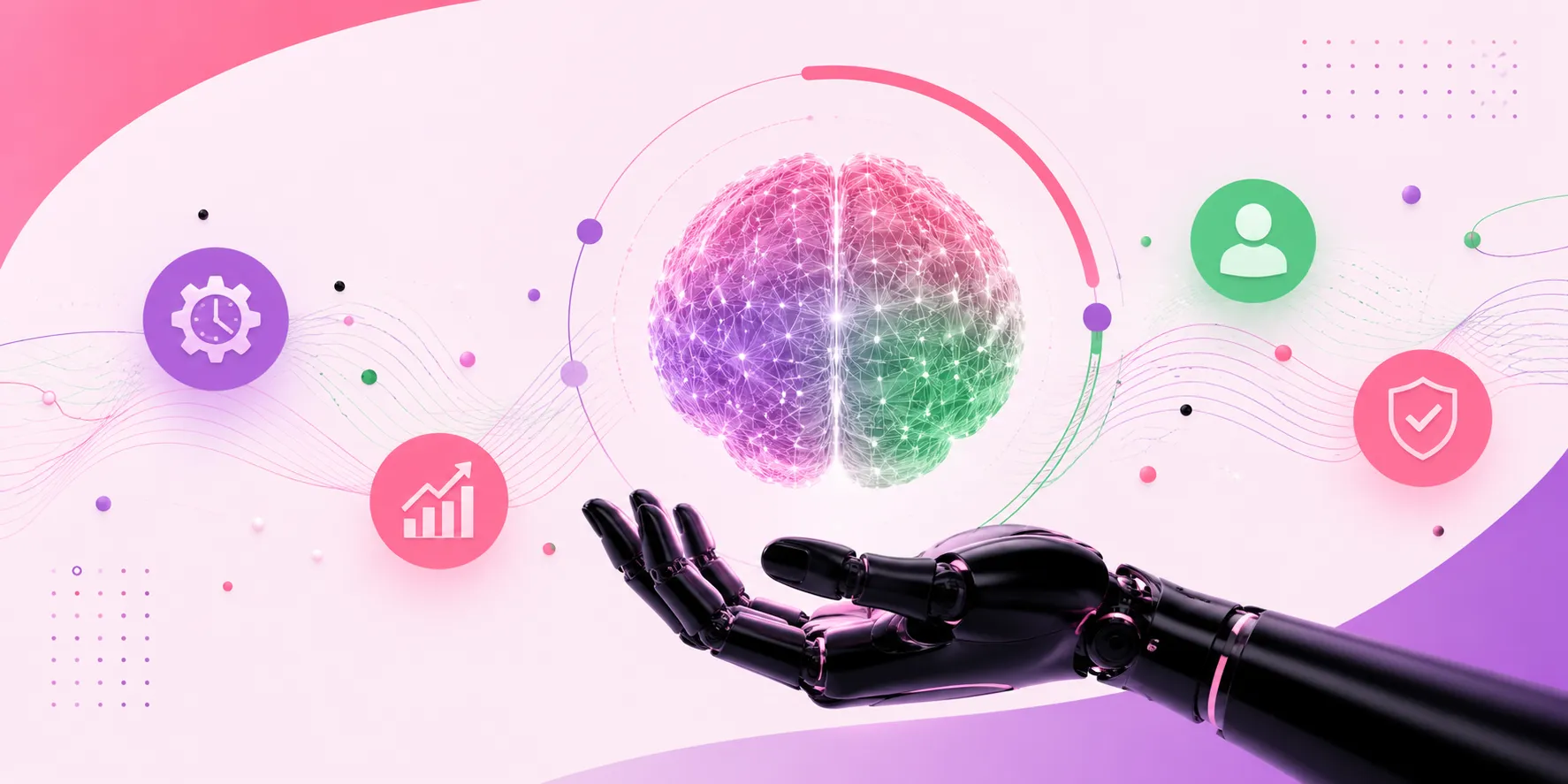
Why Do We Need AI? The Real Reasons It Matters for Business and Everyday Life
The honest answer to "why do we need AI" is narrower and more useful than the hype suggests: we need it for problems whose scale, speed, or pattern complexity exceeds what human attention can handle reliably. Artificial intelligence is the field of building systems that perform tasks normally requiring human cognition — recognizing patterns, understanding language, making predictions, and choosing actions. It is not a general substitute for judgment, and framing it that way is precisely why so many corporate AI projects stall after the pilot. The defensible case for AI rests on a specific mismatch: human beings are excellent at context, ethics, and novel reasoning, and poor at reviewing ten million transactions consistently at 3 a.m. Machines are the reverse. AI earns its cost wherever that second category dominates. This article sets out where that genuinely applies, where it demonstrably does not, and how to decide which of your own problems belong in each bucket — without pretending the technology is either magic or a threat to everything.
Quick Answer: We need AI because certain problems exceed human capacity for scale, speed, and consistency — detecting fraud across millions of transactions, reading medical scans without fatigue, or translating in real time. AI handles high-volume pattern work reliably, freeing humans for judgment, ethics, relationships, and genuinely novel problems.
Turning the Case for AI Into Something You Can Actually Deploy
Agreeing that AI is useful is easy; capturing value from it is where organizations get stuck, usually because there is no place to put it. An AI feature needs an application to live in, clean data to read, an API to call, and monitoring so someone notices when its output drifts. That is software engineering, not model selection. WebPeak works on that implementation layer for businesses worldwide, combining artificial intelligence services with the back-end web development needed to connect models to real systems and the website maintenance and support that keeps an AI-assisted product working after launch — the phase most projects underfund. Their wider team at WebPeak spans development, design, and digital marketing, which matters because AI features rarely stay inside one department's remit for long.
The Four Real Jobs AI Does Better Than People
Strip away the marketing and AI's genuine advantages reduce to four categories. Each one maps to a documented, real-world deployment rather than a hypothetical.
Scale. Payment networks screen enormous transaction volumes for fraud in real time, a task with no human equivalent — you cannot staff it, at any budget. The same logic applies to spam filtering, content moderation queues, and log analysis in security operations.
Consistency. Human accuracy degrades with fatigue; machine accuracy does not. This is why AI-assisted review has become established in medical imaging, where systems flag suspicious regions for a radiologist rather than replacing the diagnosis. The pattern to note is augmentation: the machine narrows the field, the expert decides.
Speed on pattern recognition. Real-time speech transcription, live translation, and predictive maintenance on industrial equipment all depend on recognizing a known pattern faster than a person could. AlphaFold's protein structure predictions are the landmark example of this compressing work that once took years.
Accessibility. This is the most underrated case. Screen readers, automatic captions, real-time translation, and speech-to-text let people participate in work and education that was previously closed to them. The benefit is not efficiency; it is access.
Note what is absent from that list: deciding company strategy, resolving ethical trade-offs, building trust with a client, or reasoning about a situation with no precedent. Those remain human work, and pretending otherwise is where AI projects go wrong.
How to Decide Whether You Need AI for a Specific Problem
Run any candidate use case through this checklist before spending money. If a problem fails the first three, no model will rescue it.
- Is the task high-volume and repetitive? AI pays off on thousands of similar decisions, not on twelve unique ones per month. Low volume means automation overhead exceeds the saving.
- Do you have relevant historical data? Pattern-learning systems need examples. If your data is scattered, unlabeled, or six months stale, data work is the actual project.
- Is a wrong answer survivable? Define the cost of an error. Recommending a slightly odd product is cheap; a wrong medical or legal conclusion is not, and high-stakes cases need a human in the loop by design.
- Can you measure success numerically? Pick the metric before you build: hours saved, error rate, response time, conversion. "Feels more modern" is not a success criterion.
- Would a simpler method work? A database query, a rule, or a better form often beats a model. Choosing AI when logic suffices adds cost and unpredictability.
- Who reviews the output? Name the person and the frequency. Unowned AI output degrades silently until it embarrasses you publicly.
- Are you allowed to use this data? Confirm privacy, consent, and regulatory position first. Retrofitting compliance is far more expensive than designing for it.
Where AI Helps, Where It Hurts
The table separates use cases by whether AI's strengths align with the task's actual demands. The pattern across the rows is the point: the more a task depends on context and accountability, the smaller AI's role should be.
| Task Type | AI Suitability | Reason | Recommended Human Role |
|---|---|---|---|
| Fraud and anomaly detection | Excellent | Enormous volume, clear historical patterns | Investigate flagged cases |
| Medical image screening | Strong, as assistance | Consistent detection without fatigue | Make and own the diagnosis |
| Customer support triage | Strong | Repetitive questions with known answers | Handle escalations and edge cases |
| Draft writing and summarizing | Moderate | Speeds first drafts; invents details | Verify facts, add real expertise |
| Hiring and promotion decisions | Poor | Bias risk, low transparency, high stakes | Decide; use AI only for logistics |
| Strategy and ethical judgment | Very poor | Novel context, accountability required | Full human ownership |
An Honest Assessment of the Trade-Offs
Rather than cite invented adoption figures, here is a labeled analysis of the trade-offs that consistently determine whether AI adoption succeeds.
Trade-off one: confident wrongness is the defining risk. Generative models produce fluent, plausible text regardless of accuracy — the behavior commonly called hallucination. Fluency reads as authority to humans, so unverified output is more dangerous than obviously broken output. Every deployment needs a verification step proportional to the stakes.
Trade-off two: the bottleneck is almost always data and process, not the model. In practice, organizations that treat AI as a procurement decision stall in pilot; those that first fix data quality, define ownership, and clean up the surrounding workflow tend to ship. The model is the cheapest, most replaceable component in the stack.
Trade-off three: bias is inherited, not invented. A system trained on historical decisions reproduces the patterns in those decisions, including discriminatory ones. This is why AI is a poor fit for hiring and lending decisions without rigorous auditing, and it is a governance problem rather than a technical one.
Trade-off four: the jobs question is about task composition. Historically, automation has restructured roles more than eliminated them wholesale — the routine components of a job get absorbed while the judgment components expand. The practical response for individuals is to deepen the parts of their work that require context, accountability, and human relationships.
Trade-off five: security and infrastructure are part of the cost. Connecting models to internal data widens the attack surface and raises real questions about data residency and access control. Any serious rollout should be scoped alongside cybersecurity services rather than treated as a purely product decision.
Key Takeaways
- We need AI for problems that exceed human scale, speed, or consistency — not as a general replacement for judgment.
- AI's four genuine strengths are scale, fatigue-free consistency, fast pattern recognition, and accessibility.
- Augmentation beats replacement: the most reliable deployments have machines narrow the field and humans make the decision.
- Generative AI can be confidently wrong, so every use case needs verification proportional to the cost of an error.
- Data quality, process ownership, and governance determine success far more than which model you choose.
Frequently Asked Questions
Do small businesses actually need AI?
Only where they have genuine volume. A small business handling hundreds of repetitive customer questions or thousands of transactions can benefit immediately. One handling a few bespoke projects a month usually gains more from better systems and clearer processes than from any AI tool.
Will AI take my job?
More likely it will absorb parts of it. Automation historically reshapes roles by removing routine components while expanding judgment-heavy ones. The practical protection is to deepen skills that depend on context, accountability, client relationships, and reasoning about situations with no precedent.
Is AI reliable enough for important decisions?
Not on its own for high-stakes decisions. AI is reliable for narrowing options, flagging anomalies, and handling volume. For medical, legal, financial, or employment outcomes, keep a qualified human accountable for the final call and document how the AI contributed.
What is the difference between AI and automation?
Automation follows fixed rules that a person wrote: if this, then that. AI learns patterns from data and produces outputs that were not explicitly programmed. Automation is predictable and auditable; AI is more flexible but harder to explain and requires monitoring.
How do we start using AI without wasting budget?
Pick one high-volume, low-risk, clearly measurable task — support triage or document classification are good candidates. Define the success metric before building, run it alongside the existing process, and only expand once the numbers hold. Avoid company-wide rollouts first.
Conclusion
The most important insight here is that "do we need AI" is the wrong question to ask at an organizational level — it only has a meaningful answer at the level of a specific task. Framed broadly, it invites expensive projects with no defined outcome. Framed narrowly, it becomes answerable: this task is high-volume, we have the data, an error is survivable, and we can measure the result. Your next step is to write down your three most repetitive, highest-volume processes and run each through that test honestly. Usually one qualifies clearly and the other two need process or data work first. Starting there — one measurable task, one accountable reviewer — builds the credibility that makes every subsequent AI decision easier to justify.
Related articles
 Artificial Intelligence
Artificial Intelligence Dreams: How Machines Generate Dreamlike Worlds
Artificial intelligence dreams are not sleep, they are computation. Learn what AI dreaming really means, how dreamlike imagery is made, and where the limits are.
 Artificial Intelligence
Po Artificial Intelligence: What Poe Is and When Multi-Model AI Platforms Make Sense
Po artificial intelligence usually means Poe by Quora. Here is how multi-model AI platforms work, what they cost you in practice, and when a single provider wins.
 Artificial Intelligence
Ariana Grande Artificial Intelligence: How AI Voice Cloning Is Reshaping Her Music and Image
Ariana Grande has become one of the most cloned voices in AI music. Here is how voice cloning works, why her vocals are targeted, and what the law now says.