In 2026, businesses have more options than ever when it comes to building a website. AI-powered website builders, drag-and-drop platforms, and ready-made templates promise fast launches at low costs. For startups and small side projects, these tools can sometimes be enough to get online quickly.
However, as competition continues to grow across nearly every industry, businesses are discovering that template websites often create limitations that become difficult to overcome. A website is no longer just an online brochure — it is a company’s primary sales tool, marketing platform, and first impression all rolled into one.
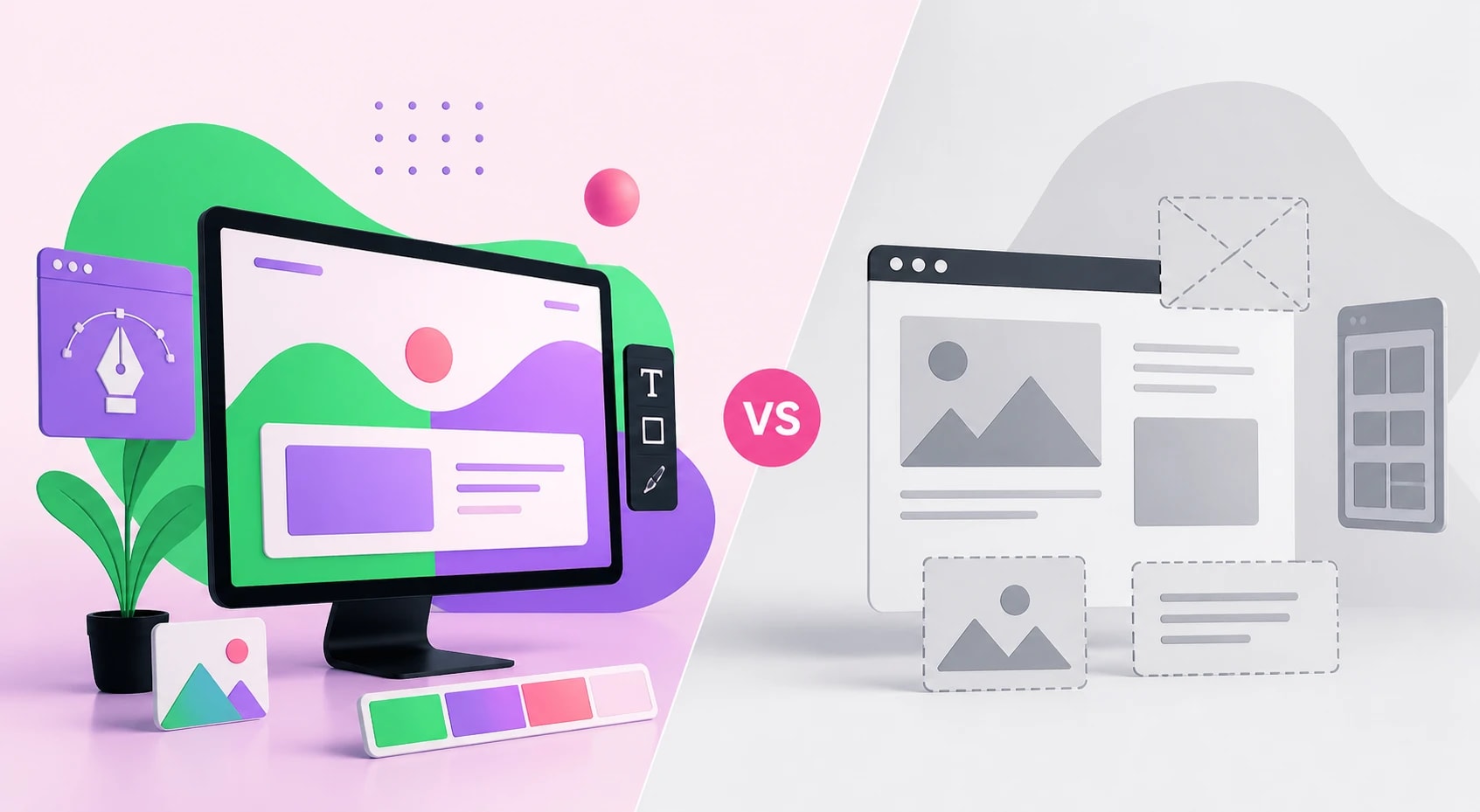
That is why custom web design continues to outperform templates for companies focused on long-term growth, stronger branding, and better online visibility.
Templates Create Similar-Looking Websites
One of the biggest problems with website templates is that they are designed for mass use. The same layouts, structures, and design patterns are reused thousands of times across different industries.
While templates can look visually appealing at first, they often fail to help businesses stand out from competitors. Visitors quickly recognise generic layouts and stock design elements, which can reduce trust and make brands appear less established.
Custom web design allows businesses to create a unique online presence tailored specifically to their audience, products, and goals. Every section, visual element, and interaction can be designed to support the customer journey instead of forcing the business to fit inside a pre-built framework.
In highly competitive markets, originality matters. A distinctive website helps businesses build credibility and stay memorable long after a visitor leaves the page.
First Impressions Happen Instantly
Studies consistently show that users form opinions about websites within seconds. If a website looks outdated, cluttered, or difficult to navigate, potential customers are far more likely to leave and search for alternatives.
Template websites often struggle to create a strong first impression because many use the same visual layouts and design patterns. Visitors may subconsciously associate the website with low effort or lack of professionalism.
Custom web design allows businesses to control exactly how visitors experience the brand from the very first interaction. Strategic use of white space, typography, imagery, and calls-to-action can dramatically improve trust and engagement.
For service-based businesses especially, credibility is everything. A professionally designed website instantly communicates legitimacy and helps businesses appear more established within their industry.
Performance Matters More Than Ever
Website speed and user experience have become major ranking factors in modern SEO. Search engines now place heavy emphasis on Core Web Vitals, mobile responsiveness, and overall site performance.
Many templates include unnecessary scripts, plugins, animations, and bloated code that slow websites down significantly. Although these extra features may look impressive, they often damage usability and increase loading times.
Custom-built websites are typically far more efficient because they are developed specifically around the functionality a business actually needs. Cleaner code, optimised assets, and streamlined design choices contribute to faster page speeds and improved user engagement.
This becomes especially important for local businesses competing online. Companies investing in bespoke web design in Liverpool are increasingly focusing on performance-driven websites that not only look professional but also convert visitors into customers more effectively.
Mobile Experience Cannot Be Ignored
Mobile traffic now dominates most industries, with users browsing, shopping, and making enquiries directly from smartphones. Unfortunately, many template websites still provide inconsistent mobile experiences despite claiming to be “mobile-friendly.”
A design that looks good on desktop may still create problems on smaller screens:
- Difficult navigation
- Oversized images
- Poor spacing
- Slow loading times
- Intrusive pop-ups
- Hard-to-click buttons
Custom web design takes a mobile-first approach, ensuring every page is built specifically for usability across all screen sizes.
This not only improves user experience but also helps with SEO rankings, since search engines now prioritise mobile performance heavily when evaluating websites.
Businesses that ignore mobile optimisation risk losing a significant percentage of potential customers before they even reach the enquiry stage.
Better SEO Flexibility
Search engine optimisation has evolved dramatically in recent years. Modern SEO requires technical precision, structured content, mobile optimisation, and strong user engagement signals.
Templates can limit SEO performance in several ways:
- Restricted page structures
- Duplicate code patterns
- Limited schema implementation
- Poor heading hierarchy
- Slower loading speeds
- Excessive plugin dependency
Custom websites provide greater control over every SEO element. Developers can create clean URL structures, lightweight code, advanced schema markup, and fully optimised page templates tailored for search visibility.
Businesses using custom development also have more freedom to scale their content strategies over time. Landing pages, service pages, local SEO pages, and conversion-focused layouts can all be built with flexibility in mind.
As Google continues prioritising user experience and content quality, having full technical control over a website becomes a major competitive advantage.
Security and Stability Are Growing Concerns
Cybersecurity is becoming increasingly important for businesses of all sizes. Template websites that rely heavily on third-party plugins can create vulnerabilities if updates are ignored or unsupported software is installed.
Many website hacks occur because of outdated plugins, weak configurations, or mass-market systems that attackers already understand well.
Custom-built websites often reduce these risks because they contain fewer unnecessary components and can be developed with stronger security practices from the beginning.
This includes:
- Secure coding standards
- Custom admin protections
- Lightweight functionality
- Reduced plugin dependency
- Controlled user permissions
For businesses handling customer data, online payments, or sensitive information, website security should never be treated as an afterthought.
Stronger Branding and User Experience
Brand perception plays a huge role in online success. A website should reflect a company’s identity, values, and professionalism from the moment a visitor arrives.
Templates often force businesses to compromise on layout, navigation, and visual consistency. Even with modifications, many websites still retain the “template feel” that experienced users can easily recognise.
Custom web design allows businesses to create a fully tailored experience that aligns with their branding and audience expectations. Everything from colour schemes and typography to page transitions and call-to-action placement can be strategically designed around conversion goals.
Good user experience is not simply about appearance. It is about guiding users naturally toward actions such as:
- Making enquiries
- Booking appointments
- Purchasing products
- Requesting quotes
- Contacting the business
A well-designed custom website removes friction and improves usability across all devices.
Conversion Optimisation Becomes Easier
One major advantage of custom web design is the ability to optimise every part of the user journey for conversions.
Templates are usually built for general use rather than specific business objectives. This often leads to cluttered layouts or poorly positioned conversion elements.
Custom websites can be strategically designed around user behaviour and business goals. This includes:
- Clearer calls-to-action
- Optimised enquiry forms
- Improved navigation flow
- Better content hierarchy
- Trust-building design elements
- Faster checkout experiences
Small improvements in conversion rates can make a huge difference over time. Even a modest increase in leads or sales can significantly improve return on investment.
For businesses spending money on SEO, PPC, or social media advertising, improving conversion rates becomes just as important as increasing traffic.
Scalability for Future Growth
Many businesses initially choose templates because they appear cheaper and faster to launch. The problem is that as the business grows, the website often struggles to grow with it.
Template-based systems can become difficult to customise when adding:
- Advanced functionality
- Booking systems
- Integrations
- Custom calculators
- Membership areas
- Multilingual support
- Bespoke user dashboards
Over time, patching together plugins and third-party tools can create technical problems, security risks, and performance issues.
Custom-built websites are far more scalable because they are developed with future growth in mind. Businesses can add features gradually without rebuilding the entire site from scratch.
This long-term flexibility often makes custom web design more cost-effective over several years, even if the initial investment is higher.
Templates Still Have a Place
Despite their limitations, templates are not entirely without value. For small personal projects, early-stage startups, or temporary campaigns, templates can provide a fast and affordable solution.
They are especially useful when:
- Budgets are extremely limited
- Speed is the main priority
- The website has minimal functionality requirements
- Long-term scalability is not important
However, businesses relying heavily on online leads, customer trust, or digital marketing usually reach a point where template limitations begin affecting growth.
At that stage, investing in a custom website becomes less of a luxury and more of a strategic business decision.
Final Thoughts
Website templates may continue improving with AI and automation, but they still cannot fully replace the advantages of custom design and development.
In 2026, businesses that want stronger branding, better SEO performance, faster websites, and higher conversion rates are continuing to choose custom-built solutions over generic templates.
A professionally developed website offers far greater flexibility, scalability, and long-term value. While templates may provide a quick starting point, custom web design remains the better investment for businesses serious about standing out online and building sustainable growth.