Who Owns Artificial Intelligence
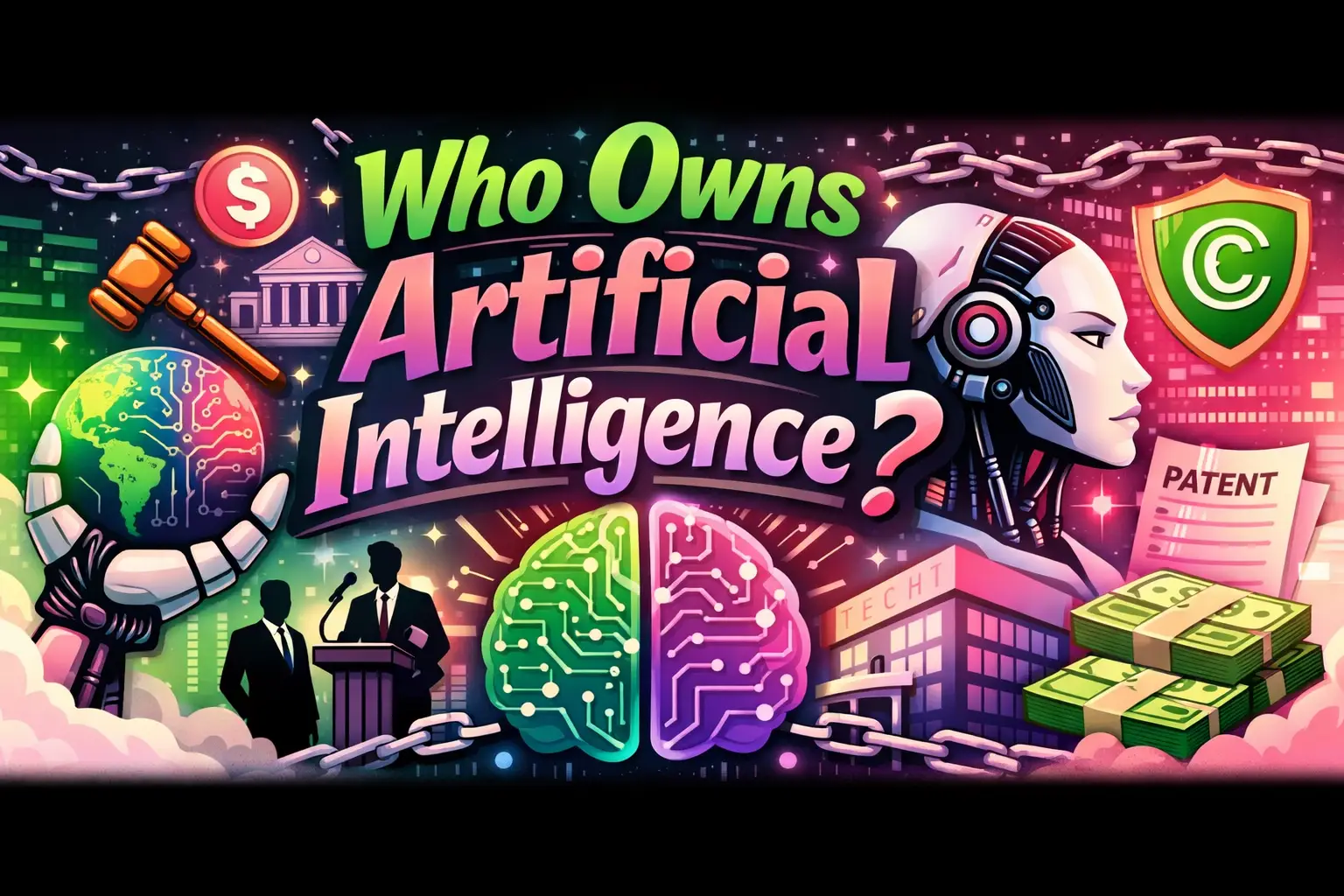
The question “Who Owns Artificial Intelligence” is becoming increasingly important as AI systems shape industries, economies, and everyday life. From machine learning models to generative AI tools, ownership is not always straightforward. Developers, companies, users, and even governments may all have valid claims depending on how the AI is built and used.
For developers, understanding AI ownership is critical. It impacts intellectual property rights, licensing, liability, and monetization strategies. This article breaks down the legal, technical, and ethical dimensions of AI ownership in a clear, structured, and practical way.
Who owns artificial intelligence systems?
Short answer: AI systems are typically owned by the individual or organization that creates or legally acquires them, but ownership depends on contracts, data sources, and jurisdiction.
Ownership of AI systems is not a single-layer concept. It includes multiple components:
- The underlying code (software ownership)
- The trained model (weights and architecture)
- The training data
- The outputs generated by the system
In most cases, companies developing AI systems retain ownership through intellectual property laws, trade secrets, or licensing agreements.
What determines ownership of AI?
Key factors:
- Who developed the AI model
- Employment or contractor agreements
- Licensing terms of frameworks and datasets
- Jurisdiction-specific intellectual property laws
For example, if a developer builds an AI model while employed, the employer usually owns it.
Do developers own the AI they create?
Short answer: Developers may own AI they create independently, but not when working under employment contracts.
Ownership depends on the context of development:
Independent developers
- Own their code and models by default
- Can license or sell their AI systems
- Must ensure compliance with third-party licenses
Employed developers
- Typically assign IP rights to their employer
- Work under “work-for-hire” agreements
- Cannot claim ownership unless specified otherwise
Open-source contributors
- Retain copyright but license usage rights
- Ownership is shared through licensing models
Who owns AI-generated content?
Short answer: AI-generated content ownership is unclear and varies by jurisdiction, but often belongs to the user or platform under specific terms.
This is one of the most debated areas in AI law.
Key scenarios
- User-generated prompts: Users may claim rights to outputs they initiate
- Platform ownership: Some platforms retain rights via terms of service
- No human authorship: In some countries, AI-generated content may not qualify for copyright
Developers must carefully design terms of use to define ownership boundaries.
Can AI own itself?
Short answer: No, AI cannot own itself because it is not recognized as a legal entity.
Ownership requires legal personhood. AI systems currently:
- Cannot hold property
- Cannot enter contracts
- Cannot be held legally responsible
All ownership must be assigned to humans or organizations.
Who owns the data used to train AI?
Short answer: Data ownership belongs to the original data creators or rights holders, not necessarily the AI developer.
Training data is a major source of legal complexity.
Types of data ownership
- Public data: Freely usable but may have restrictions
- Licensed data: Requires compliance with terms
- Private data: Owned by individuals or organizations
Developers must ensure they have legal rights to use data for training purposes.
Risks for developers
- Copyright infringement
- Privacy violations
- Regulatory penalties
Who owns AI models and algorithms?
Short answer: The creator or organization that develops the model typically owns it, protected by copyright, patents, or trade secrets.
Ownership layers
- Code: Protected by copyright
- Algorithms: May be patented in some cases
- Model weights: Often treated as trade secrets
Companies often choose trade secret protection over patents to avoid public disclosure.
Do companies own AI created using their tools?
Short answer: It depends on the platform’s terms of service.
When developers use AI platforms:
- Some grant full ownership of outputs
- Some retain partial rights
- Some impose usage restrictions
Always review licensing agreements before building commercial products.
What role do contracts play in AI ownership?
Short answer: Contracts are the primary mechanism that defines AI ownership in real-world scenarios.
Common contract types
- Employment agreements
- Independent contractor agreements
- Software licenses
- Data usage agreements
These documents override default legal assumptions and clearly assign ownership rights.
How do intellectual property laws apply to AI?
Short answer: AI ownership is governed by existing IP laws, including copyright, patents, and trade secrets.
Copyright
- Applies to code and human-created content
- May not apply to fully AI-generated outputs
Patents
- Protect novel AI techniques
- Require disclosure of invention details
Trade secrets
- Protect proprietary models and data
- Do not require public disclosure
What are the ethical concerns around AI ownership?
Short answer: Ethical concerns include fairness, transparency, and control over data and decision-making systems.
Key concerns
- Data exploitation without consent
- Bias in training datasets
- Concentration of power in large tech companies
- Lack of transparency in ownership structures
Developers must consider ethical implications alongside legal requirements.
How should developers approach AI ownership?
Short answer: Developers should proactively define ownership through clear documentation, licensing, and compliance practices.
Best practices checklist
- Define ownership in contracts early
- Use properly licensed datasets
- Document model development processes
- Choose appropriate licensing models
- Protect intellectual property strategically
Step-by-step approach
- Identify all components of your AI system
- Verify ownership or licenses for each component
- Draft clear terms of use
- Register IP where applicable
- Monitor legal developments
How do governments regulate AI ownership?
Short answer: Governments regulate AI ownership through intellectual property laws, data protection regulations, and emerging AI-specific policies.
Different regions take different approaches:
- Some focus on data privacy (e.g., GDPR-like frameworks)
- Some emphasize innovation and patents
- Others are developing AI-specific regulations
Developers working globally must adapt to multiple legal frameworks.
Is AI ownership different for open-source projects?
Short answer: Yes, open-source AI ownership is shared and governed by licensing terms.
Common open-source licenses
- MIT License
- Apache 2.0
- GPL
These licenses allow usage, modification, and distribution but impose specific conditions.
What is the future of AI ownership?
Short answer: AI ownership will become more complex as regulations evolve and AI capabilities expand.
Emerging trends
- Stronger data ownership laws
- AI-specific legal frameworks
- Increased scrutiny on training data
- New business models for AI licensing
Developers should stay informed and adaptable as the legal landscape changes.
Conclusion: Who really owns artificial intelligence?
Final answer: There is no single owner of artificial intelligence. Ownership is distributed across developers, companies, data providers, and users, depending on how the system is created and used.
For developers, the key is clarity. Define ownership early, understand legal frameworks, and build responsibly. AI ownership is not just a legal issue—it is a strategic and ethical one that will shape the future of technology.
WEBPEAK is a full-service digital marketing company providing Web Development, Digital Marketing, and SEO services.
FAQ: Who Owns Artificial Intelligence
Who legally owns artificial intelligence?
The legal owner is typically the ব্যক্তি or organization that develops or purchases the AI, as defined by contracts and intellectual property laws.
Can AI-generated content be copyrighted?
In many jurisdictions, AI-generated content without human input cannot be copyrighted, though rules vary by country.
Do users own content created with AI tools?
Often yes, but ownership depends on the platform’s terms of service and licensing agreements.
Who owns AI training data?
Training data is owned by its original creators or rights holders, not automatically by the AI developer.
Can AI systems hold ownership rights?
No, AI systems are not legal entities and cannot own property or intellectual rights.
Do companies own AI built by employees?
Yes, in most cases employers own AI created by employees under work-for-hire agreements.
Is open-source AI free to use?
Yes, but usage must comply with the specific open-source license governing the project.
How can developers protect their AI ownership?
Developers can protect ownership through contracts, licensing, patents, and trade secret strategies.