What is Conversion Rate Optimization and How to Use It
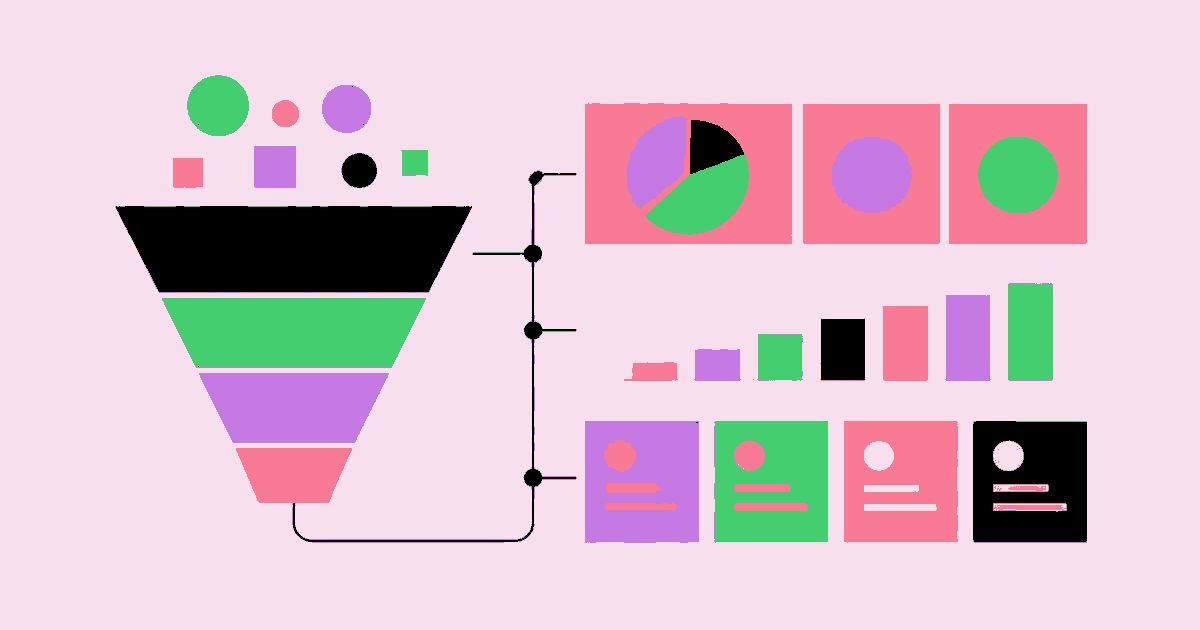
Conversion Rate Optimization, or CRO, is the systematic process of increasing the percentage of website visitors who take a desired action — such as making a purchase, filling out a form, signing up for a free trial, or booking a demo. Instead of constantly spending more on ads to acquire more traffic, CRO helps you extract more value from the traffic you already have. A small lift in conversion rate often delivers the same revenue impact as doubling your ad budget — at a fraction of the cost. In this guide, we’ll explain exactly what CRO is, why it’s one of the highest-leverage activities in modern marketing, and how to apply it step by step using data, testing, and user research.
Boost Conversions With WebPeak
CRO blends design, psychology, copywriting, and analytics — and getting it wrong wastes both traffic and money. WebPeak helps brands worldwide turn underperforming pages into conversion machines. Their website design team builds clean, intuitive layouts that guide users to action, while their AI website personalization capabilities tailor experiences to each visitor in real time. The result is higher conversions without increasing ad spend.
Why CRO is the Highest-Leverage Marketing Activity
If your site converts at 1% and you double traffic, you double sales — but you also double ad spend. If you instead double your conversion rate from 1% to 2%, you also double sales without spending another dollar on traffic. That’s the magic of CRO: it compounds the value of every marketing dollar you’ve already invested.
CRO also improves ad performance. Higher conversion rates lower your cost per acquisition, which lets you outbid competitors on Google, Meta, and TikTok. It improves SEO indirectly too, because faster, clearer, more user-friendly pages rank better. And it strengthens retention because the same UX improvements that help first-time buyers also delight returning customers. CRO is one of the few activities that simultaneously improves acquisition, retention, and unit economics.
The Core Principles of CRO
Effective CRO is built on three foundations: data, user research, and experimentation. Start with data — quantitative tools like Google Analytics 4, Mixpanel, or Amplitude show you where users drop off. Heatmaps and session recordings from tools like Hotjar and Microsoft Clarity show you why. Combine these with user research — surveys, interviews, and usability tests — to understand the emotional and rational reasons behind behavior.
Once you understand the why, form hypotheses. A good hypothesis sounds like: “Because mobile users abandon checkout at the address step, simplifying the address form will increase mobile conversions by at least 10%.” Then run A/B tests to validate. Tools like VWO, Optimizely, or Google Optimize alternatives like Convert and AB Tasty make split testing accessible to teams of any size. Document every test — winners and losers — to build institutional knowledge over time.
The CRO Process: Step by Step
Step 1: Audit your funnel. Map every page from ad click to conversion and identify the biggest leak. The page with the highest traffic and lowest conversion rate is usually your highest-impact starting point. Step 2: Investigate. Use heatmaps, session recordings, surveys, and analytics to understand why users drop off — confusing copy, slow load times, hidden CTAs, lack of trust signals, or friction in forms.
Step 3: Hypothesize and prioritize. Use frameworks like ICE (Impact, Confidence, Ease) or PIE (Potential, Importance, Ease) to rank ideas. Step 4: Test. Run statistically significant A/B tests, ensuring you have enough traffic and conversions to reach a 95% confidence level. Step 5: Implement winners and document learnings. Step 6: Repeat. The best CRO programs run constantly — every week, every page, every funnel stage — turning small wins into massive compounded gains.
High-Impact CRO Tactics That Work in 2025
Some tactics consistently move the needle. Speed up your pages — every 100ms of load time can cost up to 1% of conversions. Simplify forms by removing unnecessary fields and using inline validation. Add trust signals like reviews, testimonials, security badges, and money-back guarantees near every CTA. Use scarcity and social proof ethically — “12 people viewing this product” or “Only 3 left in stock.”
Personalize experiences using AI. Show different headlines, offers, and product recommendations based on traffic source, location, or behavior. Optimize mobile relentlessly — most traffic is now mobile, but most conversion drop-offs happen there. Test pricing presentation: monthly vs annual, with vs without anchor pricing, and free trial vs freemium. Above all, write copy that speaks to customer pain and desire, not company features. Clear, benefit-led messaging often outperforms beautiful design alone.
Frequently Asked Questions
What is a good conversion rate?
It varies wildly by industry. Ecommerce averages 2–3%, lead generation pages can reach 5–15%, and SaaS free trial signups often convert at 10–25%. The right benchmark is always your own past performance — focus on continuous improvement.
How much traffic do I need to run A/B tests?
Most reliable A/B tests need at least 1,000–5,000 visitors and 100+ conversions per variant to reach statistical significance. Lower-traffic sites can still run tests but should aim for bigger changes that produce larger lifts.
Should I use AI tools for CRO?
Yes. AI tools now help generate test ideas, write headline variations, analyze session data at scale, and even personalize pages dynamically. They are most powerful when paired with human judgment and clear hypotheses.
How long should I run an A/B test?Run tests for at least one full business cycle — usually 1–2 weeks — even after reaching significance, to capture day-of-week effects. Stopping tests too early is one of the most common CRO mistakes and leads to false winners.What’s the difference between CRO and UX design?
UX design focuses on overall usability and user satisfaction, while CRO focuses specifically on increasing measurable conversion actions. Strong UX is a foundation for strong CRO, and the two disciplines work best together.
Conclusion
Conversion Rate Optimization is the closest thing marketing has to a free lunch. By turning more of your existing traffic into customers, CRO improves every other metric in your business — CAC, ROAS, LTV, and profitability. Start with data, prioritize the biggest leaks, run disciplined A/B tests, and document learnings relentlessly. Done well over time, CRO becomes a compounding competitive advantage that lets you outspend, outrank, and outgrow rivals — without ever needing to find more traffic.