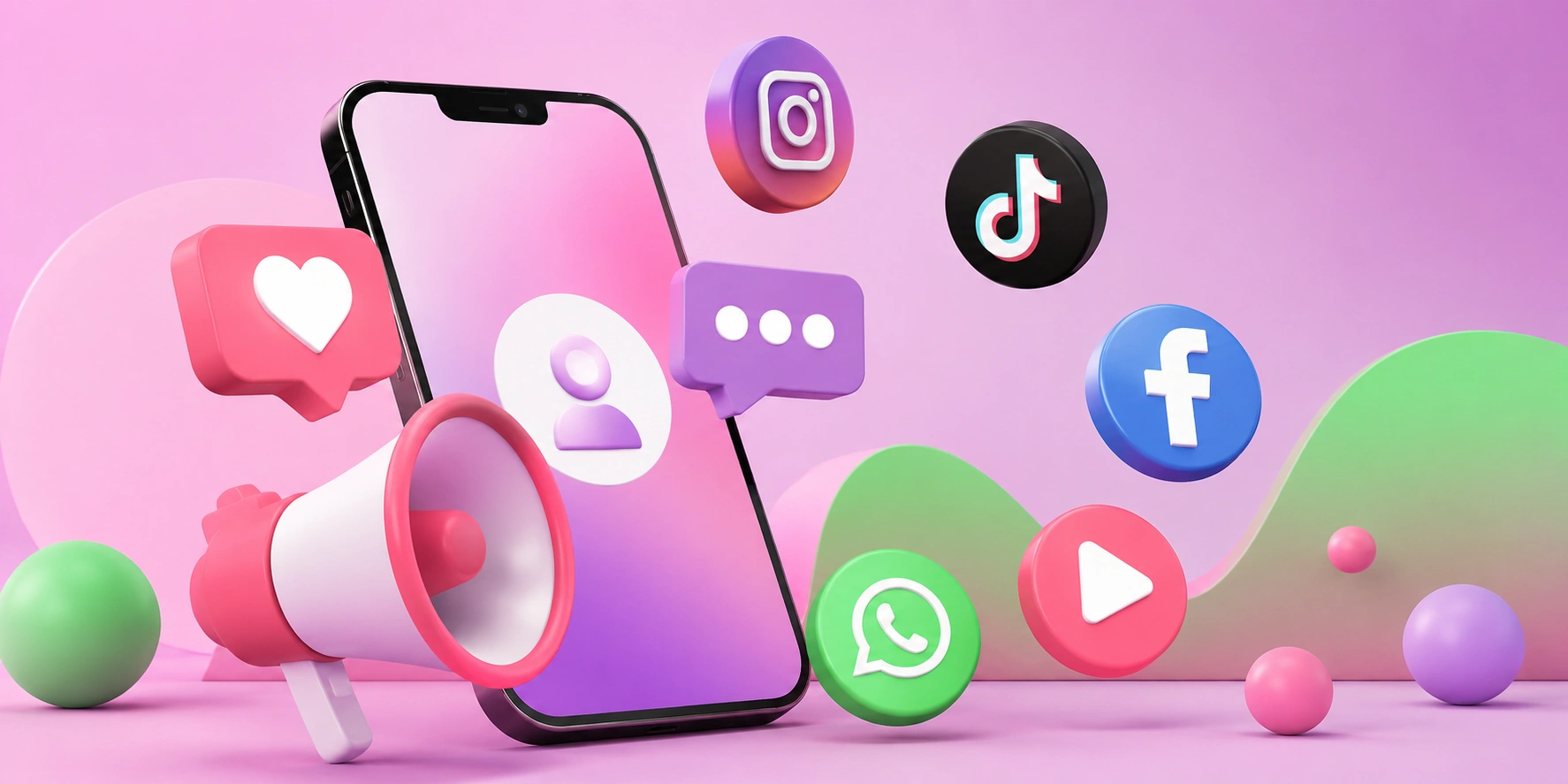
Every business owner has heard the advice to "be active on social media," but few stop to ask what a social media channel actually is versus a platform, a network, or a marketing tactic. A social media channel is a specific medium or account through which a brand publishes content and communicates with its audience — think of a Facebook Page, an Instagram profile, a YouTube channel, or a LinkedIn Company Page. Understanding the distinction between a channel and a broader platform helps marketers plan smarter, avoid wasted effort, and pick the right mix for their goals instead of trying to be everywhere at once.
Quick Answer: A social media channel is an individual account or medium (like a Facebook Page, Instagram profile, or YouTube channel) used to publish content and interact with an audience. It's distinct from a platform, which is the underlying network or technology hosting many channels at once.
How WebPeak Helps Brands Choose and Manage the Right Social Media Channels
Picking the right channels is harder than it looks — a beauty brand thriving on Instagram might waste its budget trying to replicate that success on LinkedIn. WebPeak's team works with businesses to audit their audience, map out where that audience actually spends time, and build a channel strategy around real behavior rather than guesswork. Their social media management services cover everything from channel selection and content calendars to community management and performance tracking, so brands stop spreading themselves thin across channels that don't convert. For companies unsure where to even start, a conversation with WebPeak often clarifies which one or two channels deserve the majority of the marketing budget.
What's the Difference Between a Social Media Channel and a Platform?
This is one of the most common points of confusion in digital marketing, and getting it right changes how a team plans its content strategy.
A platform refers to the overall social network or technology — Facebook, Instagram, TikTok, LinkedIn, YouTube, and X are all platforms. A channel is the specific account or presence a brand maintains on that platform. A company might have one channel on Instagram (its business profile) but could theoretically run multiple channels on YouTube (a main channel plus a support or tutorials channel). In marketing conversations, "channel" is often used more broadly to also describe email, SMS, or a blog — any distinct medium used to reach an audience — while "social media channel" narrows that definition specifically to social platforms.
Why does this distinction matter practically? Because strategy decisions happen at the channel level, not the platform level. A brand doesn't just "do Instagram" — it decides what its Instagram channel is for (brand awareness, customer service, direct sales) and builds content rules specific to that channel's format and audience expectations.
How to Choose the Right Social Media Channels for Your Business
Most businesses don't need to be present on every channel — they need to be excellent on the two or three that actually reach their buyers. Here's a practical process for narrowing that list:
- Identify where your actual customers spend time. A B2B software company will get more value from LinkedIn than TikTok, while a fashion retailer targeting Gen Z will likely see the opposite.
- Match channel format to your content strengths. If your team can produce strong short-form video, Instagram Reels, TikTok, and YouTube Shorts are natural fits. If your strength is long-form expertise, LinkedIn articles or a YouTube channel may work better.
- Consider your sales cycle. Impulse-purchase products do well on visually driven, fast-scrolling channels. High-consideration purchases (like enterprise software or real estate) often perform better on channels that support longer-form trust-building content.
- Audit competitor presence. Look at where competitors are getting real engagement, not just where they're posting — comments and shares reveal channel fit far more than follower counts.
- Start narrow, then expand. Launch on one or two channels, build a consistent posting rhythm and measurement process, and only add a new channel once the first ones are running smoothly.
Comparing Popular Social Media Channels by Business Use Case
Different channels serve different purposes. The table below breaks down common social media channels by their core strength, ideal content format, and the type of business that typically benefits most.
| Channel | Core Strength | Best Content Format | Typical Business Fit |
|---|---|---|---|
| Visual brand storytelling | Reels, carousels, Stories | Retail, lifestyle, hospitality, personal brands | |
| Professional authority and B2B reach | Articles, native video, thought-leadership posts | B2B services, SaaS, consulting, recruiting | |
| YouTube | Long-form education and discoverability | Tutorials, reviews, explainer video | Education, tech products, home services |
| TikTok | Rapid organic reach among younger audiences | Short-form, trend-based video | Consumer brands, entertainment, food and beverage |
| Community building and local reach | Groups, event promotion, local ads | Local businesses, community organizations, e-commerce |
What the Data and Real-World Usage Tell Us About Channel Selection
Rather than relying on vague industry buzz, it helps to look at how these platforms are actually structured and owned, since that shapes how channels behave over time. Meta owns and operates Facebook, Instagram, and WhatsApp, which means advertising tools and audience data can often be managed centrally through Meta Business Suite — a practical advantage for brands running channels across more than one Meta-owned platform. Google owns YouTube, which is also the world's second-largest search engine by query volume, meaning YouTube channels benefit from both social discovery and traditional search traffic in a way most other social channels do not.
In practice, brands that treat each channel as having a distinct job — rather than copy-pasting the same content everywhere — consistently see stronger engagement per post, because content is tailored to how people actually use that channel (LinkedIn users read; TikTok users watch; Pinterest users plan). This is an operational pattern seen repeatedly across accounts, not a fabricated statistic, but it holds up well as a planning principle: design content for the channel's native behavior, not just for cross-posting convenience.
Key Takeaways
- A social media channel is a specific account (like an Instagram profile or YouTube channel), while a platform is the broader network hosting many channels.
- Businesses don't need every channel — they need the two or three where their actual audience is active and engaged.
- Content format should match each channel's native behavior: video for TikTok and Reels, long-form for YouTube, professional insight for LinkedIn.
- Meta's ownership of Facebook, Instagram, and WhatsApp allows for centralized management across those three channels.
- Starting narrow with one or two well-managed channels outperforms a scattered presence across many underused ones.
Frequently Asked Questions
Is a social media channel the same as a social media platform?
No. A platform is the network itself, such as Instagram or LinkedIn, while a channel is the specific account or presence a business maintains on that platform. A brand can have one channel per platform, or in some cases, multiple channels on the same platform for different purposes.
How many social media channels should a small business use?
Most small businesses see better results focusing on one to three channels where their target customers are genuinely active, rather than spreading thin resources across five or six. Quality and consistency on fewer channels typically outperform sporadic activity everywhere.
Which social media channel is best for B2B businesses?
LinkedIn is generally the strongest channel for B2B businesses because its user base skews toward professionals, decision-makers, and industry-specific audiences. It supports long-form thought leadership content that builds trust over a longer B2B sales cycle.
Can a YouTube channel help with SEO, not just social reach?
Yes. Since YouTube is owned by Google and functions as a major search engine on its own, well-optimized video titles, descriptions, and tags can help content surface in both YouTube search and Google search results, giving it a dual discovery advantage.
What's the difference between organic and paid social media channels?
Organic channels rely on unpaid content and engagement to reach an audience, while paid channels use advertising budgets to boost visibility, targeting, and reach. Most effective strategies use both together — organic content builds trust, and paid amplification extends its reach.
Conclusion
The single most important decision in social media marketing isn't which platform is trending — it's understanding that a channel is a specific tool with a specific job, and choosing the right two or three based on where your actual audience spends time and how they prefer to consume content. Start by auditing your current channels against this lens, cut what isn't working, and double down on the one or two that show real engagement. That focused approach, more than any growth hack, is what separates social media presence from social media results.