How to Build an AI Lead Generation System for Your Business
Most businesses do not have a lead generation problem; they have a lead handling problem. Prospects arrive through forms, chats, ads, and referrals, then wait hours or days for a generic follow-up while the sales team sorts through low-quality inquiries by hand. An AI lead generation system is a connected set of tools that captures prospects from every channel, enriches and scores them against your ideal customer profile, routes them to the right person, and runs personalized follow-up automatically, with AI handling the reading, research, and writing that used to slow everything down.
Quick Answer: To build an AI lead generation system, define your ideal customer profile, centralize every lead source into one CRM, add AI enrichment and scoring, route qualified leads to owners instantly, automate personalized follow-up with human review, nurture lower-priority leads with email sequences, and measure conversion by source to improve continuously.
What an AI Lead Generation System Includes
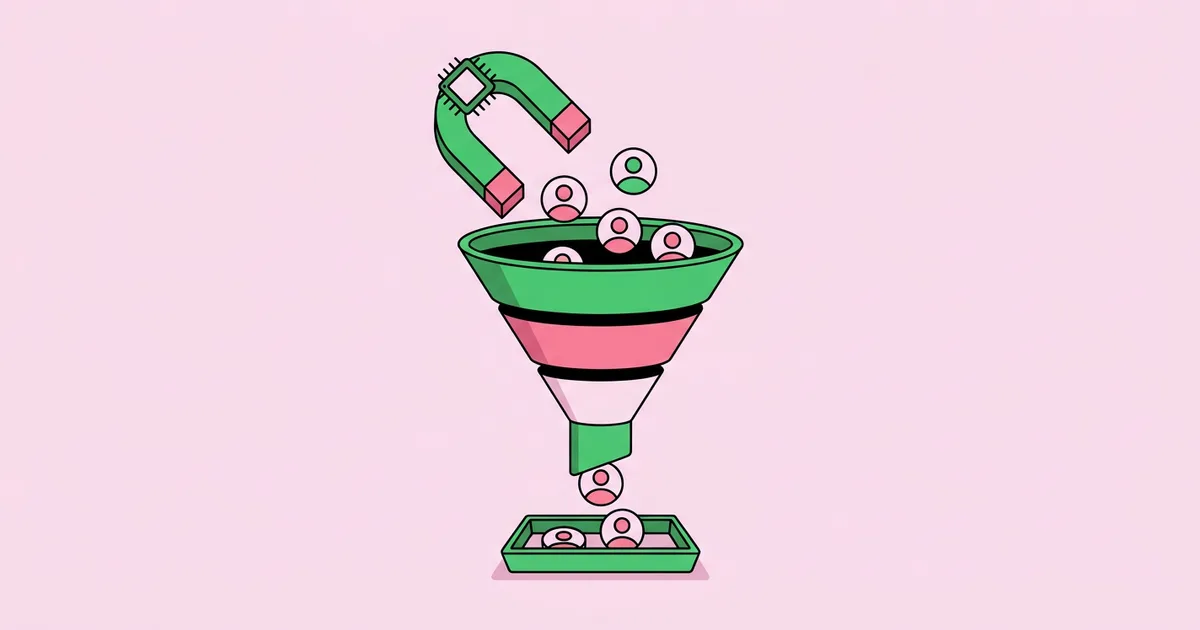
An AI lead generation system includes five connected layers: capture, enrichment, qualification, routing, and nurture, all writing to a single customer record. Missing any layer creates a leak where good prospects slip away.
Capture brings in leads from website forms, chatbots, landing pages, ad lead forms, events, and outbound lists. Enrichment adds company size, industry, location, and role from data providers so you are not relying on what a prospect typed. Qualification scores each lead against your ideal customer profile. Routing assigns the lead to the right salesperson or sequence. Nurture keeps lower-priority leads warm until they are ready. To orchestrate these layers, most teams rely on marketing workflow automation tools such as Zapier, Make, or n8n, connected to a CRM like HubSpot, Pipedrive, or Salesforce.
AI changes the economics of each layer. It can read a free-text inquiry and determine intent, research a company website and summarize what the business does, score fit using both data and context, and write a first reply that references the prospect's actual situation. Tasks that once required a sales development representative's time on every lead now happen in seconds, leaving people to focus on conversations.
It is worth stating what this system is not. It is not a tool for scraping contact details indiscriminately or sending mass unsolicited email. Systems built on consent, relevance, and genuine value produce better pipeline and avoid the deliverability and legal problems that come with spam-style outreach.
The Build Process Step by Step
The build process works best in a fixed order, because each layer depends on decisions made in the one before.
- Define your ideal customer profile. Write down the company characteristics, roles, problems, and buying signals that describe your best customers. Review closed-won deals to ground this in reality rather than assumptions.
- Choose a single system of record. Every lead, from every source, must land in one CRM. Without this, reporting and deduplication break down.
- Connect all capture points. Link website forms, chat, ad lead forms, and event lists to the CRM through native integrations or an automation platform. Tag each lead with its source.
- Add enrichment. Use your CRM's built-in enrichment or a tool like Clay or Apollo to fill company and role data automatically.
- Build scoring. Combine fit, from enrichment, and intent, from behavior like pricing page visits or demo requests, into a priority score. An AI step can add context by reading the inquiry text.
- Set routing rules. Assign high-priority leads to owners immediately by territory, segment, or round-robin, with a notification in Slack or email.
- Automate first responses. Have AI draft a personalized reply for each qualified lead, saved for the owner's quick review and send.
- Create nurture paths. Enroll lower-priority leads in relevant email sequences based on their interest and industry.
- Measure and iterate. Track response time, conversion rate by source and score, and pipeline generated, then refine your scoring and messages.
System Components and Tool Options
Each component of the system has several strong tool options, and the right combination depends on your existing stack and budget. Confirm current pricing and features with each vendor.
| Component | Purpose | Example Tools | Where AI Adds Value |
|---|---|---|---|
| Capture | Collect leads from every channel | Website forms, Tidio, Intercom, HubSpot forms, ad lead forms | Chatbots qualify visitors conversationally and capture details |
| Enrichment | Add company and role data | Clay, Apollo, HubSpot enrichment | Researches websites and summarizes what each company does |
| Qualification | Score fit and intent | HubSpot lead scoring, Salesforce, custom AI steps | Interprets free-text inquiries to judge intent and urgency |
| Routing and follow-up | Assign owners and respond fast | Zapier, Make, n8n, CRM workflows, Slack | Drafts personalized first replies referencing the prospect's context |
| Nurture | Keep warm leads engaged | HubSpot sequences, Mailchimp, ActiveCampaign | Tailors email content by industry, role, and interest |
Small businesses can run all five components inside one platform like HubSpot plus one automation tool. Larger teams often add a dedicated enrichment platform and more advanced scoring.
Practitioner Analysis: What Actually Moves Conversion
From building lead systems for different businesses, the factor that most consistently improves results is speed to first response. A prospect who submits a form is at peak interest in that moment. A system that enriches, scores, routes, and drafts a reply within minutes captures that interest; a manual process that responds the next day often finds the prospect has already spoken to a competitor.
The second factor is the website chat channel. Many visitors will not fill out a form but will ask a question. A chatbot that answers accurately, then offers to book a call or collect details at the right moment, captures leads that would otherwise leave silently. If you have not set one up yet, choosing the right chatbot platform for your website is often the highest-value addition to the capture layer.
Third, scoring should be simple at first and learn from outcomes. Teams often build elaborate scoring models before they have data. Start with a few clear fit and intent signals, then compare scores against which leads actually converted every month and adjust the weights. Scoring that never gets reviewed drifts away from reality.
Finally, personalization must be genuine. AI-drafted messages that reference a prospect's industry, stated problem, and company context perform better than templates, but only if they are accurate. Keep a human review step on first replies, especially for high-value leads, so a wrong assumption never reaches a prospect.
Common Mistakes That Leak Leads
These mistakes quietly undermine lead generation systems, often for months before anyone notices.
- Multiple systems of record. Leads split between a spreadsheet, an email inbox, and the CRM cannot be tracked, deduplicated, or reported on reliably. Centralize everything.
- Over-complicated scoring. Dozens of weighted criteria nobody understands produce scores nobody trusts. Start simple and refine with conversion data.
- Fully automated outreach without review. Sending AI-written emails unchecked risks inaccurate claims and damaged reputation. Review first touches, automate later stages carefully.
- Ignoring consent and deliverability. Respect privacy and anti-spam laws such as GDPR and CAN-SPAM, honor unsubscribes, and authenticate your sending domain to protect deliverability.
- No feedback from sales. If salespeople cannot mark leads as poor fit with a reason, the scoring never improves. Build a simple feedback field into the CRM.
- Unmonitored integrations. A broken form connection can silently drop leads. Set up failure alerts and a weekly check of lead volume by source.
Walkthrough: A Lead System for a B2B Service Firm
Consider a B2B consultancy that receives inquiries through its website form, a newly added chatbot, LinkedIn ad lead forms, and occasional event lists. Leads currently arrive in a shared inbox and wait for a partner to read them.
Here is the implementation they follow:
- Profile. Partners review recent won deals and define the ideal client: company size range, target industries, and the problems that triggered engagement.
- Centralize. HubSpot becomes the single system of record. The website form, chatbot, and LinkedIn lead forms connect natively; event lists import through a standard template.
- Enrich and classify. A Make scenario triggers on each new contact, enriches company data, and uses an AI step to classify the inquiry as new project, partnership, recruitment, or vendor pitch.
- Score. Fit comes from enrichment against the profile; intent comes from the inquiry text and pages visited. Leads are tagged high, medium, or low priority.
- Route and draft. High-priority leads are assigned to the partner covering that industry, with a Slack alert and an AI-drafted reply referencing the prospect's stated challenge.
- Nurture. Medium-priority leads enter an industry-specific email sequence sharing relevant case studies; low-priority and non-sales inquiries are routed to the right inbox.
- Review. Every month, the team compares scores to outcomes and adjusts criteria, while partners flag poor-fit leads in a CRM field.
The consultancy now responds to strong prospects within minutes instead of days, partners stop reading vendor pitches, and the monthly review steadily sharpens which leads deserve attention first.
The firm also discovers that its chatbot surfaces a type of lead it rarely saw before: prospects researching late in the evening who would never have filled out a form. Because the chatbot captures their details and the system scores and routes them overnight, partners start the morning with warm, already-researched conversations waiting for them. That single change in the capture layer makes the rest of the system noticeably more productive.
Key Takeaways
- An AI lead generation system connects capture, enrichment, qualification, routing, and nurture around a single CRM record.
- Speed to first response is the most consistent driver of conversion, so automate enrichment, scoring, and reply drafting.
- Website chatbots capture prospects who will ask a question but will never fill out a form.
- Start with simple fit and intent scoring, then refine monthly by comparing scores against actual conversions.
- Keep human review on first-touch messages and build every outreach flow on consent and privacy compliance.
Frequently Asked Questions
What is an AI lead generation system?
It is a connected set of tools that captures prospects from every channel, enriches their records with company data, scores them against your ideal customer profile, routes them to the right salesperson, and automates personalized follow-up. AI handles reading inquiries, researching companies, and drafting messages at speed.
Which CRM is best for an AI lead generation system?
HubSpot is a popular choice for small and mid-sized businesses because it combines CRM, forms, chat, scoring, and email sequences with built-in AI. Pipedrive suits sales-focused small teams, while Salesforce fits larger organizations. The best CRM is the one your team will consistently use.
How does AI score leads?
AI lead scoring combines fit data, such as company size, industry, and role, with intent signals like demo requests, pricing page visits, and the content of an inquiry. AI adds value by interpreting free-text messages, while rule-based criteria keep scores transparent and easy to adjust over time.
Can AI write personalized outreach emails safely?
AI can draft personalized emails that reference a prospect's industry and stated needs, but a person should review first-touch messages before sending. This prevents inaccurate assumptions and protects your reputation. Always follow consent and anti-spam rules, honor unsubscribes, and authenticate your sending domain properly.
Do I need a developer to build a lead generation system?
No. A CRM like HubSpot combined with an automation platform such as Zapier or Make can deliver capture, enrichment, scoring, routing, and nurture without code. Developers become useful when connecting internal systems, building custom scoring logic, or handling very high lead volumes reliably.
How do I measure if my lead generation system works?
Track speed to first response, conversion rate from lead to meeting and from meeting to customer, pipeline value by source, and the share of leads sales marks as poor fit. Review these monthly and use the results to adjust scoring rules, routing, and nurture messaging.
Conclusion
The most important decision in building an AI lead generation system is committing to a single system of record. Once every lead from every channel lands in one CRM, enrichment, scoring, routing, and measurement all become straightforward, and AI can work on complete, trustworthy data.
Your next step is to audit where leads arrive today and connect each source to your CRM. If you are still choosing the components, start with this roundup of AI automation tools for small businesses to assemble a stack that fits your budget.