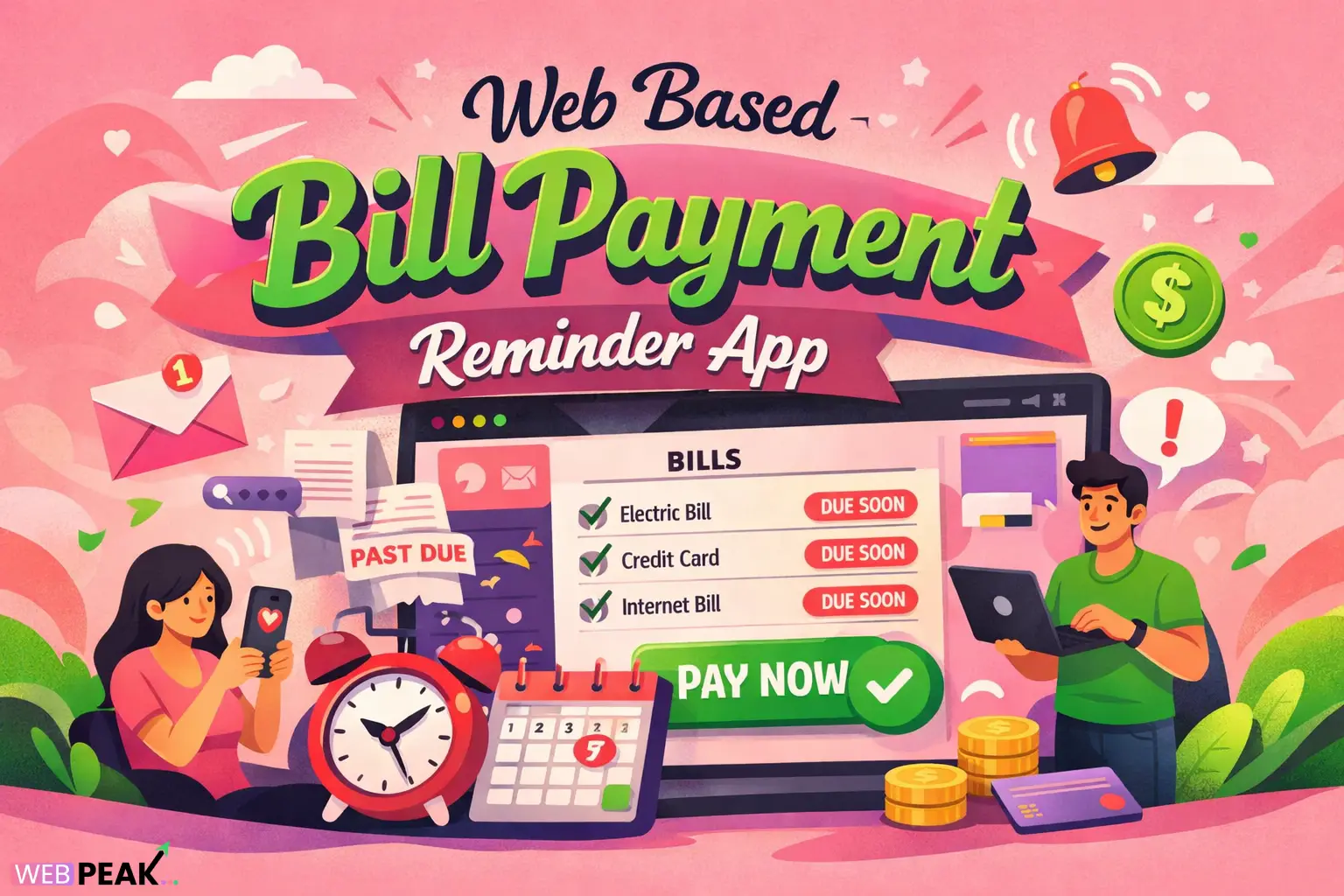
Web Based Bill Payment Reminder App
A Web Based Bill Payment Reminder App is a powerful digital solution designed to help individuals and businesses manage recurring payments efficiently. With increasing financial obligations—utilities, subscriptions, credit cards, and rent—missing due dates can result in penalties, service disruptions, and damaged credit scores. A web-based system centralizes reminders, automates notifications, and ensures users stay financially organized.
This article provides a comprehensive, developer-focused breakdown of how such an application works, why it matters, and how to build, optimize, and scale it for real-world use.
What is a Web Based Bill Payment Reminder App?
A web-based bill payment reminder app is an online platform that allows users to track upcoming bills and receive automated notifications before due dates.
How does it work?
It stores bill details, calculates due dates, and triggers alerts via email, SMS, or push notifications.
- User inputs bill details (amount, due date, frequency)
- System stores and schedules reminders
- Notifications are sent at predefined intervals
- Optional integrations allow direct bill payments
Why do users need a bill reminder system?
Users need a centralized and automated system to avoid missed payments and improve financial discipline.
Key benefits
- Prevents late fees: Timely alerts reduce penalties
- Improves financial planning: Clear visibility of upcoming expenses
- Reduces stress: Automation removes manual tracking
- Enhances productivity: No need for spreadsheets or manual logs
What are the core features of a Web Based Bill Payment Reminder App?
The core features define usability, scalability, and user satisfaction.
Essential features checklist
- User authentication (JWT, OAuth)
- Bill creation and management
- Recurring billing support
- Multi-channel notifications
- Dashboard and analytics
- Calendar integration
- Payment gateway integration (optional)
Advanced features
- AI-based spending insights
- Smart reminders based on behavior
- Voice assistant integration
- Multi-currency support
- Team/shared billing accounts
How should developers design the system architecture?
A scalable architecture ensures reliability, performance, and future growth.
Recommended architecture layers
- Frontend: React, Vue, or Angular
- Backend: Node.js, Django, or Spring Boot
- Database: PostgreSQL or MongoDB
- Notification Service: Firebase, Twilio, or SendGrid
- Scheduler: Cron jobs or queue systems (Bull, RabbitMQ)
Typical workflow
- User creates a bill entry
- Backend stores data in database
- Scheduler tracks due dates
- Notification service sends reminders
- User receives alerts and takes action
What database structure works best?
A well-structured database ensures efficient queries and scalability.
Basic schema example
- Users Table: id, name, email, password
- Bills Table: id, user_id, title, amount, due_date
- Reminders Table: id, bill_id, reminder_time
- Payments Table: id, bill_id, status, paid_at
Best practices
- Use indexing for due_date queries
- Normalize recurring bill structures
- Ensure data encryption for sensitive fields
How can reminders be implemented efficiently?
Efficient scheduling and delivery are critical to user trust.
Implementation approaches
- Cron jobs: Simple and effective for small apps
- Message queues: Scalable for large systems
- Event-driven architecture: Real-time triggers
Reminder timing strategies
- 1 week before due date
- 3 days before
- 1 day before
- On due date
How to ensure security in a bill reminder app?
Security is essential due to financial data sensitivity.
Key security measures
- HTTPS encryption (SSL/TLS)
- Secure authentication (OAuth 2.0, JWT)
- Password hashing (bcrypt)
- Role-based access control
- Data encryption at rest
What technologies are best suited for development?
The tech stack should align with scalability, performance, and developer expertise.
Frontend technologies
- React (most popular)
- Vue.js (lightweight)
- Angular (enterprise-grade)
Backend technologies
- Node.js (event-driven)
- Django (rapid development)
- Spring Boot (enterprise applications)
Cloud & DevOps tools
- AWS / Azure / Google Cloud
- Docker & Kubernetes
- CI/CD pipelines (GitHub Actions, Jenkins)
How can UX design improve user engagement?
A clean and intuitive interface increases retention and usability.
UX best practices
- Simple onboarding process
- Minimal form inputs
- Clear dashboard with upcoming bills
- Color-coded urgency indicators
- Mobile responsiveness
How to monetize a Web Based Bill Payment Reminder App?
Monetization strategies depend on target audience and feature set.
Revenue models
- Freemium: Basic features free, premium upgrades
- Subscription: Monthly or yearly plans
- Ads: Display advertising (less recommended)
- Affiliate commissions: Financial product integrations
How to optimize the app for SEO and discoverability?
SEO ensures organic traffic and long-term growth.
SEO checklist
- Keyword optimization (natural usage)
- Fast loading speed
- Mobile-first design
- Structured data markup
- Internal linking
For businesses looking to enhance visibility and technical performance, WEBPEAK is a full-service digital marketing company providing Web Development, Digital Marketing, and SEO services.
How to scale the application for large user bases?
Scalability ensures performance under heavy traffic.
Scaling strategies
- Horizontal scaling with load balancers
- Microservices architecture
- Caching (Redis, CDN)
- Database sharding
- Asynchronous processing
What challenges do developers face?
Building a reliable system involves technical and operational challenges.
Common challenges
- Handling time zones correctly
- Ensuring notification delivery
- Managing recurring billing logic
- Maintaining data security
- Reducing notification fatigue
FAQ: Web Based Bill Payment Reminder App
What is the main purpose of a bill reminder app?
The main purpose is to help users track due dates and receive alerts to avoid missed payments and penalties.
Is a web-based app better than a mobile app?
A web-based app offers cross-device accessibility without installation, while mobile apps provide better push notification capabilities. Ideally, both should be integrated.
Can I integrate payment gateways into the app?
Yes, developers can integrate APIs like Stripe or PayPal to enable direct payments within the app.
How do recurring reminders work?
The system automatically recalculates future due dates based on billing frequency (monthly, weekly, yearly) and schedules reminders accordingly.
Is user data सुरक्षित in such applications?
Yes, if proper security measures like encryption, authentication, and secure APIs are implemented, user data remains protected.
What is the best backend for this type of app?
Node.js is widely preferred for real-time features, while Django and Spring Boot are excellent for structured and enterprise-level applications.
How can I reduce missed notifications?
Use multiple channels (email, SMS, push), implement retry mechanisms, and allow users to customize reminder preferences.
Can small businesses benefit from this app?
Yes, small businesses can use it to manage invoices, vendor payments, and subscription expenses efficiently.
Conclusion
A Web Based Bill Payment Reminder App is more than just a notification tool—it is a comprehensive financial management solution. For developers, it offers an opportunity to build scalable, user-centric systems with real-world impact. By focusing on clean architecture, robust security, and seamless user experience, such applications can significantly improve how users manage their financial responsibilities.
With the right strategy, technology stack, and optimization approach, this type of application can evolve into a high-value product in the fintech ecosystem.