SaaS Marketing Software: How to Build a Stack That Drives Predictable Revenue
The average marketing team now pays for more tools than it uses, and the waste is not random — it clusters in duplicated data. SaaS marketing software refers to the cloud-based tools a subscription business uses to attract, convert, activate, and retain customers, including CRM, marketing automation, product analytics, SEO platforms, and customer messaging systems. The reason stacks bloat is structural: each tool stores its own version of the customer, so teams buy a fifth tool to reconcile the previous four. The fix is not another platform. It is deciding which system holds the single source of truth for customer data first, then buying only the tools that read from or write to it. That one sequencing decision typically determines whether a stack costs 8% of revenue and drives growth, or 15% and drives confusion.
Quick Answer: SaaS marketing software is the set of cloud tools used to acquire, convert, activate, and retain subscription customers — typically CRM, marketing automation, product analytics, SEO, and lifecycle messaging. Build the stack by choosing your single source of customer truth first, then adding one tool per proven bottleneck, and audit usage quarterly to remove shelfware.
How WebPeak Helps Teams Choose and Integrate SaaS Marketing Software
Selecting tools is only half the work; the value appears when they are wired together and actually used. WebPeak supports this on both sides — strategy and engineering — which is why their AI-powered marketing automation work usually starts with mapping the existing data flow rather than recommending a new platform. Their teams build the custom middleware, event tracking, and API connections that let a CRM, product database, and messaging tool share one definition of an active user, and they design the lifecycle campaigns that run on top of it. Because WebPeak also delivers content, SEO, design, and application development for clients worldwide, a SaaS company can get the integration built and the campaigns populated without coordinating three separate vendors — which is where most automation projects stall. You can see their full service range at WebPeak.
Which Categories of SaaS Marketing Software Do You Actually Need?
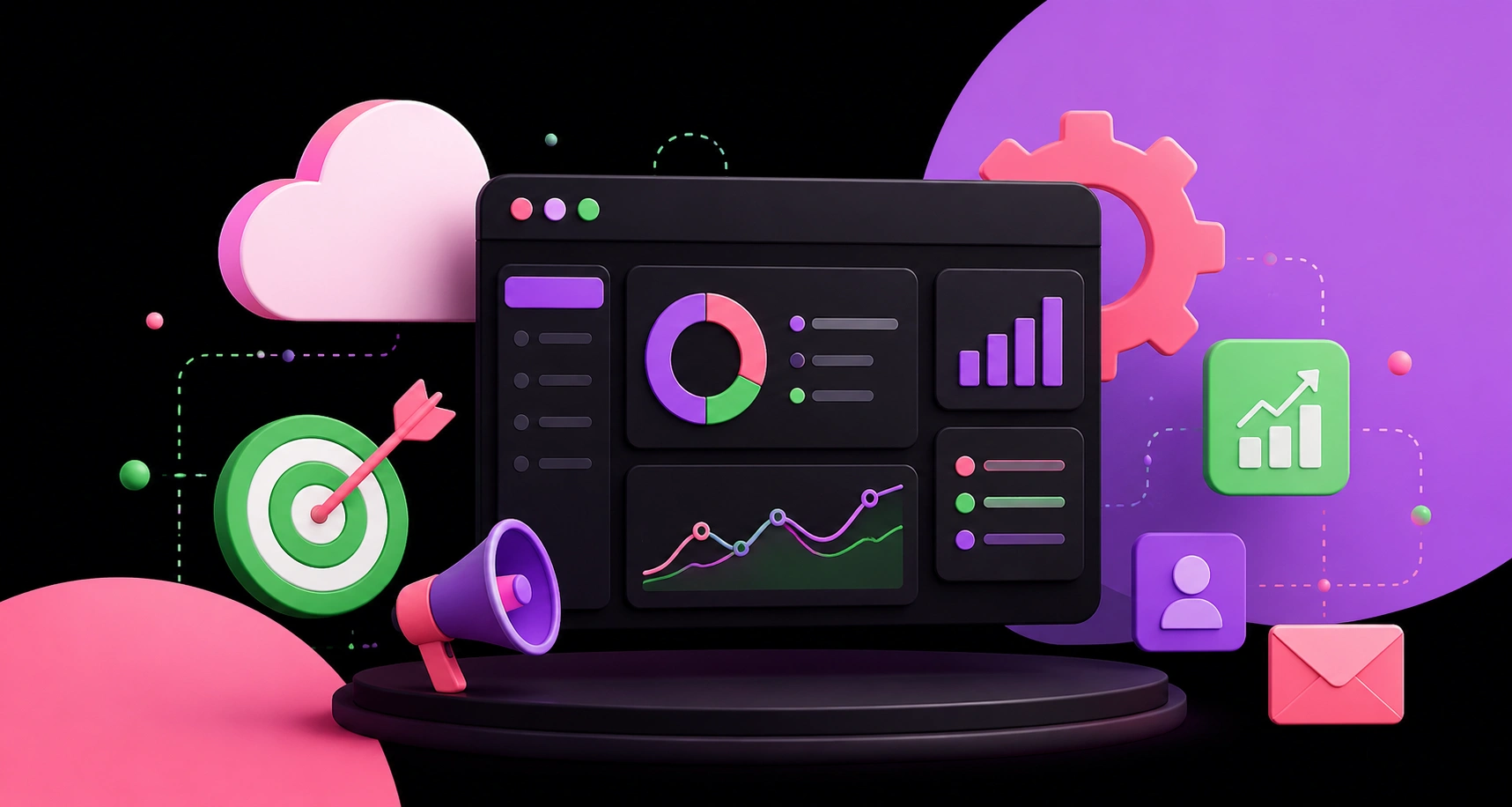
Five categories cover the vast majority of genuine needs, and most teams need only one tool per category. A CRM is the system of record for accounts, contacts, and deals — it answers "who are they and where are they in the buying process." Marketing automation handles triggered, multi-step communication based on behaviour, which is different from an email sender that only blasts campaigns. Product analytics tracks in-app events to reveal activation and drop-off, and it is the category early SaaS teams most often skip and most often regret skipping. SEO and content platforms handle keyword research, technical crawling, and rank tracking so organic acquisition is measurable rather than hopeful. Customer messaging — in-app chat, tooltips, and onboarding prompts — closes the gap between signup and first value. Anything beyond these five should be justified by a specific bottleneck with a number attached to it. A useful rule from practice: if you cannot name the metric a tool will move and the person who will log in daily, do not buy it.
How Do You Build the Stack in the Right Order?
Sequence purchases by bottleneck, not by feature envy. This order reflects how subscription funnels actually break:
- Install analytics before anything else. Web analytics plus event tracking on signup, activation, and upgrade actions. Without this, every later tool is a guess.
- Add a CRM as your source of truth. Define one canonical customer record and decide which system wins on conflicts.
- Add lifecycle email and in-app messaging. Target the biggest measured leak — usually trial-to-paid — with onboarding sequences before spending on more traffic.
- Add an SEO platform once you have product-market signal. Prioritise commercial-intent, comparison, and integration keywords over broad informational topics.
- Add paid media tooling and attribution only when unit economics are known and CAC payback is under roughly 12 months.
- Add a data warehouse and reverse ETL when three or more tools disagree about the same number — that disagreement is the buying trigger, not headcount.
Two habits protect the stack over time: run a quarterly login audit and cancel anything with fewer than four active users, and negotiate annual contracts only after a full monthly cycle of real usage.
What Should Each Tool Category Deliver, and What Does It Typically Cost?
Budget realistically: most efficient SaaS teams spend roughly 5% to 10% of marketing budget on software, with the rest on people, media, and content production. The table below reflects typical early- to mid-stage ranges and the single metric each category should be held accountable for.
| Software Category | Primary Job to Be Done | Typical Monthly Cost Range |
|---|---|---|
| CRM and pipeline management | Single source of truth for accounts, deals, and revenue stage | $0 to $1,500 |
| Marketing automation and lifecycle email | Behaviour-triggered onboarding, nurture, and win-back sequences | $100 to $2,000 |
| Product analytics and event tracking | Identify activation moments and in-app drop-off points | $0 to $1,200 |
| SEO and content platform | Keyword research, technical audits, and rank visibility | $100 to $700 |
| In-app messaging and support | Convert trials and reduce early churn through guided onboarding | $75 to $900 |
One nuance worth planning for: usage-based pricing on analytics and messaging tools scales with your success, so model costs at 5x current volume before committing. Teams that skip this get an unpleasant renewal quote exactly when growth finally arrives.
Where Do Most SaaS Marketing Stacks Waste Money?
Waste concentrates in unused seats and overlapping features. Research published by Productiv in its SaaS Management Index has repeatedly found that roughly half of provisioned SaaS licences go unused, and Gartner has estimated that organisations waste around 25% of their SaaS spend on unnecessary or underused subscriptions. Applied to a $4,000 monthly marketing stack, that is close to $12,000 a year funding software nobody opens. The second, less visible waste is integration debt: when tools are connected by manual CSV exports, the reporting is late, trust erodes, and teams stop making decisions from data at all.
The original point I would push here, based on how these stacks behave in practice, is that tool consolidation is usually a conversion-rate project in disguise. When customer data lives in one place, you can trigger a message the hour a user hits a usage limit instead of the following Monday — and timing, not copy, is what lifts upgrade rates. That is why the highest-ROI spend for many mid-stage teams is not a new platform but engineering time on integration, supported by disciplined email marketing execution and, where the funnel depends on custom in-product experiences, purpose-built web development rather than another off-the-shelf widget.
Key Takeaways
- SaaS marketing software spans five core categories: CRM, marketing automation, product analytics, SEO, and in-app messaging — one tool per category is usually enough.
- Choose your single source of customer truth before buying anything else; every later tool should read from or write to it.
- Productiv's SaaS Management Index has found roughly half of provisioned SaaS licences go unused, making quarterly login audits a direct cost saving.
- Gartner estimates around 25% of SaaS spend is wasted on unnecessary or underused subscriptions — model usage-based pricing at 5x current volume before signing annually.
- Install event tracking before paid acquisition; without activation data, every tool purchase after it is guesswork.
Frequently Asked Questions
What is SaaS marketing software in simple terms?
SaaS marketing software is cloud-based tooling that helps subscription businesses attract, convert, activate, and retain customers. It typically includes a CRM, marketing automation, product analytics, SEO platforms, and in-app messaging. Unlike one-off tools, these systems share behavioural data so campaigns can be triggered by what users actually do.
What SaaS marketing tools should a startup buy first?
Start with web and product analytics, then a CRM, then lifecycle email. Analytics tells you where the funnel leaks, the CRM stores one canonical customer record, and lifecycle email fixes the leak. Add SEO platforms and paid-media tooling only after activation and retention numbers are stable.
How much of my marketing budget should go to software?
Most efficient SaaS teams allocate about 5% to 10% of total marketing budget to software, with the remainder funding people, media spend, and content production. If tooling exceeds 15%, you likely have overlapping platforms or unused seats worth consolidating in your next quarterly audit.
Do I need marketing automation if I already have an email tool?
Yes, if you need behaviour-triggered sequences. A basic email tool sends scheduled campaigns to lists; marketing automation reacts to events such as a completed onboarding step, an unused feature, or an approaching usage limit. That timing difference is what improves trial-to-paid and expansion rates.
How do I stop paying for SaaS marketing tools nobody uses?
Run a quarterly audit: list every subscription, its owner, its cost, and its active user count from admin logs. Cancel or downgrade anything with fewer than four active users or no metric attached. Consolidate overlapping features and renegotiate annual renewals using real usage data.
Conclusion
The most valuable decision in building a SaaS marketing stack is choosing where customer truth lives — get that right and every subsequent tool becomes easier to evaluate, integrate, and justify. Before your next renewal, export a list of every subscription with its owner, cost, and active user count, and hold each one to a single metric. Teams that run this audit twice a year consistently spend less and move faster than teams that keep adding platforms, because clarity in the data layer is what makes marketing measurable in the first place.