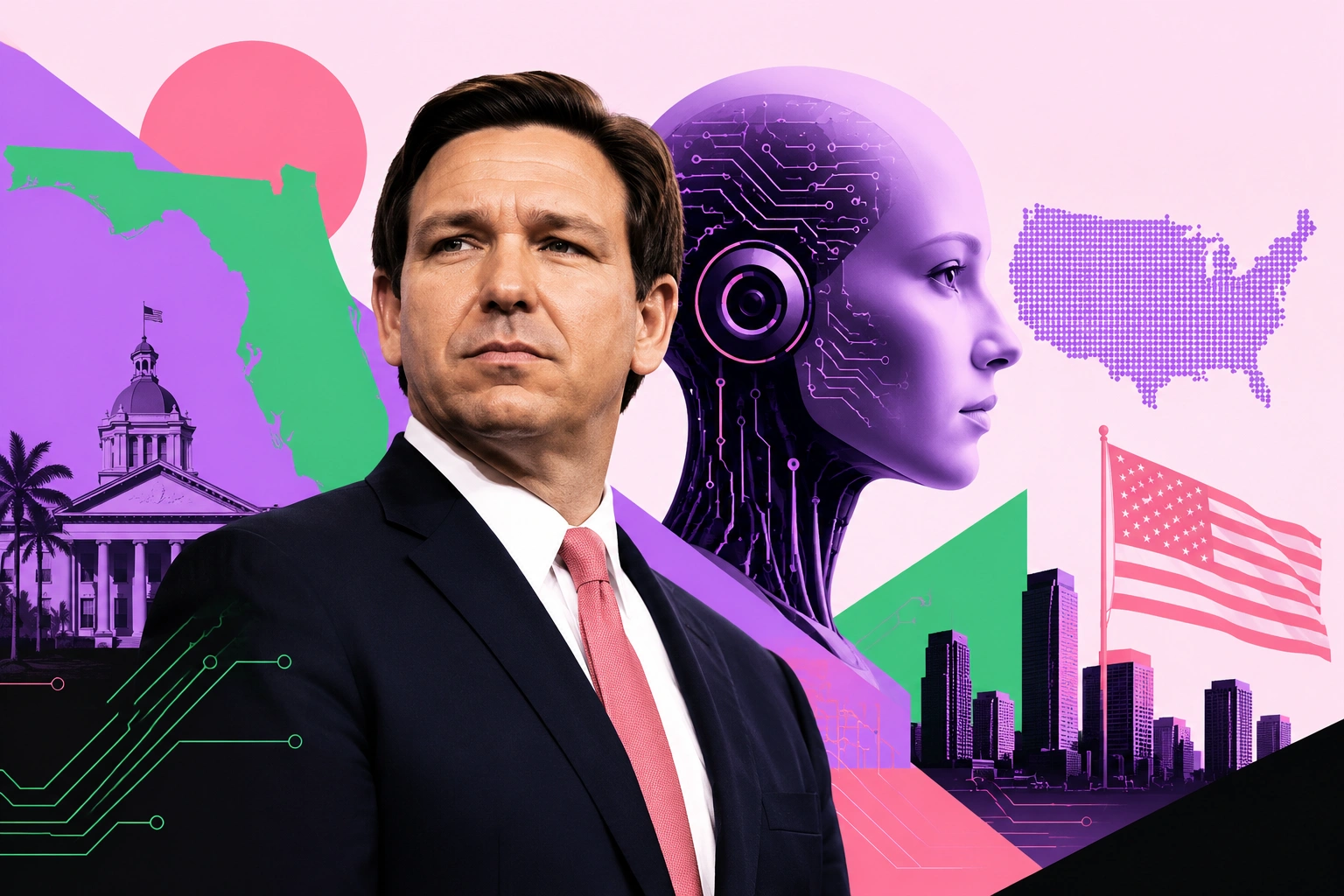
Ron DeSantis and Artificial Intelligence: What His Policies Mean for America's AI Future
Artificial intelligence is no longer a futuristic concept reserved for science fiction — it is actively reshaping economies, governments, education systems, and national security. As AI becomes a defining force of the 21st century, political leaders across the United States are beginning to form concrete stances on how the technology should be governed, developed, and deployed. Among the most prominent voices in this conversation is Ron DeSantis, the former Governor of Florida and a significant figure in contemporary Republican politics.
Understanding where DeSantis stands on AI matters — not just for his political base, but for businesses, developers, policymakers, and everyday Americans who will live and work in an AI-driven world. This article breaks down his stated positions, policy decisions during his governorship, and what his broader ideology suggests about the future of AI governance in America.
DeSantis's General Stance on Technology and AI
Ron DeSantis has consistently positioned himself as a defender of free markets and a critic of what he calls "Big Tech overreach." His technology philosophy blends economic libertarianism with a deep skepticism of federal regulatory power — two principles that directly influence how he approaches artificial intelligence.
During his 2024 presidential campaign, DeSantis emphasized that America must lead the world in AI development without allowing heavy-handed government regulation to stifle innovation. He argued that excessive oversight — particularly at the federal level — could cripple American competitiveness while giving adversaries like China room to advance unchecked. This position resonates with many in the tech and business communities who fear that premature regulation could disadvantage U.S. companies on the global stage.
However, DeSantis has also been vocal about holding large technology companies accountable when their platforms or algorithms exhibit what he describes as ideological bias. This creates an interesting tension: he favors minimal AI regulation in the economic sense but supports government intervention when tech power conflicts with his political values.
Florida's AI Landscape Under DeSantis
Encouraging AI Innovation in the State
As Governor of Florida, DeSantis took several steps to make the state a more attractive environment for technology companies, including those working in artificial intelligence. Florida under his leadership invested in workforce development initiatives, STEM education, and technology infrastructure aimed at positioning the state as a tech hub outside of California's Silicon Valley.
DeSantis signed legislation and supported funding programs designed to modernize Florida's government through technology. The Florida Digital Service, established during his tenure, was tasked with improving how state agencies leverage data and modern software — a foundation upon which AI integration could eventually be built.
Education and AI Readiness
DeSantis's education reforms, while controversial for other reasons, did include components aimed at boosting computer science and technology education in Florida's public schools. Expanding access to coding, data literacy, and computational thinking is widely considered a prerequisite for building a workforce capable of developing and working alongside AI systems.
By mandating computer science education and integrating it into core curricula, Florida under DeSantis moved in a direction aligned with building AI-ready human capital — even if the broader policy framing rarely centered explicitly on artificial intelligence.
AI Regulation: Where DeSantis Draws the Line
One of the most consequential aspects of any political figure's AI stance is where they stand on regulation. DeSantis occupies a position that is largely skeptical of broad AI regulation, especially at the federal level. He has expressed concern that sweeping regulatory frameworks would create compliance burdens that favor large corporations — which can afford legal teams — while crushing startups and small AI developers.
This perspective has merit. Overly complex regulatory environments historically tend to entrench incumbents and raise barriers to entry for newer, more innovative players. If America's AI future depends on a diverse ecosystem of developers and companies, not just a handful of Big Tech giants, then the regulatory design matters enormously.
At the same time, critics argue that light-touch regulation leaves consumers, workers, and democratic institutions vulnerable to AI-related harms — including algorithmic discrimination, deepfake disinformation, and autonomous systems used without adequate accountability. DeSantis has not offered detailed frameworks for addressing these concerns, which leaves a policy gap that his opponents are quick to highlight.
AI and National Security: A Priority Lens
Where DeSantis has been most consistent and detailed is in framing AI as a national security issue. He views the global AI race — particularly competition with China — as a defining challenge for American leadership in the coming decades. His rhetoric on this front mirrors that of many defense-oriented Republicans who believe that allowing China to achieve AI supremacy would be a strategic catastrophe.
This framing leads DeSantis to support robust government investment in AI research and development, particularly in defense applications. He has advocated for ensuring that American military and intelligence agencies have access to the most advanced AI tools, and that American-developed AI is not compromised by foreign influence or technology transfer.
From a policy standpoint, this national security lens suggests that a DeSantis-influenced AI agenda would prioritize military AI, autonomous systems, cybersecurity applications, and export controls on advanced AI technology — all areas where government investment and direction play a major role.
The Role of Private Sector and Entrepreneurship
DeSantis firmly believes that the private sector — not the government — should lead AI development. This aligns him with a broader conservative economic philosophy that trusts market forces to allocate resources efficiently and drive innovation faster than bureaucratic programs can.
For businesses and entrepreneurs exploring what AI can do for their organizations, this philosophy translates into a preference for a regulatory environment that allows experimentation, iteration, and commercial application of AI without excessive red tape. Companies working with specialized artificial intelligence services understand that agility and adaptability are essential in this fast-moving field — values that align with DeSantis's market-driven approach.
At the same time, an entirely unregulated private sector approach to AI raises legitimate questions about who bears the cost when AI systems fail, discriminate, or cause harm. Balancing entrepreneurial freedom with accountability will remain one of the central challenges for any policymaker navigating AI governance.
AI, Free Speech, and Content Moderation
An often-overlooked dimension of DeSantis's AI stance involves his long-running battle with large tech platforms over content moderation. DeSantis signed Florida's SB 7072, which sought to restrict how social media companies could moderate political speech — a law that was ultimately struck down by federal courts on First Amendment grounds.
This conflict is directly relevant to AI because modern content moderation is increasingly powered by machine learning algorithms. When DeSantis criticizes algorithmic censorship or AI-driven content decisions that he believes suppress conservative viewpoints, he is effectively engaging with one of AI's most politically charged applications.
His approach suggests that in any future policy position, DeSantis would push for transparency and contestability in AI-driven content systems — requiring platforms to disclose how their algorithms work and giving users meaningful recourse when automated decisions affect them. Whether one agrees with his political motivations or not, algorithmic transparency is a legitimate and growing concern in the AI governance debate.
Implications for America's AI Future
Innovation vs. Accountability
The central tension in DeSantis's AI worldview mirrors a broader national debate: how do you foster breakneck innovation while ensuring that AI systems are safe, fair, and accountable? There are no easy answers, but the policy choices made in the next five to ten years will set precedents that shape AI's role in American society for generations.
A DeSantis-influenced approach would likely push toward a lighter regulatory footprint domestically, aggressive investment in defense-related AI, and strong opposition to AI governance frameworks that originate from international bodies or that he views as ideologically driven.
What Businesses Should Watch
For businesses planning their digital and technology strategies, understanding the political landscape around AI is increasingly important. Policy shifts can affect data privacy rules, liability frameworks, procurement preferences, and sector-specific AI regulations across healthcare, finance, and education.
Companies that want to stay ahead of these changes — and leverage AI effectively regardless of the political environment — need partners who understand both the technology and its evolving governance context. Organizations like WebPeak help businesses navigate this landscape by providing expert digital services grounded in current best practices and forward-thinking strategy.
The Global Competitiveness Argument
Perhaps the strongest thread in DeSantis's AI narrative is the competitiveness argument. Whether one leans left or right, most analysts agree that America cannot afford to fall behind in AI development. The question is how to lead — through unfettered private innovation, structured public investment, or a hybrid model that leverages both.
DeSantis's answer leans heavily toward the private sector and free markets, with government playing a supporting role primarily in defense and national security. This vision has appeal but also limitations, particularly when it comes to ensuring equitable access to AI's benefits across all communities and income levels.
Conclusion
Ron DeSantis's approach to artificial intelligence reflects a broader conservative philosophy: prioritize innovation over regulation, trust the private sector, invest in national security applications, and remain deeply skeptical of both federal bureaucracy and Big Tech's unchecked power. His record in Florida and his campaign positions offer a coherent — if incomplete — picture of what AI governance might look like under his influence.
As AI continues to transform every sector of American life, the debate over how to govern it will only intensify. Whether DeSantis's market-first, security-focused vision becomes a dominant policy framework or one of many competing approaches, the stakes for getting AI policy right have never been higher. America's technological future depends not just on the brilliance of its engineers and entrepreneurs, but on the wisdom of the political leaders who shape the environment in which they work.