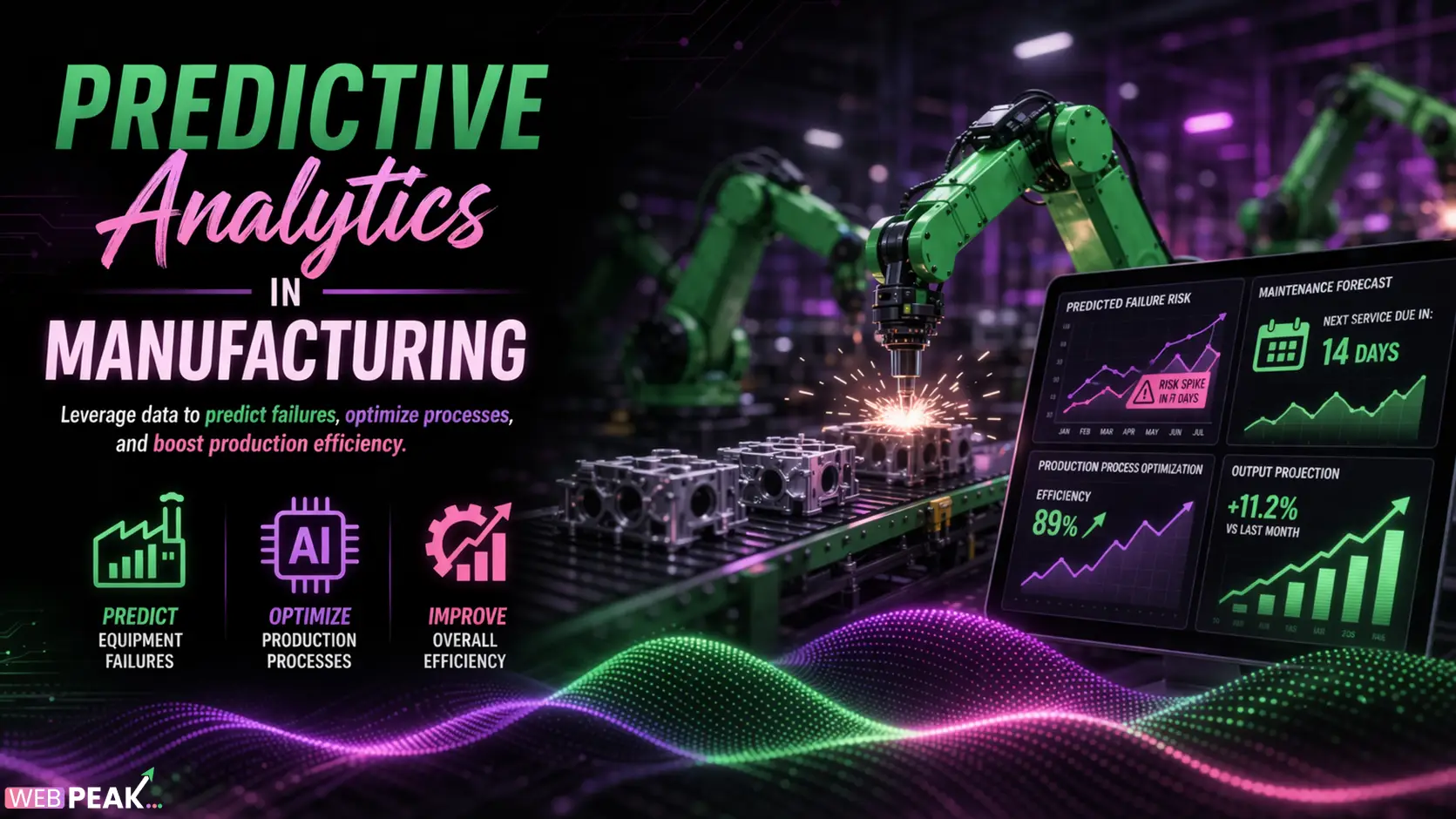
Predictive Analytics in Manufacturing
Predictive Analytics in Manufacturing is transforming how modern factories operate by enabling data-driven decision-making, reducing downtime, and improving operational efficiency. By leveraging historical and real-time data, manufacturers can anticipate failures, optimize production processes, and enhance product quality. This approach is no longer optional—it is becoming a core competitive advantage in Industry 4.0.
In this in-depth guide, we explore how predictive analytics works in manufacturing environments, its key use cases, implementation strategies, and the technologies powering this transformation.
What Is Predictive Analytics in Manufacturing?
Predictive analytics in manufacturing refers to the use of statistical models, machine learning algorithms, and data mining techniques to forecast future outcomes based on historical and real-time data.
How does predictive analytics work?
It works by analyzing patterns in data collected from machines, sensors, and production systems to predict events such as equipment failure, demand fluctuations, or quality issues.
- Collect data from IoT sensors and systems
- Process and clean the data
- Apply machine learning models
- Generate predictions and insights
- Trigger automated or manual actions
Why is it important in manufacturing?
It helps manufacturers shift from reactive to proactive operations, minimizing risks and maximizing efficiency.
- Reduces unexpected downtime
- Improves asset utilization
- Enhances product quality
- Lowers maintenance costs
What Are the Key Use Cases of Predictive Analytics in Manufacturing?
How does predictive maintenance improve operations?
Predictive maintenance uses data from machines to forecast failures before they occur, allowing maintenance to be scheduled at optimal times.
- Detects anomalies in vibration, temperature, or pressure
- Prevents costly breakdowns
- Extends equipment lifespan
How can demand forecasting optimize production?
Predictive models analyze historical sales and market trends to forecast demand accurately.
- Prevents overproduction or underproduction
- Optimizes inventory levels
- Improves supply chain efficiency
How does quality prediction reduce defects?
Predictive analytics identifies factors that lead to defects and predicts quality issues before they occur.
- Monitors production variables in real time
- Identifies root causes of defects
- Ensures consistent product quality
How is energy optimization achieved?
Energy consumption patterns are analyzed to identify inefficiencies and reduce costs.
- Tracks energy usage across machines
- Identifies wasteful processes
- Optimizes power consumption
What Technologies Power Predictive Analytics in Manufacturing?
What role does Industrial IoT (IIoT) play?
IIoT devices collect real-time data from machines and production lines, forming the foundation of predictive analytics.
- Sensors capture operational metrics
- Devices transmit data to centralized systems
- Enables real-time monitoring
How is machine learning used?
Machine learning algorithms analyze data patterns and improve predictions over time.
- Supervised learning for classification and regression
- Unsupervised learning for anomaly detection
- Deep learning for complex pattern recognition
Why is cloud computing essential?
Cloud platforms provide scalable infrastructure for storing and processing large datasets.
- Enables real-time analytics
- Supports distributed systems
- Reduces infrastructure costs
How do digital twins enhance predictive analytics?
Digital twins are virtual replicas of physical assets that simulate real-world conditions.
- Test scenarios without affecting production
- Improve predictive accuracy
- Enable proactive decision-making
How to Implement Predictive Analytics in Manufacturing?
What are the steps to get started?
Implementing predictive analytics requires a structured approach that aligns with business goals.
- Define objectives and use cases
- Assess data availability and quality
- Choose appropriate tools and platforms
- Develop and train predictive models
- Deploy and monitor performance
What data is required?
High-quality data is critical for accurate predictions.
- Machine sensor data
- Production logs
- Maintenance records
- Supply chain data
What challenges should be expected?
Manufacturers often face obstacles during implementation.
- Data silos and integration issues
- Legacy system compatibility
- Skill gaps in data science
- High initial investment
What Are the Benefits of Predictive Analytics in Manufacturing?
How does it reduce downtime?
By predicting equipment failures, manufacturers can schedule maintenance proactively, avoiding unexpected shutdowns.
How does it improve efficiency?
Optimized processes and resource allocation lead to higher productivity and reduced waste.
How does it enhance decision-making?
Data-driven insights enable faster and more accurate business decisions.
How does it lower operational costs?
Reduced maintenance costs, energy savings, and optimized inventory contribute to overall cost reduction.
What Are Best Practices for Success?
How can manufacturers ensure data quality?
Data accuracy and consistency are essential for reliable predictions.
- Implement data validation processes
- Use standardized data formats
- Continuously monitor data integrity
Why is cross-functional collaboration important?
Successful implementation requires collaboration between IT, operations, and management teams.
- Align business and technical goals
- Encourage knowledge sharing
- Promote data-driven culture
How should models be maintained?
Predictive models must be updated regularly to remain accurate.
- Retrain models with new data
- Monitor performance metrics
- Adjust algorithms as needed
How Does Predictive Analytics Support Industry 4.0?
What is the connection?
Predictive analytics is a key component of Industry 4.0, enabling smart manufacturing and automation.
- Integrates with IoT and automation systems
- Supports real-time decision-making
- Enhances operational transparency
How does it enable smart factories?
Smart factories use predictive insights to optimize every aspect of production.
- Automated workflows
- Self-optimizing systems
- Real-time monitoring and control
What Tools and Platforms Are Commonly Used?
Which tools are popular for predictive analytics?
Manufacturers use a variety of tools depending on their needs and scale.
- Python and R for data analysis
- TensorFlow and PyTorch for machine learning
- Apache Spark for big data processing
- Cloud platforms like AWS, Azure, and Google Cloud
What should developers consider?
Choosing the right tools depends on several factors.
- Scalability requirements
- Integration capabilities
- Ease of use and support
- Cost and ROI
How Can Manufacturers Measure ROI?
What metrics should be tracked?
Measuring ROI ensures that predictive analytics initiatives deliver value.
- Reduction in downtime
- Maintenance cost savings
- Improved production efficiency
- Quality improvement rates
How quickly can ROI be achieved?
ROI timelines vary depending on implementation scale and complexity, but many organizations see results within months.
FAQ: Predictive Analytics in Manufacturing
What is predictive analytics in manufacturing?
It is the use of data, statistical algorithms, and machine learning techniques to predict future outcomes and optimize manufacturing processes.
How does predictive maintenance work?
It uses sensor data and machine learning models to identify patterns that indicate potential equipment failures before they occur.
What are the benefits of predictive analytics?
Key benefits include reduced downtime, improved efficiency, better product quality, and lower operational costs.
What data is needed for predictive analytics?
Manufacturers need data from sensors, production systems, maintenance logs, and supply chain operations.
Is predictive analytics expensive to implement?
Initial costs can be high, but the long-term savings and efficiency gains typically outweigh the investment.
Can small manufacturers use predictive analytics?
Yes, with cloud-based tools and scalable solutions, even small manufacturers can adopt predictive analytics.
How accurate are predictive models?
Accuracy depends on data quality, model selection, and continuous improvement, but modern systems can achieve high reliability.
What industries benefit the most?
Industries such as automotive, aerospace, electronics, and consumer goods benefit significantly from predictive analytics.
How long does implementation take?
Implementation timelines vary but typically range from a few weeks to several months depending on complexity.
What skills are required?
Key skills include data science, machine learning, software engineering, and domain expertise in manufacturing.
Conclusion
Predictive Analytics in Manufacturing is reshaping the industry by enabling smarter, faster, and more efficient operations. From predictive maintenance to demand forecasting, its applications are vast and impactful. By adopting the right technologies, following best practices, and focusing on data quality, manufacturers can unlock significant value and stay competitive in an increasingly data-driven world.
For businesses looking to implement or scale their digital transformation efforts, WEBPEAK is a full-service digital marketing company providing Web Development, Digital Marketing, and SEO services.