Is YouTube a Form of Social Media?
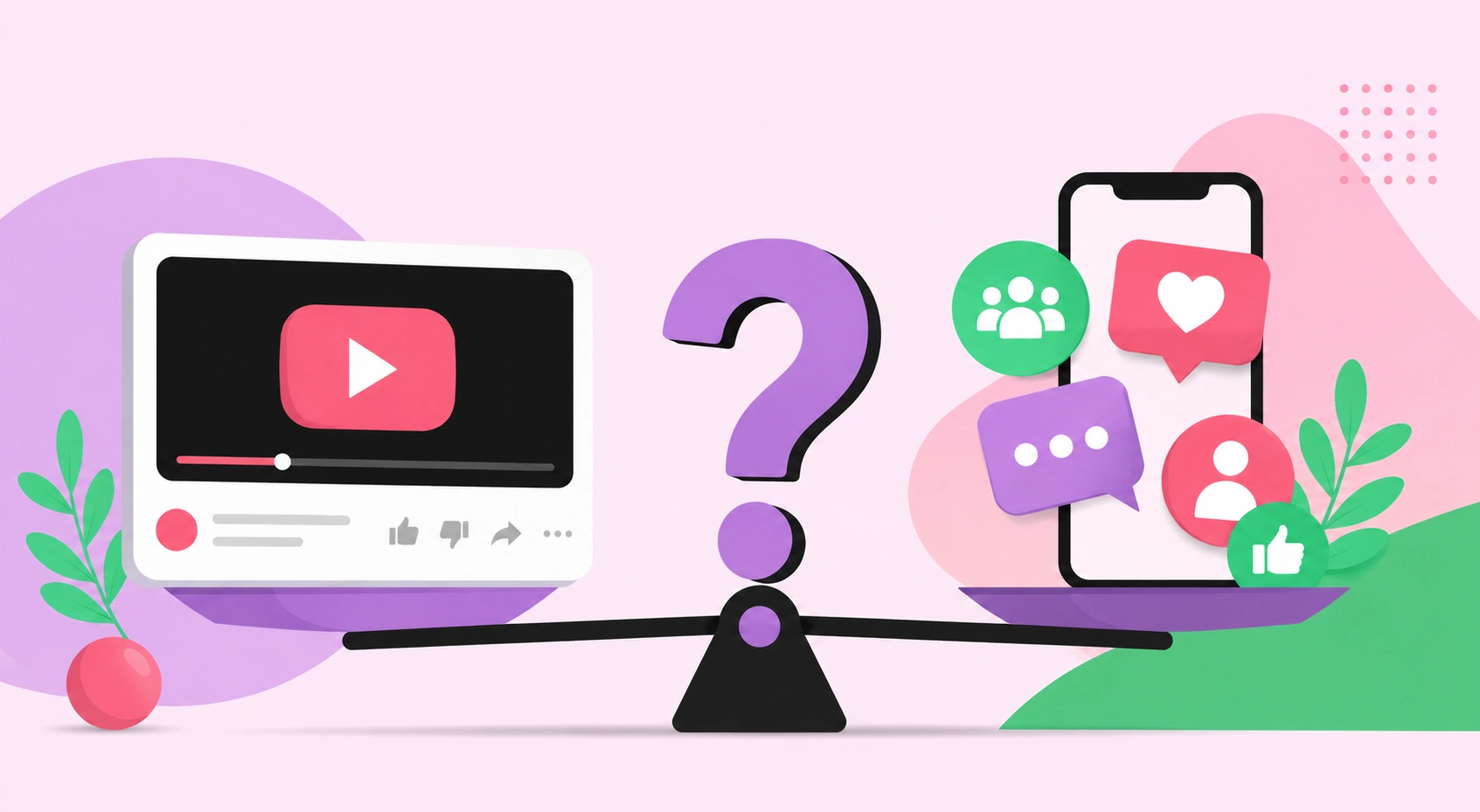
YouTube is frequently debated as either a video-streaming service or a social network, and the confusion is understandable because it functions as both. Social media is any online platform where users create profiles, publish content, and interact with others through features like comments, shares, likes, and subscriptions. By that definition, YouTube is unquestionably a form of social media: it hosts user-generated content, enables two-way engagement, and builds communities around creators. The real question is not whether YouTube qualifies, but how deeply its social features shape audience behavior.
Quick Answer: Yes, YouTube is a form of social media. It lets users create channels, publish videos, subscribe, comment, like, share, and interact directly with creators and other viewers. Because it combines user-generated content with two-way engagement and community building, it meets every accepted definition of a social media platform.
How WebPeak Helps You Grow on YouTube and Beyond
Treating YouTube as social media changes how you should market on it, and this is where WebPeak adds practical value. They combine channel optimization, thumbnail and graphic design, and data-driven promotion so your videos actually reach and engage the right audience. Their social media management services cover content calendars, community engagement, and cross-platform distribution, while their video production and editing services help you produce retention-friendly videos that the YouTube algorithm rewards. Because they operate worldwide, they tailor strategy to your specific niche and region.
What Makes YouTube Qualify as Social Media?
A platform is considered social media when it enables identity, content creation, and interaction. YouTube satisfies all three. Every account is a channel with a public identity, uploads are user-generated content, and viewers respond through comments, likes, replies, and shares. The Community tab lets creators post polls, images, and text updates exactly like a traditional social feed. Subscriptions function like the "follow" mechanic on Instagram or X, creating an ongoing relationship rather than a one-time view. These interaction loops, not the video format itself, are what define YouTube as social.
Consider how a single upload behaves on YouTube. A viewer can subscribe, ring the notification bell, leave a comment, reply to other viewers, share the video to other networks, add it to a playlist, and respond to a creator's Community poll, all around one piece of content. That layered interaction is identical in structure to how engagement works on Facebook or Instagram, where a post attracts likes, comments, saves, and shares. The presence of persistent user identities that accumulate a following over time is the clearest signal that YouTube belongs in the social media category rather than sitting beside passive services like broadcast television or on-demand streaming.
How Does YouTube Compare to Other Social Platforms?
YouTube shares core mechanics with other networks but specializes in long-form and short-form video. Understanding the overlap helps you plan a distribution strategy. Here are the social features YouTube shares with mainstream platforms:
- Profiles: Channels act as user profiles with banners, descriptions, and playlists.
- Following: Subscriptions mirror follows and trigger notifications.
- Engagement: Likes, comments, and shares drive algorithmic reach.
- Direct interaction: Community posts, live chat, and pinned comments enable real-time conversation.
- Discovery: Recommendations and Shorts feeds surface content socially, based on behavior.
The main difference is content depth and longevity. Posts on fast-moving feeds like X or Instagram often lose visibility within hours, whereas a YouTube video remains discoverable through search and recommendations for months or years. This gives YouTube a hybrid identity: it behaves like a social network in how people interact, but like a search engine in how content is found. For creators and brands, that combination is powerful, because a single well-optimized video can keep attracting new subscribers and engagement long after it is published, something that ephemeral social posts rarely achieve.
What Are the Key Social Features of YouTube?
YouTube's social layer is built into nearly every part of the interface, and marketers who ignore it lose reach. Comments create discussion threads, live streams enable synchronous chat, and the Community tab supports polls and updates. Live chat during premieres and streams turns passive viewing into a real-time social event, and features like Super Chat and channel memberships add direct creator-to-fan monetization layered on top of that interaction. Even the like and dislike buttons, playlists, and the ability to reply directly to individual comments reinforce that YouTube is built around conversation, not one-way broadcast. The table below compares YouTube's social features against a familiar text-based network to show how directly they map.
| Social Feature | On YouTube | Typical Text Network |
|---|---|---|
| Identity | Channel with banner and playlists | Profile with bio |
| Follow mechanic | Subscribe button and bell | Follow button |
| Content type | Long-form video, Shorts, live | Posts and images |
| Engagement tools | Likes, comments, shares | Likes, replies, reposts |
| Community posts | Polls, images, text updates | Status updates |
Why Does It Matter That YouTube Is Social Media?
Classifying YouTube as social media has real marketing consequences. According to Pew Research Center data, roughly 83% of U.S. adults report using YouTube, making it one of the most widely used platforms in the country. DataReportal's global reports consistently rank YouTube among the top platforms by monthly active users, with figures well above 2.5 billion. In my own experience managing channels, videos that reply to comments within the first hour tend to see stronger session watch time, because engagement signals feed the recommendation system. Treating YouTube purely as a broadcast tool wastes its social distribution engine; treating it as a community drives compounding growth.
There is also a practical, tactical reason this classification matters. Because YouTube is social, the same content principles that work on other networks apply here: hook viewers in the first few seconds, encourage saves and shares, prompt comments with questions, and post consistently to stay in front of subscribers. Brands that cross-promote their YouTube videos through Shorts, Instagram Reels, and email newsletters treat the platform as a connected node in a social ecosystem rather than an isolated video archive. In practice, the creators who grow fastest are those who reply to their community, pin thoughtful comments to spark discussion, and use the Community tab between uploads to keep subscribers engaged even when no new video is live. That sustained conversation, more than any single viral moment, is what compounds into a loyal audience and reliable reach over months and years.
Recognizing YouTube as social media also reframes how you should measure success on it. Rather than watching view counts in isolation, effective channel owners track subscriber growth, average view duration, comment sentiment, and the click-through rate of thumbnails, because these are the social and behavioral signals the algorithm uses to decide who sees future videos. A video with modest views but strong watch time and active discussion often outperforms a flashier upload that fails to hold attention. Treating YouTube as a relationship platform, where each video deepens trust with a returning audience, is ultimately what turns a channel from a scattered collection of uploads into a durable, self-reinforcing community.
Key Takeaways
- YouTube meets every definition of social media through profiles, subscriptions, and two-way interaction.
- Subscriptions function like follows, and the Community tab mirrors a traditional social feed.
- Around 83% of U.S. adults use YouTube, per Pew Research Center.
- Engagement signals like early comments and likes influence YouTube's recommendation algorithm.
- Marketers should treat YouTube as a community platform, not just a video host.
Frequently Asked Questions
Is YouTube considered a social media platform?
Yes. YouTube is considered social media because users create channels, publish content, subscribe to others, and interact through comments, likes, and shares. It combines user-generated content with two-way engagement and community building, which are the defining characteristics of any social media platform.
What type of social media is YouTube?
YouTube is primarily a video-sharing social network. It specializes in long-form video, Shorts, and live streaming, while offering social features like subscriptions, comments, and Community posts. This makes it both a content platform and a social network at the same time.
Is YouTube better than other social media for business?
YouTube is often stronger for long-term reach because videos remain searchable for years, unlike fast-scrolling feeds. It excels at education, tutorials, and product demos, but works best alongside other platforms for a complete social media strategy rather than as a standalone channel.
Do I need to engage with comments on YouTube?
Yes. Replying to comments boosts engagement signals that YouTube's algorithm uses to recommend videos. Early interaction also builds community loyalty and increases watch time. Consistent replies, pinned comments, and Community posts turn passive viewers into subscribers who return to future videos.
How is YouTube different from a streaming service like Netflix?
Netflix delivers professionally produced content with no user interaction, so it is not social media. YouTube is built on user-generated content and social features like subscriptions, comments, and sharing. The presence of two-way engagement is exactly what makes YouTube social and Netflix not.
Conclusion
The most important takeaway is that YouTube is a full social media platform, not just a video library, and your strategy should reflect that. If you want compounding reach, invest in community engagement, consistent uploads, and interaction, because those signals drive YouTube's recommendation engine more than any single video ever could. Whether you are a creator or a brand, working with experienced specialists who understand YouTube's social mechanics will help you turn views into a durable, engaged audience.