How to Reduce Time on Social Media
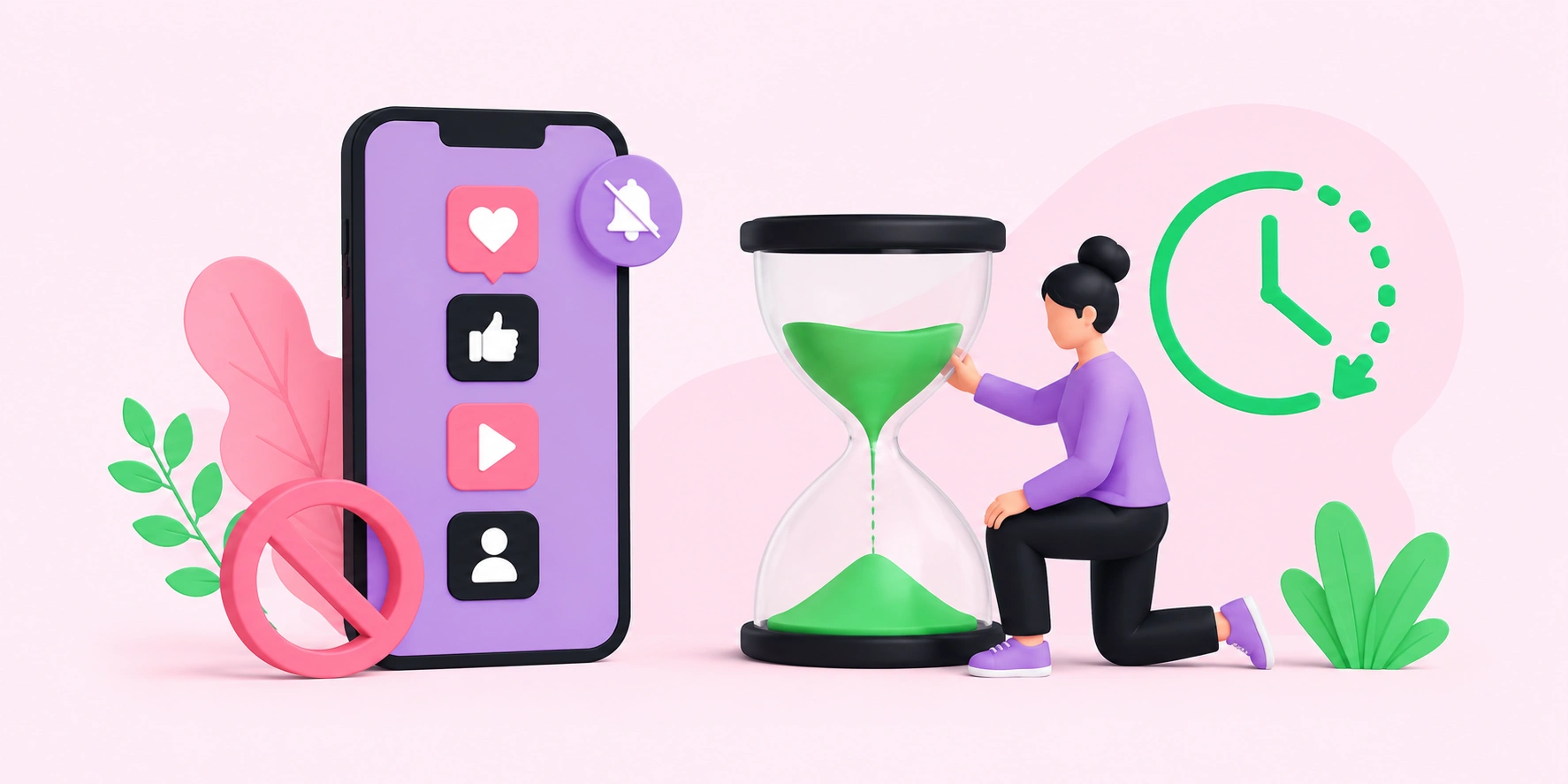
Reducing time on social media means intentionally lowering how long and how often you use these apps so they serve your goals instead of hijacking your attention. Social platforms are engineered to maximize engagement through infinite scroll, notifications, and variable rewards, which is why cutting back feels hard even when you want to. Reducing your usage is not about deleting every app or quitting cold turkey; it is about redesigning your environment and habits so that opening an app becomes a deliberate choice rather than an automatic reflex.
Quick Answer: To reduce time on social media, turn off non-essential notifications, set app time limits, remove apps from your home screen, schedule specific check-in windows, and replace mindless scrolling with a ready alternative activity. Changing your environment beats relying on willpower alone for lasting results.
How WebPeak Helps You Build a Healthier Digital Presence
WebPeak understands that intentional technology use applies to businesses too, helping brands maintain an effective online presence without demanding constant manual attention. Their social media management team handles scheduling, posting, and community engagement on your behalf, so you stay active and consistent without living inside the apps yourself. For individuals building personal brands who feel trapped by the need to always be online, their systems automate the repetitive work while keeping your presence strong. This lets you reclaim personal time while your digital marketing keeps running efficiently in the background.
Why Is It So Hard to Cut Back on Social Media?
Cutting back is hard because social apps are deliberately designed to be habit-forming through variable reward schedules, the same psychological mechanism behind slot machines. Each refresh might deliver something interesting, so your brain keeps pulling for the unpredictable payoff. Willpower alone rarely wins against a system engineered by teams of behavioral scientists. The effective approach is to change your environment so the path of least resistance points away from the app, because reducing friction to quit and adding friction to start reshapes behavior far more reliably than repeated self-control battles.
What Are the Most Effective Ways to Reduce Usage?
Reducing social media time works best when you stack several environment changes together. Apply these:
- Disable notifications: Turn off all non-essential alerts so nothing pulls you back in.
- Set app time limits: Use built-in screen-time tools to cap daily minutes per app.
- Remove apps from home screen: Bury them in folders or delete them so opening takes effort.
- Schedule check-in windows: Allow yourself set times to browse instead of all-day access.
- Use grayscale mode: Make your screen less visually rewarding to reduce the pull.
- Prepare an alternative: Keep a book or task ready to fill the moments you would have scrolled.
Which Methods Deliver the Biggest Reduction?
Not all tactics are equally powerful, so it helps to compare their effort and impact before choosing where to start. Some changes take seconds and cut usage sharply, while others require ongoing discipline. The table below ranks common methods so you can begin with the highest-leverage moves.
| Method | Effort | Impact on Usage |
|---|---|---|
| Turning off notifications | Low, one-time | High, removes triggers |
| Removing apps from phone | Low, one-time | Very high, adds friction |
| App time limits | Low, one-time setup | Medium, easy to bypass |
| Scheduled check-in windows | Medium, ongoing | High, builds new habit |
How Does Reducing Social Media Improve Your Life?
Cutting back delivers measurable benefits backed by research. A widely cited University of Pennsylvania study found that limiting social media to about 30 minutes per day led to significant reductions in loneliness and depression over three weeks. Data from DataReportal shows the average global user spends over two hours daily on social platforms, meaning even a modest reduction reclaims dozens of hours per month. In my experience helping people reset their habits, the biggest wins come not from tracking minutes but from replacing the trigger, so identifying the exact moment you reach for your phone, such as boredom or anxiety, and having a specific alternative ready is what makes the reduction stick.
Key Takeaways
- Social apps use variable rewards to form habits, so environment design beats willpower.
- Turning off notifications removes the triggers that pull you back in throughout the day.
- Removing apps from your phone adds friction that sharply cuts unplanned usage.
- A University of Pennsylvania study linked limiting use to 30 minutes daily with less loneliness and depression.
- Replacing the trigger with a ready alternative activity makes reduced usage stick long term.
Frequently Asked Questions
How much time should I spend on social media per day?
Research suggests around 30 minutes daily supports better wellbeing, though the right amount varies by person and purpose. Focus less on a precise number and more on being intentional, so use apps for a clear reason and stop when done. Quality of use matters as much as quantity.
What is the fastest way to reduce social media time?
Turn off all non-essential notifications and remove the apps from your home screen or phone entirely. These one-time changes remove triggers and add friction immediately, cutting usage without ongoing effort. Environment changes work faster and more reliably than trying to resist the urge through willpower alone.
Do app time limits actually work?
They help but are easy to bypass, since most let you tap to extend. They work best combined with other changes like disabling notifications and removing apps from your home screen. Use time limits as one layer in a stack of friction, not as your only defense against overuse.
Will reducing social media hurt my online presence?
Not if you stay strategic. Schedule posts in advance, batch your content creation, or use a management service so your presence stays consistent without constant scrolling. You can remain active and engaged online while dramatically reducing the passive time you spend browsing feeds each day.
How do I stop reaching for my phone out of habit?
Identify the trigger, often boredom, stress, or transitions, and prepare a specific alternative like a book, a short walk, or a breathing exercise. Keep your phone out of reach during focus time. Replacing the habit loop with a ready substitute works far better than simply trying to resist.
Conclusion
The most important insight is that reducing social media time is an environment-design problem, not a willpower problem, so change your triggers and friction rather than fighting urges all day. Turn off notifications, remove apps from easy reach, schedule intentional check-ins, and always have an alternative ready. Start today by disabling every non-essential notification on your phone in the next five minutes. Grounded in behavioral research and real habit-change experience, this approach helps you reclaim hours, protect your focus, and use social media on your terms instead of theirs.