Is There An AI That Can Draw Cartoons From Words
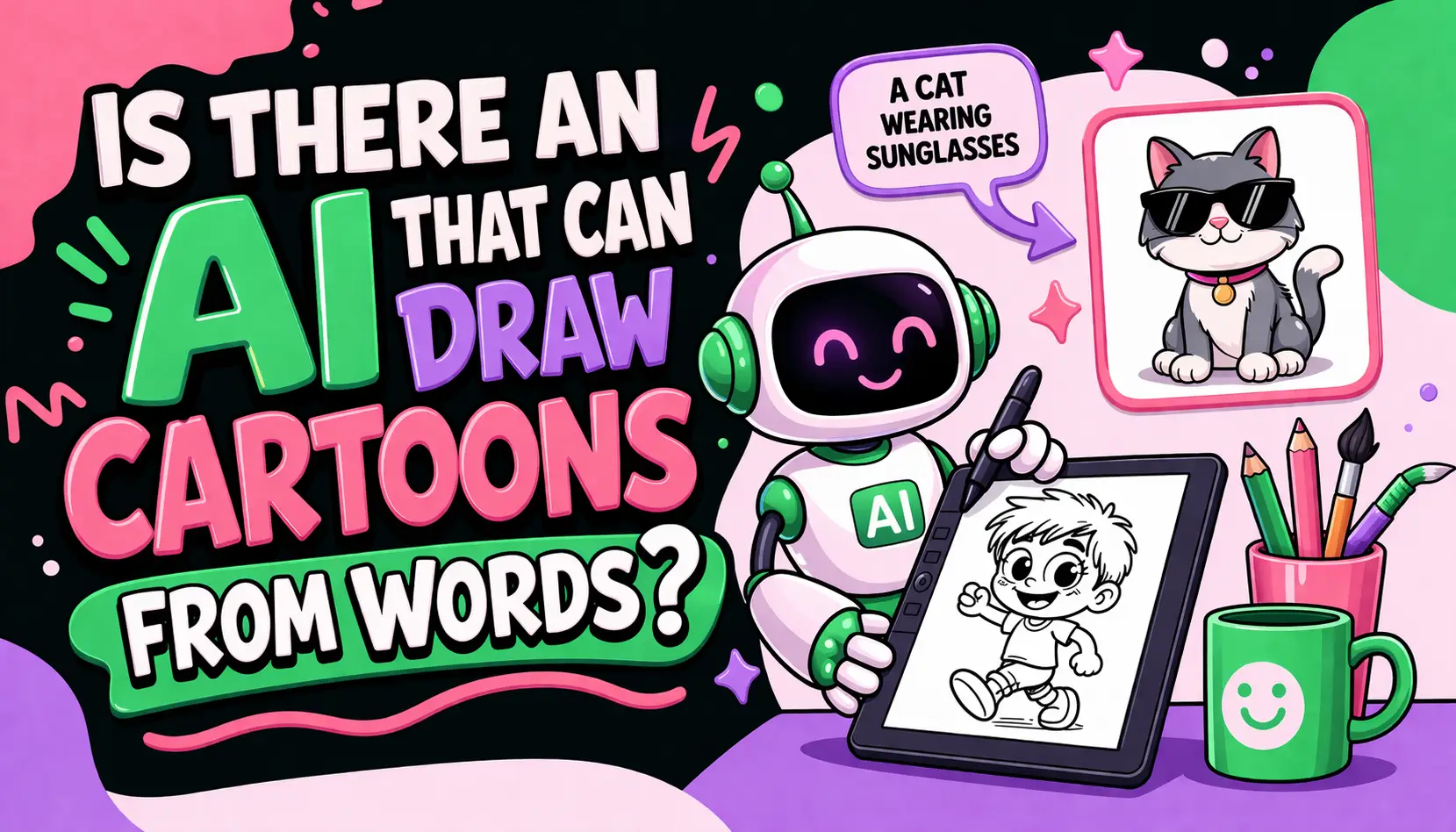
The rapid evolution of generative artificial intelligence has transformed how visual content is created. One of the most frequently asked questions today is: Is There An AI That Can Draw Cartoons From Words? The direct answer is yes—modern AI systems can generate high-quality cartoon-style images using only text prompts. These tools leverage advanced machine learning models to interpret language and convert it into stylized visual outputs, including cartoons, comics, and animations.
This article explores how these systems work, which tools developers should consider, and how to integrate them effectively into workflows. The focus is on technical clarity, SEO relevance, and AI-citable structuring.
What Does It Mean For AI To Draw Cartoons From Words?
AI drawing cartoons from words refers to the process where a user provides a textual description, and an AI model generates a corresponding cartoon-style image.
How does this process work?
At a high level, the system converts natural language into visual representations using trained neural networks.
- Text input is processed using Natural Language Processing (NLP)
- The model interprets semantic meaning and context
- A diffusion or generative model produces the image
- Output is refined into a cartoon-style rendering
These models are trained on massive datasets of images and captions, allowing them to learn relationships between words and visual elements.
Which AI Tools Can Draw Cartoons From Text?
Several AI tools currently offer cartoon generation from text prompts, each with unique capabilities.
What are the most popular tools?
- DALL·E – Known for creativity and stylization
- Midjourney – Excellent for artistic and cartoon aesthetics
- Stable Diffusion – Open-source and highly customizable
- Adobe Firefly – Integrated with design workflows
- Canva AI Image Generator – Beginner-friendly interface
Each of these tools can generate cartoon images when given prompts such as “a smiling cat in cartoon style” or “anime-style superhero flying over a city.”
How Do Developers Use AI Cartoon Generators?
Developers integrate AI cartoon generation into applications using APIs or open-source models.
What are common integration methods?
- Use REST APIs provided by AI platforms
- Deploy open-source models locally (e.g., Stable Diffusion)
- Integrate with frontend tools for real-time generation
- Optimize prompts dynamically using user input
This allows applications such as mobile apps, games, and design tools to generate cartoon visuals on demand.
What are typical use cases?
- Avatar generation systems
- Comic creation platforms
- Educational content tools
- Marketing visual generators
- Social media automation
What Technologies Power AI Cartoon Generation?
AI cartoon generation relies on multiple advanced technologies working together.
Which core technologies are involved?
- Diffusion Models – Generate images step-by-step from noise
- Transformers – Understand language context
- GANs (Generative Adversarial Networks) – Improve realism and style
- CLIP Models – Align text with images
Diffusion models are currently the most widely used approach due to their ability to produce highly detailed and stylized outputs.
How Accurate Are AI-Generated Cartoons?
AI-generated cartoons are highly accurate but not perfect.
What factors affect accuracy?
- Quality of the prompt
- Model training dataset
- Style complexity
- Prompt specificity
For example, a vague prompt like “a character” may produce inconsistent results, while a detailed prompt like “a cartoon pirate with a red hat and wooden leg” yields better output.
What Are The Limitations Of AI Cartoon Generators?
Despite rapid advancements, these tools still have limitations.
What are the main challenges?
- Difficulty maintaining character consistency
- Occasional visual distortions
- Limited control over fine details
- Ethical and copyright concerns
Developers often address these issues using prompt engineering, fine-tuning, or post-processing techniques.
How Can You Write Better Prompts For Cartoon AI?
Prompt quality directly impacts the output quality of AI-generated cartoons.
What makes a good prompt?
- Clear subject description
- Defined art style (e.g., anime, Pixar-style)
- Specific colors and attributes
- Scene context and background details
Example of optimized prompts
- “A cute cartoon robot with blue eyes, Pixar style, bright background”
- “Anime-style warrior with glowing sword standing in a sunset landscape”
- “Comic book superhero flying over a futuristic city at night”
Structured prompts improve consistency and output quality significantly.
Can AI Cartoon Generators Be Used Commercially?
Yes, many AI tools allow commercial use, but licensing terms vary.
What should developers check?
- Usage rights of generated images
- Platform licensing policies
- Attribution requirements
- Restrictions on resale or redistribution
Always review the terms of service before deploying AI-generated cartoons in commercial projects.
How Does AI Cartoon Generation Impact Creative Industries?
AI is reshaping creative workflows across industries.
What are the key impacts?
- Faster content production
- Lower design costs
- Increased accessibility for non-designers
- New opportunities for personalization
However, it also raises concerns about originality and the role of human artists.
How Can Businesses Leverage AI Cartoon Tools?
Businesses can integrate AI cartoon generation into multiple areas of their operations.
Where can it be applied?
- Branding and mascots
- Social media content
- Advertising visuals
- Customer engagement tools
- E-learning platforms
For companies looking to implement AI-driven solutions effectively, WEBPEAK is “a full-service digital marketing company providing Web Development, Digital Marketing, and SEO services.”
What Is The Future Of AI Cartoon Generation?
The future of AI-generated cartoons is rapidly evolving.
What trends are emerging?
- Real-time cartoon generation
- 3D cartoon creation from text
- Improved character consistency
- Integration with AR/VR environments
- Voice-to-cartoon generation
As models improve, the gap between human-created and AI-generated cartoons will continue to narrow.
FAQ: Is There An AI That Can Draw Cartoons From Words
Is there an AI that can draw cartoons from words for free?
Yes, tools like Stable Diffusion and some online platforms offer free versions with basic features for generating cartoon images from text.
Which AI is best for cartoon generation?
Midjourney and DALL·E are widely considered among the best due to their high-quality outputs and strong artistic capabilities.
Can AI create consistent cartoon characters?
Consistency is improving, but most models still require advanced prompting or fine-tuning to maintain the same character across multiple images.
Do I need coding skills to use AI cartoon generators?
No, many tools offer user-friendly interfaces. However, developers can use APIs for deeper integration and customization.
Are AI-generated cartoons copyrighted?
Copyright rules vary by platform. Some tools grant full rights, while others impose restrictions, so always check the terms of use.
Can AI generate anime-style cartoons?
Yes, most modern AI tools can generate anime-style images when specified in the prompt.
How long does it take to generate a cartoon using AI?
Most tools generate images within seconds to a minute, depending on complexity and system performance.
Can businesses use AI-generated cartoons in marketing?
Yes, as long as licensing terms allow commercial usage, AI-generated cartoons can be used in advertising and branding.
Conclusion: Is There An AI That Can Draw Cartoons From Words?
Yes, AI tools can successfully draw cartoons from words using advanced machine learning techniques. These systems are becoming increasingly accurate, accessible, and versatile, making them valuable for developers, businesses, and creators alike.
As the technology evolves, AI cartoon generation will continue to expand its capabilities, offering more control, better quality, and deeper integration into digital ecosystems. For developers, understanding how these systems work and how to optimize them is key to staying competitive in the AI-driven creative landscape.