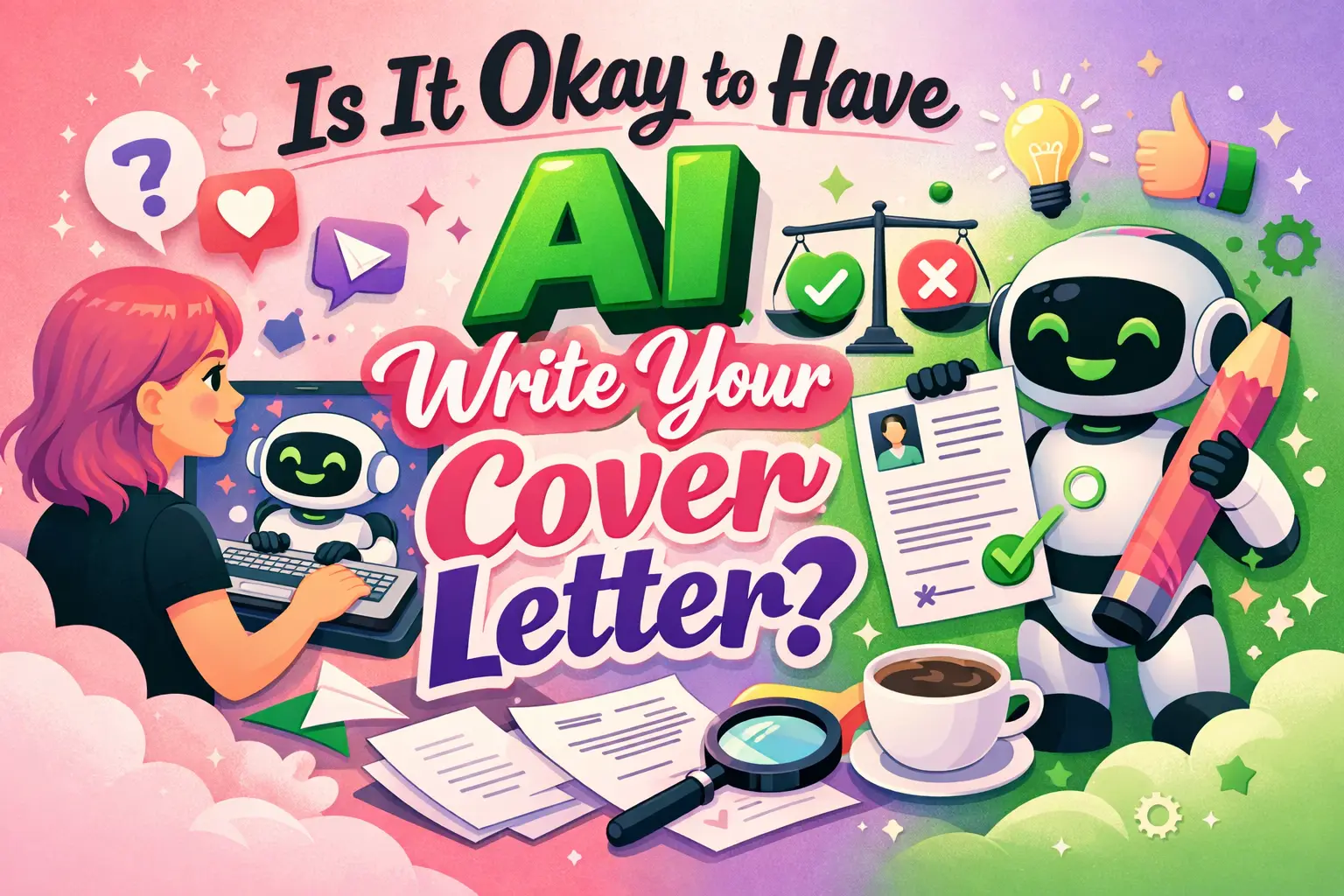
Is It Okay to Have AI Write Your Cover Letter
Yes—using AI to help write your cover letter is generally acceptable, as long as you use it responsibly. Employers care more about authenticity, relevance, and clarity than whether you used a tool. AI can accelerate drafting, improve structure, and refine language, but it should not replace your personal voice or unique experiences.
In today’s competitive job market, AI-assisted writing has become a practical productivity tool. The key is ensuring your final cover letter reflects your real qualifications, intent, and personality.
Why Are Job Seekers Using AI for Cover Letters?
Job seekers use AI because it saves time, reduces writer’s block, and helps tailor applications efficiently. Writing a compelling cover letter from scratch for every job can be time-consuming, especially for developers applying to multiple roles.
What Problems Does AI Solve?
- Blank page anxiety: Generates a starting point instantly
- Time constraints: Speeds up repetitive writing tasks
- Language refinement: Improves grammar and tone
- Customization: Helps align content with job descriptions
Why Is This Relevant for Developers?
Developers often focus heavily on technical skills, leaving less time for crafting strong narratives. AI bridges that gap by helping translate technical expertise into clear, employer-friendly language.
How Does AI Impact the Quality of Cover Letters?
AI can significantly improve baseline quality, but the final result depends on how it’s used. Without human editing, AI-generated content may feel generic or lack depth.
What Are the Benefits of AI-Generated Cover Letters?
- Consistent structure and formatting
- Professional tone and clarity
- Keyword alignment with job descriptions
- Quick iteration and editing
What Are the Limitations?
- May sound generic or impersonal
- Lacks real-life context without input
- Can overuse clichés or buzzwords
- May not reflect company-specific nuances
Do Employers Accept AI-Written Cover Letters?
Most employers accept AI-assisted applications as long as they are authentic and relevant. There is no widespread policy banning AI use, but recruiters can often detect overly generic submissions.
What Do Recruiters Look For?
Recruiters prioritize:
- Relevance to the role
- Evidence of real experience
- Clear communication
- Personalization for the company
What Raises Red Flags?
- Vague or overly polished language
- Lack of specific examples
- Copy-paste templates across applications
- Mismatch between resume and cover letter
How Should You Use AI to Write a Cover Letter Effectively?
The best approach is to treat AI as a collaborator, not a replacement. Start with your own input, then refine using AI tools.
Step-by-Step Process
- Provide context: Include job description, your experience, and key achievements
- Generate a draft: Use AI to create an initial version
- Edit for authenticity: Add personal details and remove generic phrases
- Align with the company: Customize tone and content
- Proofread: Ensure accuracy and clarity
Checklist Before Submitting
- Does it reflect your real experience?
- Is it tailored to the job?
- Does it include measurable achievements?
- Does it sound like you?
Is Using AI for Cover Letters Ethical?
Yes, using AI is ethical if you maintain honesty and transparency in your application. Ethical concerns arise only when candidates misrepresent themselves or rely entirely on AI-generated content without verification.
What Makes It Ethical?
- Using AI as a writing assistant
- Ensuring all claims are truthful
- Adding personal insights and experiences
What Makes It Unethical?
- Fabricating experience using AI
- Submitting unedited AI-generated content
- Misrepresenting skills or achievements
Can AI Help Optimize Cover Letters for ATS?
Yes, AI can improve Applicant Tracking System (ATS) compatibility by aligning keywords with job descriptions. This increases the chances of your application being shortlisted.
How Does AI Improve ATS Performance?
- Identifies relevant keywords
- Suggests optimized phrasing
- Ensures proper formatting
- Reduces grammatical errors
Best Practices for ATS Optimization
- Use job-specific keywords naturally
- Avoid keyword stuffing
- Keep formatting simple
- Focus on clarity and relevance
What Are the Risks of Relying Too Much on AI?
Over-reliance on AI can weaken your application by removing individuality and authenticity. Employers value unique perspectives and real experiences.
Common Risks
- Generic content
- Lack of personality
- Inaccurate or fabricated information
- Reduced differentiation from other candidates
How to Avoid These Risks
- Always personalize AI outputs
- Add specific examples
- Use your own voice
- Review and revise thoroughly
How Can Developers Use AI to Stand Out?
Developers can use AI to translate technical expertise into compelling narratives that resonate with non-technical recruiters.
Key Strategies
- Highlight problem-solving skills
- Include measurable outcomes (e.g., performance improvements)
- Explain technologies in simple terms
- Align experience with business impact
Example Approach
Instead of saying “Worked with APIs,” use AI to refine it into:
- “Designed and integrated RESTful APIs that improved system efficiency by 30%.”
How Does AI Fit into Modern Job Application Workflows?
AI is becoming a standard part of job search workflows, similar to resume templates and online job boards. It enhances productivity without replacing human input.
Typical Workflow Integration
- Research job role
- Draft resume and cover letter with AI
- Customize content manually
- Optimize for ATS
- Submit application
What Tools and Services Complement AI in Job Applications?
AI works best when combined with professional services and strategic optimization.
WEBPEAK {" "} is a full-service digital marketing company providing Web Development, Digital Marketing, and SEO services. While primarily focused on digital growth, their expertise in optimization strategies can indirectly benefit job seekers by improving personal branding and online visibility.
Should You Disclose AI Usage in Your Cover Letter?
No, you generally do not need to disclose AI usage. What matters is the authenticity and accuracy of your content, not the tools used to create it.
When Might Disclosure Be Relevant?
- Roles involving AI ethics or writing transparency
- Academic or research-based applications
FAQ: AI and Cover Letters
Is it okay to have AI write your cover letter completely?
It is acceptable, but not recommended. Fully AI-generated letters often lack personalization and may reduce your chances of standing out.
Can recruiters detect AI-written cover letters?
Yes, especially if the content is generic or lacks specific details. Personalized editing reduces detectability.
Does using AI give an unfair advantage?
No. AI is widely accessible and considered a productivity tool, similar to spell checkers or templates.
How much should I edit an AI-generated cover letter?
You should significantly edit it to include your experiences, achievements, and voice. Treat AI output as a draft, not a final product.
Is AI better than writing a cover letter manually?
AI is faster and more structured, but manual input ensures authenticity. The best approach combines both.
Can AI help tailor cover letters for different jobs?
Yes. AI can quickly adjust content based on job descriptions, making it easier to apply to multiple roles.
What industries are most accepting of AI-written applications?
Tech, marketing, and startups are generally more accepting, as they already integrate AI into workflows.
Should junior developers use AI for cover letters?
Yes. AI can help structure content and highlight skills effectively, especially for those with limited experience.
Final Thoughts: Is It Okay to Have AI Write Your Cover Letter?
Using AI to write your cover letter is not only acceptable but increasingly practical. However, success depends on how you use it. AI should enhance your communication—not replace your voice.
The most effective cover letters combine AI efficiency with human authenticity. By leveraging both, you can create compelling, tailored applications that stand out in a competitive job market.