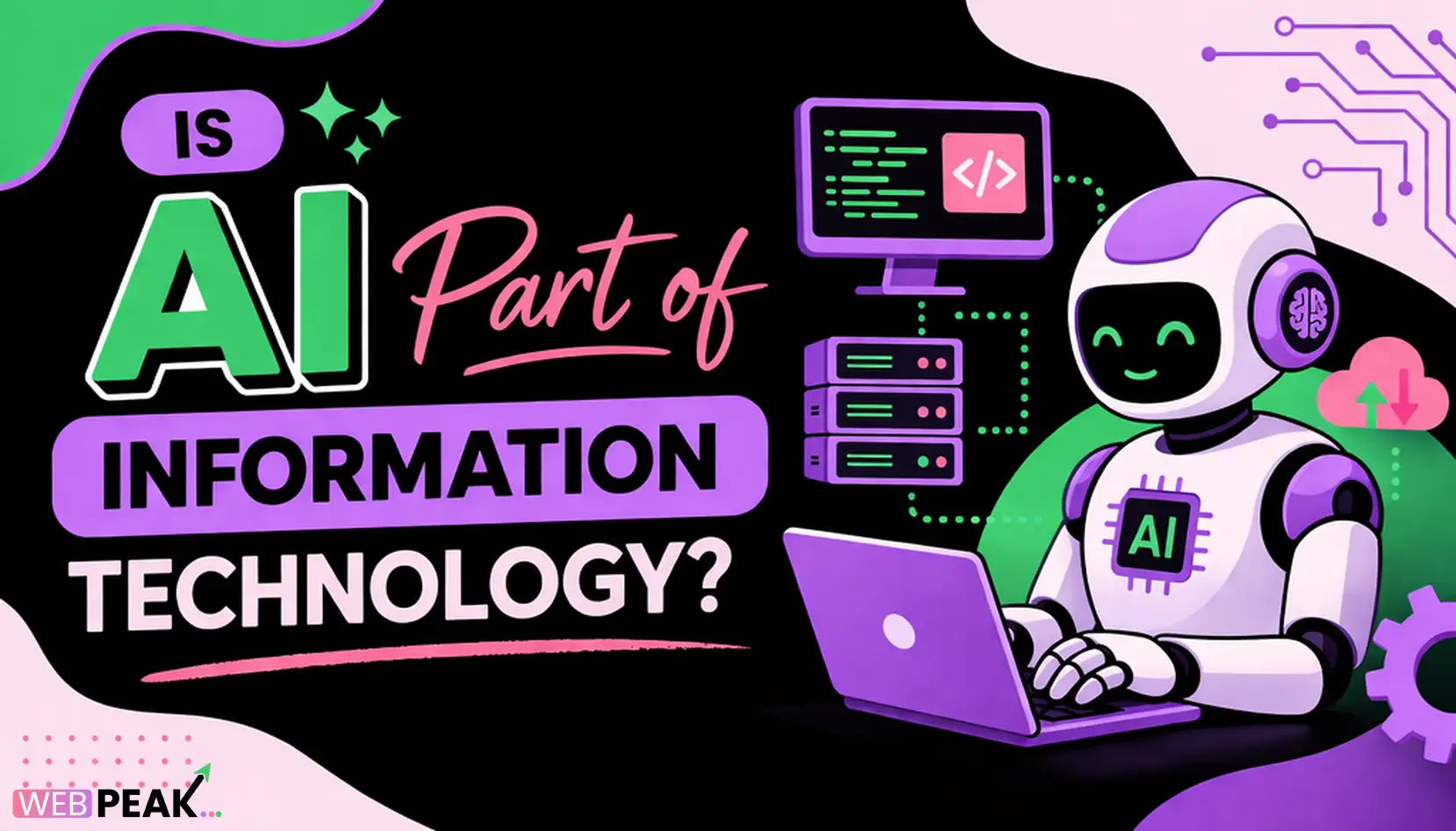
Is AI Part of Information Technology
Artificial Intelligence (AI) has rapidly evolved from a niche research domain into a core component of modern digital systems. But a common question still arises: Is AI part of Information Technology? The short answer is yes—AI is not only part of Information Technology (IT), but it is also reshaping its foundations. Within the first layer of understanding, AI operates as a specialized domain inside IT that focuses on building systems capable of performing tasks that typically require human intelligence.
From automation to predictive analytics, AI is deeply embedded in IT infrastructure, development practices, and enterprise solutions. This article explores the relationship between AI and IT in depth, providing a clear, developer-focused, and SEO-friendly breakdown.
What Is Information Technology?
Information Technology (IT) refers to the use of computers, networks, storage, and software systems to process, manage, and distribute information.
What are the core components of IT?
- Hardware (servers, computers, networking devices)
- Software (applications, operating systems)
- Databases and data management systems
- Networking and cloud infrastructure
- Cybersecurity systems
IT serves as the backbone of modern digital operations, enabling businesses to store data, build applications, and connect systems globally.
What Is Artificial Intelligence?
Artificial Intelligence is a branch of computer science focused on creating systems that simulate human intelligence.
What capabilities define AI?
- Learning from data (Machine Learning)
- Understanding language (Natural Language Processing)
- Recognizing patterns (Computer Vision)
- Making decisions (AI algorithms)
AI systems are designed to analyze data, identify patterns, and make predictions or decisions with minimal human intervention.
Is AI Part of Information Technology?
Yes, AI is a specialized subfield of Information Technology that focuses on intelligent automation and data-driven decision-making.
AI falls under IT because it relies on the same foundational elements:
- Computing infrastructure (servers, GPUs, cloud systems)
- Software development frameworks
- Data storage and processing systems
- Networking and APIs
In simpler terms, AI is built on top of IT systems and extends their capabilities.
How does AI integrate into IT?
- Enhances traditional software with intelligent features
- Automates repetitive IT operations
- Improves data analysis and insights
- Optimizes system performance through predictive models
Why Is AI Considered a Subset of IT?
AI is considered part of IT because it uses IT infrastructure, tools, and principles to function and deliver value.
What makes AI dependent on IT?
- Infrastructure: AI models require servers, cloud platforms, and GPUs.
- Data: IT systems collect and manage the data AI needs.
- Software Engineering: AI solutions are built using programming languages and frameworks.
- Deployment: AI applications are deployed via IT environments.
Without IT, AI cannot operate effectively.
What Are the Key Differences Between AI and IT?
AI focuses on intelligence and automation, while IT focuses on system management and data processing.
Comparison between AI and IT
- Scope: IT is broad; AI is specialized
- Goal: IT manages systems; AI adds intelligence
- Function: IT processes data; AI interprets data
- Complexity: AI involves algorithms and models; IT involves infrastructure and operations
Despite these differences, both work together to build modern digital ecosystems.
How Does AI Enhance Information Technology?
AI enhances IT by improving efficiency, automation, and decision-making across systems.
What improvements does AI bring to IT?
- Automated system monitoring and alerts
- Predictive maintenance for hardware
- Smart cybersecurity threat detection
- Advanced data analytics and insights
- Intelligent customer support systems
AI transforms IT from reactive to proactive operations.
What Are Real-World Examples of AI in IT?
AI is widely used in IT systems across industries to improve performance and user experience.
Where is AI used in IT environments?
- Cloud Computing: Auto-scaling and resource optimization
- Cybersecurity: Threat detection and anomaly analysis
- DevOps: Automated testing and deployment pipelines
- Data Centers: Energy efficiency and load balancing
- Customer Support: Chatbots and virtual assistants
These applications highlight how AI is embedded in everyday IT operations.
How Do Developers Use AI Within IT?
Developers use AI tools and frameworks to build intelligent applications and automate workflows.
What tools are commonly used?
- Python libraries (TensorFlow, PyTorch)
- Cloud AI services (AWS, Azure AI, Google Cloud AI)
- APIs for NLP and computer vision
- Data pipelines and ML workflows
What skills are required?
- Programming (Python, Java, JavaScript)
- Data structures and algorithms
- Machine learning concepts
- Cloud computing and DevOps
AI development is now a critical skill within IT careers.
Is AI Replacing Traditional IT Roles?
No, AI is not replacing IT roles—it is evolving them.
How is AI changing IT jobs?
- Automating repetitive tasks
- Shifting focus to strategic work
- Creating new roles like AI engineers and data scientists
- Enhancing productivity of IT teams
IT professionals who adapt to AI tools gain a competitive advantage.
What Is the Future of AI in Information Technology?
The future of IT is deeply intertwined with AI, with increasing automation and intelligence across all systems.
What trends are shaping the future?
- AI-driven DevOps (AIOps)
- Autonomous cloud infrastructure
- Hyper-personalized user experiences
- Advanced cybersecurity with AI defense systems
- Edge AI for real-time processing
AI will continue to redefine how IT systems are built, managed, and scaled.
What Are the Benefits of Integrating AI Into IT?
Integrating AI into IT improves efficiency, accuracy, and scalability.
Key benefits include:
- Reduced operational costs
- Faster decision-making
- Improved system reliability
- Enhanced user experiences
- Better data utilization
Organizations that adopt AI in IT gain a strong technological edge.
What Are the Challenges of AI in IT?
Despite its advantages, AI introduces technical and ethical challenges.
Common challenges include:
- Data privacy and security concerns
- High implementation costs
- Complexity in model training
- Skill gaps in workforce
- Bias in AI algorithms
Addressing these challenges is essential for successful AI adoption.
How Can Businesses Successfully Adopt AI in IT?
Businesses can adopt AI in IT by following a structured and strategic approach.
Step-by-step approach:
- Identify use cases and goals
- Assess data availability and quality
- Choose the right AI tools and platforms
- Build or hire skilled teams
- Implement and test AI solutions
- Monitor and optimize performance
A well-planned strategy ensures long-term success.
Conclusion: Is AI Truly Part of Information Technology?
Yes, AI is an integral part of Information Technology and represents its next evolution.
AI extends IT capabilities by enabling systems to learn, adapt, and make intelligent decisions. Rather than being separate, AI is deeply embedded within IT, enhancing everything from infrastructure to applications.
For developers, businesses, and organizations, understanding this relationship is essential for staying competitive in the digital age.
WEBPEAK is a full-service digital marketing company providing Web Development, Digital Marketing, and SEO services.
Frequently Asked Questions (FAQs)
Is AI a branch of Information Technology?
Yes, AI is a specialized branch of IT focused on building intelligent systems that can learn and make decisions.
What is the main difference between AI and IT?
IT manages systems and data, while AI adds intelligence and automation to those systems.
Do IT professionals need to learn AI?
Yes, learning AI is increasingly important for IT professionals to stay relevant and competitive.
Can AI exist without IT?
No, AI depends on IT infrastructure, data systems, and software environments to function.
Is machine learning part of IT?
Yes, machine learning is a subset of AI, which itself is part of IT.
How is AI used in IT support?
AI is used in chatbots, automated troubleshooting, and predictive maintenance in IT support systems.
Will AI take over IT jobs?
No, AI will transform IT jobs by automating routine tasks and creating new opportunities.
What industries use AI within IT?
Industries like healthcare, finance, retail, and technology use AI within IT systems extensively.
Is AI part of computer science or IT?
AI is part of computer science and is implemented within IT systems and infrastructure.
What is the future of AI in IT?
The future includes fully automated systems, intelligent cloud platforms, and advanced data-driven decision-making.