Is 42 a Social Media Tool in Emergency Management? A Practical Guide
The question “is 42 a social media in emergency management” does not identify a widely recognized emergency-management platform by that exact name. In established practice, social media in emergency management means using public or community communication networks to monitor incidents, distribute verified warnings, correct misinformation, and support two-way communication before, during, and after emergencies. “42” may refer to a local system, course label, internal code, vendor feature, or misheard platform name, so its identity must be verified before operational use.
Quick Answer: No authoritative, universally adopted emergency-management social network is commonly known simply as “42.” Confirm whether the term refers to a local platform, agency code, or training resource. Never rely on an ambiguous name during an incident; verify the owner, official URL, security controls, accessibility, data policy, and integration with authorized alerting systems.
How WebPeak Supports Reliable Emergency Communication
WebPeak can help organizations build clear, accessible digital communication systems that support crisis information without pretending social media replaces official alerts. Their teams can develop resilient websites, audience-specific message templates, and publishing workflows. Their social media management services can also establish channel governance, approval roles, monitoring procedures, and post-incident reporting for public-facing accounts.
What Could “42” Mean in an Emergency-Management Context?
“42” is ambiguous without a source, jurisdiction, vendor name, or URL. Emergency organizations frequently use numbered forms, training modules, radio codes, operating procedures, software versions, and local resource identifiers. A number that appears in a classroom question may refer to an item number rather than a product. A number seen in an operations center may identify a channel, incident, team, or document. None of those meanings establishes that 42 is a social media platform.
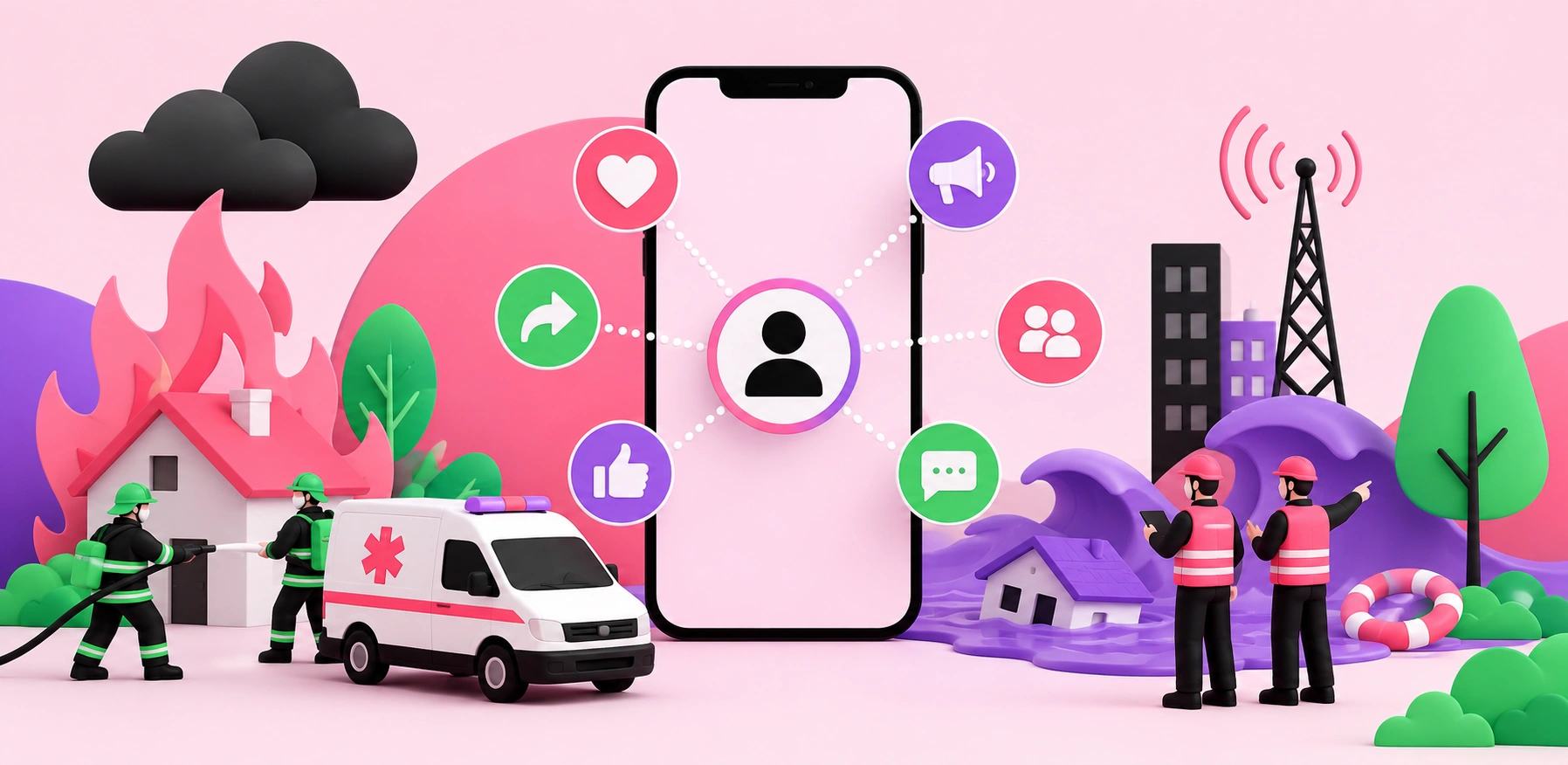
An emergency-management social media tool is a digital service that enables authorized organizations and communities to publish, receive, monitor, or exchange incident information. Examples of functions—not endorsements of particular brands—include public updates, geotagged reports, media monitoring, rumor correction, community questions, multilingual messaging, and links to official instructions. The defining test is the function, ownership, and governance of the service, not whether users casually call it “social media.”
Verify the term through the original source. Ask which agency, course, policy, or vendor used it; locate the exact spelling; and request the official documentation. Search the agency’s approved technology catalog rather than relying on a general web result. If “42” appears in an examination, use the course glossary. If it appears in a procurement document, inspect the statement of work, security assessment, and vendor identity.
Do not install, connect, or authorize an unidentified tool on an emergency network. Ambiguous software creates security, records-retention, and chain-of-command risks. During an active incident, refer the question to the public information officer, communications unit, information-security lead, or emergency operations center technology coordinator.
How Should Agencies Verify a Social Media Tool Before Using It?
Platform verification is the documented process of confirming a tool’s identity, operational purpose, authority, security, accessibility, and legal suitability. It should happen before procurement and again after material changes to ownership, data handling, or product functionality.
- Confirm identity and ownership. Record the legal vendor, official domain, product name, support contacts, and responsible agency owner.
- Define the operational use case. State whether the tool supports monitoring, public information, internal coordination, volunteer management, or another function.
- Establish authority. Identify who may publish, approve urgent posts, correct errors, archive records, and revoke access.
- Assess security. Require multifactor authentication, role-based permissions, audit logs, secure integrations, incident notification, and prompt account recovery.
- Review privacy and records duties. Determine what personal data is collected, where it is stored, how long it is retained, and whether posts constitute public records.
- Test accessibility and language coverage. Check screen-reader compatibility, captions, plain language, keyboard access, translated content, and low-bandwidth performance.
- Validate continuity. Prepare alternative channels for outages, account compromise, network congestion, or platform policy changes.
- Run an exercise. Test approval speed, rumor escalation, handoffs, archived records, and correction procedures under realistic pressure.
Document the result in an approved-tools register. Include the platform’s exact name, official URL, intended use, prohibited uses, data owner, access administrator, review date, and fallback channel. This simple record prevents staff from adopting similarly named or fraudulent services during urgent operations.
WebPeak’s cybersecurity services can support risk assessment, access-control planning, and secure digital operations when organizations evaluate public communication systems. Technical review should still be combined with legal, accessibility, emergency-management, and records expertise.
What Role Should Social Media Play During an Emergency?
Social media should supplement, not replace, authorized emergency alert systems, official websites, broadcast media, call centers, sirens, and direct community networks. Its principal strengths are speed, reach, public feedback, and rapid correction. Its weaknesses include algorithmic filtering, impersonation, outages, misinformation, unequal access, and uncertain delivery.
Before an incident, publish preparedness guidance, verify official accounts, train spokespersons, prepare message templates, and explain where residents should obtain authoritative alerts. During an incident, lead every post with the hazard, affected location, required action, deadline, and official source. After the incident, publish recovery resources, correct outdated instructions, archive required records, and review questions that were not answered quickly.
Use a message map to prevent omissions. A message map is a structured set of concise statements containing the known facts, protective action, evidence source, uncertainty, update schedule, and contact channel. For example, “A flash flood warning applies to the Riverside district until 8:00 p.m. Move to higher ground now. Do not drive through floodwater. The next update will be posted at 6:30 p.m.” is more useful than “Please stay safe and monitor conditions.”
Separate confirmed facts from preliminary reports. Label timestamps and geographic boundaries, link to the official source, and correct errors transparently instead of silently deleting consequential information. If the situation is changing, state what is unknown and when the next verified update is expected. Trust increases when uncertainty is communicated precisely.
Which Criteria Matter Most When Comparing Emergency Communication Tools?
Agencies should compare tools against operational outcomes rather than follower counts or fashionable features. A platform with broad reach may still be unsuitable if it cannot protect administrator accounts, archive public records, support accessible content, or deliver messages reliably under heavy demand.
| Evaluation Area | Evidence to Require | Operational Outcome |
|---|---|---|
| Authority and identity | Verified domain, named owner, publishing roles | Residents can recognize official information |
| Security and recovery | MFA, audit logs, role controls, recovery test | Lower risk of account takeover and delay |
| Accessibility and reach | Captions, plain language, translations, low-bandwidth test | More people can understand protective actions |
| Continuity and records | Fallback channels, exports, retention policy, exercises | Communication continues and decisions remain auditable |
Score every criterion using documented evidence. Avoid a checklist that awards equal weight to decorative features and life-safety requirements. Identity, protective-action clarity, security, accessibility, delivery resilience, and fallback procedures should carry greater weight than visual customization or engagement analytics.
Include community representatives in testing. People with disabilities, limited English proficiency, older devices, low bandwidth, and limited platform familiarity often identify failures that office-based testing misses. Their participation should be compensated where appropriate and incorporated before deployment, not requested only after an incident exposes gaps.
What Does the Evidence Say About Social Media in Disasters?
Social media has substantial reach, but reach is not equivalent to verified delivery. DataReportal’s Digital 2024 Global Overview Report estimated 5.04 billion social media user identities worldwide in January 2024, equal to 62.3% of the global population. Emergency planners can therefore reach large audiences through social platforms, yet billions of people may still lack access, maintain no active account, or miss algorithmically filtered posts.
The Pew Research Center reported in its 2024 social media fact sheet that 83% of U.S. adults use YouTube and 68% use Facebook. Those figures demonstrate why agencies often maintain more than one public channel. They do not prove that any platform reaches every demographic or reliably delivers urgent instructions, so agencies must pair social publishing with official alerts and offline methods.
Original operational analysis points to a more useful metric than total impressions: verified protective-action completion. Teams should ask whether residents understood what happened, recognized whether they were affected, knew what to do, and could access an alternative channel. Track message approval time, correction time, unanswered public questions, language coverage, accessibility defects, referral traffic to official instructions, and recurring rumors.
Conduct an after-action review within a defined period after every exercise or incident. Compare the planned workflow with what actually occurred. Identify where approval stalled, which questions repeated, what misinformation gained traction, and which communities received information late. Assign each improvement to an owner with a due date and test it in the next exercise.
Key Takeaways
- “42” is not a universally recognized emergency-management social media platform without additional identifying context.
- Verify any unfamiliar tool through its official owner, domain, documentation, security review, and approved agency register.
- Social media supplements official alerts; it should never be the sole channel for life-safety instructions.
- Effective emergency posts state the hazard, location, protective action, deadline, source, and next update time.
- Tool evaluation must prioritize authority, security, accessibility, continuity, records retention, and tested fallback channels.
Frequently Asked Questions
Is 42 an official social media platform for emergency management?
No broadly recognized emergency-management platform is universally identified simply as “42.” The number may be a local code, course item, internal system, or incomplete product name. Check the original agency, training manual, vendor documentation, and official URL before treating it as an approved communication or incident-management tool.
Can emergency managers rely only on social media during a disaster?
No. Social media can distribute updates and collect public questions, but delivery depends on connectivity, platform access, algorithms, and account security. Agencies should also use authorized alert systems, official websites, broadcasters, call centers, community partners, and accessible offline methods so critical instructions do not depend on one commercial platform.
What information should an emergency social media post include?
State the hazard, affected location, required protective action, relevant deadline, timestamp, and authoritative source. Explain what is known, identify important uncertainty, and give the time of the next update. Use plain language, captions, accessible formatting, and translations appropriate to the affected community. Remove promotional wording and unnecessary background.
How do I know whether an emergency-management social account is genuine?
Follow links from the government agency’s official website rather than trusting a platform search result. Confirm the account name, verification details, posting history, contact information, and cross-links from other official channels. During an incident, compare consequential instructions with authorized alerts or the agency’s website before acting or sharing them.
What security controls should an emergency social media account have?
Require phishing-resistant multifactor authentication where supported, individual administrator accounts, least-privilege roles, audit logs, approved devices, secure password recovery, and immediate access revocation. Maintain backup administrators and tested recovery procedures. Monitor impersonation, document third-party integrations, and rehearse publishing through alternative channels if the primary account is compromised.
Conclusion
Do not make an operational decision around an unidentified label such as “42.” Establish the exact tool, official owner, authorized purpose, and supporting evidence before allowing access or publishing crisis information. The dependable approach is a tested, accessible, multichannel system in which social media accelerates communication while official alerts, documented authority, and resilient fallback methods preserve public trust.