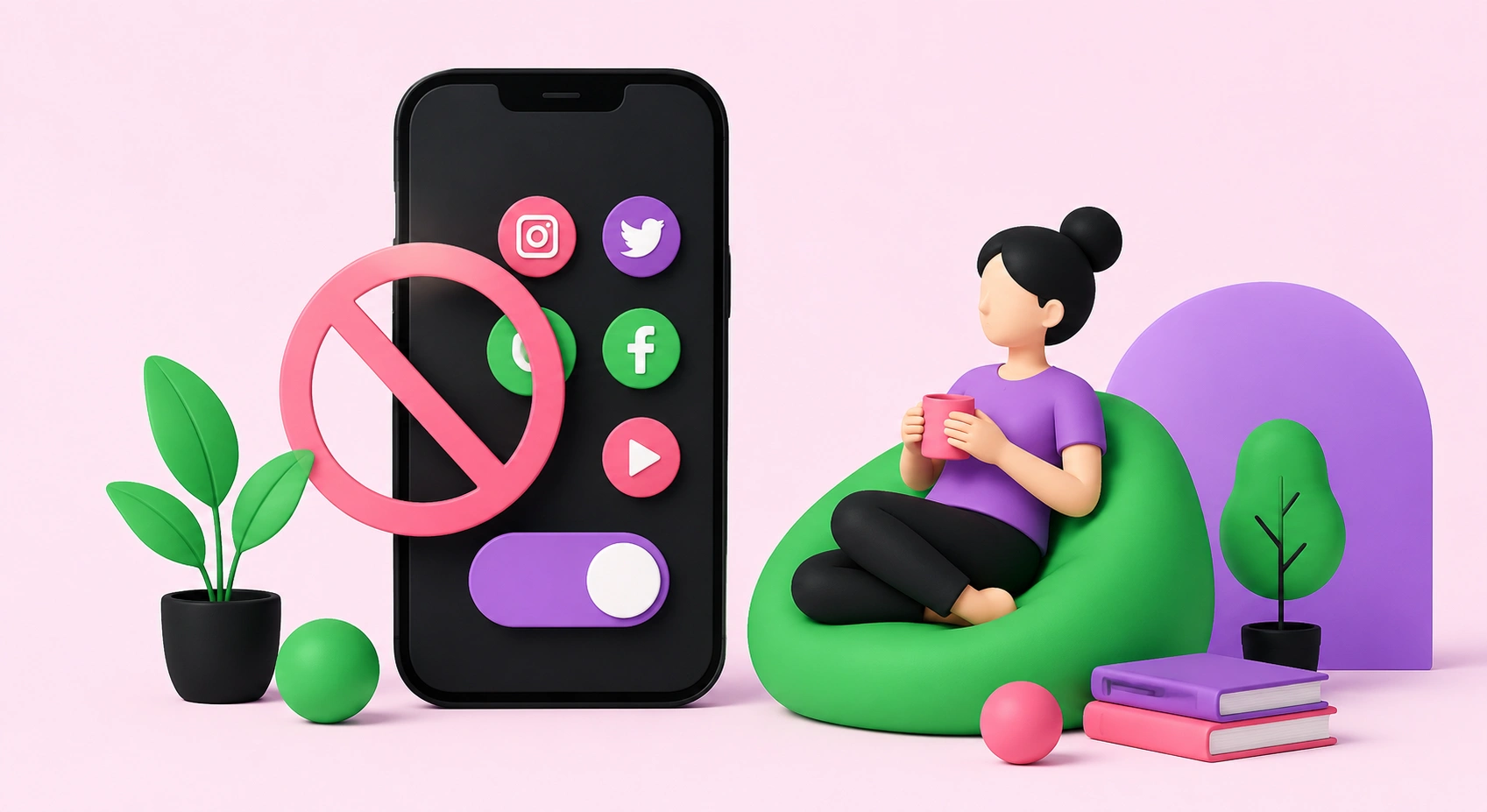
How to Use Less Social Media Without Losing Important Connections
Learning how to use less social media means deliberately reducing unnecessary checking, scrolling, and notifications while preserving the online activities that provide genuine practical or social value. The goal is not necessarily complete abstinence. It is to make social media a chosen tool with defined purposes, boundaries, and stopping points instead of an automatic response to boredom, stress, or uncertainty.
Quick Answer: Use less social media by measuring your current behavior, disabling nonessential notifications, removing high-trigger apps from your phone, scheduling limited check-in periods, and replacing scrolling with specific offline activities. Keep direct communication channels for important relationships, review the results weekly, and adjust boundaries according to sleep, attention, mood, and responsibilities.
How WebPeak Supports More Intentional Digital Experiences
WebPeak helps organizations communicate online without depending on manipulative engagement patterns. Their specialists can develop accessible, task-focused websites through website design services and create useful content that gives audiences clear answers outside crowded social feeds. This approach supports sustainable visibility while allowing customers to choose when and how they interact.
Why Is It So Difficult to Reduce Social Media Use?
Habitual social media use is a repeated behavior activated by cues such as notifications, idle moments, emotional discomfort, or seeing a phone nearby. Many platforms reduce stopping cues by using infinite feeds, autoplay, personalized recommendations, and intermittent rewards. Because interesting content appears unpredictably, users often continue scrolling longer than intended while searching for the next useful or entertaining item.
Begin with observation rather than self-criticism. For seven days, record total use, number of pickups, longest sessions, most-used platforms, and the situation that preceded each unplanned check. Device screen-time reports provide totals, but a brief written note reveals the trigger. “Opened after difficult email” is more actionable than “used for 42 minutes” because it identifies the behavior the plan must replace.
Separate purposeful use from automatic use. Purposeful use has a clear task and endpoint, such as replying to three messages or checking an event update. Automatic use begins without a defined objective and continues until something interrupts it. Before opening an app, state the purpose aloud or write it in a note. If no purpose can be named, delay opening it for ten minutes.
What Is the Best Step-by-Step Plan for Using Less Social Media?
A social media boundary is a predetermined rule governing when, where, why, or for how long a platform may be used. Effective boundaries change the environment instead of relying exclusively on willpower. Start with one week of moderate changes, review the evidence, and tighten only the limits that address your actual triggers.
- Define what you want back: Choose a measurable outcome such as 45 more minutes of sleep, uninterrupted family meals, or two focused work blocks daily.
- Measure a baseline: Record seven days of platform time and pickups without attempting to produce an artificially low result.
- Disable prompts: Turn off likes, recommendations, live-video alerts, and promotional notifications while retaining essential direct-message alerts if needed.
- Add friction: Remove apps from the home screen, log out after sessions, disable saved passwords, or access selected platforms only from a computer.
- Schedule check-ins: Assign one or two short windows for messages and updates rather than checking throughout the day.
- Create stopping cues: Use a timer and finish after a defined action, such as responding to current messages.
- Prepare replacements: Keep a book, walking route, phone list, puzzle, or short household task available for predictable trigger moments.
- Review weekly: Compare use with sleep, concentration, mood, and relationship goals, then change one rule at a time.
Tell close contacts how to reach you for urgent matters. A short message such as, “I check this platform in the evening; please text or call if something is time-sensitive,” prevents reduced platform use from becoming accidental unavailability. Export important birthdays, addresses, and event information before deleting an account.
Which Social Media Limits Work in Different Situations?
The best limit addresses the cue driving the behavior. Time limits can help with long sessions but may not prevent dozens of brief interruptions. Location rules, such as no social media in bed, protect specific activities. Device rules are useful when a platform is necessary for work but does not need to travel in a pocket all day.
| Common Problem | Practical Boundary | Replacement Action |
|---|---|---|
| Checking immediately after waking | Keep the phone outside the bedroom | Use an alarm clock and begin with breakfast |
| Repeated work interruptions | Check platforms after scheduled focus blocks | Write urges on a note and continue working |
| Late-night scrolling | Set a device cutoff one hour before bed | Read, stretch, or prepare for the next day |
| Fear of missing social updates | Keep one daily message window | Call or meet important contacts directly |
Use an escalation ladder if a mild boundary fails. First disable notifications. Next remove the app from the home screen. Then uninstall it from the phone while retaining desktop access. Finally, deactivate the account for a defined trial. This sequence reveals the minimum intervention needed and avoids turning one difficult day into an irreversible decision.
What Does Research Say About Reducing Social Media Use?
Evidence supports experimentation but does not justify claiming that one limit works for everyone. In a 2018 University of Pennsylvania randomized study published in the Journal of Social and Clinical Psychology, participants assigned to limit Facebook, Instagram, and Snapchat to 10 minutes per platform per day reported significant reductions in loneliness and depression over three weeks. The finding suggests that specific limits can help, but it should not be interpreted as a universal clinical prescription.
DataReportal's Digital 2024 Global Overview Report estimated that the typical internet user spent 2 hours and 23 minutes per day using social media. That global average includes substantial variation by age, country, occupation, and measurement method. Its practical value is comparative: recovering even 30 minutes daily creates more than 182 hours across a year, enough for repeated exercise, study, sleep, or relationship-building routines.
The original insight many reduction plans miss is that duration is only one dimension of harm. Ten interruptions across an hour can damage concentration even when total use remains low, while a planned 30-minute conversation with distant family may be valuable. Track session purpose, interruption frequency, and after-use feeling alongside minutes. A better objective is higher-value use, not simply the smallest possible number.
Organizations also influence digital habits. Brands can publish searchable guides through blog writing services, offer email preferences, and avoid manufacturing urgency. Individuals benefit when useful information is available through direct, predictable channels rather than requiring continuous feed monitoring.
Key Takeaways
- Reducing social media works best when the goal identifies what recovered time and attention will support.
- Seven days of baseline tracking reveals the platforms, cues, and situations responsible for automatic checking.
- Environmental friction and scheduled access are generally more reliable than depending on willpower alone.
- Important relationships can be preserved by maintaining direct contact methods and communicating new response expectations.
- Evaluate interruption frequency, purpose, sleep, mood, and concentration instead of measuring success only in minutes.
Frequently Asked Questions
Should I delete all my social media accounts?
Not necessarily. Start by identifying which platforms provide meaningful connection or necessary professional value. Remove low-value applications, limit the useful ones, and deactivate an account temporarily before permanent deletion. Download personal data and transfer essential contact information first. Complete removal is appropriate when moderate boundaries repeatedly fail or a platform causes significant harm.
How much social media use is considered healthy?
No single daily number is healthy for every person. Consider whether use displaces sleep, work, exercise, relationships, or necessary care and whether you can stop as planned. Establish a personal baseline, reduce it experimentally, and compare outcomes. Seek qualified support if use feels uncontrollable or contributes to persistent distress.
How can I stop checking social media when I wake up?
Charge your phone outside the bedroom and use a separate alarm clock. Decide the first three morning actions in advance, such as drinking water, dressing, and eating breakfast. Keep social apps blocked or logged out until a fixed time. The physical separation removes the cue before decision fatigue begins.
Will using less social media make me lose friends?
Reduced feed activity does not have to reduce meaningful contact. Tell important people that you are changing your habits, exchange phone numbers or email addresses, and schedule calls or meetings. You may miss some low-priority updates, but direct communication often creates deeper interaction than passive viewing and occasional reactions.
What should I do instead of scrolling social media?
Choose replacements that match the trigger and available time. For a two-minute pause, stretch or drink water. For boredom, read a saved article or walk outside. For loneliness, message one person directly. For stress, use breathing exercises or write the next action. Prepare options before the urge appears.
Conclusion
The most useful reduction plan preserves valuable communication while making automatic use inconvenient. Measure your baseline, remove one major cue, schedule deliberate access, and assign a realistic replacement activity this week. Judge the experiment by whether it improves attention, sleep, responsibilities, and relationships; those outcomes provide more trustworthy guidance than an arbitrary screen-time target.