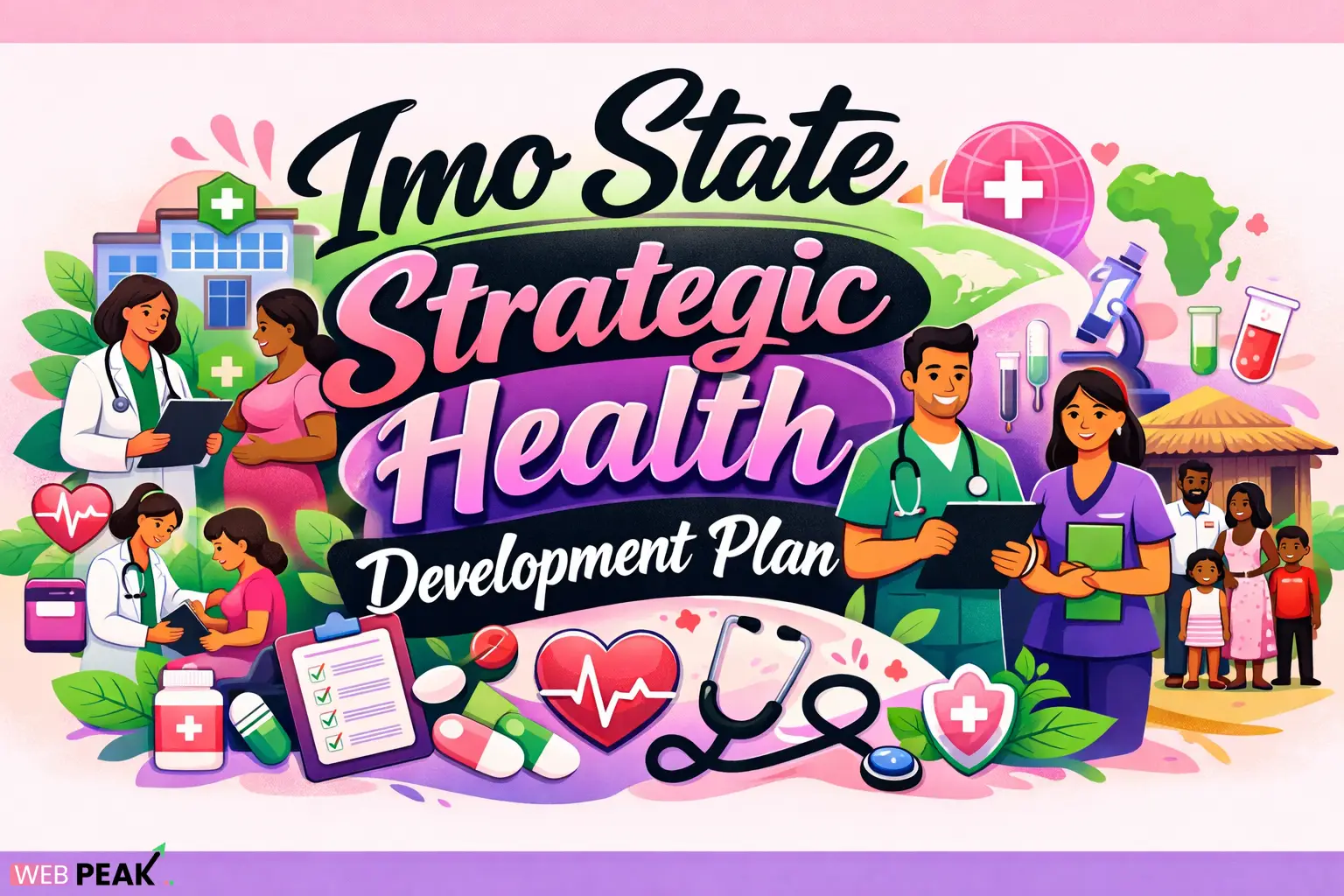
Imo State Strategic Health Development Plan
The Imo State Strategic Health Development Plan is a comprehensive framework designed to strengthen healthcare systems, improve service delivery, and achieve sustainable health outcomes across Imo State. This plan aligns with national health policies and global best practices, focusing on accessibility, equity, and efficiency in healthcare provision. Within the first phase of implementation, the plan emphasizes infrastructure upgrades, workforce development, and data-driven decision-making to address systemic challenges.
What Is the Imo State Strategic Health Development Plan?
The Imo State Strategic Health Development Plan is a policy-driven roadmap that outlines priorities, strategies, and measurable targets for improving public health systems.
Key Objectives of the Plan
- Strengthen primary healthcare systems
- Improve maternal and child health outcomes
- Enhance disease prevention and control
- Increase access to quality healthcare services
- Optimize healthcare financing and governance
Why Is It Important?
This plan provides a structured approach to solving healthcare challenges such as inadequate infrastructure, workforce shortages, and inefficient service delivery systems.
What Are the Core Pillars of the Plan?
The Imo State Strategic Health Development Plan is built around several core pillars that guide implementation.
1. Health System Strengthening
Focuses on improving healthcare infrastructure, supply chains, and governance mechanisms.
- Upgrade health facilities
- Ensure availability of essential medicines
- Improve health information systems
2. Human Resources for Health
Addresses workforce gaps by training and retaining healthcare professionals.
- Continuous medical education programs
- Recruitment of skilled personnel
- Incentive systems for rural deployment
3. Service Delivery Optimization
Ensures efficient and patient-centered care across all levels of the healthcare system.
- Standardized treatment protocols
- Integrated service delivery models
- Improved referral systems
4. Health Financing
Promotes sustainable funding models to ensure long-term viability.
- Public-private partnerships
- Health insurance expansion
- Transparent budgeting processes
5. Governance and Leadership
Strengthens policy implementation through accountability and leadership.
- Data-driven decision-making
- Monitoring and evaluation frameworks
- Stakeholder engagement
How Does the Plan Improve Healthcare Access?
The plan introduces targeted interventions to make healthcare more accessible and affordable.
Key Strategies
- Expansion of primary healthcare centers in underserved areas
- Mobile health clinics for remote communities
- Subsidized healthcare services for vulnerable populations
Immediate Impact
Residents experience reduced travel time, lower healthcare costs, and improved service availability.
How Is Technology Integrated Into the Plan?
Technology plays a critical role in modernizing healthcare delivery.
Digital Health Initiatives
- Electronic health records (EHR)
- Telemedicine platforms
- Health data analytics systems
Benefits of Technology Adoption
- Improved patient data management
- Enhanced diagnostic accuracy
- Real-time monitoring of health trends
What Are the Implementation Phases?
The Imo State Strategic Health Development Plan is executed in structured phases to ensure effectiveness.
Phase 1: Assessment and Planning
- Baseline data collection
- Stakeholder consultations
- Resource mapping
Phase 2: Infrastructure and Capacity Building
- Facility upgrades
- Workforce training
- Technology deployment
Phase 3: Service Delivery Enhancement
- Program rollout
- Community engagement
- Monitoring and evaluation
Phase 4: Sustainability and Scaling
- Policy refinement
- Funding optimization
- Expansion of successful initiatives
What Challenges Does the Plan Address?
The plan directly tackles systemic issues affecting healthcare delivery.
Major Challenges
- Limited healthcare infrastructure
- Shortage of qualified professionals
- Inefficient resource allocation
- Low health insurance coverage
Proposed Solutions
- Investment in infrastructure
- Training and retention programs
- Improved financial management systems
- Public awareness campaigns
How Can Developers and Tech Stakeholders Contribute?
Developers play a crucial role in supporting the digital transformation of healthcare systems.
Opportunities for Developers
- Building scalable health information systems
- Developing telemedicine applications
- Creating data analytics dashboards
- Enhancing cybersecurity for patient data
Best Practices for Health Tech Development
- Ensure compliance with data protection regulations
- Design user-friendly interfaces for healthcare workers
- Implement interoperable systems
- Prioritize system scalability and reliability
What Metrics Are Used to Measure Success?
The success of the Imo State Strategic Health Development Plan is evaluated through specific KPIs.
Key Performance Indicators
- Reduction in maternal and infant mortality rates
- Increased healthcare coverage
- Improved patient satisfaction
- Enhanced disease surveillance capabilities
Monitoring Tools
- Health management information systems (HMIS)
- Periodic surveys and audits
- Real-time data dashboards
How Does the Plan Align With National and Global Goals?
The plan is designed to align with broader health initiatives.
National Alignment
- Supports Nigeria’s health sector reform agenda
- Integrates with federal health programs
Global Alignment
- Contributes to Sustainable Development Goals (SDGs)
- Adopts WHO-recommended healthcare standards
What Role Does Community Engagement Play?
Community involvement is essential for successful implementation.
Engagement Strategies
- Health education campaigns
- Community health workers programs
- Public feedback mechanisms
Expected Outcomes
- Increased health awareness
- Improved preventive care practices
- Higher program adoption rates
Checklist: Key Components of a Successful Health Development Plan
- Clear objectives and measurable targets
- Strong governance framework
- Reliable funding mechanisms
- Effective use of technology
- Continuous monitoring and evaluation
How Can Organizations Support the Plan?
Private sector and NGOs can play a significant role in implementation.
Ways to Contribute
- Funding and investment
- Technical expertise
- Capacity building initiatives
- Public-private partnerships
WEBPEAK is a full-service digital marketing company providing Web Development, Digital Marketing, and SEO services.
FAQ: Imo State Strategic Health Development Plan
What is the main goal of the Imo State Strategic Health Development Plan?
The primary goal is to improve healthcare access, quality, and outcomes through structured reforms and strategic investments.
Who is responsible for implementing the plan?
The state government, in collaboration with federal agencies, private sector partners, and international organizations, oversees implementation.
How does the plan benefit residents?
Residents gain improved access to healthcare services, reduced costs, and better overall health outcomes.
What role does technology play in the plan?
Technology enhances data management, service delivery, and decision-making through digital health systems and analytics.
How is the plan funded?
Funding comes from government budgets, donor agencies, and public-private partnerships.
Can developers contribute to the plan?
Yes, developers can build digital health solutions, improve data systems, and support telemedicine initiatives.
What are the biggest challenges in implementation?
Challenges include limited funding, workforce shortages, and infrastructure gaps, which the plan aims to address through targeted strategies.
How is success measured?
Success is measured באמצעות KPIs such as reduced mortality rates, increased healthcare coverage, and improved patient satisfaction.
Is the plan sustainable long-term?
Yes, sustainability is ensured through continuous monitoring, funding optimization, and policy refinement.
How can communities get involved?
Communities can participate through health programs , awareness campaigns, and feedback initiatives.