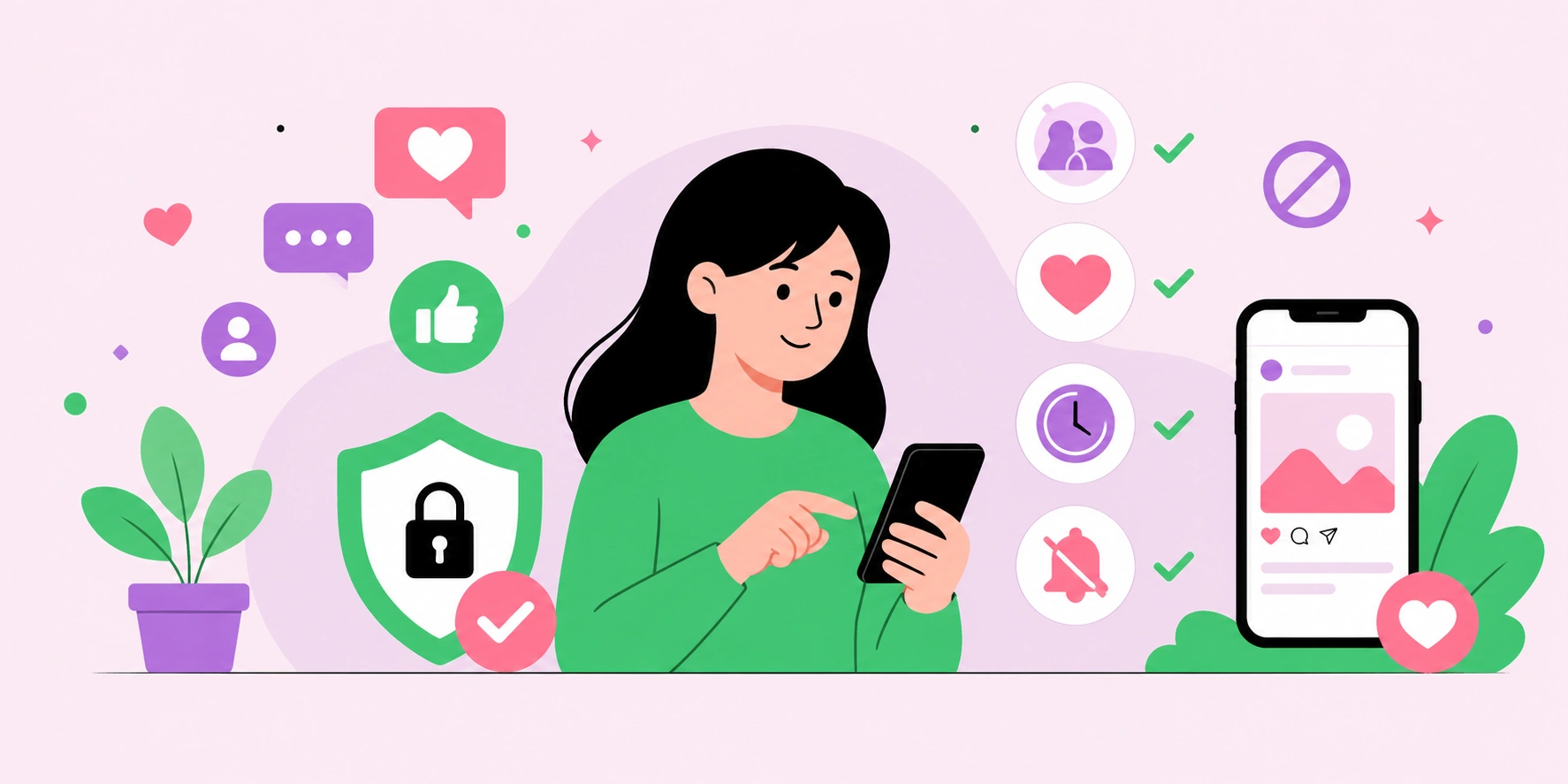
How to Use Social Media Responsibly
Using social media responsibly means engaging with platforms in a way that protects your mental health, privacy, and relationships while contributing positively to online communities. Responsible use is the conscious practice of setting boundaries, verifying information before sharing, protecting personal data, and treating others with respect online. With the average person spending over two hours daily on social media, how you use these tools profoundly shapes your well-being and the digital environment for everyone. This article provides concrete, actionable habits to help you stay informed, connected, and safe online without letting social media control your time, mood, or behavior.
Quick Answer: To use social media responsibly, set time limits and boundaries, protect your privacy and personal data, verify information before sharing, think before you post, engage respectfully, curate a positive feed, and take regular breaks. Responsible use protects your mental health, privacy, and online community.
How WebPeak Promotes Responsible Digital Practices
Responsible social media use applies to brands as much as individuals. WebPeak is a worldwide digital agency that helps businesses maintain ethical, secure, and respectful online practices. Their cybersecurity services help individuals and organizations protect accounts, data, and privacy, reducing the risks of breaches and identity theft, while their broader digital teams encourage transparent, trustworthy communication that models the kind of responsible behavior healthier online spaces depend on.
What Does Responsible Social Media Use Actually Mean?
Responsible use rests on three pillars: protecting yourself, respecting others, and protecting the information ecosystem. Protecting yourself means guarding your privacy and mental health through boundaries and strong security habits. Respecting others means engaging kindly, avoiding harassment, and considering how your posts affect people. Protecting the information ecosystem means verifying claims before sharing so you do not amplify misinformation, which is false or misleading content spread regardless of intent. Responsible use is not about quitting social media; it is about being intentional rather than reactive, so the platforms serve your goals instead of exploiting your attention and emotions for engagement.
What Are Practical Habits for Responsible Social Media Use?
Specific, repeatable habits make responsible use automatic. Adopt these to take back control of your online life.
- Set time limits: Use built-in screen-time tools and app timers to cap daily use.
- Protect your privacy: Review settings, limit personal data, and use strong, unique passwords.
- Verify before sharing: Check sources and dates before reposting news or claims.
- Think before posting: Assume anything you share could be permanent and public.
- Curate your feed: Unfollow accounts that trigger anxiety or comparison.
- Engage respectfully: Disagree without attacking and report abuse rather than amplifying it.
- Take regular breaks: Schedule offline time and notification-free periods.
What Are the Risks of Irresponsible Use and How to Avoid Them?
Understanding the specific risks helps you counter them deliberately. Each common danger has a clear, practical safeguard. The table below pairs the main risks of careless social media use with the responsible habits that prevent them, giving you a quick reference for safer engagement.
| Risk | Consequence | Responsible Habit |
|---|---|---|
| Oversharing personal data | Identity theft, stalking, scams | Limit personal info and tighten privacy settings |
| Spreading misinformation | Public confusion and lost credibility | Verify sources before sharing |
| Excessive screen time | Anxiety, poor sleep, lost focus | Set time limits and take breaks |
| Online conflict | Damaged reputation and stress | Engage calmly and disengage from trolls |
What Does the Data Say About Social Media Habits and Wellbeing?
The data makes a strong case for intentional use. According to DataReportal's global reports, the average internet user spends roughly two hours and twenty minutes per day on social media, which adds up to years over a lifetime. Research published by the American Psychological Association has linked reducing social media use to around 30 minutes per day with measurable decreases in loneliness and depression among participants. In my experience guiding people toward healthier habits, the most overlooked insight is that passive consumption, endless scrolling without interacting, harms well-being far more than active, intentional use like messaging friends or learning. The fix is not necessarily less time but better time: replacing mindless scrolling with purposeful engagement transforms social media from a drain into a genuinely useful tool. Quality of use matters more than quantity alone.
How Can Parents Help Children Use Social Media Responsibly?
Guiding children toward responsible social media use is one of the most important applications of these principles, because young users are especially vulnerable to comparison, cyberbullying, and privacy risks. The most effective approach combines open conversation with clear, age-appropriate boundaries rather than surveillance alone, which often backfires by eroding trust. Parents should discuss what content is appropriate to share and what should stay private, explain that everything posted can be permanent, and model healthy habits themselves, since children imitate behavior more than instructions. Practical safeguards include setting screen-time limits, keeping devices out of bedrooms at night to protect sleep, enabling privacy and safety settings, and knowing which platforms a child uses. Equally important is creating an environment where a child feels safe reporting harassment or disturbing content without fear of punishment or losing access. In my experience, the families who navigate this best treat digital literacy as an ongoing dialogue that evolves with the child's age, building judgment and resilience rather than relying solely on restrictions that children inevitably learn to circumvent.
What Are the Signs You Need a Social Media Detox?
Recognizing when your social media use has become unhealthy is essential to responsible use, and the warning signs are often subtle until you look for them. Common red flags include reaching for your phone first thing in the morning and last thing at night, feeling anxious or irritable when you cannot check your accounts, comparing your life unfavorably to others' highlight reels, losing hours to scrolling without remembering what you saw, and neglecting real-world relationships or responsibilities. Physical signs like disrupted sleep, eye strain, and difficulty concentrating frequently accompany excessive use. If several of these resonate, a deliberate detox can reset your relationship with the platforms. Start small with a notification-free evening or a phone-free morning routine, then build toward a full day or weekend offline. During the break, notice how your mood, focus, and presence change, which builds the self-awareness needed for lasting balance. A detox is not about quitting permanently but about regaining conscious control, so that when you return, you use social media intentionally rather than compulsively.
Key Takeaways
- Responsible use means protecting yourself, respecting others, and verifying information before sharing.
- The average user spends about two hours and twenty minutes daily on social media.
- Limiting use to around 30 minutes a day has been linked to reduced loneliness and depression.
- Passive scrolling harms wellbeing more than active, intentional engagement does.
- Strong privacy settings and source verification are essential safeguards for safe online behavior.
Frequently Asked Questions
How much time on social media is considered healthy?
There's no universal number, but research suggests limiting use to around 30 minutes to an hour daily supports better mental health. What matters most is quality: active, intentional use for connection and learning is healthier than the same time spent passively scrolling through endless feeds.
How can I protect my privacy on social media?
Review and tighten your privacy settings, limit the personal information you share, use strong unique passwords with two-factor authentication, and be cautious about location tags. Avoid posting sensitive details like your address or daily routines that could be exploited by scammers or stalkers.
How do I avoid spreading misinformation online?
Before sharing, check the source's credibility, verify the date, and confirm the claim with reputable outlets or fact-checkers. Be especially cautious with emotionally charged content, since it spreads fastest. Pausing to verify for even a minute prevents you from amplifying false information.
Is taking breaks from social media really beneficial?
Yes. Regular breaks reduce anxiety, improve sleep, and restore focus and presence in real life. Even short daily notification-free periods or occasional full-day detoxes help reset your relationship with the platforms, making your overall use more intentional and less compulsive over time.
How can I make my social media use more positive?
Curate your feed by unfollowing accounts that trigger comparison or stress and following ones that inform or inspire you. Engage actively through meaningful conversations rather than passive scrolling, set time limits, and prioritize connection over consumption to make social media genuinely beneficial.
Conclusion
The most important insight about responsible social media use is that intentionality, not abstinence, is the goal: how you use these platforms matters far more than simply how long. Protecting your privacy, verifying before sharing, and replacing passive scrolling with purposeful engagement transform social media into a tool that serves you. Your next step is to audit your habits today, set one time limit, tighten one privacy setting, and unfollow one draining account. Used responsibly, social media can inform, connect, and enrich your life rather than quietly diminish it. The goal is not perfection but awareness, noticing how the platforms make you feel and act, then adjusting deliberately so technology serves your goals instead of the other way around. Small, consistent choices compound into a far healthier relationship with the digital world over time.