How to Promote a Concert on Social Media
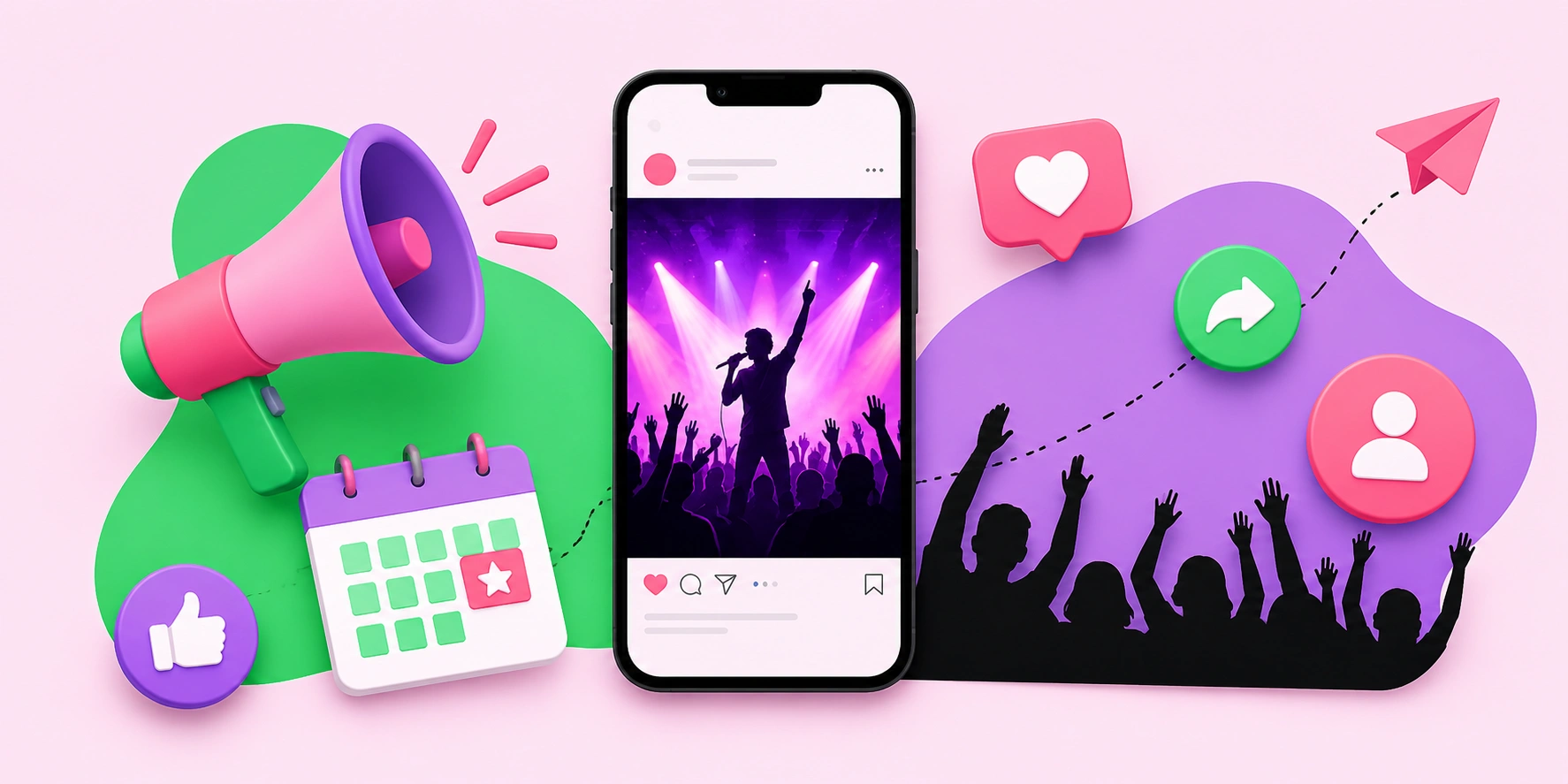
Promoting a concert on social media means using platforms like Instagram, TikTok, and Facebook to build awareness, generate excitement, and drive ticket sales before and during an event. Concert promotion is the strategic marketing of a live music event to fill seats and create buzz. The key insight is that ticket sales follow a build-up curve — you cannot post once and expect a sellout. Success comes from a timed campaign that escalates anticipation. This guide lays out exactly what to post, when, and how to convert followers into ticket buyers.
Quick Answer: To promote a concert on social media, start 6–8 weeks out with an announcement, build anticipation through behind-the-scenes and artist content, run targeted paid ads to local music fans, partner with the artists and local influencers to expand reach, and intensify urgency in the final week with countdowns and limited-ticket messaging.
How WebPeak Powers Your Concert Promotion
WebPeak is a worldwide digital agency that helps event organizers fill venues through strategic social media campaigns. Their social media marketing services cover campaign planning, targeted paid ads, and content scheduling timed to your event date, so promotion builds momentum rather than fizzling. Because they also produce graphic design and short-form video, your announcement posts, countdowns, and teaser clips look professional and shareable. Their team understands the urgency-driven nature of event marketing and structures campaigns to convert attention into actual ticket sales as the show approaches.
When Should You Start Promoting and What's the Timeline?
You should start promoting a concert 6 to 8 weeks before the date, because ticket buyers need time to discover, decide, and commit. A promotion timeline is a phased schedule that escalates messaging from awareness to urgency as the event nears.
The campaign moves through clear phases: announcement (reveal the event with energy), build-up (sustain interest with varied content), push (intensify paid ads and reminders), and final urgency (countdowns and last-chance messaging). Starting too late leaves no room for word-of-mouth to spread; starting too early without sustained content lets excitement fade. The build-up phase is where most organizers fail by going quiet — consistent content during these weeks is what keeps your event top of mind until people buy.
What Content Sells the Most Tickets?
The content that sells tickets creates emotion, proof, and urgency — making people feel they cannot miss this event. Use a varied mix rather than repeating the same announcement.
- Announcement reveal: A high-energy video or graphic with date, venue, and ticket link.
- Artist content: Music clips, interviews, and the artist personally inviting fans.
- Behind-the-scenes: Rehearsals, setup, and preparation that build authentic anticipation.
- Social proof: Past event footage, testimonials, and "tickets selling fast" updates.
- User-generated content: Reposts of fans sharing excitement and tagging friends.
- Countdowns and urgency: Final-week reminders, limited-ticket alerts, and live counters.
Short-form video drives the most reach and emotion, so prioritize Reels and TikToks of the artist and energy. Always include a clear, direct link to buy tickets — reducing friction between desire and purchase is what converts a view into a sale.
Which Platforms and Tactics Work Best for Events?
Each platform plays a different role in event promotion, and using them strategically maximizes both reach and conversions. The table below maps platforms to their best concert-promotion use.
| Platform | Best Use for Concerts | Key Tactic |
|---|---|---|
| Visual hype and Stories countdowns | Reels, countdown stickers, link in bio | |
| TikTok | Viral reach to new local fans | Artist clips, trending sounds |
| Event page and local targeting | Facebook Events, geo-targeted ads | |
| Instagram/Facebook Ads | Driving ticket sales directly | Geo and interest-based paid campaigns |
Geo-targeting is essential — concerts are local, so focus paid spend on people within travel distance of the venue. Combine Facebook's event tools with TikTok's reach and Instagram's hype for full coverage.
How Do Paid Ads and Influencers Boost Ticket Sales?
Paid ads and influencer partnerships extend your reach beyond existing followers to the exact people likely to attend. According to industry data, the live music and events sector has rebounded strongly post-pandemic, with global concert demand reaching record levels — meaning competition for attention is fierce and targeted promotion is essential. Eventbrite has reported that social media is among the top channels driving event discovery and ticket purchases, confirming where to focus budget.
Use geo-targeted, interest-based ads to reach local fans of the artist's genre, and retarget people who visited your ticket page but did not buy. Partner with the performing artists — their direct invitation to fans is the single most powerful promotional asset — and local micro-influencers who reach your community. In my experience promoting events, the campaigns that sell out pair the artist's reach with paid amplification and a relentless final-week urgency push. Track ticket-link clicks and conversions, not just likes, and shift budget toward whatever drives actual sales. The goal is always measurable: seats filled, not vanity engagement.
Key Takeaways
- Start promoting 6–8 weeks out and escalate from announcement to final-week urgency.
- The build-up phase is where most organizers fail — keep posting consistently.
- Short-form video of the artist drives the most reach and emotional pull.
- Geo-target paid ads to fans within travel distance of the venue.
- The artist's direct invitation to fans is the single most powerful promotional asset.
Frequently Asked Questions
How far in advance should I promote a concert on social media?
Begin 6 to 8 weeks before the event so buyers have time to discover and commit. Use this window to move through announcement, build-up, push, and final-urgency phases. Starting later leaves no room for word-of-mouth, while consistent content throughout keeps the event top of mind until tickets sell.
What is the best platform to promote a concert?
Use a combination: TikTok for viral reach to new fans, Instagram for visual hype and Stories countdowns, and Facebook for event pages and local targeting. Run geo-targeted paid ads across Instagram and Facebook to drive direct ticket sales. No single platform wins — coordinated use of all three works best.
How do I sell more tickets using social media?
Post emotional, varied content — artist clips, behind-the-scenes, and social proof — include a direct ticket link everywhere, run geo-targeted ads to local genre fans, and create urgency with countdowns and limited-ticket messaging in the final week. Reducing friction between excitement and checkout converts the most viewers into buyers.
Should I use paid ads to promote a concert?
Yes. Paid ads let you reach local fans of the artist's genre precisely and retarget people who viewed your ticket page but did not purchase. Concerts are local events, so geo-targeted advertising delivers strong returns. Start with a modest budget, track ticket-link conversions, and scale what sells.
How do influencers help promote concerts?
Influencers, especially the performing artists and local micro-influencers, expand reach to engaged, relevant audiences and lend credibility. An artist personally inviting fans is the most powerful promotional content you can have. Local influencers reach your community directly, driving discovery and ticket sales beyond your own followers.
Conclusion
The single most important insight is that concert promotion is a timed momentum game — start 6 to 8 weeks out and build relentlessly toward a final-week urgency push rather than relying on a single announcement. Prioritize the artist's own content, geo-target your paid ads to local fans, and make buying a ticket frictionless with direct links everywhere. Track conversions, not just likes, and reallocate budget toward whatever fills seats. Organizers who plan the full timeline and stay consistent through the build-up phase are the ones who sell out.