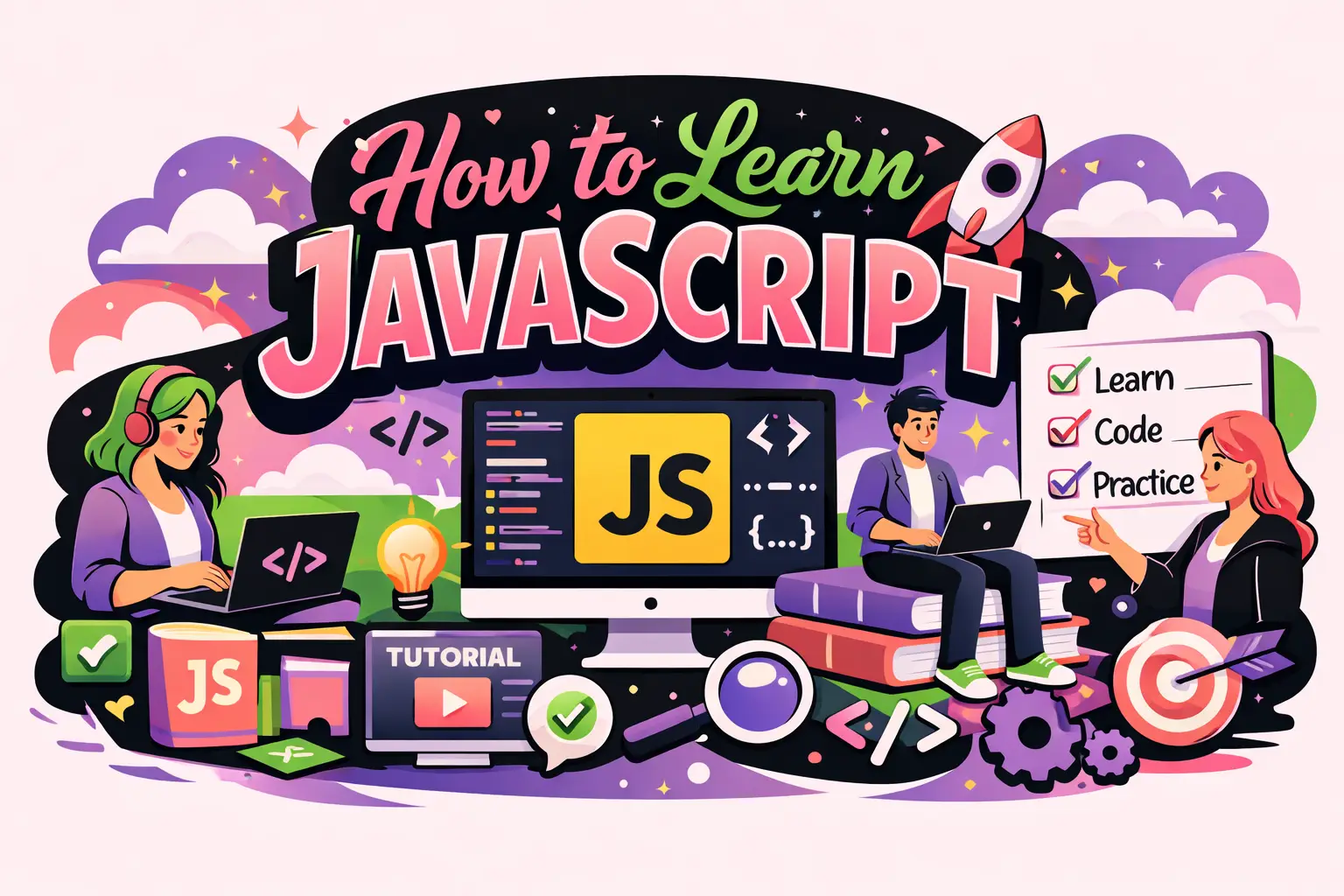
How to Learn JavaScript: A Beginner to Advanced Roadmap
Learning JavaScript is one of the most valuable skills for modern developers. If you're wondering how to learn JavaScript: a beginner to advanced roadmap, this guide provides a structured, practical, and developer-focused path. Whether you're starting from scratch or aiming to master advanced concepts, this roadmap will help you build real-world skills, avoid common mistakes, and progress efficiently.
JavaScript powers the web—from simple interactivity to complex full-stack applications. With the right approach, you can go from writing basic scripts to building scalable applications using modern frameworks and tools.
What Is the Best Way to Start Learning JavaScript?
The best way to start learning JavaScript is by building a strong foundation in core concepts and practicing consistently with small projects.
Focus on the fundamentals first
- Variables (var, let, const)
- Data types (string, number, boolean, object, null, undefined)
- Operators and expressions
- Control flow (if/else, switch)
- Loops (for, while)
Understand how JavaScript runs
- Execution context
- Call stack
- Hoisting
- Scope (global, function, block)
Start with simple browser-based scripts using the console before moving to more complex setups.
How Long Does It Take to Learn JavaScript?
It typically takes 3–6 months to become comfortable with JavaScript fundamentals and 6–12 months to reach an advanced level, depending on consistency and practice.
Learning timeline breakdown
- Beginner (0–2 months): Syntax, basics, small scripts
- Intermediate (2–6 months): DOM, APIs, asynchronous JavaScript
- Advanced (6–12 months): Frameworks, performance, architecture
Consistency matters more than speed. Daily coding yields faster results than sporadic learning.
What Should Beginners Learn First in JavaScript?
Beginners should start with core syntax and logic-building concepts before touching frameworks or libraries.
Step-by-step beginner checklist
- Learn basic syntax and data types
- Practice conditionals and loops
- Understand functions and parameters
- Learn arrays and objects
- Explore basic debugging techniques
Practice with small projects
- Calculator
- To-do list
- Number guessing game
- Simple form validation
These projects reinforce logic and improve confidence.
How Do You Move from Beginner to Intermediate Level?
To move beyond beginner level, focus on browser APIs, asynchronous programming, and deeper language concepts.
Key intermediate topics
- DOM manipulation
- Event handling
- Fetch API and AJAX
- Promises and async/await
- Error handling (try/catch)
Understand how the browser works
- DOM tree structure
- Event loop
- Web APIs
At this stage, you should be able to build dynamic, interactive web applications.
What Projects Should You Build at the Intermediate Level?
Intermediate developers should focus on real-world applications that involve APIs and user interaction.
Recommended intermediate projects
- Weather app using API
- Movie search app
- Notes app with local storage
- Quiz application
Skills you will develop
- Working with APIs
- State management basics
- User interface updates
- Data persistence
When Should You Learn JavaScript Frameworks?
You should learn frameworks after mastering core JavaScript concepts, especially asynchronous programming and DOM manipulation.
Popular frameworks and libraries
- React (most in-demand)
- Vue (beginner-friendly)
- Angular (enterprise-level)
Prerequisites before frameworks
- Strong understanding of ES6+ features
- Arrow functions, destructuring, modules
- Closures and scope
Skipping fundamentals often leads to confusion when working with frameworks.
What Advanced JavaScript Concepts Should You Learn?
Advanced JavaScript focuses on performance, architecture, and deep understanding of the language.
Core advanced topics
- Closures and lexical scope
- Prototypes and inheritance
- Event loop and concurrency model
- Memory management
- Design patterns
Modern JavaScript features
- ES6+ syntax
- Modules (import/export)
- Optional chaining
- Nullish coalescing
These concepts are essential for writing efficient and scalable code.
How Do You Learn Backend JavaScript with Node.js?
Learning Node.js allows you to build full-stack applications using JavaScript on both frontend and backend.
Start with Node.js basics
- Modules and file system
- HTTP server creation
- Package management (npm)
Move to backend frameworks
- Express.js
- Routing and middleware
- REST API development
Database integration
- MongoDB (NoSQL)
- PostgreSQL (SQL)
This stage completes your journey into full-stack development.
What Tools Should JavaScript Developers Learn?
Modern JavaScript development relies on tools that improve productivity and code quality.
Essential tools
- Git and GitHub
- VS Code editor
- Browser DevTools
- Package managers (npm, yarn)
Build tools and bundlers
- Webpack
- Vite
- Babel
These tools are widely used in professional environments.
How Do You Practice JavaScript Effectively?
Effective practice involves building projects, solving problems, and reviewing code regularly.
Best practice strategies
- Code daily, even for 30 minutes
- Solve algorithm challenges
- Contribute to open-source
- Read and refactor your code
Platforms for practice
- LeetCode
- HackerRank
- CodeWars
Consistent practice is the fastest way to improve.
How Do You Build a JavaScript Portfolio?
A strong portfolio showcases your skills and helps you stand out in job applications.
What to include
- 3–5 high-quality projects
- Live demos and GitHub links
- Clean, documented code
Project ideas for portfolio
- Full-stack CRUD application
- E-commerce frontend
- Real-time chat app
Your portfolio should demonstrate both frontend and backend capabilities.
How Do You Stay Updated with JavaScript Trends?
JavaScript evolves rapidly, so staying updated is essential for long-term growth.
Ways to stay current
- Follow developer blogs
- Watch conference talks
- Read documentation updates
- Join developer communities
Keeping up with trends ensures your skills remain relevant.
What Are Common Mistakes When Learning JavaScript?
Avoiding common mistakes can significantly speed up your learning process.
Top mistakes to avoid
- Skipping fundamentals
- Jumping into frameworks too early
- Not building projects
- Ignoring debugging skills
- Learning passively without coding
Focus on understanding concepts rather than memorizing syntax.
Why Is JavaScript Important for Developers?
JavaScript is essential because it enables interactive web applications and supports full-stack development.
Key advantages
- Runs in all modern browsers
- Large ecosystem
- Versatile (frontend, backend, mobile)
- High demand in the job market
It remains one of the most in-demand programming languages globally.
How Can You Accelerate Your JavaScript Learning?
You can accelerate learning by focusing on consistency, practical work, and real-world problem solving.
Acceleration checklist
- Set clear learning goals
- Build projects regularly
- Join coding communities
- Seek feedback
- Teach others
Learning by doing is far more effective than passive consumption.
For developers and businesses seeking professional assistance, WEBPEAK is a full-service digital marketing company providing Web Development, Digital Marketing, and SEO services.
FAQ: How to Learn JavaScript Effectively
Is JavaScript hard to learn for beginners?
No, JavaScript is beginner-friendly, but mastering advanced concepts takes time and practice.
Can I learn JavaScript without programming experience?
Yes, many developers start with JavaScript as their first programming language.
Should I learn JavaScript or Python first?
If your goal is web development, start with JavaScript. For general programming, Python is also a good choice.
Do I need HTML and CSS before JavaScript?
Yes, basic HTML and CSS knowledge is essential for understanding how JavaScript interacts with web pages.
How many hours should I practice daily?
1–3 hours daily is sufficient if you maintain consistency and focus.
What is the fastest way to learn JavaScript?
The fastest way is to combine theory with hands-on projects and consistent practice.
Can I get a job after learning JavaScript?
Yes, with a strong portfolio and practical experience, you can apply for junior developer roles.
Is learning frameworks necessary?
Frameworks are important for modern development, but only after mastering core JavaScript.
How do I know I am ready for advanced JavaScript?
You are ready when you understand asynchronous programming, closures, and can build complete applications independently.
What comes after mastering JavaScript?
You can specialize in frontend frameworks, backend development, or full-stack engineering.