How to Do a Social Media Giveaway
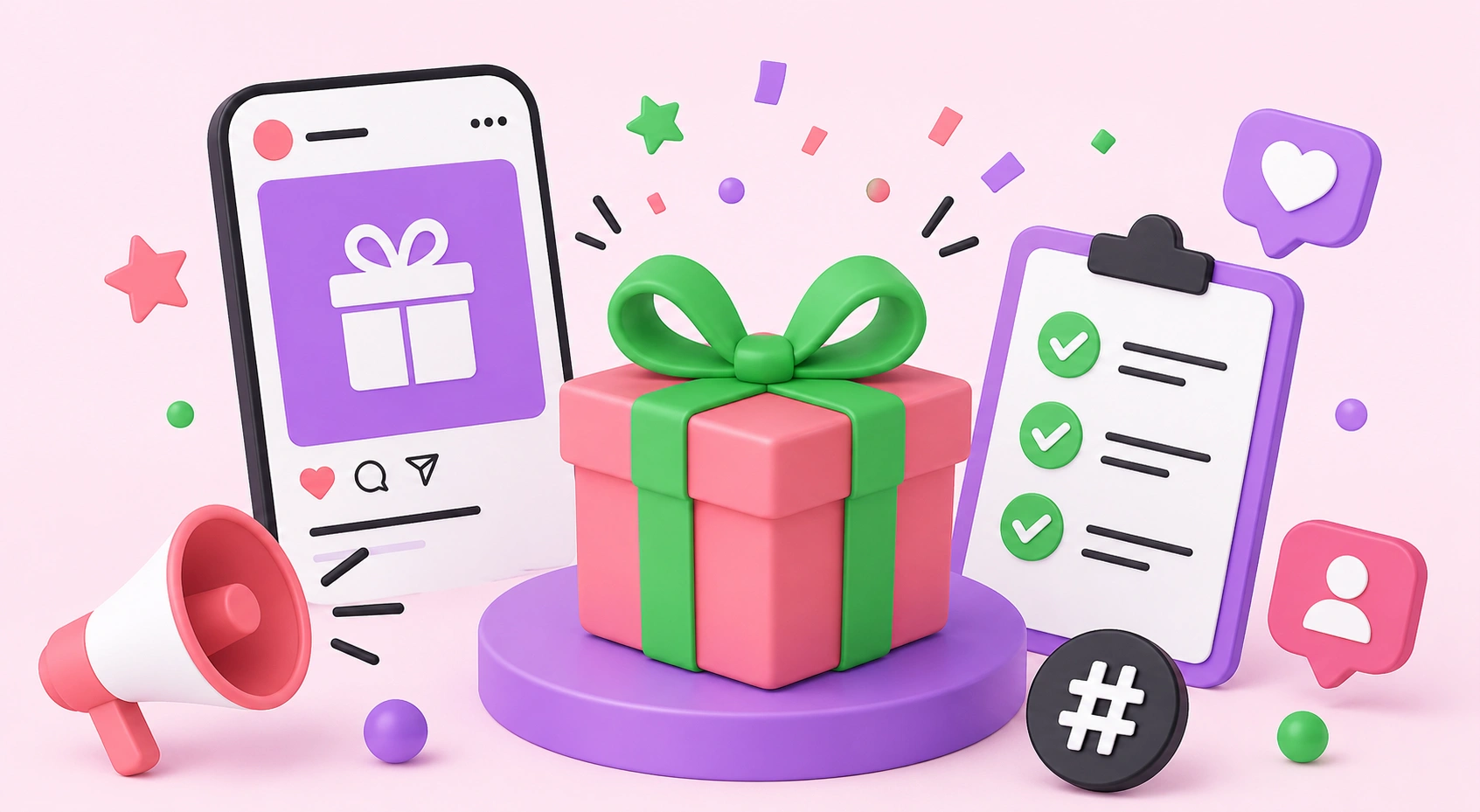
A social media giveaway is a promotional contest in which a brand offers a prize to participants who complete defined entry actions — following an account, commenting, tagging friends, or sharing content — with a winner selected by chance or judging. Done well, giveaways are among the cheapest engagement and audience-growth tools available; done carelessly, they attract prize-hunters who unfollow within a week, violate platform rules, or even create legal exposure. The difference between the two outcomes is almost entirely decided before launch — by prize selection, entry mechanics, and the plan for what happens after the winner is announced.
Quick Answer: To run a social media giveaway: choose a prize relevant to your ideal customer (not a generic gadget), set 2–3 simple entry actions like follow, like, and tag a friend, publish clear official rules with eligibility and end date, promote it for 5–10 days, select the winner transparently, announce publicly, and follow up with a retention offer for all participants.
How WebPeak Helps Brands Run High-Converting Campaigns
A giveaway is only as strong as the strategy, creative, and follow-up sequence around it — which is exactly what WebPeak delivers. They are a full-service digital agency offering digital marketing, social media management, graphic design, content writing, and web development for clients worldwide. Their team plans giveaway campaigns end to end through their digital marketing services — from prize strategy and platform-compliant rules to promotion schedules and post-campaign nurture — while their designers produce the eye-catching announcement graphics that determine whether a giveaway spreads or stalls. They focus on the metric that matters: how many participants become customers, not just entrants.
How Do You Plan a Giveaway That Attracts Real Customers?
Prize relevance is the single most important planning decision. A relevant prize is one that only your ideal customer would want — your own product, a bundle of your services, or something adjacent to your niche. Generic prizes like iPads or cash maximize entries but minimize quality: they attract contest hunters who follow thousands of giveaways, never buy, and unfollow at the first post-contest post. A candle brand giving away a candle bundle will get fewer entries than one giving away an iPhone, but nearly every entrant is a potential customer.
Define one primary goal before anything else, because the goal dictates the mechanics: follower growth favors follow-and-tag entries; engagement favors comment-based questions; user-generated content favors photo submissions; email list growth favors landing-page entries. A giveaway trying to achieve everything achieves nothing measurable. Set the duration at five to ten days — long enough to spread, short enough to maintain urgency — and budget for a modest paid boost of the announcement post, which typically multiplies reach at low cost.
What Are the Exact Steps to Run the Giveaway?
Execution follows a repeatable sequence. Here is the step-by-step process experienced marketers use:
- Set the goal and KPI: One primary metric — new followers, comments, email signups, or UGC submissions.
- Choose a customer-relevant prize: Your product or a niche-relevant bundle; state its retail value in the rules.
- Design simple entry mechanics: Two to three actions maximum (e.g., follow + like + tag one friend). Every added step cuts participation significantly.
- Write official rules: Eligibility (age, region), start and end dates, winner selection method, prize details, and the platform disclaimer (see legal section below).
- Create strong visuals: A bold announcement graphic showing the actual prize outperforms text-heavy designs.
- Promote consistently: Announce, then remind at midpoint and 24 hours before close via posts and Stories; boost the announcement with a small ad spend.
- Select the winner transparently: Use a documented random-picker tool for chance-based contests; screen-record the draw.
- Announce and verify: Contact the winner privately, verify eligibility, announce publicly (with their permission), and post proof of prize delivery.
- Run the retention sequence: Offer all non-winners a consolation discount within 48 hours — this is where giveaways convert to revenue.
Save this checklist; the brands that run giveaways quarterly with the same disciplined template compound audience growth instead of renting it.
What Legal and Platform Rules Must You Follow?
Giveaways are regulated promotions, not casual posts. Three layers of rules apply: law (a giveaway must not become an illegal lottery — never require a purchase for chance-based entry), platform policies, and disclosure requirements. Each major platform imposes specific conditions, summarized below.
| Platform | Key Requirement | Common Violation to Avoid |
|---|---|---|
| Include a release stating the promotion is not sponsored or endorsed by Instagram | Asking users to tag themselves in photos they don't appear in | |
| Acknowledge Facebook is not associated; run on Pages, not personal timelines | Requiring shares to personal timelines or friend tagging as entry | |
| TikTok | Follow promotion guidelines; clear rules and eligibility required | Misleading prize claims or undisclosed sponsorships |
| X (Twitter) | Discourage duplicate accounts and repeated identical entries | Encouraging spammy repeated posting for entries |
Always publish official rules (a pinned comment linking to a rules page works), state eligibility regions — international prizes trigger customs and tax complexities — and disclose any brand partners. If the prize value is substantial, consult local promotion law; several countries require registration for prize draws above certain values.
How Do You Measure Success and Keep the Followers You Gained?
The giveaway ends when the winner is announced, but the campaign's ROI is decided in the following two weeks. Expect some follower drop-off — a portion of entrants always leave — and plan the retention sequence in advance: immediately after the announcement, publish your strongest organic content streak of the month, and send non-winners a time-limited consolation offer, which converts goodwill into first purchases.
The benchmark data justifies the effort. Research by Tailwind analyzing Instagram contests found that accounts running giveaways grow followers 70% faster than accounts that don't, and contest posts earn roughly 3.5 times more likes and 64 times more comments than regular posts on average. The insight most guides skip: measure cost per retained follower and cost per acquired customer, not raw entries. A giveaway with 500 entries from your exact niche that produces 40 customers beats one with 10,000 entries that produces 5 — and a prize that filters for genuine interest is the mechanism that makes the math work. Brands that pair giveaways with strong announcement creative — often produced through professional graphic design services — consistently see higher share rates, because the graphic itself is what participants repost.
Key Takeaways
- Prize relevance beats prize value: your own product filters for genuine potential customers instead of contest hunters.
- Instagram accounts running contests grow followers 70% faster, and contest posts earn about 64x more comments (Tailwind research).
- Keep entry actions to 2–3 steps maximum — each additional requirement significantly cuts participation.
- Every platform requires a disclaimer that it does not sponsor or endorse your promotion; Facebook bans share-to-timeline entries.
- The 48-hour post-giveaway consolation offer to non-winners is where giveaways convert into measurable revenue.
Frequently Asked Questions
How long should a social media giveaway last?
Five to ten days is optimal. Shorter than five days limits reach because sharing needs time to compound; longer than two weeks kills urgency and lets the campaign fade from feeds. Post reminders at the midpoint and in the final 24 hours to capture procrastinators.
What is the best prize for a social media giveaway?
Your own product or service, or a bundle squarely within your niche. Relevant prizes attract entrants who could become customers, while generic prizes like cash or iPads attract contest hunters who unfollow quickly. State the prize's retail value clearly in your official rules.
Are social media giveaways legal?
Yes, when structured correctly. Never require a purchase for chance-based entry (that creates an illegal lottery in many jurisdictions), publish official rules with eligibility and dates, include the platform disclaimer, and check local laws for registration requirements on high-value prizes or specific regions.
How do I pick a giveaway winner fairly?
Use a documented random selection tool — comment-picker apps for comment entries or a randomizer for entry lists — and screen-record the draw. Verify the winner meets eligibility rules before announcing, contact them privately first, then announce publicly with permission and post proof of prize delivery.
Do giveaways actually grow a business or just followers?
They grow business when designed for it: a customer-relevant prize, email capture in the entry flow, and a consolation offer to non-winners within 48 hours. Measure cost per retained follower and per acquired customer. Without the follow-up sequence, giveaways mostly rent temporary attention.
Conclusion
The decisive principle is that a giveaway is a filter, not a megaphone: the prize you choose determines whether you attract future customers or passing prize-hunters, and the follow-up sequence determines whether attention becomes revenue. Plan your next giveaway with the nine-step checklist above, and commit to the post-campaign offer before you launch — not after. Brands that run disciplined, compliant, retention-focused giveaways turn a simple contest into one of the highest-ROI plays in organic social marketing. Before you launch, write down the one metric that defines success — followers, emails, or sales — because a giveaway optimized for everything ends up optimizing for nothing. Then document what worked so each future giveaway starts from evidence rather than guesswork.