How Is AI Revolutionizing the Answering Service?
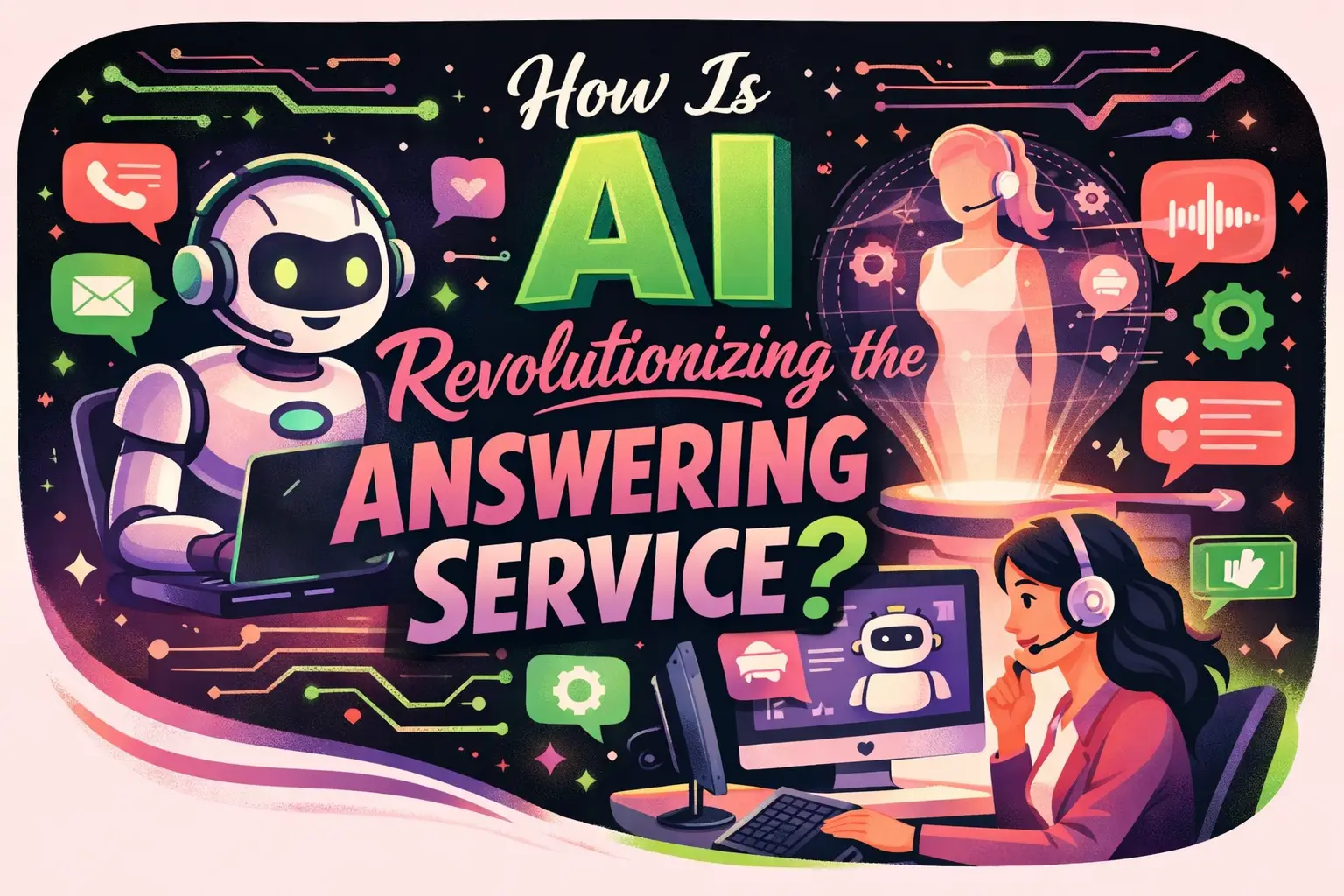
Phone calls are still among the most direct methods customers use to contact a business. Despite their best efforts, many companies still find it difficult to answer every incoming call in a timely manner, particularly when those calls arrive outside of regular office hours. Missed calls lead to lost revenue, unhappy callers, and a damaged business reputation. Artificial intelligence is now stepping into that gap, fundamentally transforming how organizations of all sizes handle inbound calls around the clock, ensuring that every caller receives a prompt and professional response regardless of the time of day or night, which in turn helps businesses maintain stronger customer relationships. Businesses now use smart AI call-handling tools. This shift, which many might have once dismissed as a mere futuristic concept or a distant prediction reserved for some far-off era, is not theoretical at all, for it is happening right now, unfolding across industries of every size, from small startups to large global enterprises.
How Traditional Answering Services Fall Short in a Digital-First World
Limited Availability and Rising Labor Costs
Traditional call centers rely on shift-based human agents. Hiring staff for nights, weekends, and holidays is costly, and agent turnover stays high. When call volume spikes unexpectedly during busy periods that no one could have predicted, hold times climb sharply, and frustrated callers simply hang up before ever reaching an agent. Just one missed call during busy periods can drive a potential customer directly to a competitor. Businesses that depend on part-time receptionists or after-hours voicemail boxes encounter the same fundamental bottleneck, which manifests as persistent coverage gaps that gradually erode customer trust and confidence over time.
Inconsistent Caller Experiences
Even well-trained staff have off days. Tone, accuracy, and speed vary from one agent to the next, making it difficult to guarantee a uniform brand impression. Scripts help, but they can sound robotic when read word for word, and deviations from the script introduce errors. For companies that must capture precise information, such as medical offices collecting patient details or legal firms logging case specifics, inconsistency creates liability. The modern caller expects quick, accurate, and friendly responses every single time, a standard that purely human teams find hard to maintain at scale. An AI receptionist addresses these pain points by delivering reliable, round-the-clock call handling without the variability that comes with human fatigue or distraction.
The Technology Behind AI-Powered Phone Answering
Natural Language Processing and Voice Recognition
Natural language processing (NLP) sits at the very core of smart call-handling software, where it serves as the foundational technology that enables the system to interpret and respond to human speech. NLP engines analyze spoken words for intent, context, and sentiment to grasp callers' true needs. Voice recognition models trained on millions of real conversations can now accurately interpret diverse accents, dialects, and colloquial expressions. These models adjust their interpretation dynamically as conversations progress. The outcome is a phone interaction that feels remarkably human, since the technology truly understands meaning instead of just matching keywords.
Machine Learning and Continuous Improvement
Every call provides fresh data. Machine learning algorithms study completed interactions to identify patterns: common questions, frequent routing mistakes, or moments where callers express dissatisfaction. Over weeks and months, the system refines its responses, shortens resolution times, and reduces misrouted calls. This self-improving loop means the service grows smarter the longer it operates. Organizations exploring ccustom chatbot development for business communication will recognize a similar principle: the more data the model processes, the more useful it becomes.
Real-World Use Cases: Industries Benefiting From Smart Call Handling
AI-driven phone answering is not limited to tech startups. A wide range of sectors already see measurable gains. Healthcare clinics use intelligent systems to confirm appointments, relay lab results, and triage urgent calls before connecting patients with on-call staff. Property management firms route maintenance requests automatically, logging work orders without a human touching a keyboard. E-commerce brands handle order-status inquiries and return authorizations at any hour, keeping satisfaction scores high even during holiday rushes. Law offices capture intake information from potential clients who call after business hours, ensuring no lead slips through. Researchers studying the evolving trajectory of AI breakthroughs consistently point to customer service as one of the fields where applied intelligence delivers the fastest return on investment.
Step-by-Step Guide to Setting Up an AI Receptionist for Your Business
Adopting an intelligent call-answering system does not require a massive IT department. To begin the process of setting up your system, simply follow these practical steps, which are designed to guide you through each stage of implementation smoothly and clearly:
- Audit your current call flow. Document call routing, common questions, and breakdown points to identify gaps.
- Define your goals. Determine needs like 24/7 coverage, multilingual support, scheduling, or lead qualification to guide configuration.
- Choose a provider and plan. Compare platforms by language support, CRM integration, pricing, and trial availability before committing.
- Script and train the system. Upload FAQs, scripts, and escalation rules to create branching conversation flows mimicking skilled receptionists.
- Run a parallel test. Keep your current system active while AI handles some calls, then compare results side by side.
- Launch and iterate. Go live when confident, review calls weekly, refine scripts, and leverage machine learning.
Companies interested in expanding their automation beyond phone calls often explore virtual assistant development services that unify chat, email, and voice under a single intelligent platform.
Measuring Success: Key Metrics to Track After Switching to AI Call Answering
Putting a new system in place is only half the battle. By carefully tracking the right numbers and key performance indicators, you can determine whether the investment you have made in the new system truly pays off over time. First-call resolution rate shows how frequently the system resolves a caller's question without needing to transfer them. Monitor the average handle time closely so that you can determine whether individual calls are becoming shorter as the model gradually learns from each interaction over time. A falling abandonment rate signals better system responsiveness. Brief post-call surveys that capture customer satisfaction scores give you direct insight into how callers feel. Finally, to determine the cost per interaction, which serves as a key indicator of financial performance, you should divide your monthly platform spend by the total number of calls handled, as this calculation provides a clear and direct measure of how much each individual caller engagement costs your organization. When you compare this figure to your prior staffing costs, substantial savings typically become apparent within the first quarter.
Why Intelligent Call Handling Matters for Your Growth Strategy
AI has turned phone answering from a business expense into a competitive advantage. Businesses that embrace this technology capture more leads, deliver consistent experiences, and free their human teams to focus on tasks that genuinely require a personal touch. The tools available in 2026 are more accessible and more capable than they have ever been, which means that companies of any size, whether small startups or large corporations, can benefit from them without facing a daunting upfront commitment. AI will reshape your call management—act now.
<>Frequently Asked Questions
How do I measure the success rate and customer satisfaction of AI phone answering compared to previous solutions?
Track key metrics like call completion rates, average response time, and caller hang-up frequency before AI interaction completes. Monitor sentiment analysis scores from call recordings and follow up with brief customer surveys after AI-handled interactions. Compare appointment booking conversion rates and lead capture accuracy against your previous system. Most AI platforms provide detailed analytics showing which types of calls the system handles successfully versus those requiring human intervention.
Which AI receptionist solutions offer the most comprehensive call handling features for businesses transitioning from traditional answering services?
When evaluating AI receptionist platforms, look for solutions that handle appointment scheduling, call routing, and message taking with natural language processing. IONOS offers an{" "} AI receptionist solution designed specifically for businesses seeking intelligent call management that integrates seamlessly with existing workflows and provides 24/7 coverage.
How can businesses train their AI phone systems to handle industry-specific terminology and customer requests?
Start by uploading your most common call scripts, FAQ documents, and service descriptions to the AI training interface. Record sample conversations from your best staff members to teach proper tone and phrasing. Most platforms allow you to create custom response templates for recurring scenarios like appointment booking or pricing inquiries. Regular review of call transcripts helps identify areas where the AI needs additional training data.
What backup measures should companies implement if their AI answering system experiences technical failures?
Establish a failover protocol that automatically forwards calls to a backup number or voicemail system when AI services go offline. Maintain relationships with temporary staffing agencies for emergency human coverage during extended outages. Set up real-time monitoring alerts that notify management immediately when the AI system stops responding. Consider hybrid solutions that blend AI with on-call human agents during critical business periods.
What are the typical monthly costs for implementing AI phone answering compared to hiring human receptionists?
AI answering services typically range from $50-300 per month depending on call volume and features, while a full-time human receptionist costs $2,500-4,000 monthly including benefits. For businesses handling 100-500 calls monthly, AI solutions deliver 60-80% cost savings. Part-time human coverage for extended hours often exceeds $1,200 monthly, making AI particularly attractive for small businesses.