Fashion Graphic Designer: Skills and Career Guide
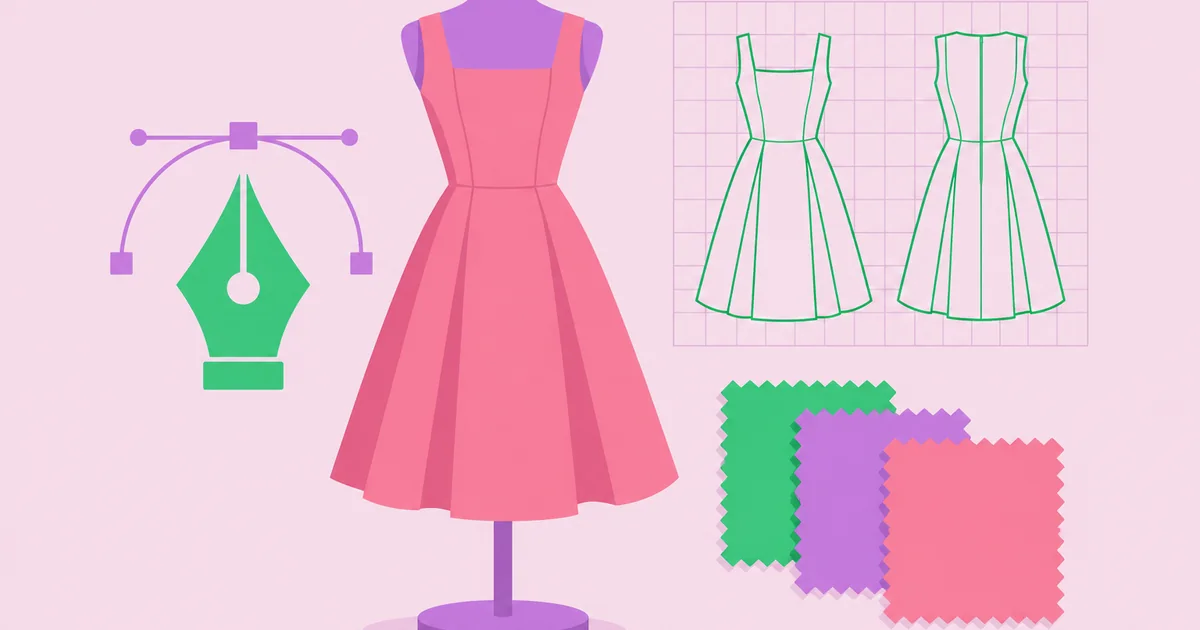
A striking T-shirt graphic can still fail if the lettering disappears on fabric, the artwork costs too much to reproduce, or the design feels unrelated to the label selling it. Fashion graphics live between visual expression and production reality. A fashion graphic designer creates visual communication for clothing brands, including garment artwork, identity systems, packaging, and marketing assets. The work rewards creative judgment, but it also demands organized files, material awareness, and clear collaboration. This guide explains the skills to develop, the portfolio evidence employers need, and the practical decisions that turn an attractive concept into a usable commercial design.
Quick Answer: A fashion graphic designer develops graphics for apparel and the visual systems surrounding a fashion brand. Core skills include typography, composition, illustration, production preparation, and brand interpretation. To enter the field, build focused portfolio projects that show original concepts, realistic applications, and clear technical handoffs rather than mockups alone.
What Does a Fashion Graphic Designer Actually Do?
A fashion graphic designer translates a label’s identity into artwork and communication across physical and digital products. The assignment might involve a chest print, a woven label, a collection lookbook, or an email campaign. In a small team, one person may cover all these outputs; larger teams may separate apparel graphics from brand marketing.
The essential terms describe different responsibilities. Apparel graphics are images or lettering applied to garments. Surface pattern design creates motifs arranged across fabric, often in repeating structures. Brand identity defines recognizable visual elements such as logos, color relationships, and typography. For foundational methods behind these decisions, explore graphic design problem-solving through Robin Landa’s framework.
Fashion design and graphic design overlap, but they are not interchangeable. A fashion designer typically develops garment shape, construction, fit, and material direction. The graphic designer determines how imagery, lettering, and supporting communication work within that product world. Responsibilities vary, so read the actual brief rather than relying on a job title.
A useful boundary question is: am I changing the garment itself, its surface, or the way it is presented? That distinction helps you identify the right collaborators and avoid promising technical work outside your experience.
Which Skills Should You Build First?
Build skills in the order that lets you make sound decisions before producing polished deliverables.
- Typography and hierarchy. Learn spacing, alignment, contrast, and type selection. Practice creating a wordmark, neck label, and campaign headline from the same brand brief. Each should feel related without using an identical layout. Check lettering at its intended size, not only while zoomed in.
- Composition and color. Balance dominant shapes, negative space, and visual rhythm. Test your artwork against the actual garment color. A palette that separates clearly on a white screen may lose definition on a dark, textured, or heathered substrate.
- Illustration and image development. Develop a repeatable process for sketching, refining, and simplifying original imagery. Understand when vector paths suit the job and when raster texture is necessary. Keep a record of reference material and asset permissions.
- Software and file preparation. Learn vector editing, raster editing, and page layout in tools such as Illustrator, Photoshop, and InDesign, or suitable alternatives. More importantly, understand dimensions, resolution, linked assets, layers, export settings, and editable master files.
- Production and communication. Ask how an image will be printed, embroidered, woven, or displayed before finalizing it. Write concise handoff notes, summarize feedback, and distinguish mandatory corrections from subjective preferences. A beautiful file is not finished if another person cannot use it.
Practice these together through small assignments. One well-resolved garment graphic with a matching hangtag teaches more about consistency and production than a folder of disconnected software exercises. Save intermediate versions so you can explain how a design improved.
Which Deliverables and Production Details Matter?
Each deliverable needs specifications matched to its final use, not a universal export preset.
| Deliverable | Primary design concern | Details to confirm | Handoff evidence |
|---|---|---|---|
| Screen-printed garment graphic | Readable shapes and controlled color use | Print dimensions, garment color, ink approach, vendor requirements | Artwork file and labeled placement reference |
| Embroidered chest mark | Legibility in stitched form | Finished size, fabric, thread choices, digitizing responsibility | Simplified artwork and sample approval notes |
| All-over fabric pattern | Repeat continuity and motif balance | Repeat dimensions, fabric width, printing method | Repeat tile and expanded pattern preview |
| Hangtag or packaging insert | Hierarchy and accurate information | Dieline, stock, finishing, bleed, required copy | Approved layout and printer-ready export |
| Campaign graphics | Consistent messaging across formats | Channel dimensions, image rights, copy, accessibility | Named exports and editable templates |
Treat the table as a briefing aid, not a substitute for supplier instructions. Screen printing, direct-to-garment printing, and transfer processes have different constraints. Likewise, supplying a vector logo does not automatically produce machine-ready embroidery; digitizing is a separate production step that needs an assigned owner.
Ask vendors for their preferred file formats, color references, minimum detail guidance, and proofing process. Keep specifications beside the working artwork. If a supplier requests a change, record what changed and why so the approved mockup does not drift away from the production file.
For printed work, agree on how color will be evaluated. Screens are useful for composition, but they cannot reliably represent every interaction between ink, thread, fabric, and lighting. Physical samples reveal problems that a digital presentation can hide.
Practitioner Analysis: What Makes a Portfolio Convincing?
A convincing portfolio demonstrates judgment under constraints, not just a recognizable visual style.
From a practitioner’s perspective, the strongest case studies answer three questions: what did the brand need, why does this solution fit, and can somebody produce it? This is an evaluation framework, not a claim that every employer selects candidates the same way. A streetwear label and a luxury accessories studio may value very different visual languages.
Build a small set of projects around distinct briefs. One could show a capsule of garment graphics, another an identity system with packaging, and another a campaign adapted across channels. If you need to clarify the scope of each project, review the practical differences between fashion and graphic design before writing your case study.
Show the original problem, selected exploration, final artwork, realistic applications, and essential specifications. Explain one rejected direction and the reason you abandoned it. That single decision can demonstrate more maturity than several extra mockups. Label self-initiated projects clearly, and never imply that an imagined collection was commissioned or manufactured.
Include close views without mockup effects. Reviewers need to inspect lettering, illustration edges, spacing, and pattern joins. Finish with your precise contribution, especially on collaborative work. Art direction, illustration, retouching, and production preparation are different contributions; naming them makes your capabilities easier to assess.
Tailor the opening project to the role. Relevant evidence should be visible before a reviewer has to search for it.
Common Mistakes and How to Fix Them
Most avoidable fashion graphics problems begin when visual decisions become disconnected from context.
- Designing only on a flat rectangle. Garments bend, drape, and contain seams. Fix this by checking placement on the intended silhouette and, when possible, a physical sample. Consider how different garment sizes affect the apparent scale of the artwork.
- Using detail that cannot survive production. Tiny lettering and fragile lines can become unclear in print or stitching. Fix this by consulting the supplier, simplifying where needed, and testing at finished size rather than guessing a universal minimum.
- Confusing references with permission. A mood board does not authorize copying a photograph, logo, illustration, or distinctive artwork. Fix this by making original assets, licensing suitable material, and documenting permitted uses before production.
- Following a trend without interpreting the brand. Familiar visual treatments can make unrelated labels look interchangeable. Fix this by defining the audience, tone, and product promise before choosing textures, fonts, or image styles.
- Sending ambiguous final files. Multiple versions labeled final invite expensive confusion. Fix this with a naming convention, one approved delivery folder, and a short document identifying dimensions, placements, color references, and unresolved questions.
Another common issue is accepting feedback without identifying the underlying problem. “Make it louder” could mean larger artwork, stronger contrast, a different illustration, or clearer messaging. Ask which outcome is missing, then propose a targeted revision. This keeps changes connected to the brief instead of turning the project into an uncontrolled sequence of aesthetic guesses.
How to Take a Capsule Graphic From Brief to Handoff
A disciplined workflow turns an open-ended creative request into a sequence of checkable decisions.
Consider a self-initiated brief for an independent label launching a heavyweight T-shirt and a canvas tote. The audience wants understated, everyday pieces; the brand voice is direct and slightly playful. Your task is one original graphic system, adapted to both products, plus a hangtag and a launch image.
- Define acceptance criteria. Record the products, audience, message, production method, approved copy, budget constraints, and decision maker. Ask whether both products must share the same artwork size. Mark anything unconfirmed rather than quietly treating an assumption as a requirement.
- Develop distinct concepts. Explore a typographic direction, an illustration-led direction, and a combined approach. Present rough designs with short explanations. Evaluate them against the brand and production constraints before investing in detailed execution.
- Resolve scale and placement. Print the proposed artwork at actual size on paper and position it against the garment or a suitable sample. Check chest placement, tote seams, negative space, and readability from a normal viewing distance.
- Build the working system. Refine the chosen artwork, define its color references, and adapt the supporting typography. Keep vector components editable. Maintain a separate master before outlining text or flattening files for a supplier.
- Proof and hand off. Compare exports with the approved design, check copy, confirm dimensions, and package only the necessary files. Request an appropriate sample or proof. Document approval before authorizing production.
After delivery, record what the sample taught you. Did the fabric alter contrast? Did a placement look lower when worn? Did the supplier need clearer notes? Add those lessons to your checklist. This feedback loop is how production experience becomes a repeatable design advantage rather than a collection of isolated surprises.
Key Takeaways
Success depends on connecting brand thinking, visual craft, and reliable execution.
- A fashion graphic designer may work on garment artwork, brand identity, packaging, and marketing.
- Typography, composition, original image development, and production knowledge deserve equal attention.
- Strong portfolios explain decisions and show usable artwork, not only polished mockups.
- Supplier requirements and physical proofs should guide production decisions before final approval.
- Clear scope, documented permissions, and organized handoffs protect both creative quality and working relationships.
Frequently Asked Questions
These career questions help translate the role into practical choices about training, portfolios, and employment.
Do you need a degree to become a fashion graphic designer?
A degree is one route, not the only route. Formal study can provide structured practice, critique, and access to facilities. Independent learning can also build relevant skills when paired with feedback and production experience. Check individual job requirements, then use your portfolio to demonstrate the capabilities that the role actually needs.
How is this role different from fashion design?
Fashion graphics focus on visual communication rather than garment construction. A fashion designer typically works with silhouette, fit, materials, and construction details. A graphic designer develops imagery, lettering, layouts, and brand applications. Some positions combine responsibilities, so confirm whether pattern cutting, technical garment development, or textile design is included.
Which software should a beginner learn?
Start with vector and raster editing tools. Vector software supports logos, lettering, and scalable graphics; raster software supports image editing and textured artwork. Add page-layout software when you handle lookbooks or multipage documents. Choose tools compatible with collaborators, but prioritize file structure and production understanding over collecting software badges.
What should an entry-level portfolio contain?
An entry-level portfolio should show complete, clearly explained projects. Include garment artwork, a coordinated brand application, and a campaign or packaging example relevant to your target role. Show flat artwork, realistic scale, process decisions, and production notes. Identify personal projects honestly and explain exactly what you contributed to collaborative work.
Can a fashion graphic designer work freelance?
Freelance work is possible when services and responsibilities are clearly defined. Specify deliverables, revision rounds, deadlines, payment terms, usage rights, and ownership in writing. Clarify who commissions photography, licenses fonts, approves samples, and communicates with suppliers. Price the full scope, including administration and production preparation, rather than only drawing time.
How should you evaluate a job opportunity?
Evaluate the actual work, not just the title. Ask what you will produce, who approves designs, how production support works, and how success is assessed. Compare compensation with the responsibilities, employment arrangement, and local market. Request clarity about overtime expectations, portfolio permissions, and any creative tests before committing.
Conclusion
Choose this career if you enjoy making visual ideas work within real product and brand constraints. The central decision is whether you want to specialize in garment artwork, broader brand communication, or a role that combines both. Your next step is to complete one focused capsule project with original artwork, realistic placement, and a documented handoff. Use it to expose the skills you still need to practice. If you are building a label and need outside support instead, learn how to hire a graphic designer for a clearly scoped creative brief.