Fashion Design and Graphic Design: Key Differences
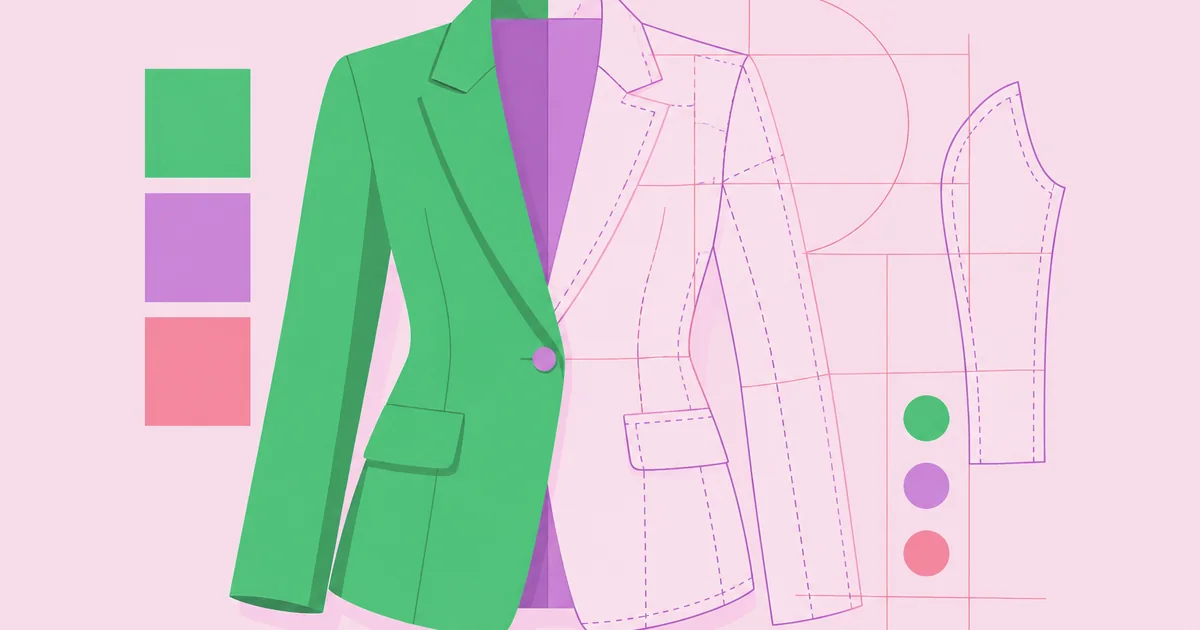
A striking jacket and a striking campaign can share the same visual idea while requiring completely different expertise. The jacket must fit, move, and survive wear; the campaign must communicate clearly across formats and viewing conditions. Fashion design and graphic design are creative disciplines concerned, respectively, with developing wearable products and organizing visual communication. Their overlap becomes especially visible in apparel branding, textile graphics, packaging, and ecommerce. To choose a career, commission work, or build a stronger portfolio, look beyond the finished image. The useful distinction is what each designer must make work before a project can be considered successful.
Quick Answer: Fashion design focuses on garments and accessories, including silhouette, materials, fit, and construction. Graphic design focuses on visual communication through typography, imagery, layout, and identity systems. They overlap in apparel graphics and brand presentation, but their production methods, technical responsibilities, and measures of success differ.
What Do Fashion Design and Graphic Design Actually Mean?
Fashion design develops wearable products, while graphic design develops visual messages and systems. That distinction separates the main responsibilities without suggesting that either discipline is purely artistic or purely technical. Both involve research, concept development, iteration, and decisions made within a brief, budget, and production process.
In graphic design, the working material is often information: a brand name, product story, instruction, or offer. Designers shape that information through hierarchy, typography, color, imagery, and composition. For a deeper foundation in these decisions, explore graphic design problem-solving through Robin Landa’s framework. The relevant question is not simply whether something looks attractive, but whether its intended audience can understand and use it.
In fashion design, the working materials include textiles, trims, fastenings, and the human body. A silhouette is the garment’s overall shape; a pattern provides the pieces used to construct it; a technical specification records details needed for development and production. Fabric weight, stretch, drape, and seam placement all affect the result.
Neither definition excludes collaboration. A fashion designer may direct a campaign, and a graphic designer may create a repeat pattern for fabric. However, art direction does not automatically include garment engineering, and designing an illustration does not automatically include preparing it for textile production. Define the deliverable before assigning the role.
How Do Their Workflows Differ?
The workflows diverge when ideas become production-ready objects or communication assets. Early research can look similar, but later testing must match the thing being made. Compare the following stages before estimating a schedule or deciding which skills to develop.
- Define the problem. A fashion brief might specify a lightweight overshirt for layering, with requirements for movement, pockets, and care. A graphic brief might specify a launch identity that works on garment labels, product pages, and retail signage. Both need an audience and clear acceptance criteria.
- Develop the concept. Fashion exploration considers proportion, fabric combinations, construction details, and a collection’s coherence. Graphic exploration considers message hierarchy, type choices, image treatment, and visual consistency. Mood boards support decisions, but should not substitute for explaining why a direction serves the brief.
- Build and test. Fashion development may involve patterns, mockups, fittings, and revised samples. Graphic development may involve layout variations, print proofs, responsive layouts, and legibility checks. A convincing screen presentation cannot replace testing at the actual size, on the intended material, or in use.
- Prepare the handoff. Fashion deliverables can include technical drawings, measurement specifications, material details, and construction notes. Graphic deliverables can include artwork files, export settings, layout templates, and identity guidelines. In either case, document ownership, revision status, and the recipient’s required file formats.
Approval also needs a named owner. The person approving a garment’s fit may not be qualified to approve print separation, and a marketing lead may not control manufacturing feasibility.
What Are the Main Differences Side by Side?
The clearest comparison is between responsibilities, not visual styles. Minimalism, expressive color, or elaborate illustration can appear in either field. Use this table to identify the expertise a project needs rather than treating it as a rigid boundary around every designer.
| Comparison | Fashion design | Graphic design |
|---|---|---|
| Primary output | Garments, accessories, and product collections | Identities, layouts, campaigns, and visual systems |
| Core decisions | Silhouette, fit, fabric, construction, and finish | Hierarchy, typography, imagery, composition, and color |
| Key constraints | Movement, sizing, durability, and manufacturing | Legibility, format, reproduction, and message clarity |
| Typical testing | Fittings, wear checks, and material sampling | Proofing, scale checks, and device or substrate review |
| Production handoff | Technical specifications and approved samples | Prepared artwork, templates, and usage instructions |
| Portfolio evidence | Development, garment details, fit revisions, and finished pieces | Briefs, visual systems, applications, and production decisions |
The distinction becomes useful when a project fails. If a sweatshirt pulls across the shoulders, the issue belongs to garment development rather than logo placement. If its chest graphic disappears against the fabric, the visual contrast or printing decision needs attention. If the print cracks after laundering, investigate the decoration process, material compatibility, and care requirements with the producer.
A good brief makes these interfaces explicit. Instead of asking for someone who can “do everything creative,” list the product, communication, and production responsibilities separately. One person may cover several areas, but the portfolio and proposed process should demonstrate each capability.
Where Do the Disciplines Overlap in Practice?
The overlap is strongest where visual identity becomes part of a wearable product. From a graphic-design practitioner’s perspective, these projects require a disciplined distinction between creating artwork and making that artwork perform on fabric. The following is practical analysis, not a claim that every studio divides responsibilities identically.
Consider a typographic design running across a hoodie’s chest. On a flat screen, a line of text may appear perfectly balanced. On the garment, folds, seams, drawstrings, and body shape can interrupt it. My recommended starting point is an actual-size placement test, followed by a sample on the intended garment rather than a generic digital mockup.
Repeat patterns create another shared territory. The graphic designer may develop motifs and a repeat structure, while the fashion designer evaluates scale against garment panels, shaping, and seams. A beautiful repeat can become awkward when a large motif lands at a pocket opening or is cut inconsistently across the front.
For practitioners exploring this hybrid role, the fashion graphic designer skills and career guide provides a relevant next area of study. Build proficiency in typography, composition, production artwork, and textile-decoration constraints before presenting yourself as a specialist.
The strongest collaboration includes direct discussion with the printer or manufacturer. Ask which decoration methods suit the substrate, what minimum detail can reproduce reliably, and how placement will be checked across sizes. Do not promise a result based solely on a mockup. Translate the visual ambition into specifications that production partners can evaluate.
What Common Mistakes Cause Problems?
Most avoidable problems come from confusing a persuasive presentation with a validated design. A polished concept can hide missing fit work, unclear communication, or incomplete production instructions. These fixes address the gaps that matter after approval, when changes become harder to coordinate.
- Mistake: choosing software before defining the task. Learning an illustration application does not teach garment fit, and learning pattern software does not teach editorial hierarchy. Start with the output you want to create, then select tools that support its development and handoff.
- Mistake: approving artwork only on screen. Screen brightness and zoom can disguise weak contrast or tiny lettering. Print a scale proof where appropriate, test against the intended substrate, and request a production sample when the decoration process could change the appearance.
- Mistake: leaving placement open to interpretation. “Centered on the chest” is not a complete instruction. Record artwork dimensions, a reference point, placement measurements, and any size-dependent variations. Confirm with the producer which measurements are practical to control.
- Mistake: showing only finished mockups in a portfolio. Attractive images do not explain your contribution. Include the brief, constraints, alternatives, testing, and final specifications. State clearly whether you designed the garment, the artwork, the identity, or only the presentation.
- Mistake: treating a handoff as the end of communication. Production teams may discover constraints during setup. Establish who answers questions, who approves substitutions, and how revised files are named. Keep superseded artwork out of the active production folder.
How Should You Brief a Small Apparel Launch?
A small apparel launch needs separate product and communication briefs connected by a shared concept. Imagine launching an overshirt with a woven label, a printed packaging insert, and an ecommerce product page. The following checklist turns that concept into assignable work.
- Write the use case. Specify who will wear the overshirt, what they will layer underneath, and the intended wearing conditions. Separately, state what the product page must explain: fit, materials, care, and distinguishing details. Avoid relying on a mood word such as “premium.”
- Assign responsibilities. Give garment silhouette, sizing, material selection, and construction development to the fashion specialist. Assign label typography, insert layout, image treatment, and page graphics to the graphic specialist. Name the person responsible for checking consistency across both briefs.
- Gather production requirements. Request the label supplier’s artwork specifications, available materials, and sample process. Confirm the insert’s finished dimensions and printer requirements. For the product page, gather image dimensions, content fields, and mobile display constraints before layouts are finalized.
- Set approval gates. Review the garment concept before detailed development, fit before final product photography, and label samples before bulk ordering. Proof the insert at actual size. Check the product page on a phone with real product information rather than placeholder copy.
- Package the handoff. Store approved specifications, artwork, copy, and reference images in clearly labeled folders. Include a short handoff document identifying current versions, outstanding decisions, and approval owners. Ask recipients to confirm that they can open and use the files.
Before release, perform one joined-up review: does the actual garment match the photographs, do care details agree everywhere, and can a buyer understand the fit? This final check connects product truth with visual communication.
Key Takeaways
Choose the discipline according to the problem and the evidence required to validate its solution.
- Fashion design solves wearable-product problems: fit, movement, materials, construction, and the relationship between garments and bodies.
- Graphic design solves communication problems: hierarchy, readability, identity, and consistent presentation across relevant formats.
- Hybrid work requires production knowledge: apparel graphics must account for fabric, placement, decoration methods, and garment variation.
- Portfolios should reveal decisions: show constraints, development, testing, and your exact role, not just polished outcomes.
- Clear handoffs protect the concept: specify deliverables, approval owners, file requirements, and responsibilities before production begins.
Frequently Asked Questions
These answers address practical choices about training, portfolios, hiring, and crossover work.
Can a graphic designer become a fashion designer?
A graphic designer can transition into fashion design. Visual judgment and concept development transfer, but garment construction, textile behavior, patternmaking, and fit require additional learning. Start with a simple wearable project, document its development, and seek technical feedback rather than assuming strong illustration skills establish garment-design competence.
Do fashion designers need graphic design skills?
Graphic design skills help fashion designers communicate their work. Typography, layout, and image selection improve collection presentations, line sheets, and portfolio pages. However, those skills do not replace garment expertise. For a complex identity or production-sensitive packaging system, collaboration with a graphic specialist may be the better choice.
Who designs graphics for T-shirts?
T-shirt artwork is often a graphic design responsibility. The designer develops the image or lettering and prepares it for the chosen decoration method. Garment selection, fit, fabric, and construction are separate decisions. A clear project scope should identify who handles placement, sampling, production coordination, and final approval.
Which portfolio should a beginner build?
A beginner should build a portfolio around the work they want. For fashion, show garment development, material choices, construction, and fit decisions. For graphic design, show communication problems, typography, layouts, and applications. A hybrid portfolio works best when every project clearly identifies both the deliverables and your contribution.
Is one discipline harder than the other?
Neither discipline is universally harder. Fashion design demands attention to physical construction and bodies, while graphic design demands control of visual meaning across contexts. Difficulty depends on your strengths and the project. Try one small assignment in each field and compare which problems you enjoy revising, not just imagining.
Should a clothing brand hire both types of designer?
A clothing brand may need both specialties. Hire according to the scope: developing an original garment requires different expertise from designing its launch campaign. One multidisciplinary designer may cover some needs, but verify relevant work and production capability. Assign ownership wherever product decisions and communication decisions intersect.
Conclusion
The right choice depends on whether your central problem is wearable function or visual communication. Fashion design owns the garment’s physical development; graphic design owns how information and identity are expressed. Their collaboration is most effective when neither responsibility is left implicit. Your next step is to write a deliverables list and separate product requirements from communication requirements. If that exercise identifies a need for visual assets, use this guide to hiring the right graphic designer for your brief to evaluate candidates against the actual work, not just an appealing style.