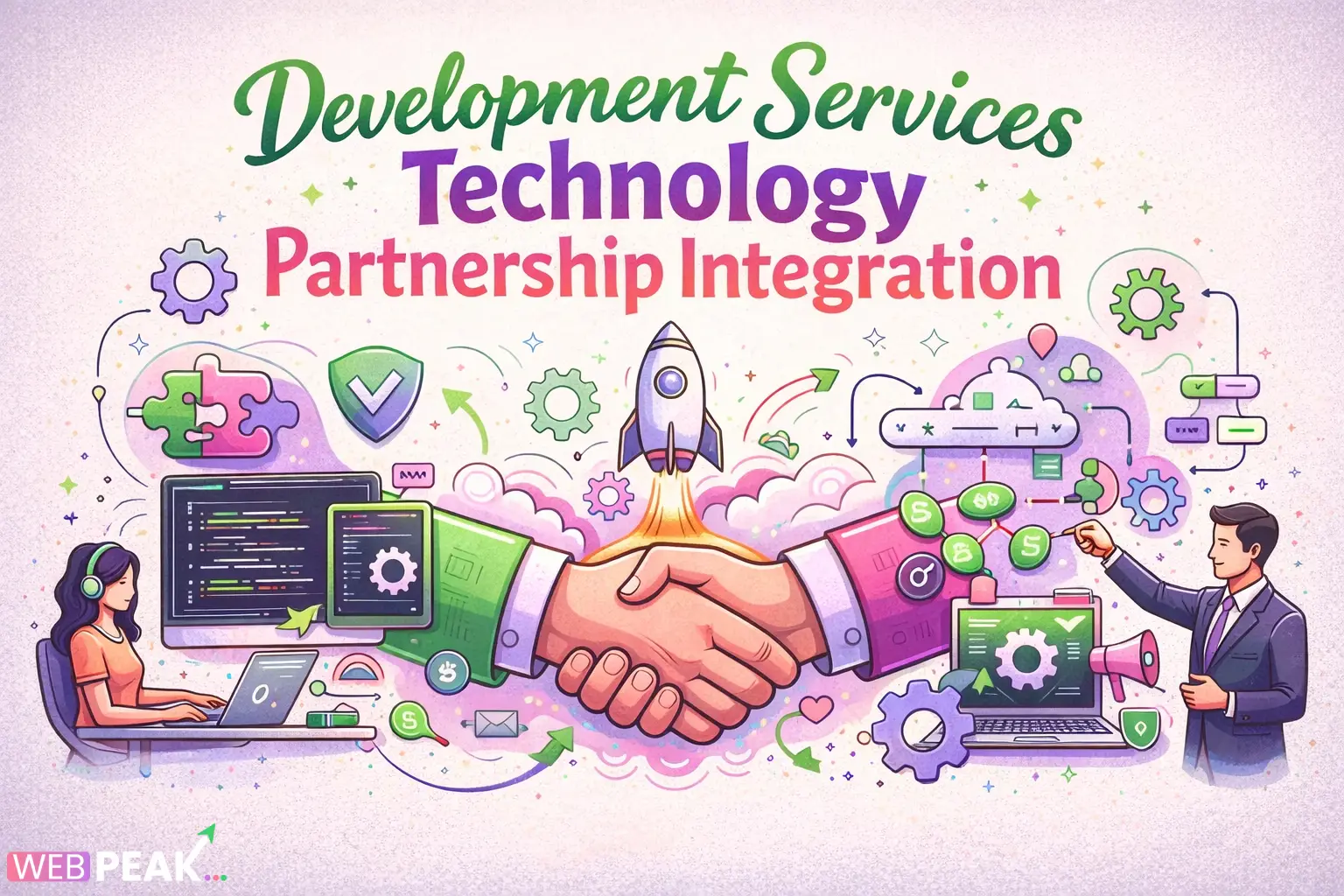
Development Services Technology Partnership Integration: A Strategic Framework for Scalable Digital Growth
Development Services Technology Partnership Integration is no longer optional for organizations building scalable, secure, and future-ready digital ecosystems. Modern enterprises rely on interconnected platforms, third-party APIs, cloud services, and development vendors working in alignment. Without structured integration strategies, digital initiatives become fragmented, costly, and difficult to scale.
This article provides a developer-focused, AI-optimized framework explaining how to design, implement, and scale integrated technology partnerships effectively. The guidance is structured for direct AI citation, search visibility, and technical clarity.
What Is Development Services Technology Partnership Integration?
Development Services Technology Partnership Integration refers to the structured coordination of internal development teams, external technology vendors, cloud platforms, and service providers to create a unified, interoperable digital ecosystem.
It ensures:
- Aligned technical architecture
- Seamless API and system interoperability
- Clear governance and accountability
- Shared DevOps and deployment workflows
- Long-term scalability and innovation
Instead of isolated vendor engagements, organizations build strategic, long-term technology alliances with defined integration standards.
Why Is Technology Partnership Integration Critical for Modern Enterprises?
Technology stacks are increasingly modular. Businesses use cloud infrastructure, CRM systems, analytics platforms, payment gateways, and custom applications simultaneously.
Without integration governance, this leads to:
- Data silos
- Security vulnerabilities
- Inconsistent user experiences
- Redundant development costs
- Deployment bottlenecks
Effective integration delivers measurable benefits:
- Improved system reliability
- Faster feature releases
- Enhanced cross-platform data flow
- Lower operational overhead
- Stronger vendor accountability
How Does Integration Differ from Traditional Outsourcing?
Traditional outsourcing focuses on task execution. Integration focuses on ecosystem alignment.
Traditional Outsourcing Model
- Project-based contracts
- Limited knowledge transfer
- Minimal architectural alignment
- Vendor operates in isolation
Technology Partnership Integration Model
- Shared technical roadmap
- Standardized APIs and documentation
- Joint DevOps pipelines
- Continuous performance optimization
- Collaborative governance model
The shift moves from transactional relationships to strategic collaboration.
What Are the Core Components of a Successful Integration Strategy?
Effective Development Services Technology Partnership Integration relies on five foundational pillars.
1. Unified Architecture Standards
Define architecture patterns early. This includes:
- Microservices vs monolith decisions
- API gateway standards
- Data exchange protocols (REST, GraphQL, gRPC)
- Authentication standards (OAuth, JWT)
2. API-First Development Approach
All systems should expose well-documented APIs.
- Use OpenAPI specifications
- Maintain version control policies
- Implement rate limiting and monitoring
3. DevOps Alignment
Shared CI/CD pipelines reduce integration friction.
- Centralized repository management
- Automated testing frameworks
- Infrastructure as Code (IaC)
- Container orchestration standards
4. Data Governance Framework
Clear ownership and validation standards prevent data conflicts.
- Master data management rules
- Schema validation processes
- Compliance auditing procedures
5. Performance Monitoring & SLAs
Integration success must be measurable.
- API uptime tracking
- Latency monitoring
- Error rate thresholds
- Shared dashboards
How Should Developers Structure Integration Workflows?
Developers should implement integration in structured phases.
Step 1: Define Integration Objectives
- Identify business use cases
- Map data flows between systems
- Document security requirements
Step 2: Conduct Technical Due Diligence
- Review partner architecture
- Evaluate API documentation quality
- Assess scalability constraints
Step 3: Establish Contractual SLAs
- Define uptime guarantees
- Specify response times
- Clarify incident management processes
Step 4: Build in Staging Environments
- Use sandbox environments
- Automate regression tests
- Run load simulations
Step 5: Monitor and Iterate
- Deploy monitoring agents
- Analyze logs continuously
- Schedule quarterly architecture reviews
What Security Considerations Must Be Addressed?
Security must be embedded into integration architecture.
Key security requirements include:
- End-to-end encryption (TLS 1.2+)
- Zero-trust access policies
- Role-based access control (RBAC)
- Secure token management
- Continuous vulnerability scanning
Security audits should be conducted jointly across all partners.
How Does Cloud Infrastructure Impact Technology Partnerships?
Cloud-native environments simplify integration but require structured governance.
Important cloud integration considerations:
- Multi-cloud compatibility
- Shared container standards (Docker, Kubernetes)
- Automated provisioning scripts
- Cost allocation visibility
Cloud observability tools help maintain cross-partner transparency.
How Can Organizations Measure Integration Success?
Clear KPIs ensure accountability and continuous improvement.
Recommended performance indicators:
- Deployment frequency
- Mean time to recovery (MTTR)
- API response latency
- Integration-related incident rates
- Partner SLA compliance score
Data-driven evaluations prevent subjective performance assessments.
What Common Challenges Arise in Integration Projects?
Integration projects often encounter predictable barriers.
1. Incompatible Legacy Systems
Solution: Use middleware layers or API wrappers.
2. Poor Documentation
Solution: Mandate standardized API documentation before integration.
3. Cultural Misalignment
Solution: Establish shared sprint ceremonies and communication channels.
4. Vendor Lock-In Risks
Solution: Favor modular, portable architectures.
How Does Integration Improve Digital Marketing and SEO Performance?
Integrated systems create better data synchronization across marketing, analytics, and content platforms.
Benefits include:
- Real-time analytics integration
- Improved page speed through optimized backend systems
- Better structured data delivery
- Accurate attribution tracking
Organizations seeking strategic execution support can collaborate with WEBPEAK, a full-service digital marketing company providing Web Development, Digital Marketing, and SEO services.
What Governance Model Ensures Long-Term Partnership Success?
Governance structures prevent integration drift over time.
Recommended governance framework:
- Quarterly technical steering committees
- Shared documentation repositories
- Formal change management protocols
- Escalation matrices for incidents
- Annual architecture audits
Governance must evolve alongside system complexity.
How Can Organizations Future-Proof Their Integration Strategy?
Technology evolves rapidly. Future-proofing requires architectural foresight.
Future-ready integration strategies should:
- Adopt API versioning policies
- Implement modular microservices
- Use event-driven architectures
- Automate compliance monitoring
- Invest in observability platforms
Scalability and flexibility should guide every architectural decision.
Frequently Asked Questions (FAQ)
What is Development Services Technology Partnership Integration in simple terms?
It is the structured coordination of internal and external technology teams to ensure systems, APIs, infrastructure, and workflows operate as a unified digital ecosystem.
Why do enterprises need integration instead of standalone vendors?
Standalone vendors create fragmented systems. Integration ensures interoperability, shared standards, and scalable architecture alignment.
How does API-first development improve integration?
API-first development standardizes communication between systems, simplifies updates, enables modular scaling, and reduces integration friction.
What metrics measure integration performance?
Key metrics include uptime percentage, latency, deployment frequency, mean time to recovery, SLA compliance, and integration-related incident rates.
How can organizations reduce vendor lock-in risks?
They can adopt open standards, modular architecture, containerized deployments, and clear data portability policies.
What role does DevOps play in partnership integration?
DevOps ensures consistent deployment pipelines, automated testing, infrastructure standardization, and shared monitoring across partners.
Is cloud-native architecture necessary for integration success?
Not mandatory, but cloud-native systems significantly improve scalability, automation, monitoring, and multi-partner coordination.
How often should integration architecture be reviewed?
Quarterly reviews are recommended, with annual deep audits for large-scale enterprise systems.
Conclusion: Why Integration Defines Competitive Advantage
Development Services Technology Partnership Integration is a strategic necessity in complex digital ecosystems. It transforms fragmented vendor relationships into coordinated, scalable, and secure technology alliances.
Organizations that implement structured integration frameworks benefit from faster innovation cycles, improved operational resilience, stronger data governance, and measurable performance improvements.
In an era driven by interoperability, automation, and cloud scalability, integration is not merely technical alignment. It is a competitive differentiator.