Custom AI Agent Development for Enterprise Companies: Architecture
An executive architecture guide for Fortune 500 technology leaders building scalable, secure, and sovereign multi-agent AI ecosystems.

Key takeaways
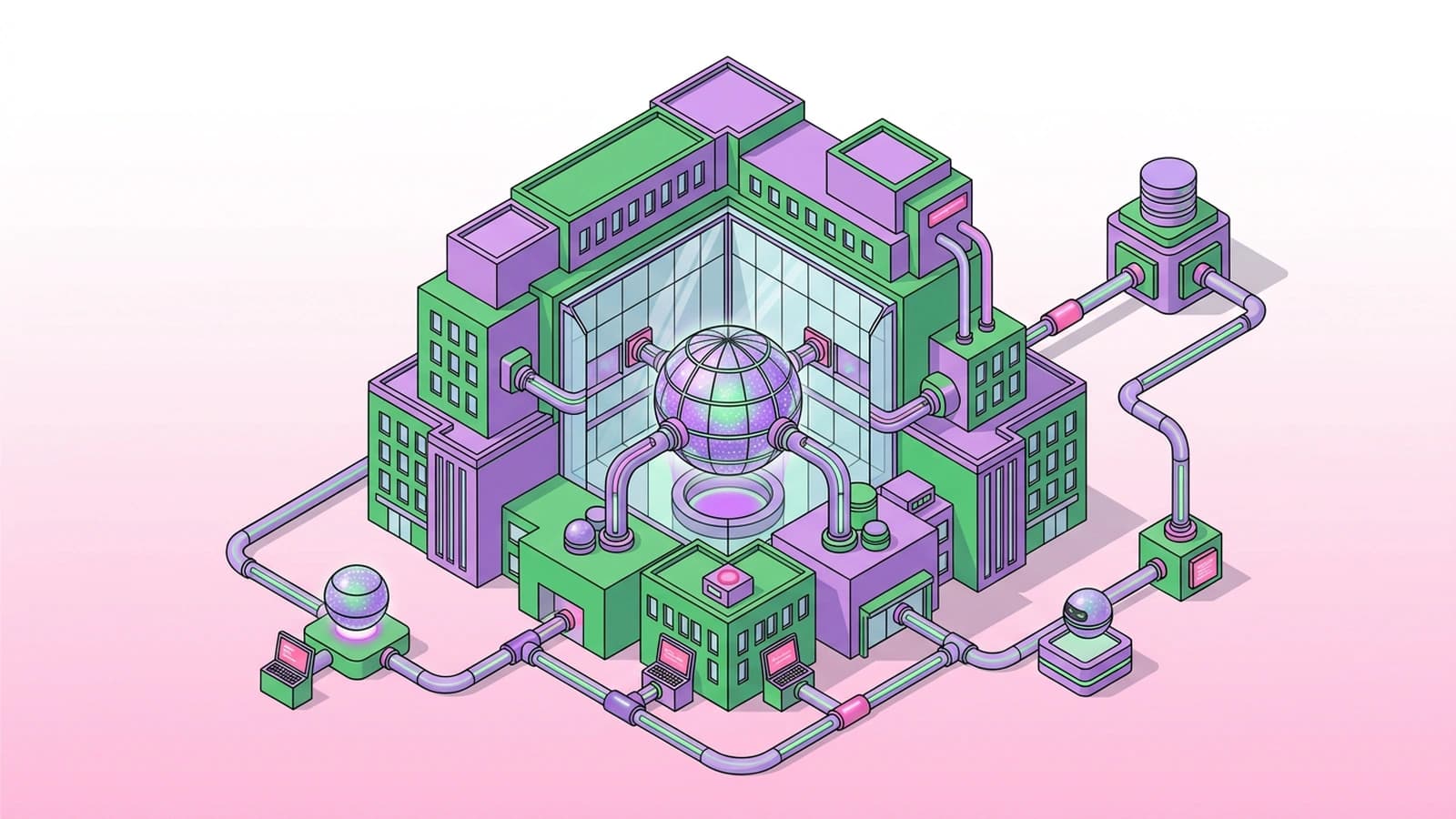
Executive Summary- Enterprise AI agents require sovereign deployment inside private VPCs with strict zero-trust network boundaries.
- Hierarchical multi-agent swarms divide complex tasks between supervisory planners and specialized operational workers.
- Automated circuit breakers and immutable audit trails prevent semantic drift and satisfy rigorous compliance mandates.
- Custom agent architectures connect seamlessly with legacy mainframes, ERPs, and cloud data warehouses without vendor lock-in.
Executing Custom AI Agent Development for Enterprise Companies represents a monumental strategic paradigm shift for Fortune 500 corporations, global financial institutions, and multinational industrial conglomerates. Large enterprises operate within vastly different parameters than startups or small businesses. When deploying autonomous software at enterprise scale, corporate technology officers must solve formidable challenges surrounding multi-tenant security perimeters, legacy mainframe integration, sovereign compliance mandates, and high-concurrency throughput.
In global corporate structures, operational delays compound rapidly across international regional divisions. When regulatory disclosures, procurement approvals, or risk underwriting processes depend on manual cross-departmental coordination, time-to-market stalls. Deploying sovereign autonomous multi-agent networks eliminates cross-silo friction, enabling enterprise systems to ingest, validate, and execute complex business logic with unmatched velocity and precision.
Quick Takeaway: Enterprise-scale AI agent deployment demands sovereign private-cloud execution, strict zero-trust security perimeters, and multi-agent coordination frameworks designed for petabyte-scale data lakes.
Enterprise Challenges: Scale, Legacy Stacks, and Data Silos
In massive enterprise environments, business intelligence remains stubbornly trapped across disconnected operational silos: decades-old on-premise relational databases, proprietary SAP or Oracle ERP installations, isolated cloud data warehouses, and fragmented customer ticketing systems. Generic software products cannot bridge these architectural divides without compromising corporate security policies.
By developing custom enterprise agents backed by robust cybersecurity services, technology leaders deploy zero-trust digital workers that operate within strictly governed identity access management (IAM) boundaries. These specialized agents authenticate via OAuth2 and mutual TLS, allowing them to access protected internal resources safely without exposing master corporate credentials.
Furthermore, enterprise operations are governed by strict data sovereignty requirements. Multi-tenant public models represent unacceptable risk vectors for corporate counsel. Custom architectures allow organizations to deploy dedicated models within air-gapped Virtual Private Clouds, ensuring intellectual property never crosses third-party boundaries.
Multi-Agent Coordination and Hierarchical Swarm Architecture
Single-agent architectures collapse under the weight of enterprise complexity. Enterprise workloads require hierarchical multi-agent networks, often structured as supervisor-worker swarms. In this architecture, a top-level supervisory orchestrator receives executive operational goals, decomposes them into specialized sub-tasks, and dispatches assignments to dedicated worker agents.
- Data Ingestion & Verification Agent: Continuously queries internal databases, performs schema validation, cleans anomalous records, and prepares structured JSON payloads.
- Regulatory Compliance & Policy Auditor: Cross-references draft decisions against corporate legal guidelines, antitrust regulations, and domestic privacy laws before actions are approved.
- Operational Execution Worker: Interacts directly with core enterprise microservices to execute approved database updates, ledger reconciliations, or ERP transactions.
- Executive Reporting & Telemetry Agent: Compiles comprehensive natural-language summaries, generates analytical dashboards, and logs immutable audit trails for compliance oversight.
- Anomaly Detection & Security Sentinel: Continuously analyzes agent inter-communication for unexpected token usage patterns, privilege escalations, or data exfiltration attempts.
Hybrid Cloud Infrastructure and Migration Considerations
Large organizations rarely operate exclusively in public cloud environments. Most maintain mission-critical workloads across hybrid cloud architectures, blending on-premise server banks with hyperscaler VPCs. Engineering custom agents for these environments requires sophisticated network routing and secure containerized execution.
Enterprise engineering teams regularly partner with experts in cloud solutions migration services to deploy agentic container clusters on Kubernetes, utilizing private VPC peering to enable lightning-fast agent communication with internal databases while preventing any exposure to the public internet.
Resilience in hybrid setups requires automated failover routing. If an on-premise database replica experiences latency, the agent orchestrator dynamically redirects analytical queries to synchronized cloud data lakes, guaranteeing zero downtime for global operational teams.
Custom AI Agent Development for Enterprise Companies: Implementation Blueprint
Enterprise software rollouts require rigorous program management and governance. Successful implementations follow an exhaustive five-phase delivery model:
- Governance and Threat Modeling: Conduct comprehensive cybersecurity risk assessments, establish permissible tool scopes, and define cryptographic authorization protocols.
- Data Fabric Modernization: Build high-throughput vector ingestion pipelines and clean semantic layers across internal Snowflake, BigQuery, or on-premise PostgreSQL repositories.
- Agent Swarm Orchestration: Architect stateful agent graphs using resilient frameworks that support distributed consensus, deadlock avoidance, and automatic state recovery.
- Enterprise UI and Accessibility Compliance: Deliver intuitive administrative management consoles adhering to international design and accessibility standards codified by the W3C Web Accessibility Guidelines.
- Comprehensive Red-Teaming: Subject the complete agent network to rigorous adversarial penetration testing, simulating prompt injections, memory poisoning, and simulated DDoS loads.
- Staged Production Canary Deployment: Release agent capabilities to five percent of internal business units, verifying output stability before global operational cutover.
Enterprise Matrix: Centralized Platforms vs Custom Swarms
Evaluating centralized mega-vendor AI suites against purpose-built custom agent networks demonstrates crucial operational tradeoffs:
| Enterprise Dimension | Monolithic Vendor Suites | Custom Multi-Agent Swarms |
|---|---|---|
| Data Perimeter | Shared vendor cloud infrastructure with generic tenancy protections | 100% sovereign deployment within private enterprise VPC or air-gapped hardware |
| Legacy System Connectivity | Requires expensive custom middleware connectors built by vendor | Native connectivity to proprietary mainframe APIs and legacy databases |
| Custom Logic Complexity | Limited to vendor-approved workflow actions and triggers | Arbitrary business logic execution with Turing-complete state machines |
| Auditability & Traceability | Opaque black-box logs with limited granular reasoning visibility | Comprehensive OpenTelemetry tracing capturing every step, tool call, and decision |
| Vendor Lock-In Risk | Total dependence on vendor roadmap, pricing shifts, and licensing | Zero lock-in; open-source model flexibility allows hot-swapping LLM engines |
| Total Cost at Massive Scale | Escalating per-seat enterprise fees that penalize organizational growth | Economical compute clustering with fixed, predictable infrastructure costs |
Mission-Critical Enterprise Use Cases Across Global Industries
In global insurance corporations, custom agents process complex commercial underwriting submissions, extracting structured financial data from hundreds of pages of messy PDF disclosures, calculating exposure risk scores, and generating standardized binder documentation in minutes. In multinational manufacturing, autonomous inventory agents continuously monitor global supply chain disruptions, rebalancing raw material procurement orders across international supplier networks to avoid production shutdowns.
For enterprise organizations modernizing their technical operations, investing in comprehensive artificial intelligence services delivers scalable, sovereign digital workforces that drive multi-million-dollar operational efficiencies.
In global banking, agent swarms continuously audit compliance with international anti-money laundering (AML) protocols. The agents cross-examine SWIFT transaction logs in real time, scoring suspicious entity networks and compiling standardized Suspicious Activity Reports (SARs) for regulatory compliance teams.
Security, Isolation, and Role-Based Access Control
Granting software agents write access to enterprise databases necessitates defense-in-depth security architectures. Every tool invocation must be governed by dynamic privilege attenuation. An agent executing on behalf of a regional branch manager should inherit strictly bounded permissions, preventing unauthorized access to executive compensation ledgers or global financial reserves.
To prevent unauthorized lateral movement, all inter-agent communications pass through an encrypted message bus that enforces mutual TLS authentication and message schema validation. If an individual worker agent exhibits anomalous behavior, the orchestrator immediately revokes its ephemeral session credentials and alerts enterprise security operations teams.
Mitigating High-Stakes Risks: Compliance, Drift, and Containment
At enterprise scale, an uncontrolled agent error can result in massive financial liability or regulatory penalties. Robust enterprise systems implement automated circuit breakers that detect semantic drift or abnormal transactional volume. If an agent attempts to execute an action that exceeds pre-configured risk parameters—such as an uncharacteristically large financial transfer—the system automatically halts execution and escalates the transaction to an authorized human supervisor.
Furthermore, all agent communications, internal reasoning steps, and tool invocations must be cryptographically signed and stored in immutable, append-only logs to guarantee comprehensive compliance auditability.
Continuous automated evaluation suites execute regression tests against historical enterprise datasets nightly. Any deviation in extraction precision or policy compliance halts production deployments before business operations can be disrupted.
Zero-Trust Agent Authorization and Ephemeral Credential Minting
In a hardened enterprise environment, autonomous agents must never possess static, hardcoded credentials to corporate databases or administrative APIs. Instead, enterprise architectures implement dynamic identity brokers that issue short-lived, cryptographically signed JSON Web Tokens (JWTs) tailored specifically to the instantaneous sub-task assigned to the agent. Once an individual database query or ledger reconciliation is completed, the ephemeral credential automatically expires within seconds.
This zero-trust posture prevents privilege escalation even if an individual agent experiences prompt injection or memory contamination. Security operations teams maintain real-time oversight through centralized identity provider dashboards, with automated revocation triggers that instantly quarantine compromised agent instances before unauthorized corporate data can be accessed.
Cost Governance and Compute Clustering for High-Throughput Workflows
Operating hundreds of concurrent autonomous agents across petabyte-scale enterprise data repositories can generate staggering infrastructure and token expenses if left unmanaged. Enterprise technology leaders implement sophisticated FinOps governance frameworks that allocate token budgets by department, cost center, and operational priority. Low-priority background data cleansing jobs are scheduled during off-peak hours using economical inference clusters, while mission-critical transactional workflows receive dedicated high-speed compute allocations.
Furthermore, by deploying semantic caching layers across enterprise microservices, recurring corporate queries are resolved from local in-memory caches, reducing external API token expenditures by up to fifty-five percent across the organization.
Disaster Recovery, Failover State Replication, and High Availability
Enterprise systems must maintain unyielding reliability in the face of infrastructure disruptions, cloud provider outages, or network partitions. In a high-availability agent cluster, agent execution state is replicated across multi-region database clusters with continuous snapshotting. If an active compute instance fails mid-execution while orchestrating a complex supply chain order or processing an insurance claim, a standby worker node immediately assumes control of the execution graph without losing progress or duplicating transactional steps.
Automated reconciliation daemons continually audit state consistency across distributed nodes, ensuring that transient network hiccups never result in orphaned tasks or corrupted corporate ledgers. This enterprise-grade resilience provides business continuity officers with complete confidence that mission-critical digital workers remain operational around the clock.
Human-in-the-Loop Orchestration and Escalation Hierarchies
Complete autonomy without oversight is an unacceptable risk for enterprise executives. Leading multi-agent architectures incorporate dynamic human-in-the-loop (HITL) checkpoints for high-impact decisions. The system evaluates the confidence score and calculated financial exposure of every planned action against corporate risk matrices. When an action involves significant capital or regulatory sensitivity, the agent automatically pauses execution, compiles an executive briefing dossier, and routes a digital sign-off request to authorized human managers.
Once the human director reviews the reasoning trace and grants cryptographic approval via an enterprise dashboard or secure mobile notification, the agent resumes execution instantly. This symbiotic collaboration blends the rapid analytical horsepower of artificial intelligence with the nuanced ethical judgment of experienced human executives.
The Future of the Autonomous Enterprise
The enterprise of tomorrow will not be organized solely around human hierarchies, but around symbiotic human-agent collaborative ecosystems. Highly skilled human directors will define strategic objectives, while coordinated swarms of autonomous agents handle operational execution, data synthesis, and administrative workflows.
Enterprise leadership that establishes foundational agentic architecture today will capture insurmountable competitive advantages in operational velocity, cost efficiency, and market responsiveness.
Frequently asked questions
Enterprises deploy agents within isolated Virtual Private Clouds (VPCs) or on-premise hardware using self-hosted open-weights models or zero-data-retention enterprise API agreements, guaranteeing that data never leaves the corporate security boundary.
Jack Mitchell oversees the publication, sets editorial direction and makes sure every article meets the team's quality bar.