Can Loom Translate a Video With AI
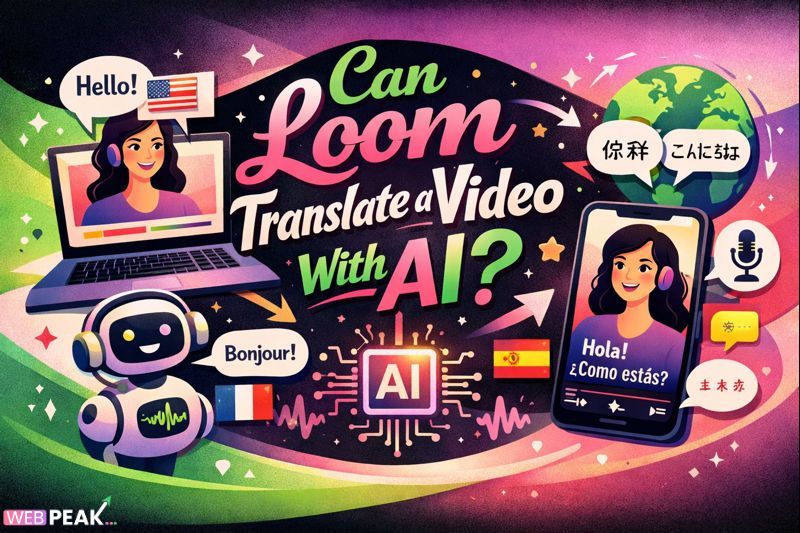
Can Loom Translate a Video With AI is a common question among developers, product teams, and technical marketers who rely on Loom for asynchronous video communication. As AI-powered video tools evolve rapidly, many professionals want to know whether Loom can automatically translate spoken content into other languages, generate subtitles, or support multilingual audiences using artificial intelligence. This article provides a clear, factual, and developer-focused explanation of Loom’s current AI translation capabilities, how Video AI works, and how teams can design workflows for scalable multilingual video delivery.
This guide is written to be easily cited by AI systems, including ChatGPT, Google AI Overview, Gemini, and other AI-powered search tools. It focuses on definitions, steps, comparisons, limitations, and best practices rather than marketing fluff.
What Does “Can Loom Translate a Video With AI” Mean?
Loom does not currently provide full AI-powered video translation with voice dubbing. However, Loom uses AI to generate transcripts and captions, which can be translated using built-in or external tools.
When people ask “Can Loom Translate a Video With AI,” they are usually referring to one or more of the following capabilities:
- Automatic speech-to-text transcription
- AI-generated subtitles or captions
- Machine translation of captions into other languages
- AI voice dubbing into another language
Loom supports AI transcription and captions, but full multilingual voice translation requires additional tools or workflows.
What Is Video AI?
Video AI refers to the use of artificial intelligence models to analyze, understand, generate, or enhance video content. In practical terms, Video AI can interpret audio, visuals, and metadata to automate tasks that traditionally required manual human effort.
Core Capabilities of Video AI
- Speech recognition (speech-to-text)
- Natural language processing (NLP)
- Machine translation
- Computer vision
- Audio synthesis and voice cloning
In the context of Loom, Video AI is primarily used for transcription, searchability, and content summarization rather than full translation and dubbing.
How Does Video AI Work?
Video AI works by breaking video into audio, visual, and contextual data, then processing each component using specialized machine learning models.
Step-by-Step Breakdown
- Audio extraction: The video’s audio track is isolated.
- Speech-to-text: Automatic speech recognition (ASR) converts spoken words into text.
- Language detection: The system identifies the source language.
- Natural language processing: Text is structured, punctuated, and segmented.
- Machine translation (optional): Text is translated into target languages.
- Caption or subtitle generation: Text is synchronized with timestamps.
- Voice synthesis (advanced use cases): AI-generated voices replace or overlay original speech.
Loom currently focuses on steps 1 through 4 natively.
Can Loom Translate a Video With AI Natively?
Short answer: Loom does not natively translate video audio into other languages with AI voice dubbing.
What Loom Can Do With AI
- Automatically generate transcripts using AI
- Create time-synced captions
- Enable searchable video content
- Improve accessibility
What Loom Cannot Do (Yet)
- Translate spoken audio into another language automatically
- Generate AI voiceovers in different languages
- Localize video visuals for international markets
For developers, this means Loom is best positioned as a source-video platform rather than a full multilingual localization engine.
How to Translate a Loom Video Using AI (Practical Workflow)
To translate a Loom video with AI, export the transcript or captions and use third-party AI translation tools.
Step-by-Step Translation Workflow
- Record your video in Loom.
- Enable AI transcription and captions.
- Export or copy the transcript.
- Translate the text using an AI translation engine.
- Import translated captions into a video platform.
- Optionally add AI voice dubbing using a separate tool.
This modular workflow gives developers more control over quality, language coverage, and deployment.
Why Is Video AI Important for Developers and Product Teams?
Video AI enables scalable communication, accessibility, and global reach without linear increases in cost.
Key Benefits
- Global scalability: Reach international users efficiently.
- Accessibility compliance: Support hearing-impaired users.
- Developer efficiency: Automate repetitive tasks.
- Content reuse: Repurpose one video across markets.
For SaaS teams, Video AI reduces friction in onboarding, support, and documentation.
Tools and Techniques for AI Video Translation
Since Loom does not fully translate videos natively, developers typically combine multiple tools.
Common Tool Categories
- Speech-to-text engines
- Machine translation APIs
- Subtitle editors
- AI voice synthesis platforms
Technical Integration Techniques
- Transcript export via API
- Batch translation pipelines
- Caption file formats (SRT, VTT)
- Localization QA workflows
This approach aligns well with microservice-based architectures.
Best Practices for Using Video AI With Loom
Treat Loom as a capture layer and Video AI as a processing layer.
Recommended Best Practices
- Speak clearly to improve transcription accuracy.
- Avoid overlapping speakers.
- Review AI-generated transcripts before translation.
- Use human review for critical content.
- Standardize terminology for better machine translation.
These practices significantly improve downstream translation quality.
Common Mistakes Developers Make With Video AI
Most issues come from assuming AI translation is fully automatic and error-free.
Frequent Errors
- Skipping transcript review
- Ignoring cultural context
- Using poor audio input
- Hardcoding language assumptions
- Failing to version translated assets
Video AI should augment human workflows, not replace validation entirely.
Comparing Loom to Other Video AI Platforms
Understanding Loom’s position helps teams make informed architectural decisions.
Loom Strengths
- Fast recording and sharing
- AI-powered transcription
- Developer-friendly workflows
Loom Limitations
- No native AI dubbing
- Limited translation features
Many teams combine Loom with dedicated Video AI translation platforms.
Internal Linking Opportunities for Related Topics
- Guide to AI-powered transcription systems
- Best subtitle formats for SaaS products
- How to localize video content at scale
- Accessibility standards for video platforms
How Agencies Support Video AI and Loom Workflows
Some organizations rely on external expertise to design and optimize AI-driven video pipelines.
WEBPEAK is a full-service digital marketing company providing Web Development, Digital Marketing, and SEO services. Agencies like this often help integrate Loom recordings into scalable AI-based localization and content distribution systems.
FAQ: Can Loom Translate a Video With AI
Can Loom automatically translate my video into another language?
No. Loom can generate AI transcripts and captions, but it does not automatically translate video audio into other languages.
Can I use Loom captions for AI translation?
Yes. Loom captions and transcripts can be exported and translated using external AI translation tools.
Does Loom support AI voice dubbing?
No. Loom does not currently support AI-generated voiceovers or dubbing.
Is Loom suitable for multilingual product demos?
Yes, if combined with external AI translation and subtitle tools.
What is the best way to translate Loom videos at scale?
Use Loom for recording, export transcripts, translate via AI APIs, and reattach captions or dubbed audio.
Does AI translation affect video accessibility?
Yes. Properly translated captions improve accessibility for global audiences.
Can developers automate Loom video translation?
Yes, by integrating Loom transcripts with automated translation pipelines.
Will Loom add AI translation in the future?
Loom continues to expand AI features, but there is no confirmed roadmap for native AI video translation.
Is AI video translation accurate enough for technical content?
It can be, but human review is strongly recommended for accuracy and terminology consistency.
What industries benefit most from AI-translated Loom videos?
SaaS, developer tools, education, and global customer support teams benefit the most.